Community awareness Worksheets for Ages 4-8
5 filtered results
-
From - To
Explore our engaging Community Awareness Worksheets designed for children ages 4 to 8! These interactive resources aim to foster understanding and appreciation for the community around them. With a variety of fun activities, young learners will discover important concepts like community helpers, local landmarks, and social responsibility. Our worksheets promote critical thinking and creativity, making it easy for children to connect with their surroundings. Ideal for classrooms or at-home learning, these worksheets will enhance children's awareness of their environment while also building essential skills. Help your child become a responsible and informed community member today with our colorful and engaging worksheets!
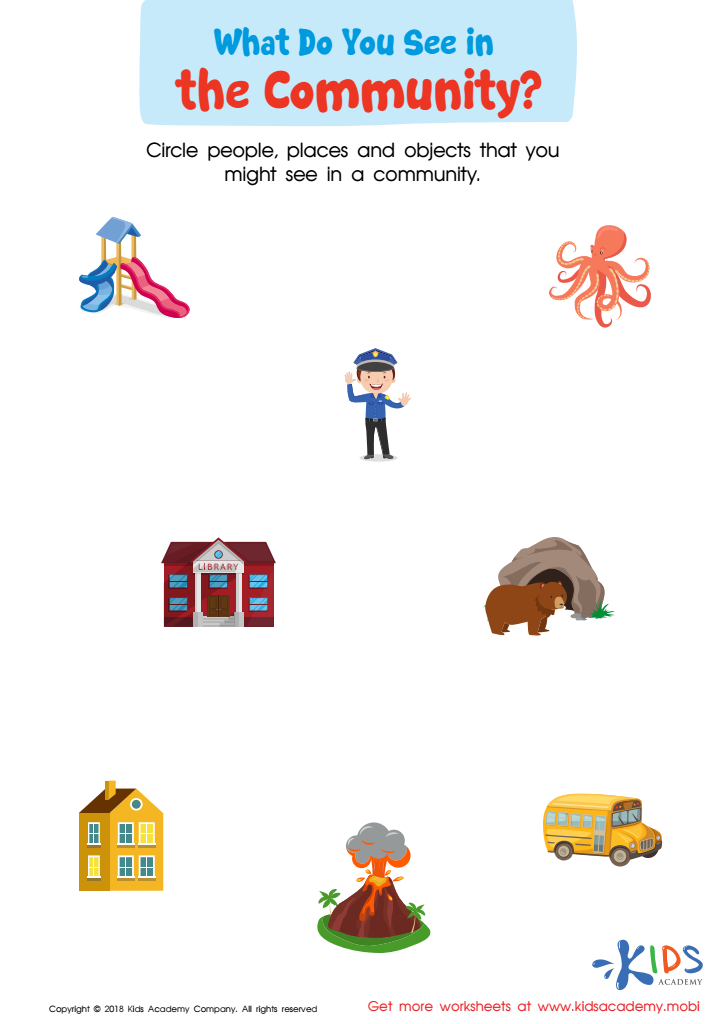
What Do You See in the Community Worksheet
 Assign to My Students
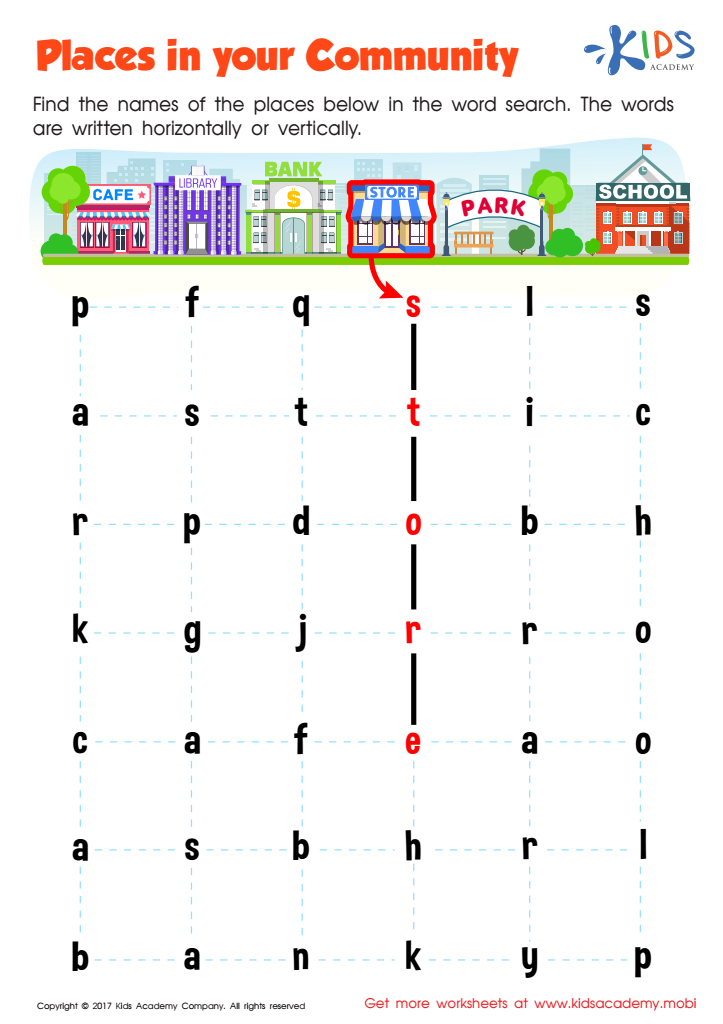
Places in Your Community Worksheet
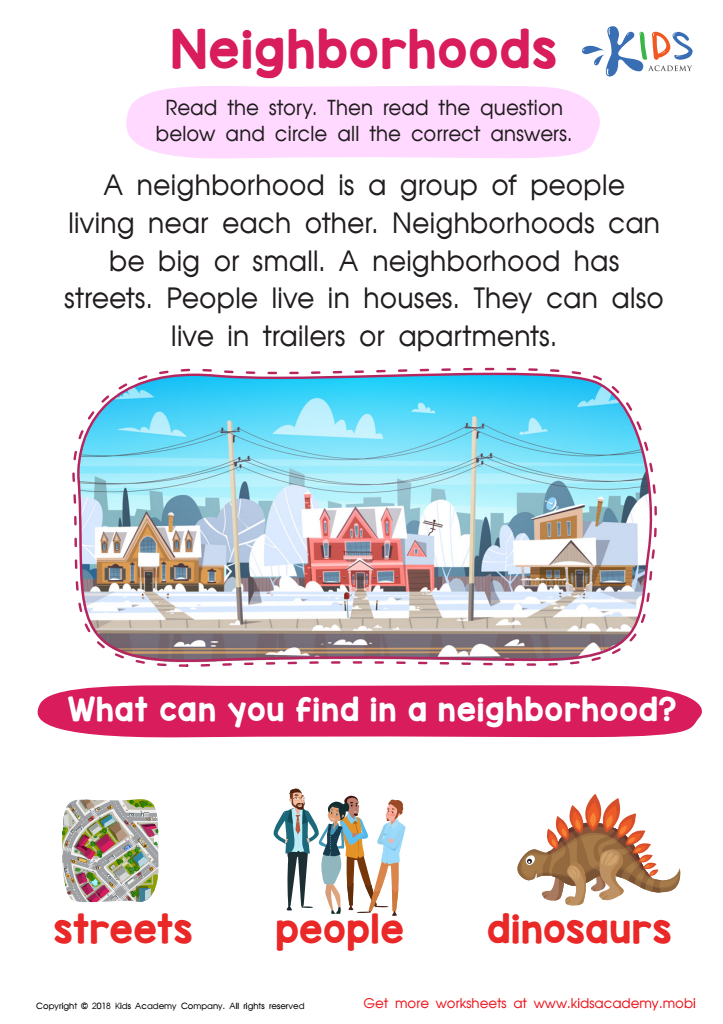
Neighborhoods Worksheet
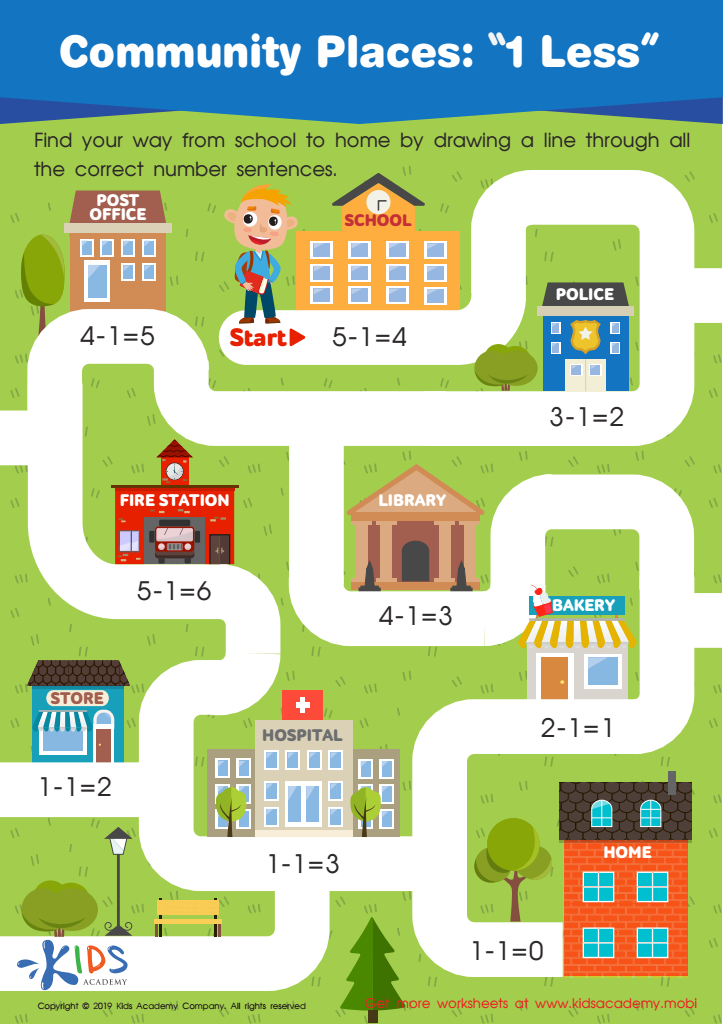
Community Places: 1 Less Worksheet
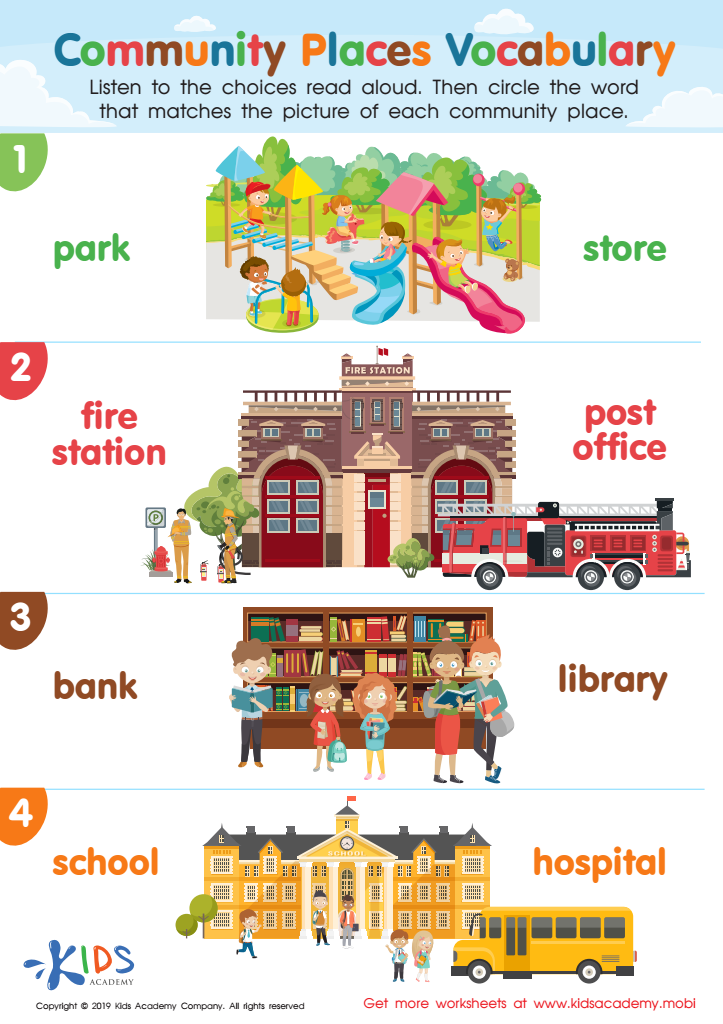
Community Places Vocabulary Worksheet




Community awareness is crucial for children aged 4-8 as it lays the foundation for social skills, empathy, and a sense of belonging. At this early age, kids are naturally curious about their surroundings. Encouraging community awareness helps them understand the roles of various community members—like first responders, teachers, and neighbors—fostering respect and appreciation for diverse professions and backgrounds.
Incorporating community education into their daily lives can enhance children’s critical thinking and problem-solving abilities. They learn about the importance of teamwork, cooperation, and the notion that everyone has a part to play in making their community thriving and safe. This awareness can also spark children's interest in civic engagement, teaching them the value of volunteering and contributing to society from a young age.
Moreover, involving children in community events can strengthen family bonds as they share experiences, ultimately leading to a more resilient sense of community. Teachers and parents should actively promote community involvement to cultivate their children into empathetic citizens with a strong understanding of their environment, enhancing social cohesion, and significantly enriching the children's educational experience beyond the classroom. Thus, community awareness is not just an educational tool but a vital component of holistic child development.








