
Counting comprehension Worksheets for Ages 4-8
3 filtered results
Difficulty Level
Grade
Age
-
From - To
Subject
Activity
Standards
Our Counting Comprehension Worksheets for ages 4-8 are designed to enhance young learners' counting and number recognition skills. These engaging, colorful worksheets support children as they progress from simple counting to more complex numerical concepts. Perfect for parents and educators, our activities align with educational standards, helping kids build a strong mathematical foundation. With fun themes and interactive exercises, your child will enjoy mastering numbers, improving their understanding through hands-on practice. Download our free worksheets and watch your young mathematicians thrive as they confidently navigate the world of counting! Get started today at Kids Academy - where learning is play.
Favorites
With answer key
Interactive
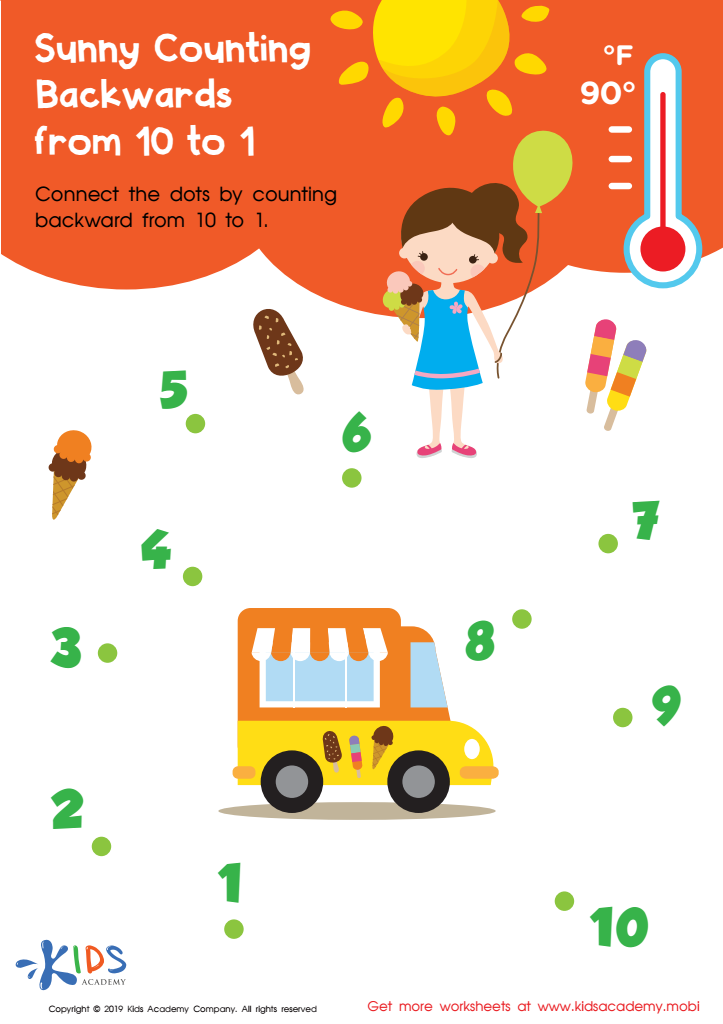
Sunny Counting Backwards from 10 to 1 Worksheet
Ask your kids what they like to do in summer heat. Look at the worksheet and ask them to identify the items in the picture. Count the numbers together then help them with connecting the dots from 10 to 1. It's a fun activity for the little girl, just like your kids.
 Assign to My Students
Sunny Counting Backwards from 10 to 1 Worksheet
Worksheet
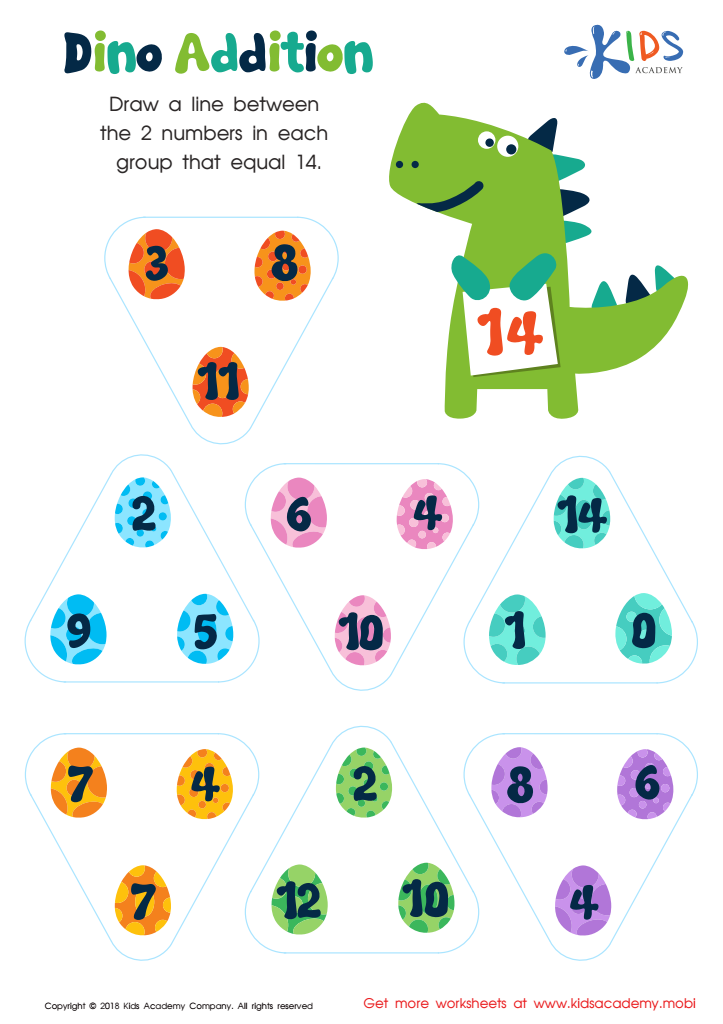
Dino Addition Worksheet
Kids can have fun with math with this cute PDF worksheet! Each triangle contains three eggs; by adding pairs of eggs together, kids can find the right combination that equals 14 and draw a line linking them. The goal is to help our playful dinosaur find the right eggs to make 14! It's a great way to practice addition and have a motivating purpose.
Dino Addition Worksheet
Worksheet
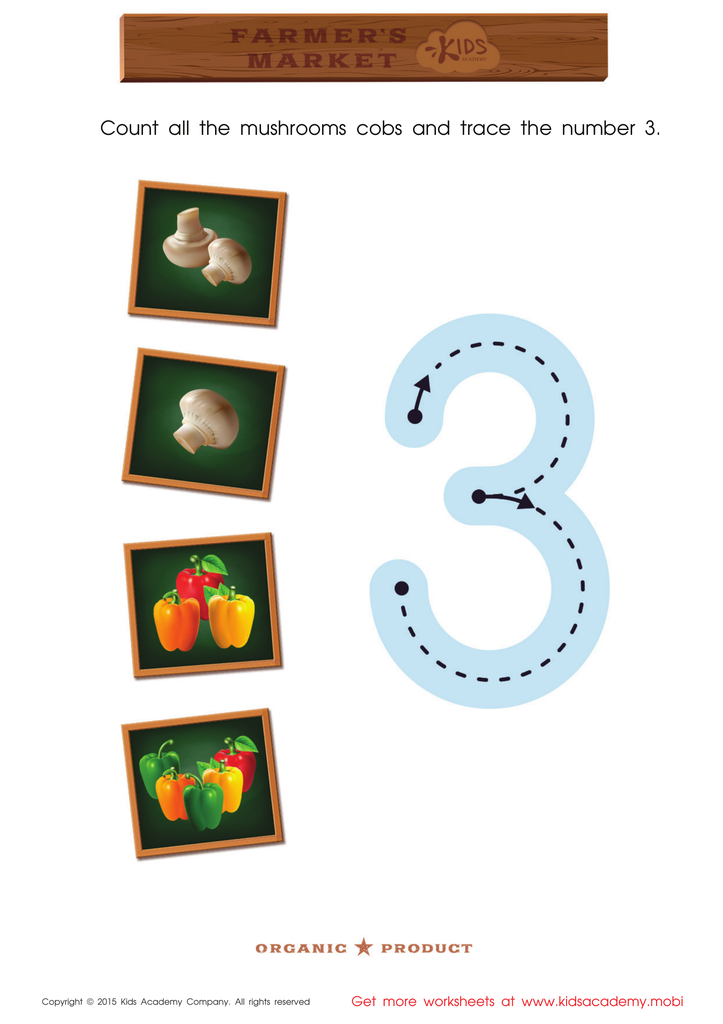
Count the Mushrooms and Trace the Number 3 Printable
Download and print this interactive math worksheet – your child will practice counting and addition, while exercising their fine motor muscles. Have them count and add mushrooms, and trace the number 3 – all from the comfort of home. Kids Academy offers more useful worksheets for preschool and kindergarten.
Count the Mushrooms and Trace the Number 3 Printable
Worksheet
Join Kids Academy for Free
Who is primarily going to use this learning content?








Counting comprehension is the foundation for a child’s early mathematical development, playing a critical role in their cognitive growth. For children aged 4-8, understanding counting goes beyond merely reciting numbers—it involves recognizing quantities, patterns, and the principles of one-to-one correspondence.
Parents and teachers should care deeply about nurturing this skill because it predicts future success in more complex mathematical concepts such as addition, subtraction, and multiplication. Mastery of counting aids children in developing problem-solving skills and logical thinking, which are essential across all areas of learning. As children count objects, they also enhance their fine motor skills and visual-spatial awareness, crucial for literacy and overall academic performance.
Engaging activities, such as counting games, interactive books, and practical experiences like measuring ingredients, can make learning fun and meaningful. Early counting proficiency builds confidence and fosters a positive attitude towards learning, reducing anxiety around math as subjects become more challenging. By emphasizing counting comprehension during these formative years, parents and teachers provide children with the tools to build a strong academic foundation, ensuring they are well-equipped for future educational endeavors. Additionally, early success in counting fosters intrinsic motivation and curiosity, driving lifelong learning and intellectual growth.








