Counting skills Worksheets for Ages 4-8 - Page 22
510 filtered results
-
From - To


.jpg)
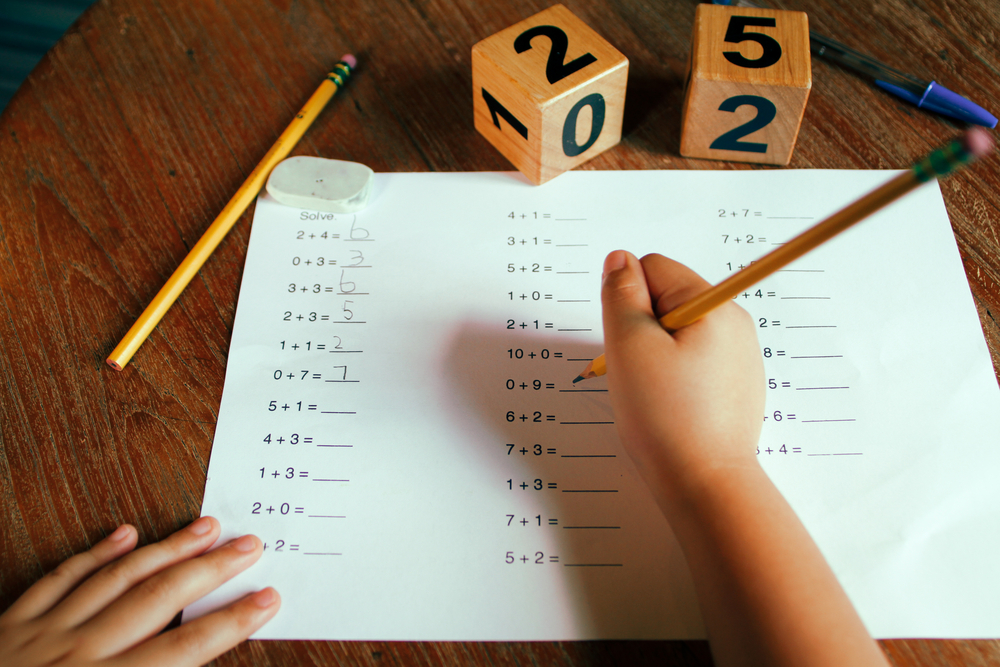




Counting skills are foundational for young learners aged 4-8, and their importance cannot be overstated. At this age, children are developing not only their mathematical abilities but also their critical thinking and problem-solving skills. Mastering counting sets the stage for more complex concepts, such as addition and subtraction, which are introduced later in elementary education.
Furthermore, counting skills promote cognitive development, enhancing a child's ability to recognize patterns, sequences, and relationships between numbers, which are essential in everyday life. These skills also contribute to a child's sense of confidence in their mathematical abilities, encouraging a positive attitude toward learning that can influence their educational journey.
Moreover, counting encourages other areas of growth, such as language development as children learn number names, social skills through shared counting games, and fine motor skills when handling counting objects. An understanding of numbers also aids in practical life skills, like time management and budgeting later in life, making counting a vital real-world application.
Teachers and parents should prioritize counting activities in fun and engaging ways to foster a solid arithmetic foundation and nurture a child's overall cognitive, linguistic, and social development. This early investment in counting skills can lead to lifelong academic success and problem-solving abilities.








