Fractions understanding Worksheets for Ages 4-8
3 filtered results
-
From - To
Explore our engaging Fractions Understanding Worksheets designed specifically for children aged 4-8! These thoughtfully crafted resources aim to make learning about fractions fun and accessible. With vibrant visuals and interactive activities, kids will develop essential mathematical skills as they explore the concepts of halves, thirds, quarters, and more. Our worksheets encourage hands-on learning, promoting cognitive development and enhancing problem-solving abilities. Ideal for home or classroom use, these worksheets help young learners gain confidence in their understanding of fractions through playful exercises. Perfect for reinforcing foundational math skills, our collection is your go-to resource for nurturing a love of learning in early education.
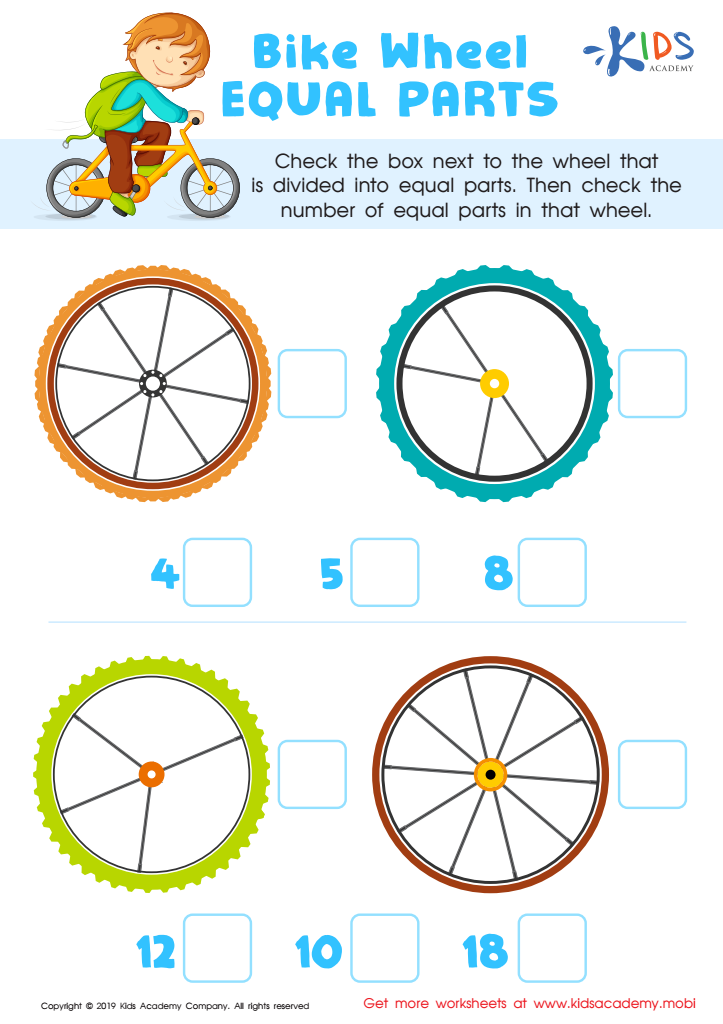
Bike Wheel Equal Parts Worksheet
 Assign to My Students
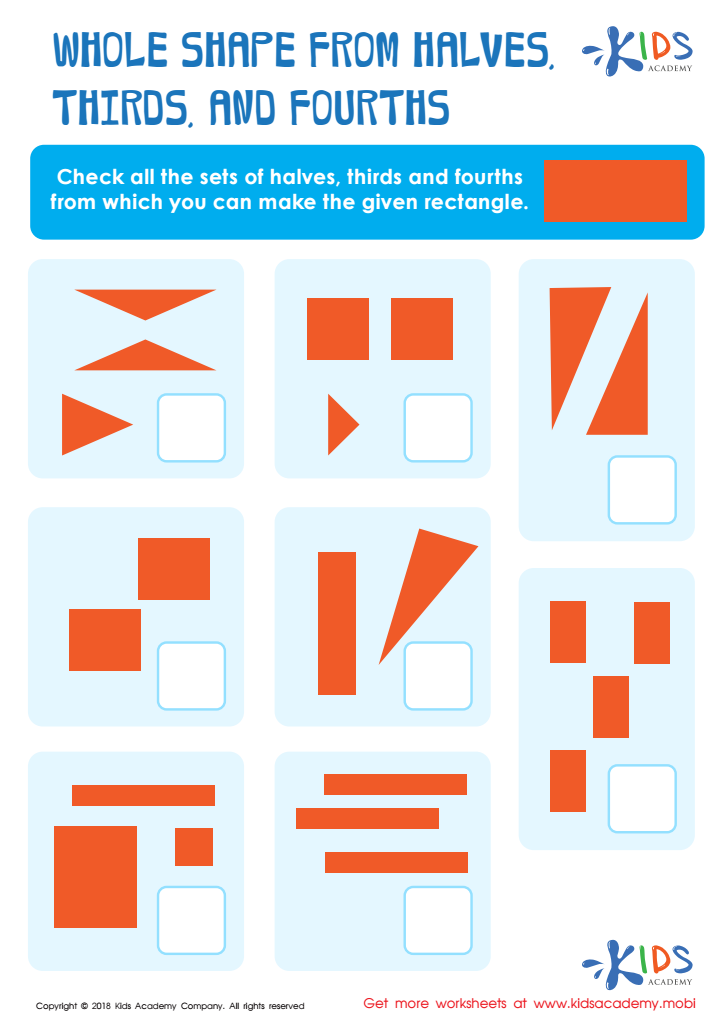
Whole Shape from Halves, Thirds and Fourths Worksheet








Understanding fractions is crucial for children aged 4-8 as it lays a foundational skill necessary for advanced mathematical concepts later on. During these formative years, children develop critical thinking and problem-solving abilities. Fractions introduce them to the idea of part-whole relationships, which enhances their ability to comprehend sharing, division, and proportional reasoning. This understanding fosters essential life skills, helping them make sense of everyday tasks, like dividing food or sharing toys.
For parents and teachers, emphasizing fraction knowledge encourages a positive relationship with math. Engaging children with hands-on activities—like cutting fruits or using fraction games—makes learning exciting and relevant. When children grasp fractions early, they gain confidence, reducing math anxiety that often stems from later, more complex topics. Moreover, fractional understanding is key in science and art, supporting interdisciplinary learning.
Ultimately, nurturing fraction comprehension fosters a sense of accomplishment in young learners, promoting a love for math as integral to life. Parents and teachers play a pivotal role in this journey, ensuring that students are equipped not just for academic success but for informed decision-making throughout their lives. Investing attention in this area early on paves the way for a more holistic and robust educational experience.








