Geometry basics Worksheets for Ages 4-8
3 filtered results
-
From - To
Discover our engaging Geometry Basics Worksheets designed specifically for children aged 4-8! These fun, interactive resources introduce young learners to essential geometric concepts, including shapes, spatial awareness, and simple measurements. Perfect for reinforcing classroom lessons or supporting home learning, our worksheets encourage creativity and critical thinking through varied activities. Kids can explore shapes through tracing, coloring, and completing puzzles, making geometry enjoyable and accessible. Whether you're a parent, teacher, or homeschooler, our worksheets provide an excellent way to enhance foundational skills. Get started today and watch your child's confidence in geometry grow as they learn through play!
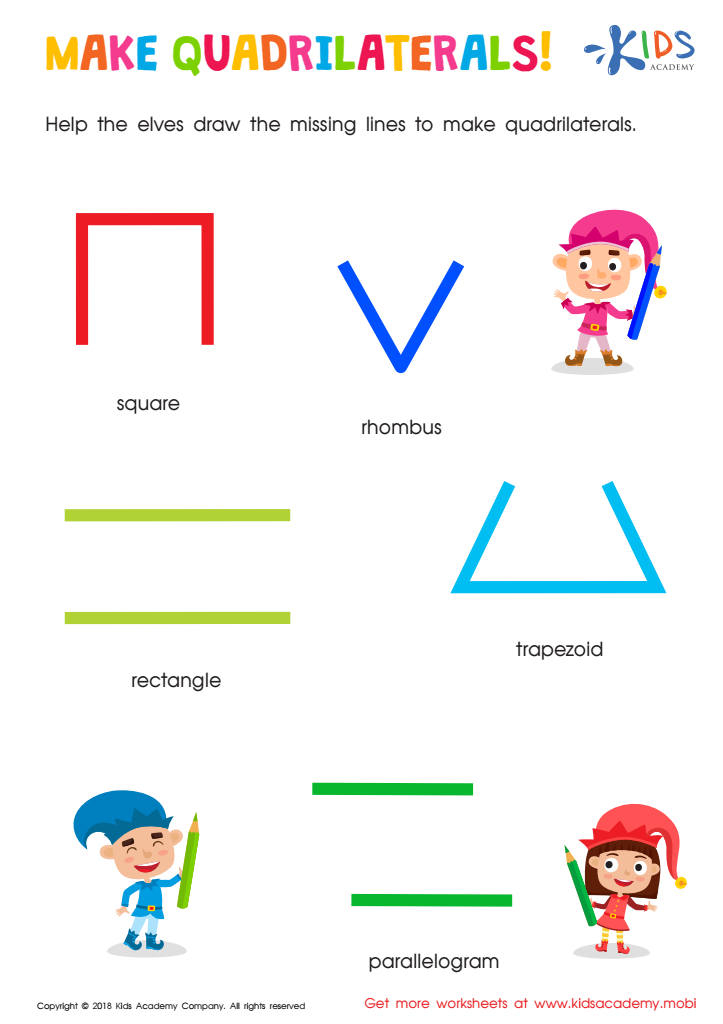
Make Quadrilaterals Worksheet
 Assign to My Students
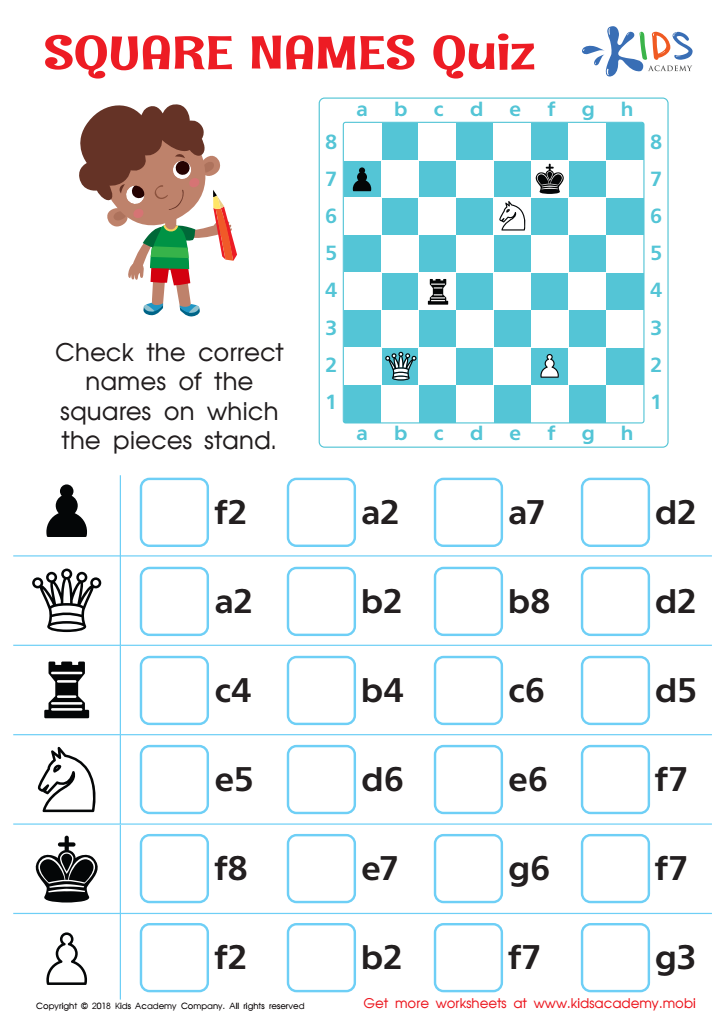
Square Names Quiz Worksheet
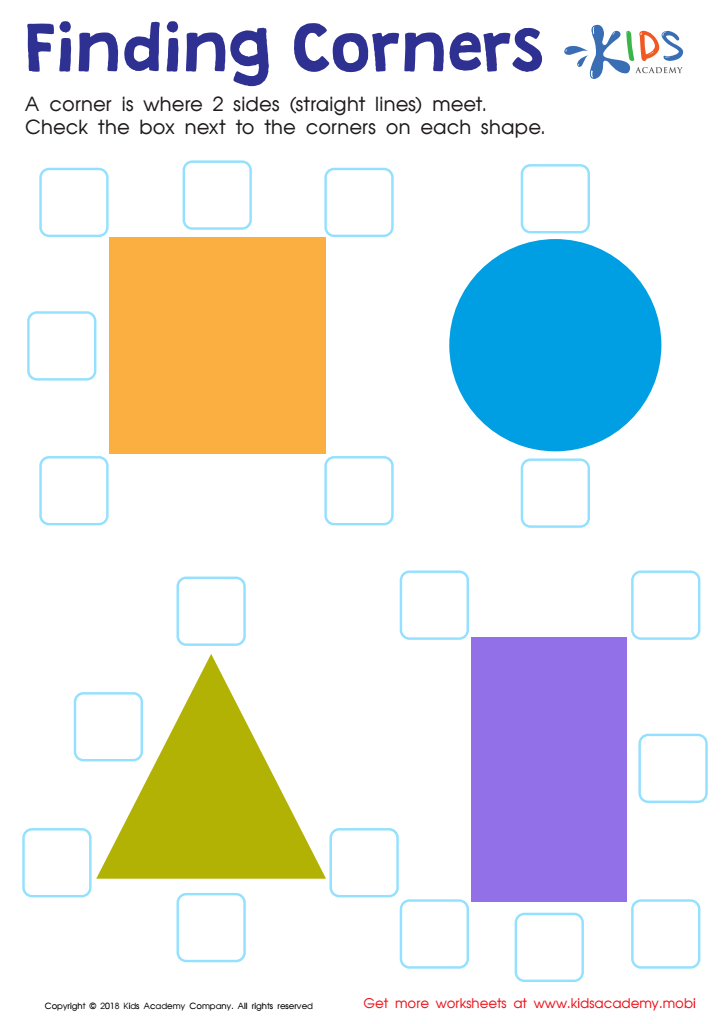
Finding Corners Worksheet








Understanding geometry basics is essential for children aged 4-8 as it lays the foundation for critical thinking and problem-solving skills. At this age, children are naturally curious and ready to explore shapes, sizes, and spatial relationships. Engaging with geometry helps them develop visualization skills, boosting their ability to comprehend complex ideas later in life.
Geometry teaches children to recognize shapes in their environment, fostering observational skills and enhancing their creativity. By identifying patterns and attributes of different shapes, they refine their ability to categorize and compare—key skills across all learning disciplines. Additionally, geometry nurtures early math skills, aiding in concepts such as measurement, symmetry, and spatial reasoning.
Parents and teachers play a crucial role in introducing geometry through interactive experiences. Activities like building with blocks, drawing shapes, or participating in shape-based games make learning fun and effective. Such hands-on experiences also facilitate teamwork and communication among peers, vital social skills.
Ultimately, a solid grasp of geometric principles provides children with the tools they need for later mathematical and scientific pursuits, reinforcing the importance of early exposure. Fostering a positive attitude toward math from a young age encourages lifelong learning and intellectual curiosity.








