
Handwriting development Worksheets for Ages 4-8
3 filtered results
Difficulty Level
Grade
Age
-
From - To
Subject
Activity
Standards
Unlock your child's potential with our engaging Handwriting Development Worksheets for ages 4-8! Designed to enhance fine motor skills and boost confidence, these worksheets provide fun and interactive activities that promote proper letter formation and optimal grip. Each worksheet is tailored to meet developmental milestones, making learning enjoyable and effective. From tracing letters to writing simple words, children will love practicing their handwriting in a playful way. Perfect for at-home learning or classroom practice, our resources encourage a love for writing that lasts a lifetime. Explore our collection today and watch your child's handwriting skills flourish!
Favorites
With answer key
Interactive
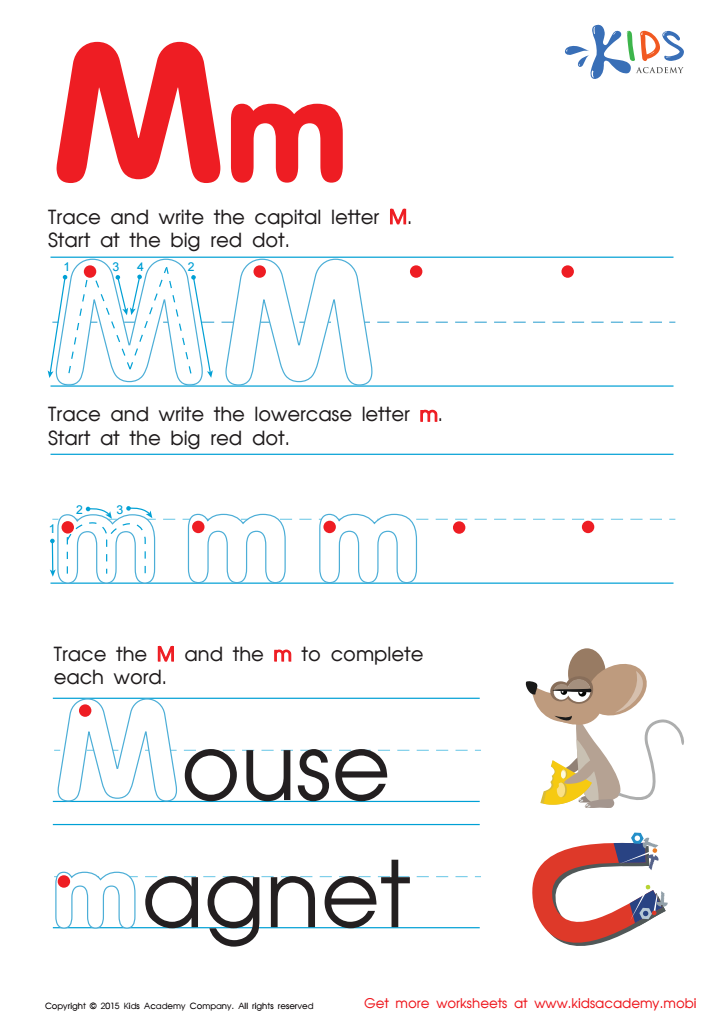
Letter M Tracing Page
Trace and write the letter "M" to help kids learn the alphabet. Start at the red dot and practice several times. Trace the capital letter first, then move on to the lowercase. Complete words like "mouse" and "magnet" in the further exercise. Get more free printables here.
Letter M Tracing Page
Worksheet
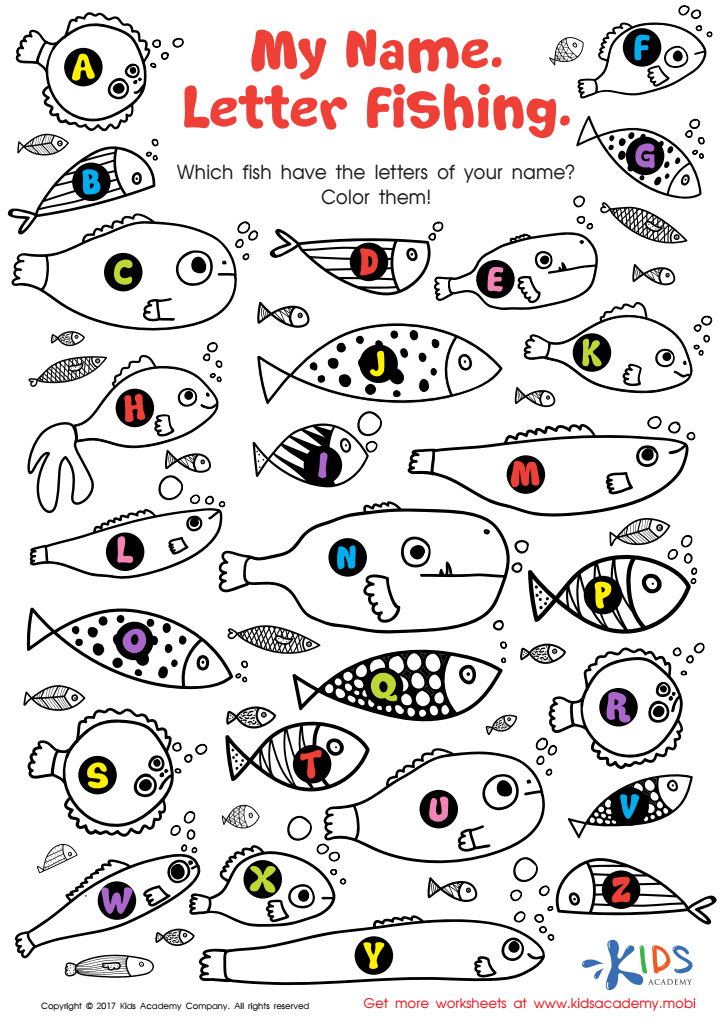
My Name: Letter Fishing Worksheet
Dive into the deep sea and search for fish with a letter on them. Can you find all the letters from your name? Color your favorite fish with crayons and be creative! On the other side, use the letters you found to write your name. Have fun coloring and finding the letters of your name! (80 words)
Download (PDF)
 Assign to My Students
Assign to My Students
My Name: Letter Fishing Worksheet
Worksheet
Join Kids Academy for Free
Who is primarily going to use this learning content?







Handwriting development is crucial for children aged 4 to 8, as it significantly impacts their overall academic performance and cognitive growth. During these formative years, children are not only learning how to write letters and words but also developing fine motor skills, coordination, and spatial awareness. Skilled handwriting fosters self-expression, enabling children to communicate their thoughts and ideas effectively.
Moreover, neat handwriting is often associated with a positive impression in academic settings. Children who struggle with writing may experience frustration, leading to lower self-esteem and disengagement from learning. When parents and teachers invest time in handwriting development, they equip children with essential tools for success in reading, writing, and beyond.
Additionally, early intervention can identify and address any handwriting difficulties, paving the way for better outcomes as the child progresses academically. By incorporating fun and engaging handwriting practice through games and activities, parents and teachers create a pleasant learning environment that nurtures a love for writing.
Ultimately, supporting handwriting development in young children lays the foundation for their academic journey, fosters effective communication skills, and enhances their confidence, making it an essential area of focus for parents and educators alike.








