Identify numbers Worksheets for Ages 4-8
3 filtered results
-
From - To
Discover a world of numbers with our engaging "Identify Numbers Worksheets for Ages 4-8". Perfect for young learners, these worksheets are designed to make learning numbers fun and interactive. Each worksheet helps children identify, count, and write numbers while using vibrant illustrations and captivating activities. Ideal for preschool and early elementary students, our educational resources build foundational math skills, enhance number recognition, and boost confidence in a supportive and enjoyable way. Create a strong numerical foundation for your child today with our expertly crafted worksheets, ensuring a bright, successful start in their educational journey.
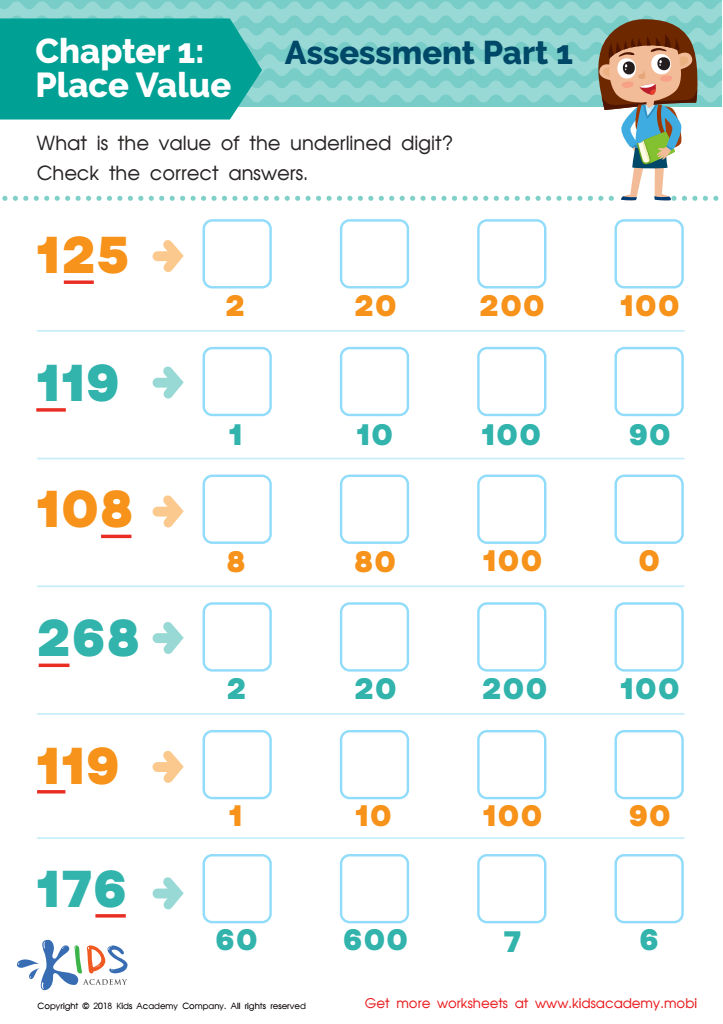
Place Value: Chapter 1 Worksheet
 Assign to My Students





.jpg)

Identifying numbers is a foundational skill that plays a crucial role in a child's overall cognitive development, especially for ages 4-8. During these formative years, children develop essential numeracy skills that will serve as building blocks for more complex mathematical concepts. Parents and teachers should prioritize number identification, as it helps children understand quantity, order, and patterns, which are core components of mathematics.
Early familiarity with numbers fosters confidence and curiosity in math, reducing anxiety around the subject. This ensures that children are more likely to engage positively with math in later stages of education. Furthermore, recognizing numbers allows children to complete everyday tasks, such as telling time, counting objects, and understanding dates, which are essential life skills. Moreover, number identification enhances cognitive skills like memory, attention, and logical thinking.
Children who can easily identify numbers are better equipped to grasp addition, subtraction, and concepts such as place value, which are integral in early math curricula. Early parental and teacher involvement in teaching numbers can make learning interactive and enjoyable through games, songs, and practical activities, which can significantly enhance a child's academic journey. In essence, caring about number identification sets the stage for future academic success and practical competence in life skills.








