Identifying Animals Worksheets for Ages 4-8
10 filtered results
-
From - To
Welcome to our "Identifying Animals Worksheets" page for children aged 4-8! Our engaging and interactive worksheets are designed to help young learners explore the fascinating world of animals. With a variety of activities, including matching, coloring, and identifying different species, these worksheets make learning fun and enjoyable. Each resource promotes essential skills, such as observation and critical thinking, while also enhancing vocabulary. Perfect for home or classroom use, our worksheets cater to various learning styles and abilities. Start your child's animal adventure today and encourage curiosity about nature through creative and educational play!
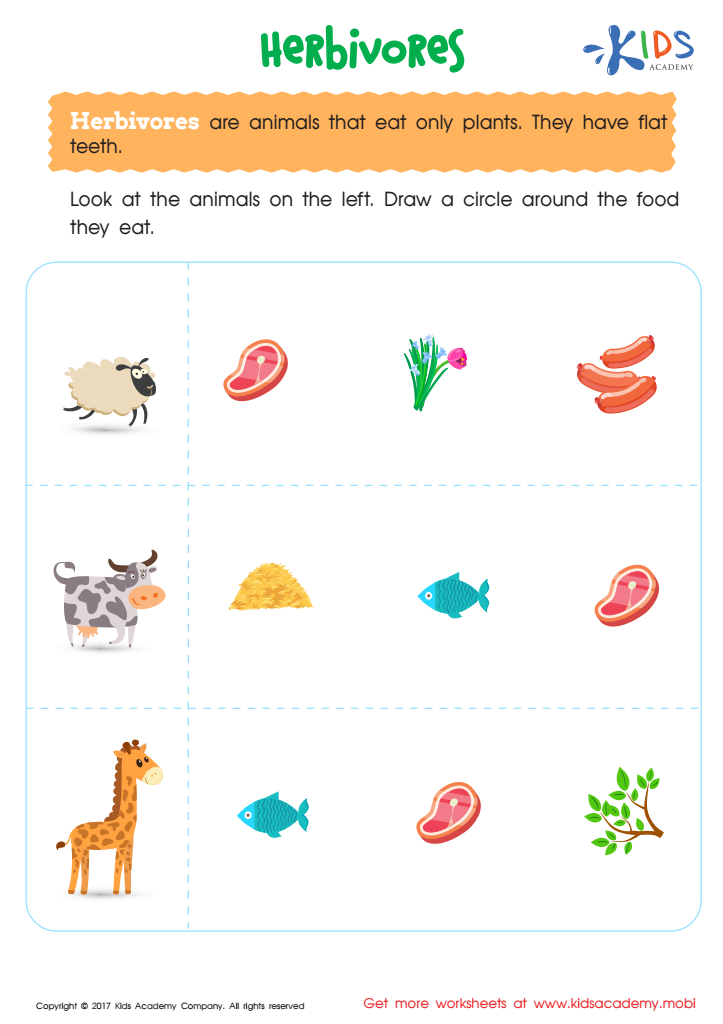
Herbivores Printable
 Assign to My Students
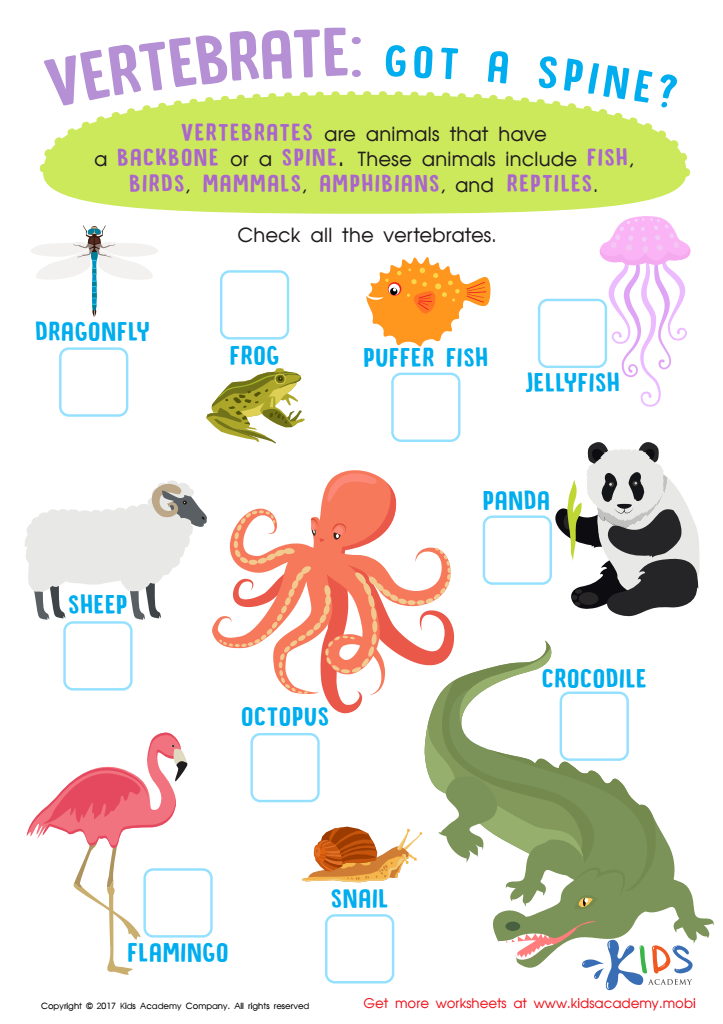
Vertebrates Animals Worksheet for 3rd Grade
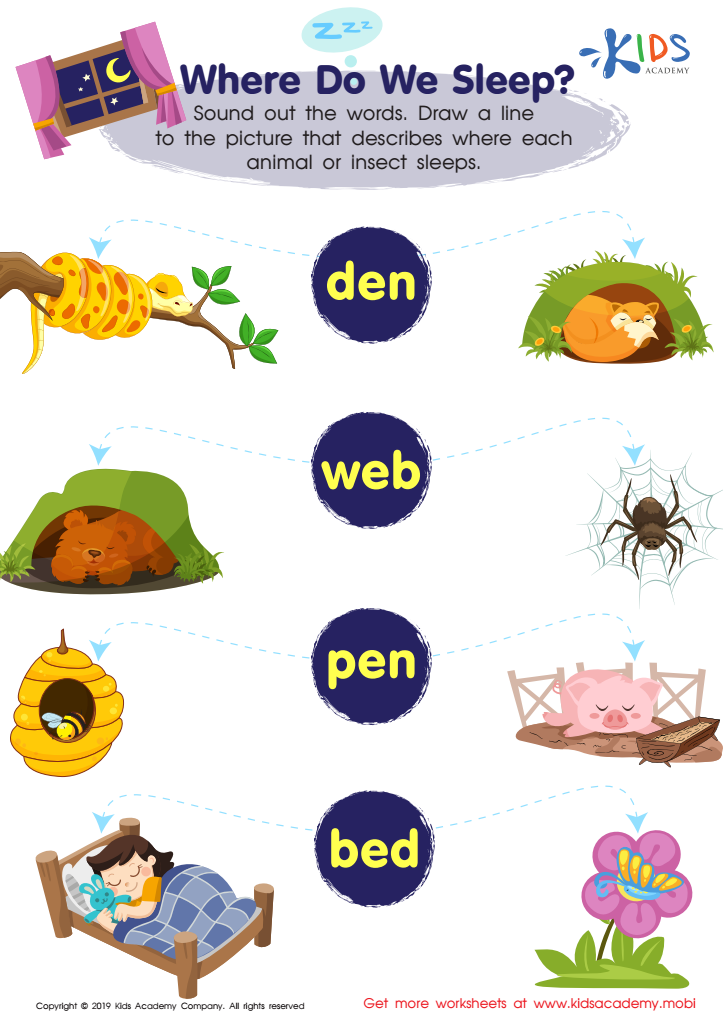
Where Do We Sleep Worksheet
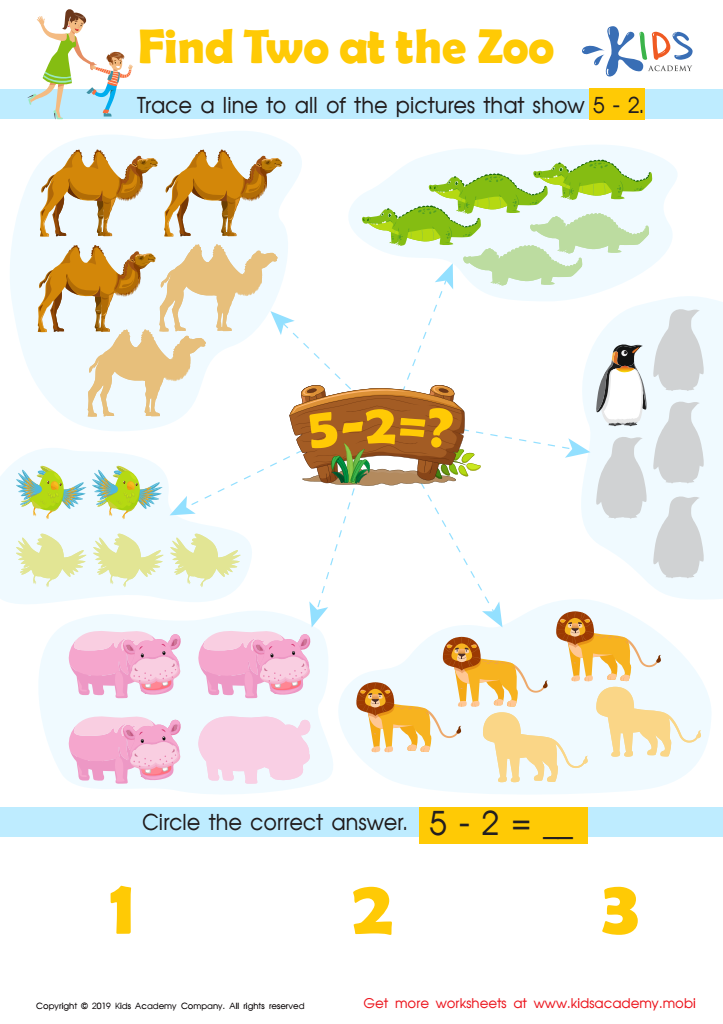
Find Two at the Zoo Worksheet
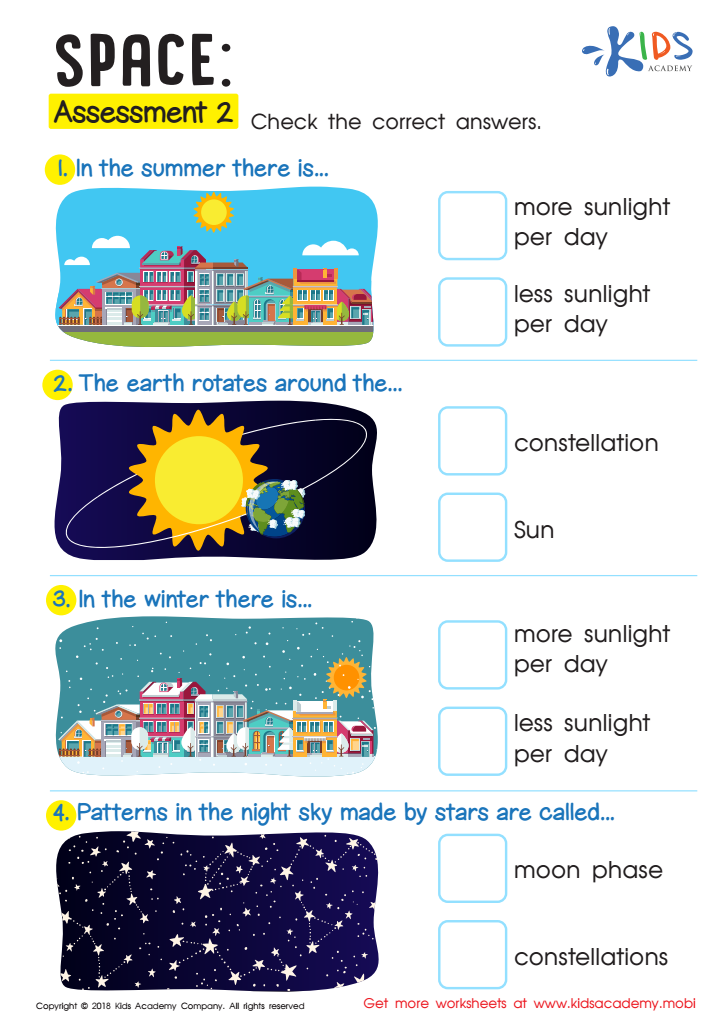
Space: Assessment 2 Worksheet







Identifying animals is a crucial educational milestone for children ages 4-8, and it plays a significant role in their overall development. For parents and teachers, understanding this aspect of learning is important for several reasons.
Firstly, identifying animals fosters curiosity and engagement with the natural world. At this age, children are naturally inquisitive, and introducing them to different animals can ignite a passion for exploration and discovery. This foundational knowledge also supports cognitive development, as children enhance their critical thinking and observation skills by differentiating between various species, habitats, and characteristics.
Secondly, recognizing animals can significantly enrich vocabulary and communication skills. As children learn to describe animals, their behaviors, and habitats, they are also expanding their language skills, which is pivotal during these formative years.
Furthermore, learning about animals can promote empathy and environmental awareness. Understanding where animals live, their role in ecosystems, and the importance of conservation can nurture a sense of responsibility and care for our planet.
Incorporating animal identification into early education not only builds knowledge but also encourages social interaction, patience, and teamwork through group activities, making it a vital component of a well-rounded curriculum for young children.








