Improve observational skills Worksheets for Ages 4-8
3 filtered results
-
From - To
Enhance your child's observational skills with our engaging worksheets designed for ages 4-8! These printable activities promote critical thinking, attention to detail, and visual discrimination, making learning both fun and effective. Each worksheet features vibrant illustrations and age-appropriate exercises that challenge children to notice subtle differences, patterns, and details in their surroundings. Ideal for home or classroom use, these resources help strengthen key learning skills that are foundational to academic success. Explore our collection now and watch your little ones develop their observational abilities in an enjoyable and interactive way! Perfect for young learners ready to expand their horizons.
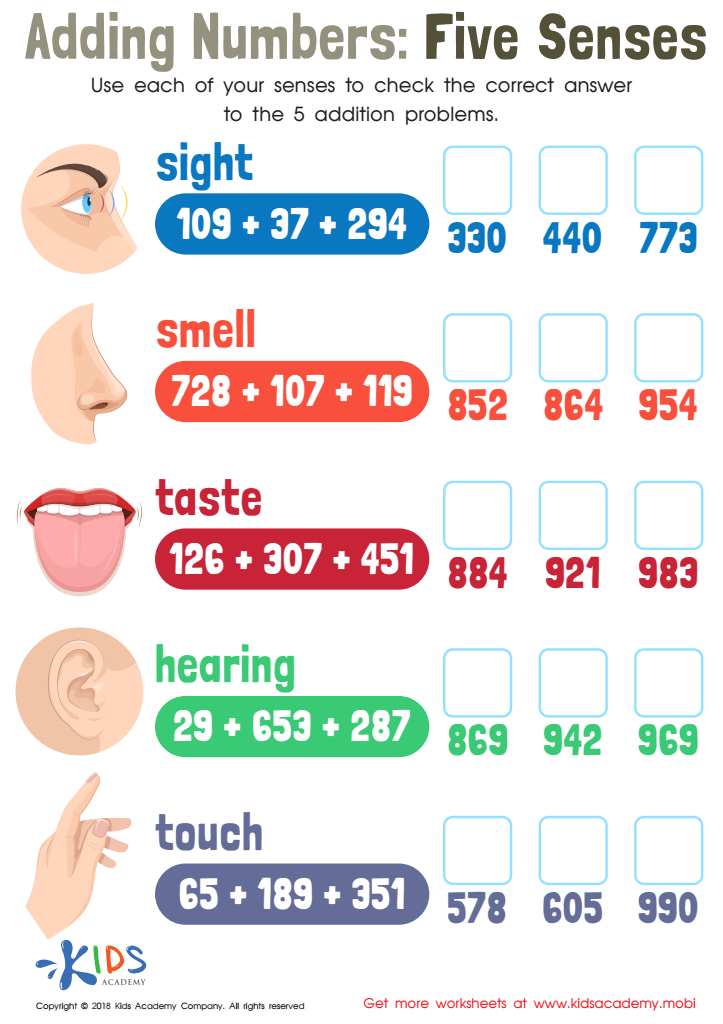
Adding Numbers: Five Senses Worksheet
 Assign to My Students
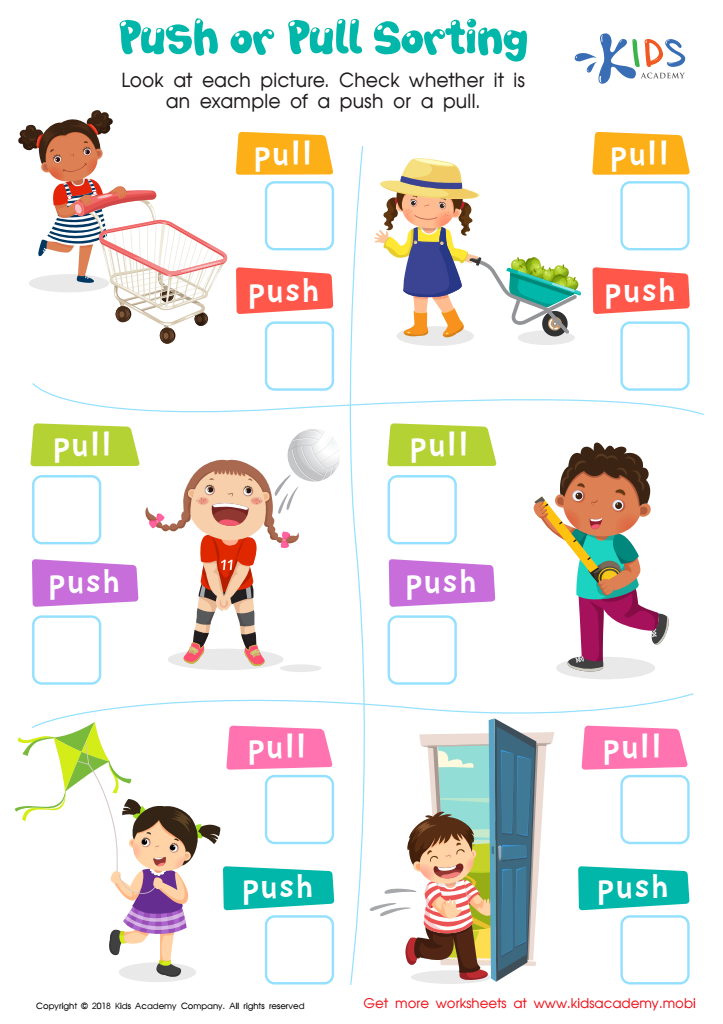
Push or Pull Sorting Worksheet





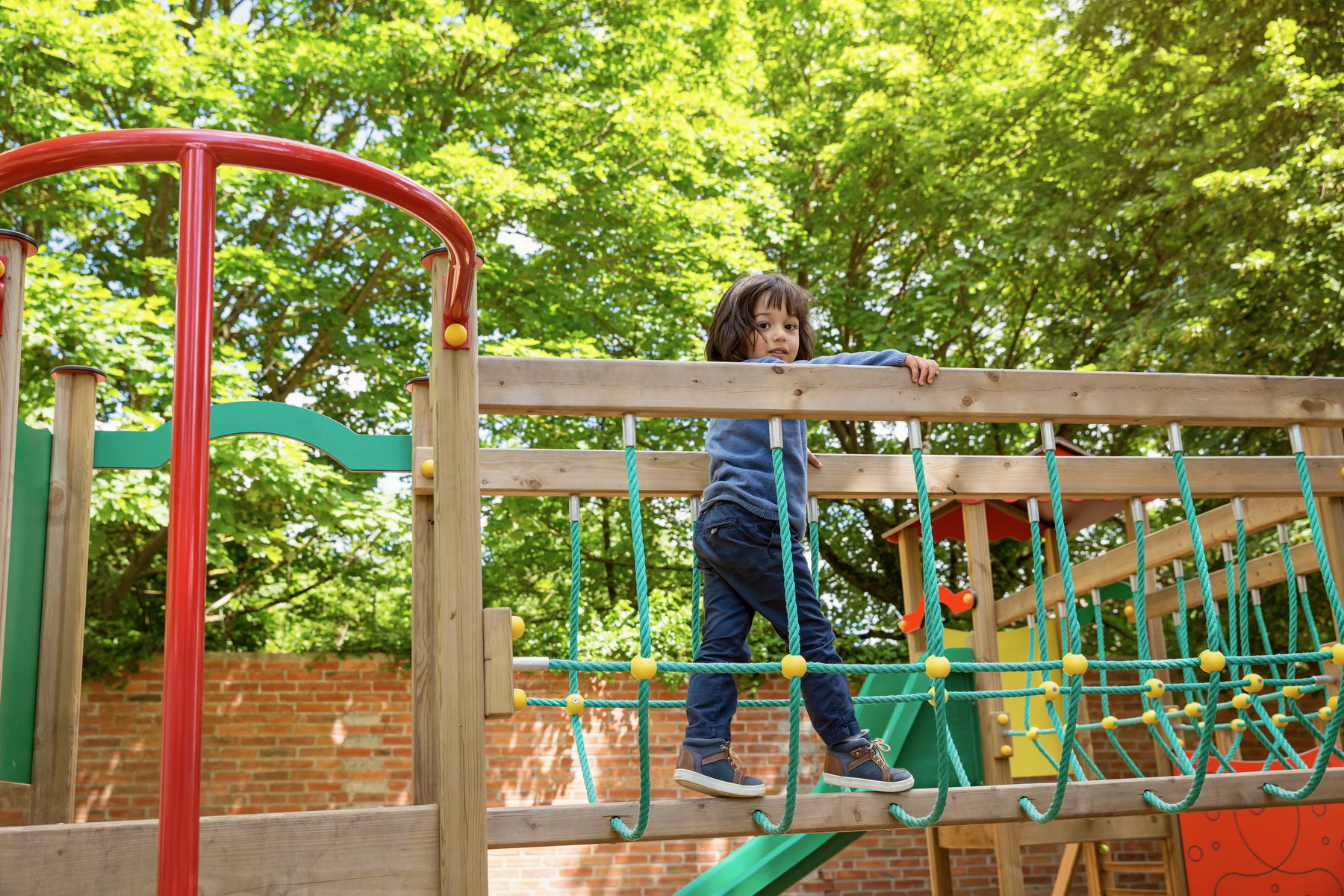
Observational skills are fundamental for young children, particularly ages 4-8, as they serve as the foundation for learning and cognitive development. Developing these skills enables children to notice details in their environment, enhance their critical thinking, and build a deeper understanding of the world around them. For parents and teachers, fostering observational abilities is crucial because it directly impacts a child’s proficiency in various subjects, including science, language arts, and social studies.
When children improve their observational skills, they become more engaged learners and develop curiosities about their surroundings, which ignites a love for exploration and discovery. This engagement positively influences their academic performance and social interactions. Additionally, strong observational skills can boost children’s emotional intelligence, enabling them to read social cues and understand others' feelings better, critical for establishing healthy relationships.
By integrating activities that promote observational skills—such as nature walks, interactive storytelling, or observational drawing—parents and teachers can cultivate a rich learning environment. This early investment not only supports academic achievement but also equips children with lifelong skills that foster creativity, adaptability, and problem-solving, essential for success in an increasingly complex world.








