Mental math skills Worksheets for Ages 4-8 - Page 2
27 filtered results
-
From - To
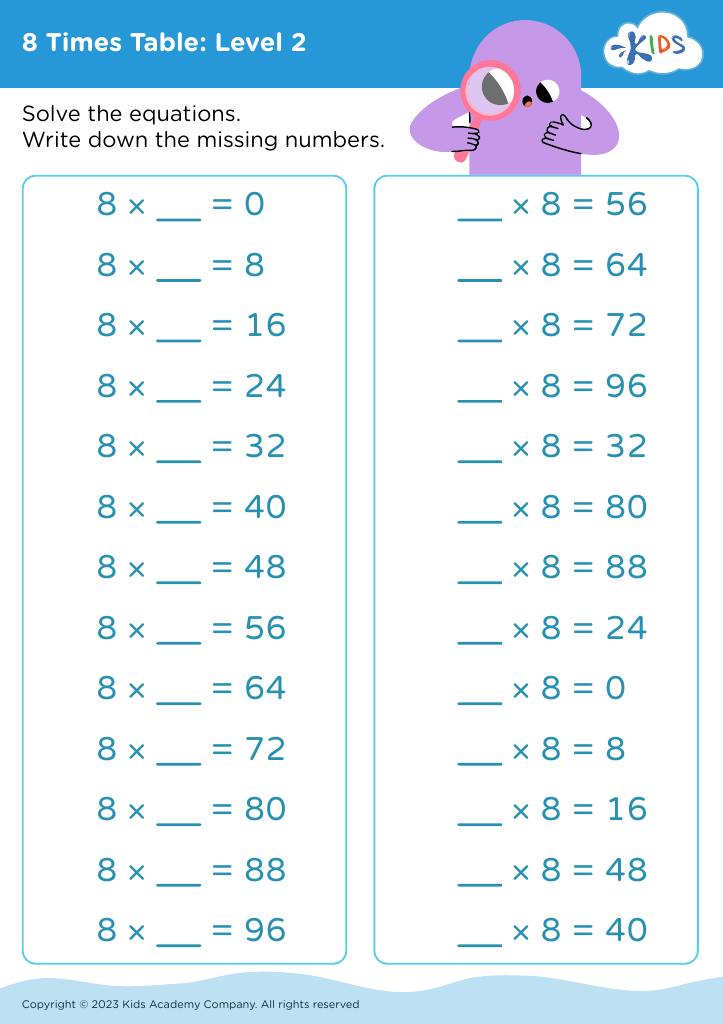
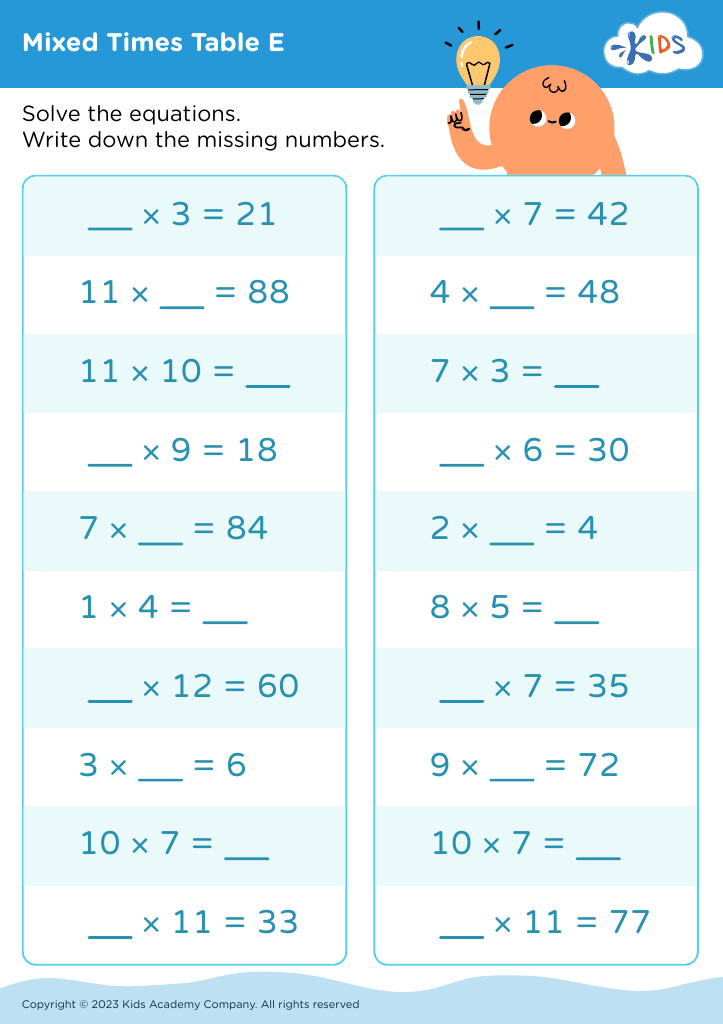







Parents and teachers should care about developing mental math skills in children aged 4-8 because these skills form the foundation for future academic success and everyday problem-solving abilities. Mental math enhances a child's number sense, allowing them to understand and manipulate numbers more fluidly. This understanding is crucial for tackling more complex mathematical concepts encountered in later grades.
Early practice in mental math sharpens memory and cognitive abilities, promoting quick thinking and boosting confidence. When children can perform calculations mentally, they develop a deeper grasp of arithmetic principles rather than relying on rote memorization or external tools like calculators. This early engagement with numbers aids in fostering a natural curiosity and positive attitude toward mathematics, reducing math anxiety in the long term.
Moreover, mental math isn't just vital in academic contexts; it has practical everyday applications. Simple tasks such as managing time, handling money, and making measurements in recipes all involve basic mental calculations. Therefore, confident mental math skills can make day-to-day activities easier and more intuitive for young children.
In summary, investing in the development of mental math skills equips children with critical cognitive tools, enhances their mathematical foundation, fosters problem-solving abilities, and helps them handle everyday tasks more effectively.








