Number counting Worksheets for Ages 4-8
4 filtered results
-
From - To
Welcome to our engaging collection of number counting worksheets designed specifically for children aged 4-8! These printable activities provide a fun and interactive way for young learners to develop foundational math skills. Our worksheets feature captivating visuals and varied counting exercises that make learning enjoyable. From counting objects to tracing numbers, children will enhance their number recognition and counting abilities, setting the stage for future math success. Perfect for both classroom and home use, these resources support early numeracy and make practice enjoyable. Explore our variety of counting worksheets today and help your child build confidence in their math skills!
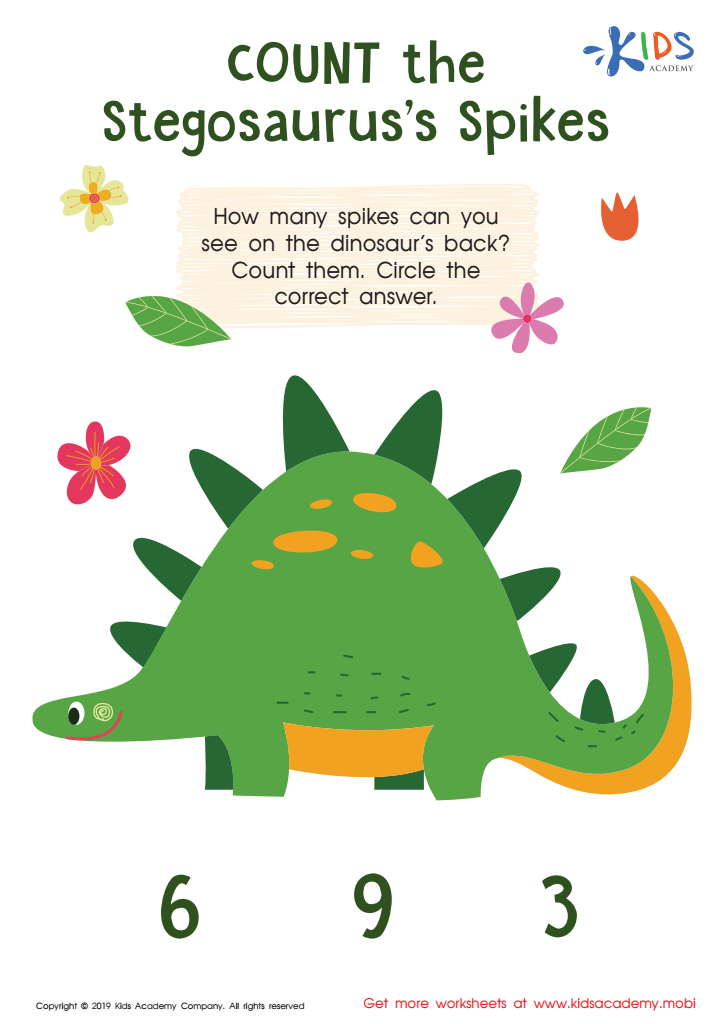
Count the Stegosaurus's Spikes Worksheet
 Assign to My Students
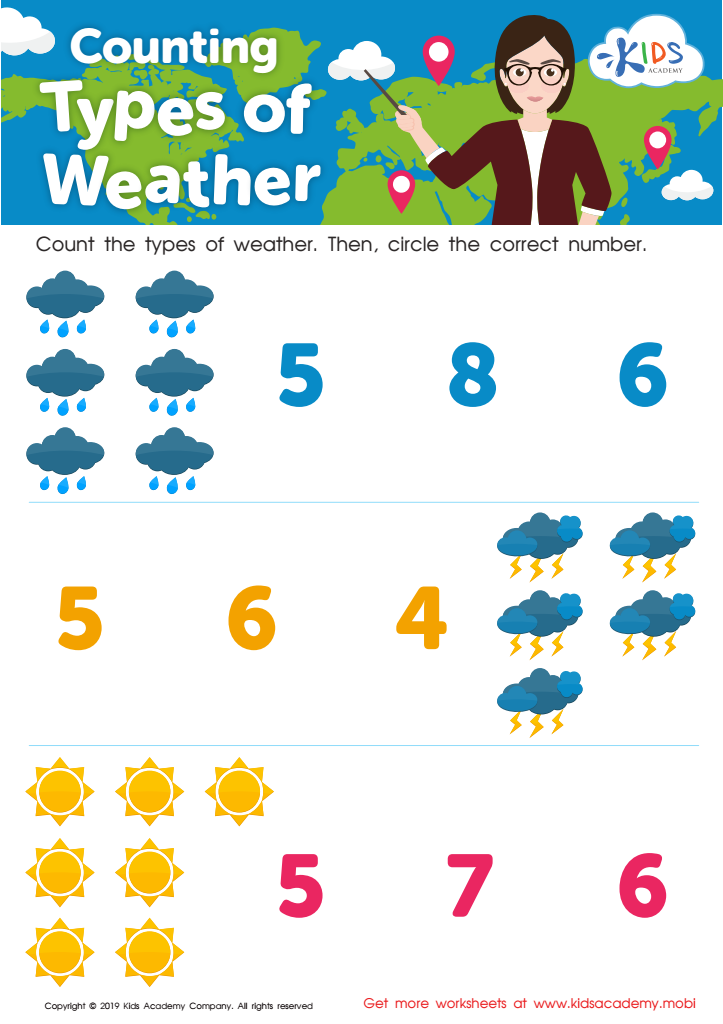
Counting Types of Weather Worksheet








Number counting is a fundamental skill essential for young children ages 4-8, as it lays the groundwork for their mathematical understanding and overall cognitive development. During these formative years, children learn to recognize, understand, and manipulate numbers, which is crucial for their academic success. Early exposure to counting fosters critical thinking, enhances problem-solving abilities, and promotes logical reasoning.
Parents and teachers should care about number counting because it offers multiple benefits that extend beyond mere mathematics. Counting aids in language development; as children verbalize numbers, they enhance vocabulary while establishing number concepts. Furthermore, through counting, children learn about patterns, relationships, and quantities, building a strong foundation for future mathematical concepts like addition, subtraction, and even basic fractions.
Early counting experiences can also promote confidence in children, making them more enthusiastic about learning. Engaging counting activities—such as counting objects, singing number songs, or playing number games—can create a fun, interactive environment that cultivates a love for mathematics. By emphasizing counting during these crucial years, parents and teachers enable children to develop a well-rounded skill set that not only prepares them for formal education but also equips them for everyday life and future challenges.








