
Numerical recognition Worksheets for Ages 4-8
3 filtered results
Difficulty Level
Grade
Age
-
From - To
Subject
Activity
Standards
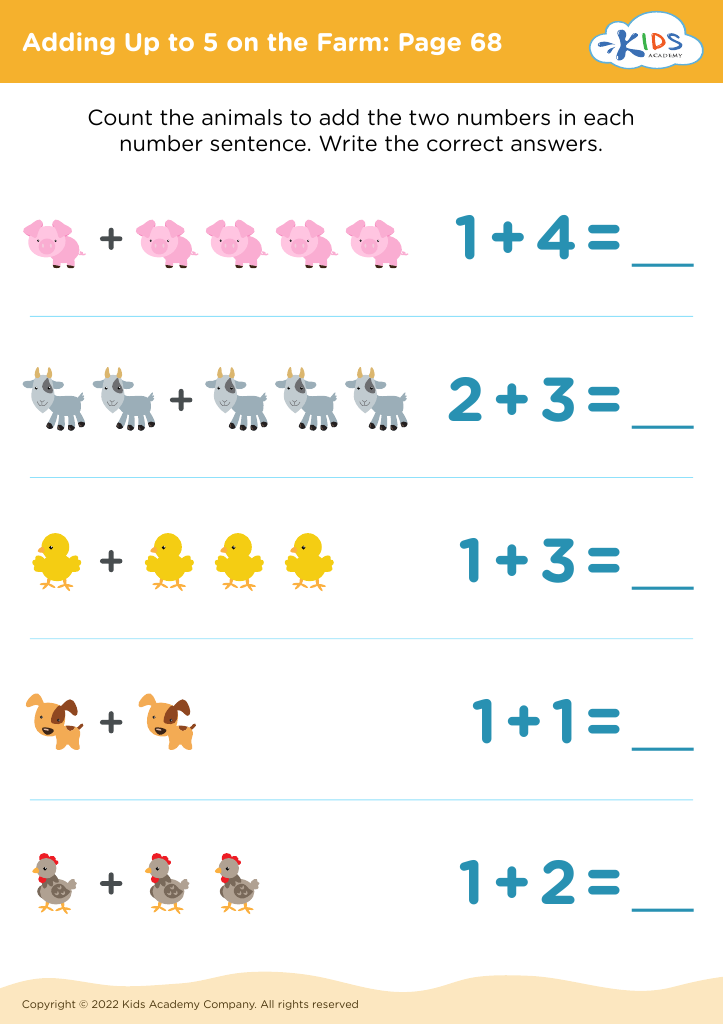
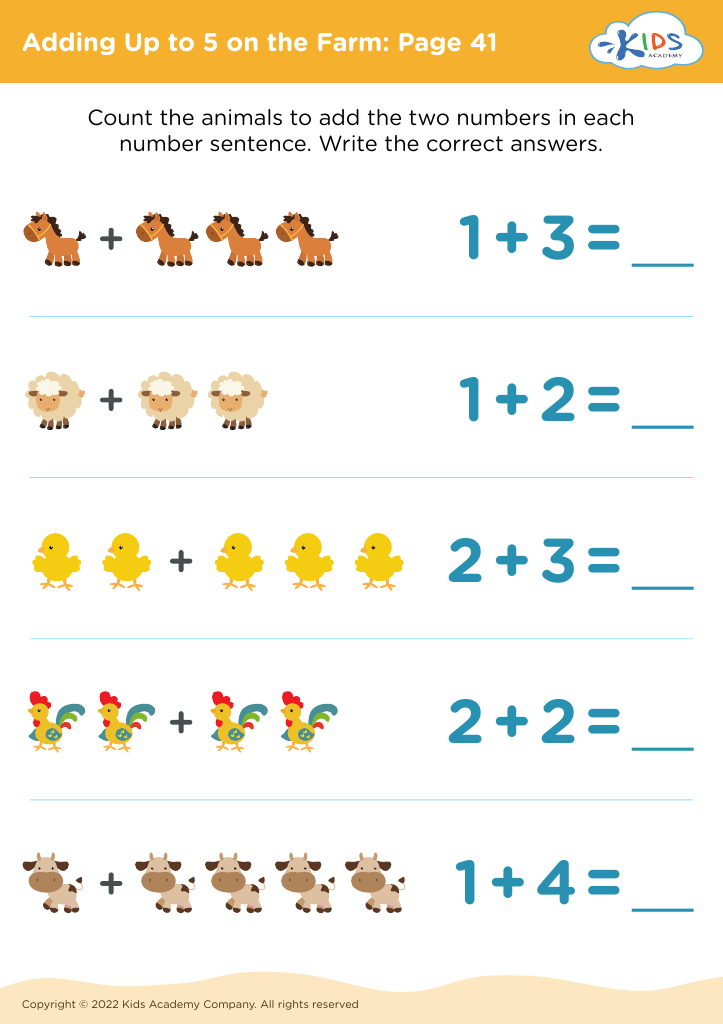
Discover our engaging Numerical Recognition Worksheets designed for children ages 4-8! These fun and interactive activities empower young learners to master their number recognition skills while fostering a love for math. With a variety of tasks, including coloring, tracing, and counting, each worksheet is crafted to make learning enjoyable and accessible. Our resources are perfect for home and school environments, enabling parents and educators to support children’s growth effectively. Watch as your child gains confidence by identifying numbers and developing essential math foundations. Explore our collection today and help your little ones embark on an exciting mathematical journey!
Favorites
With answer key
Interactive
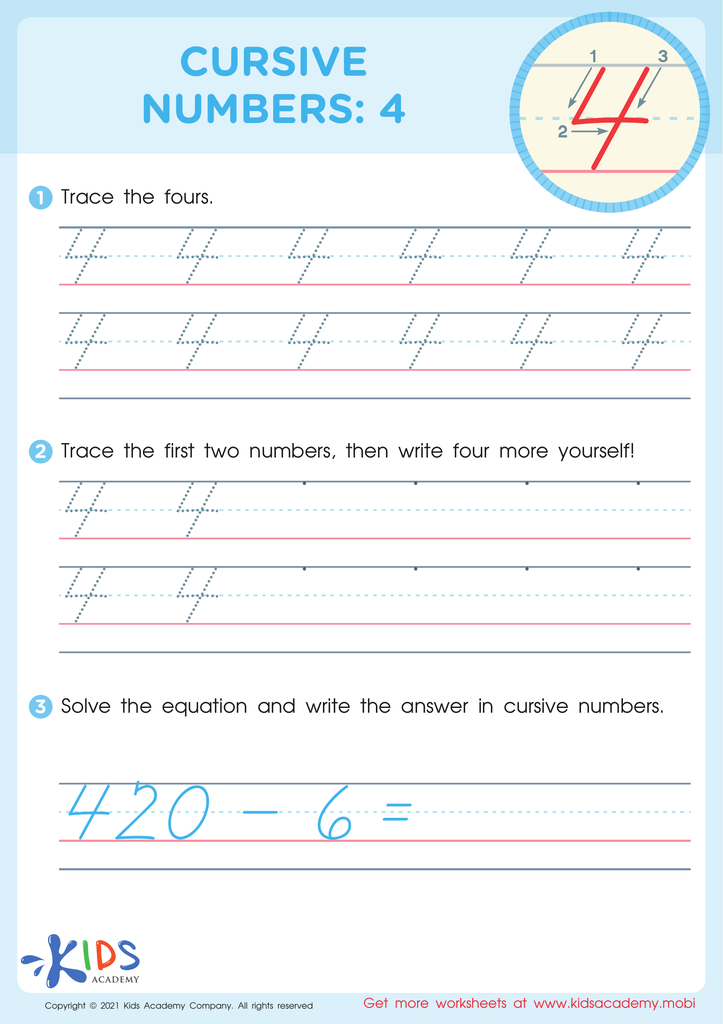
Cursive Numbers: 4 Worksheet
Math is challenging, and teaching cursive alongside it can be overwhelming. Make lessons enjoyable and your child will be more likely to stay engaged. Utilize worksheets to practice tracing the number 4 in cursive. With regular practice, your child can learn to write the number on their own.
Cursive Numbers: 4 Worksheet
Worksheet
Join Kids Academy for Free
Who is primarily going to use this learning content?








Numerical recognition is a fundamental skill that serves as the foundation for children’s mathematical understanding. By ages 4 to 8, children begin to develop critical cognitive abilities, and numerical recognition is essential for their overall mathematical competence. This skill allows young learners to identify numbers and understand their values, which is crucial for more complex mathematical operations such as addition, subtraction, and beyond.
Parents and teachers play a vital role in fostering this skill. Early familiarity with numbers helps children make sense of the world around them, whether it’s counting objects, recognizing numerical patterns, or understanding sequences in daily life. A strong grasp of numerical recognition also builds confidence, encouraging children to engage more actively in math-related activities.
Additionally, strong numerical recognition can positively impact a child’s performance in school, setting the stage for future academic success. Research indicates that early math skills correlate with later achievement not only in math but across subjects. By prioritizing numerical recognition, parents and teachers empower children to navigate everyday situations involving numbers, social interactions that include quantifying experiences, and help establish healthy attitudes towards mathematics as they grow. Hence, investing in this early skillset is crucial for their long-term educational journey.








