Observational skills Worksheets for Ages 4-8 - Page 2
30 filtered results
-
From - To
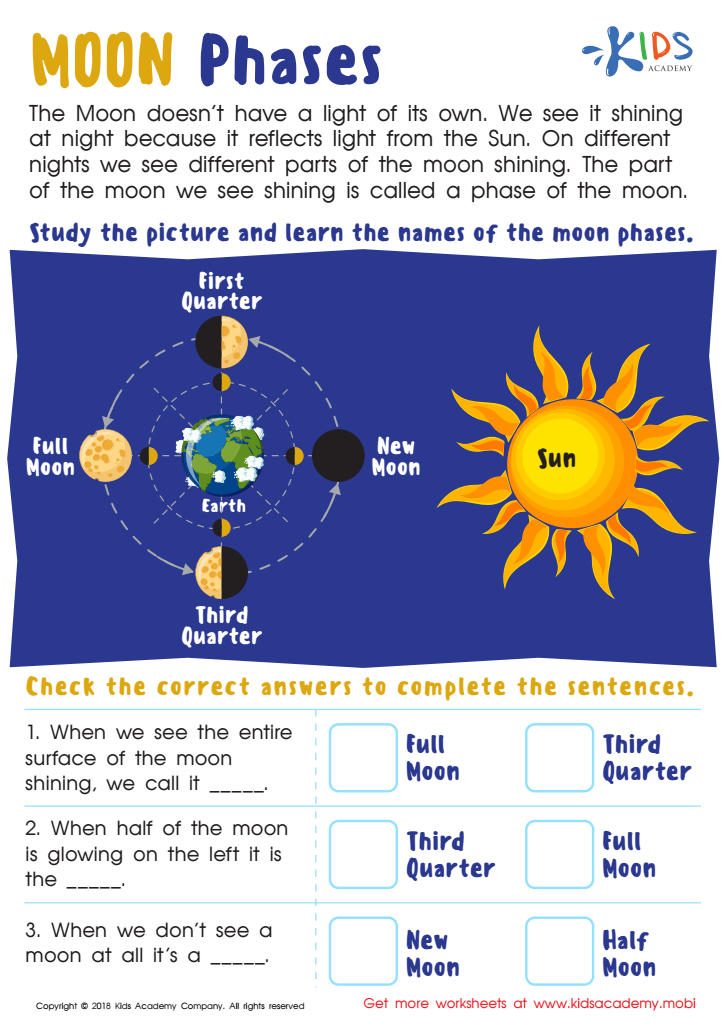
Moon Phases Worksheet
 Assign to My Students
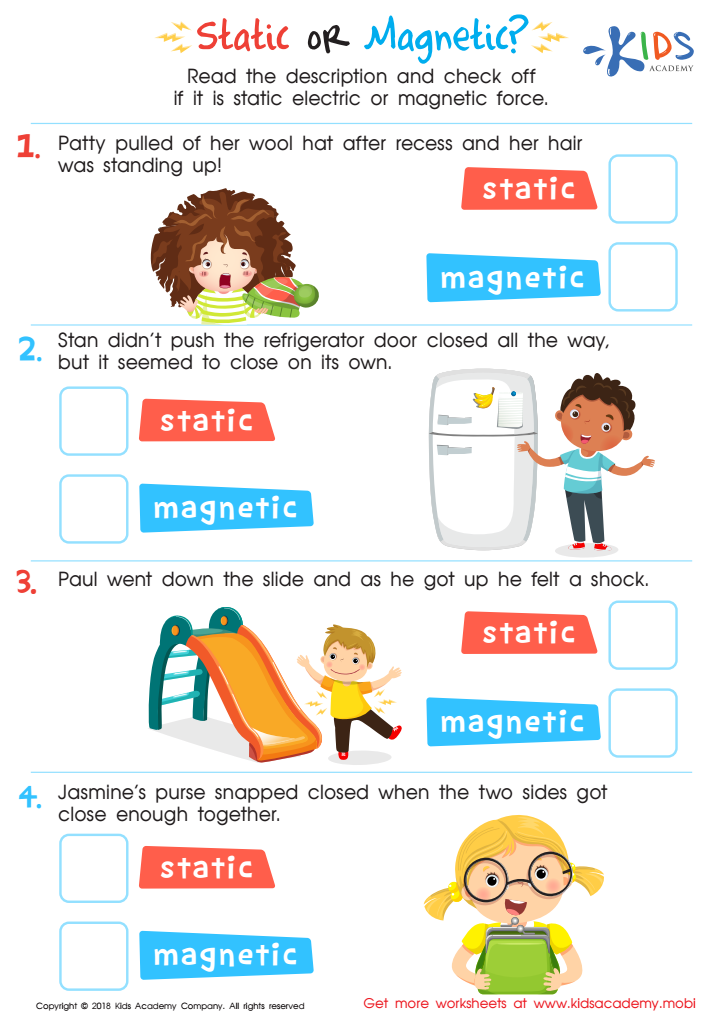
Static or Magnetic Printable Worksheet
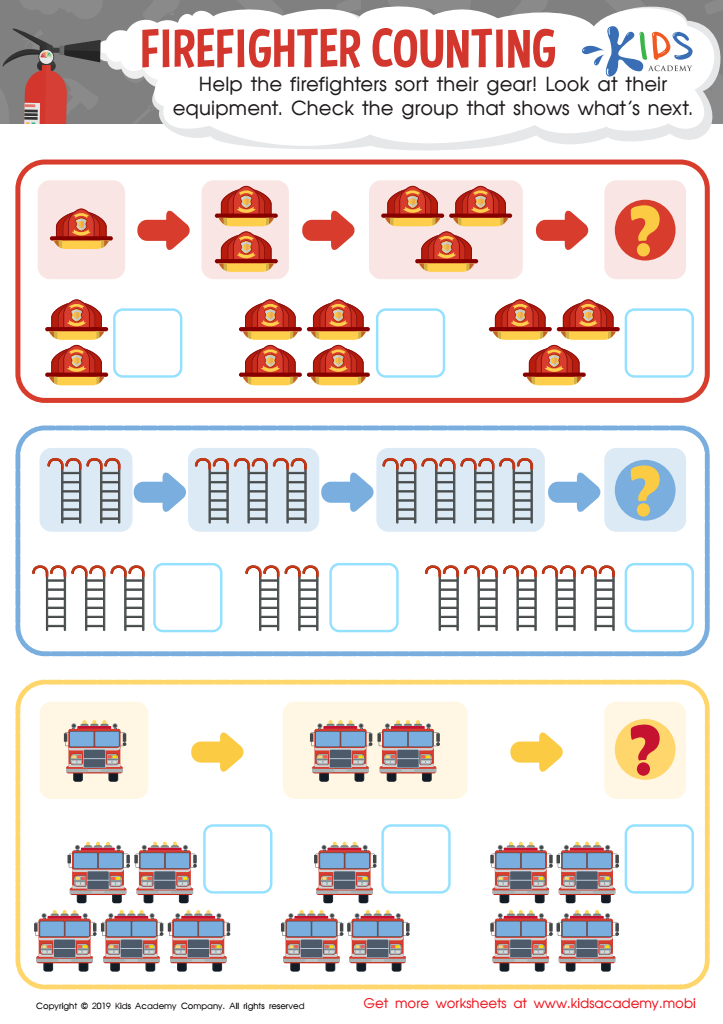
Firefighter Counting Worksheet
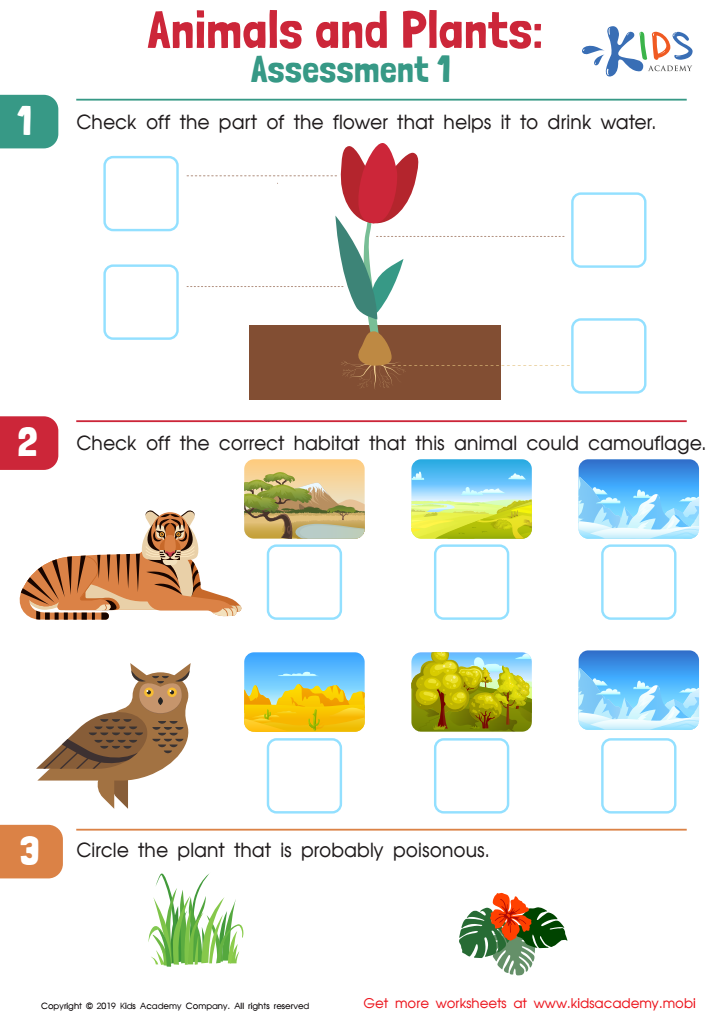
Animals and Plants: Assessment 1 Worksheet





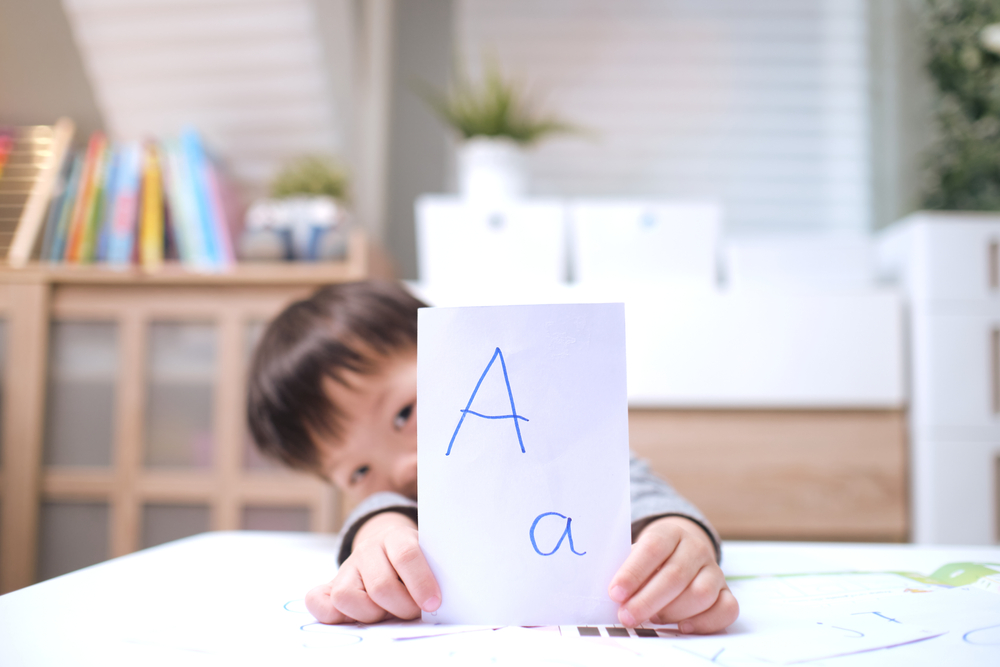
Observational skills are crucial for children ages 4-8 as they lay the groundwork for strong cognitive, social, and academic development. At this stage, children are naturally curious and eager to learn about the world around them. By honing their ability to observe, children can enhance their attention to detail, which is fundamental for reading, writing, and problem-solving skills. For instance, recognizing letters, patterns, and visual cues aids in literacy and numeracy.
Moreover, robust observational skills support emotional and social intelligence. Children who keenly observe their peers and environment are better equipped to understand social cues, empathy, and appropriate behavior in different contexts. This sensitivity to surroundings fosters effective communication and relationships.
From a cognitive perspective, observing teaches children to compare, contrast, and make connections, all of which are vital for critical thinking and the scientific method. For example, noticing how plants grow under different conditions stimulates inquiry and hypothesis formation.
Teachers and parents who encourage observation enrich a child’s holistic development. Engaging in activities like nature walks, interactive reading, or simple science experiments can significantly sharpen these skills. By nurturing a child's observational abilities, caregivers not only bolster their learning capacity but also inspire a lifelong curiosity and love for discovery.








