Plant identification Worksheets for Ages 4-8
5 filtered results
-
From - To
Discover our engaging Plant Identification Worksheets tailored for children ages 4-8. These educational tools are designed to make learning about different plants fun and interactive. Each worksheet is packed with vibrant images and easy-to-follow activities that help young learners recognize and name various plants. Our age-appropriate exercises support developing critical thinking and observation skills while fostering a love for nature. Perfectly suited for classroom use or at-home practice, these worksheets provide valuable hands-on experience in plant identification. Ignite your child's curiosity and start their botanical journey with our expertly-crafted resources. Explore now to give your little botanist a blossoming start!
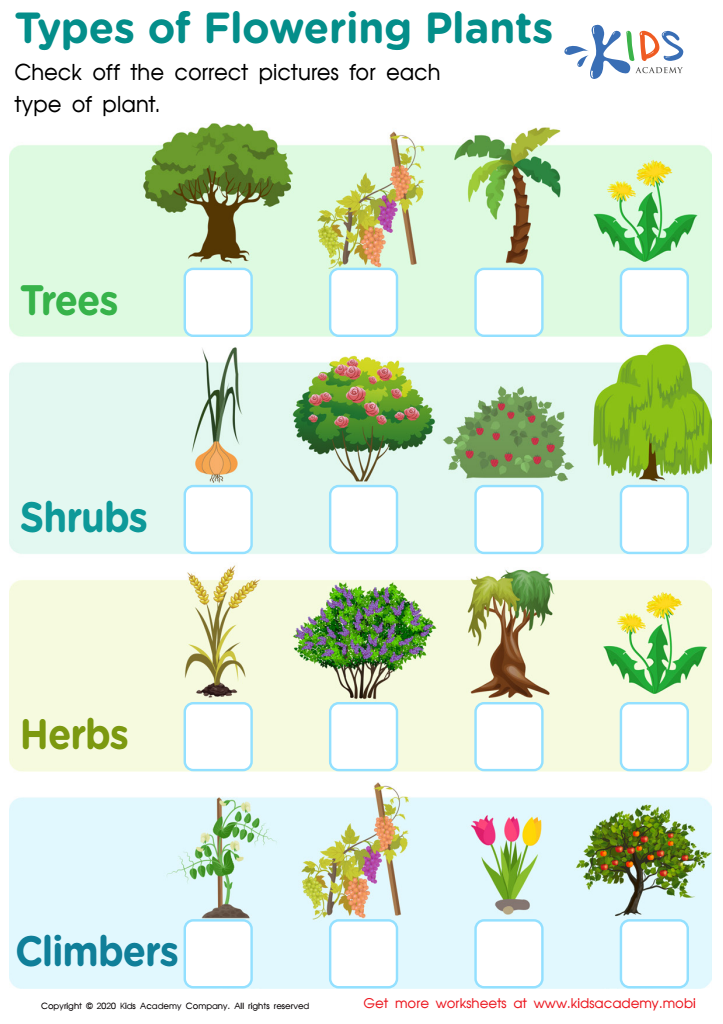
Types of Flowering Plants Worksheet
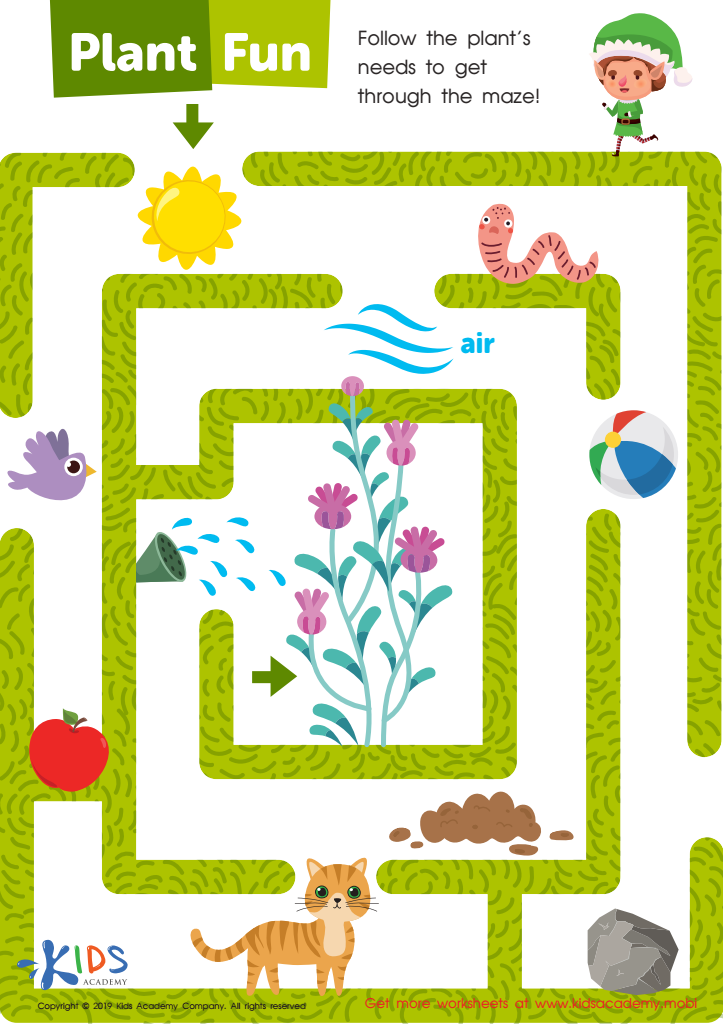
Plant Fun Worksheet
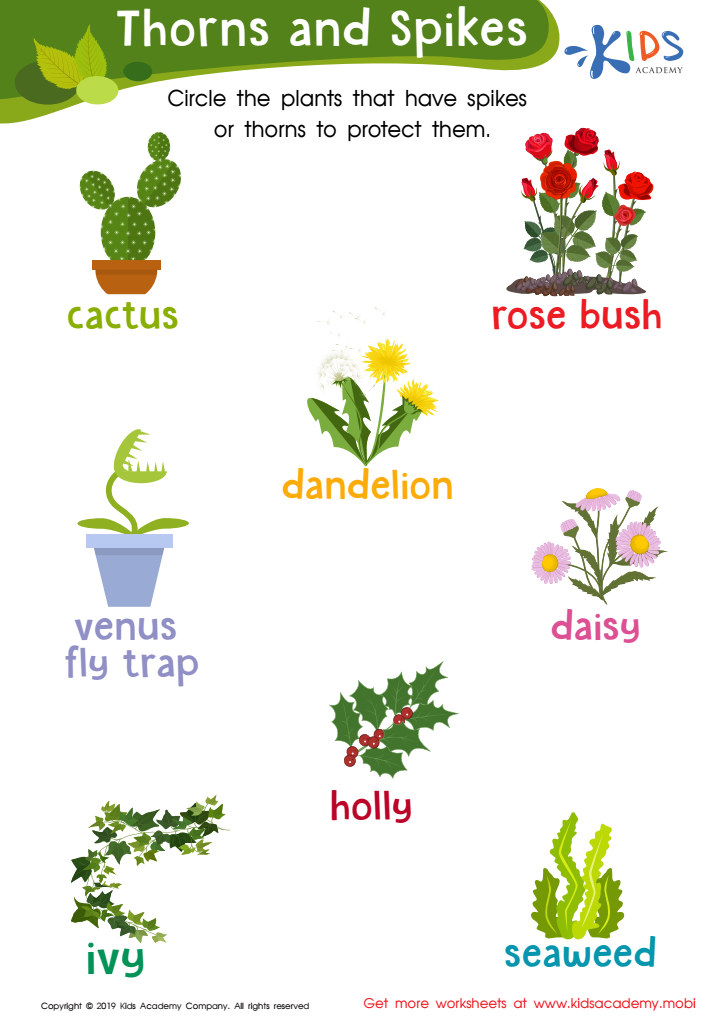
Thorns and Spikes Worksheet
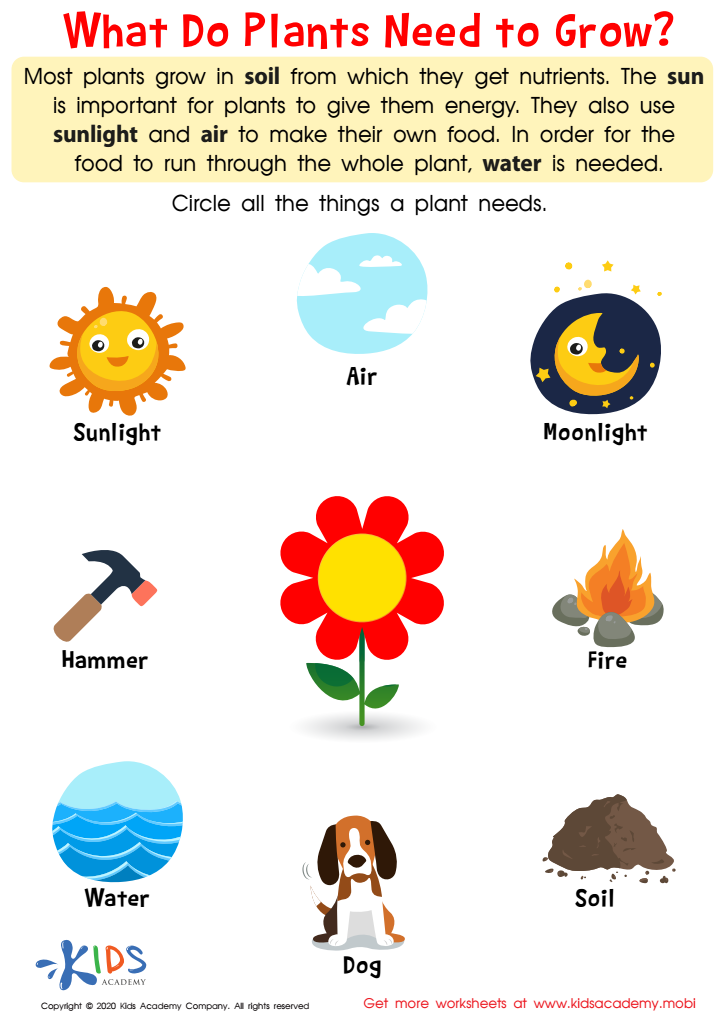
What Do Plants Need to Grow Worksheet
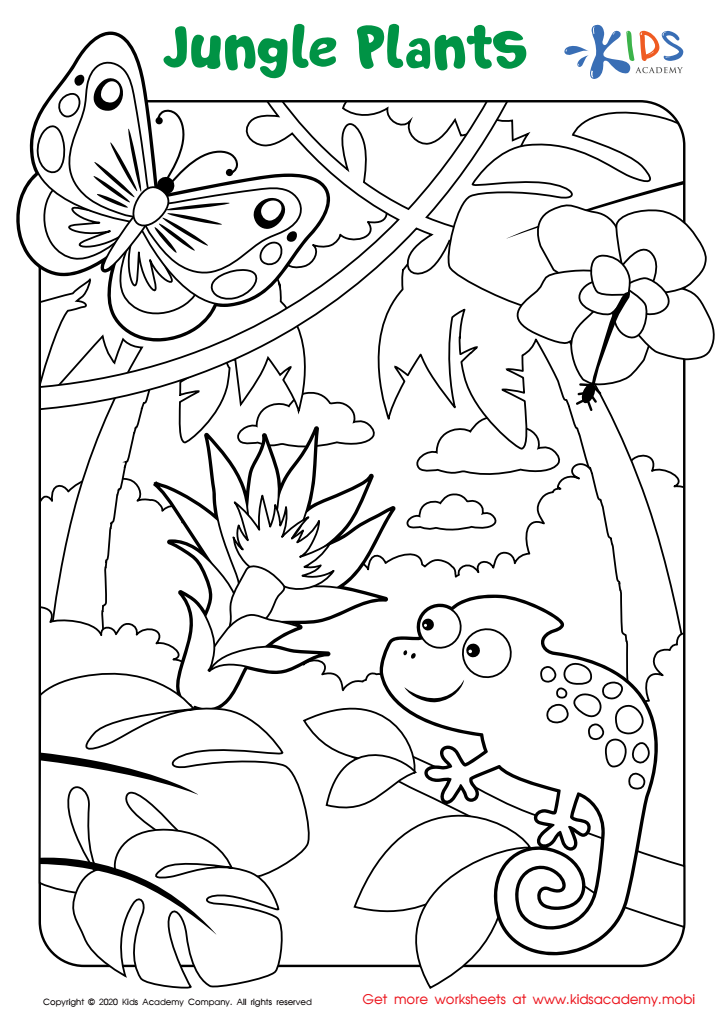
Jungle Plants Worksheet
 Assign to My Students








Plant identification for children aged 4 to 8 is more than a fun activity; it's a crucial learning experience that fosters connection with nature, encourages curiosity, and aids in cognitive development. By recognizing and naming various plants, young children develop observation skills and attention to detail. This practice engages their senses—sight, touch, and sometimes smell—allowing them to interact directly with the natural world.
Understanding plants also paves the way for early scientific thinking. Children learn to categorize, compare, and contrast different species, which are foundational skills for logical reasoning and critical thinking. When kids are introduced to concepts like photosynthesis, water cycles, and the importance of biodiversity at a young age, they become more environmentally conscious and appreciative of ecosystems.
Moreover, parents and teachers facilitate valuable outdoor experiences that promote physical activity and mental well-being. It steers children away from excessive screen time, encouraging healthier lifestyles. Hands-on experiences with plant life can foster empathy and responsibility, as children often feel a sense of stewardship over their immediate environment.
Ultimately, plant identification isn't just about knowing names; it's about nurturing a lifelong curiosity and respect for nature, laying the groundwork for informed, environmentally responsible individuals. Investing time and effort into this early education pays dividends in raising environmentally aware and intellectually curious children.








