Pronunciation practice Worksheets for Ages 4-8
3 filtered results
-
From - To
Welcome to our collection of Pronunciation Practice Worksheets tailored for children aged 4-8! Designed to foster early language skills, these engaging worksheets help young learners master sounds, improve articulation, and build confidence in speaking. Each activity features colorful illustrations and fun exercises that keep kids motivated. Our printable resources encourage practice at home or in the classroom, making learning enjoyable for both students and educators. Explore our diverse range of worksheets to support your child’s pronunciation journey and cultivate a love for language. Empower their communication skills today with our meticulously crafted practice materials!
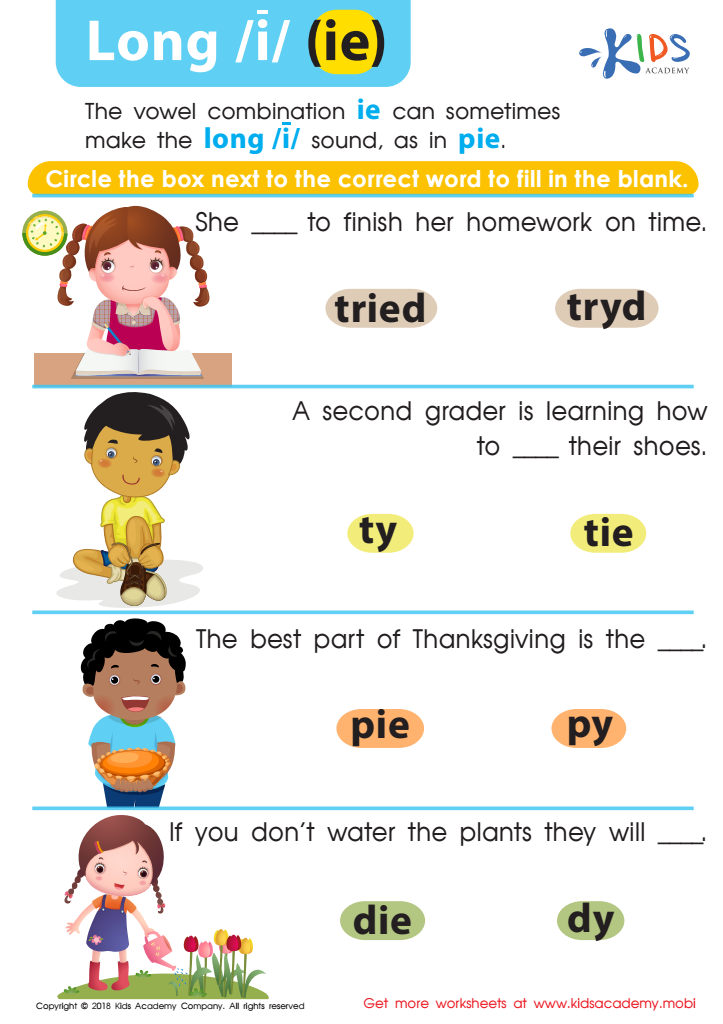
Reading: Long I and IE Worksheet
 Assign to My Students
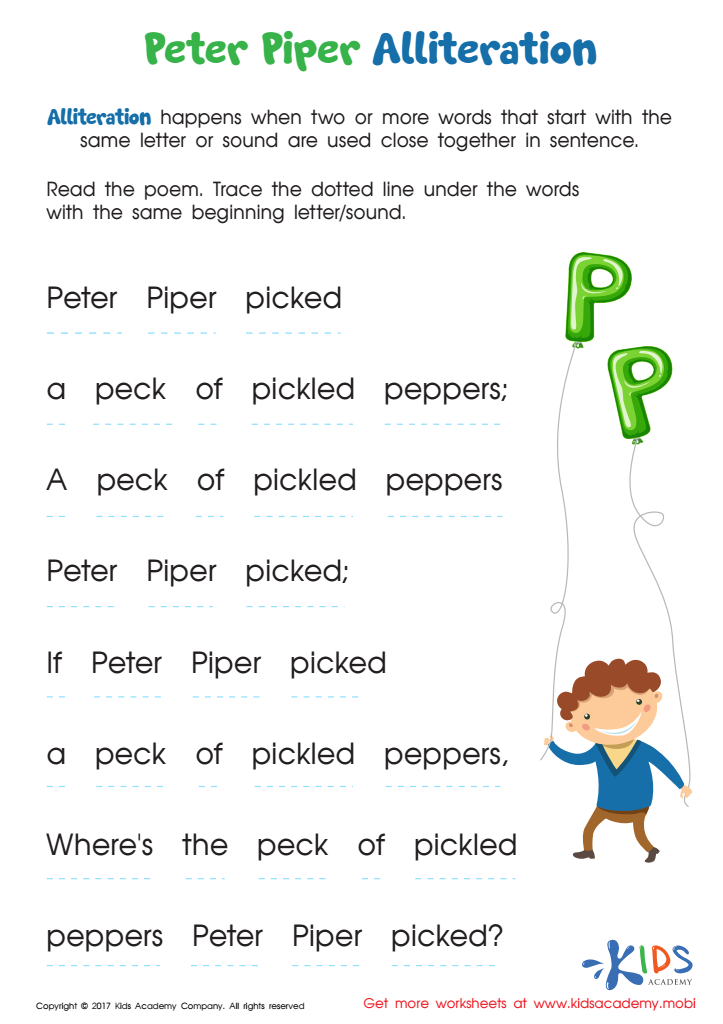
Peter Piper Alliteration Worksheet








Pronunciation practice is crucial for children aged 4-8 as it lays the foundation for effective communication and literacy skills. At this formative stage, children are developing their speaking and listening abilities, and clear pronunciation is essential in helping them express their thoughts and feelings accurately. When parents and teachers focus on pronunciation, it boosts children's confidence in speaking and encourages them to engage in conversations, which enhances their vocabulary and understanding.
Moreover, proper pronunciation is linked to reading skills. Children who learn to pronounce words correctly often find it easier to decode text and comprehend what they read. This crossover skill not only fosters a love for reading but also contributes to academic success across subjects.
Engaging in pronunciation practice through games, songs, and daily conversations makes learning enjoyable and interactive, helping children absorb language naturally. Additionally, early emphasis on pronunciation supports language development in multilingual environments, ensuring that children can navigate different linguistic contexts effectively.
By valuing pronunciation practice, parents and teachers play a vital role in nurturing articulate, confident, and literate children, setting them on a path to effective communication and lifelong learning.








