Punctuation usage Worksheets for Ages 4-8
3 filtered results
-
From - To
Discover our Punctuation Usage Worksheets tailored for children ages 4-8. These engaging and educational worksheets help young learners grasp the basics of punctuation, including periods, commas, question marks, and exclamation points. Each activity is designed to be kid-friendly, making the learning process both enjoyable and effective. With fun exercises like matching, fill-in-the-blank, and sentence correction, your child will build a strong foundation in writing and grammar. Boost your child's confidence in reading and writing while enhancing their understanding of punctuation rules. Perfect for use at home or in the classroom, these worksheets are an invaluable resource for early learning.
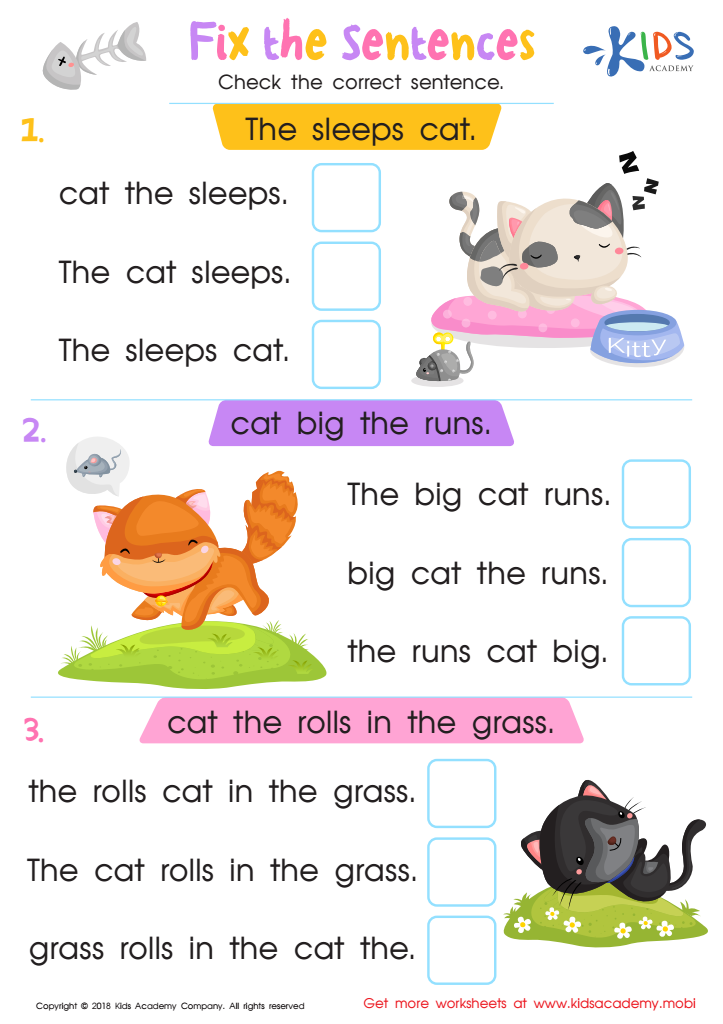
Fix the Sentences Worksheet
 Assign to My Students
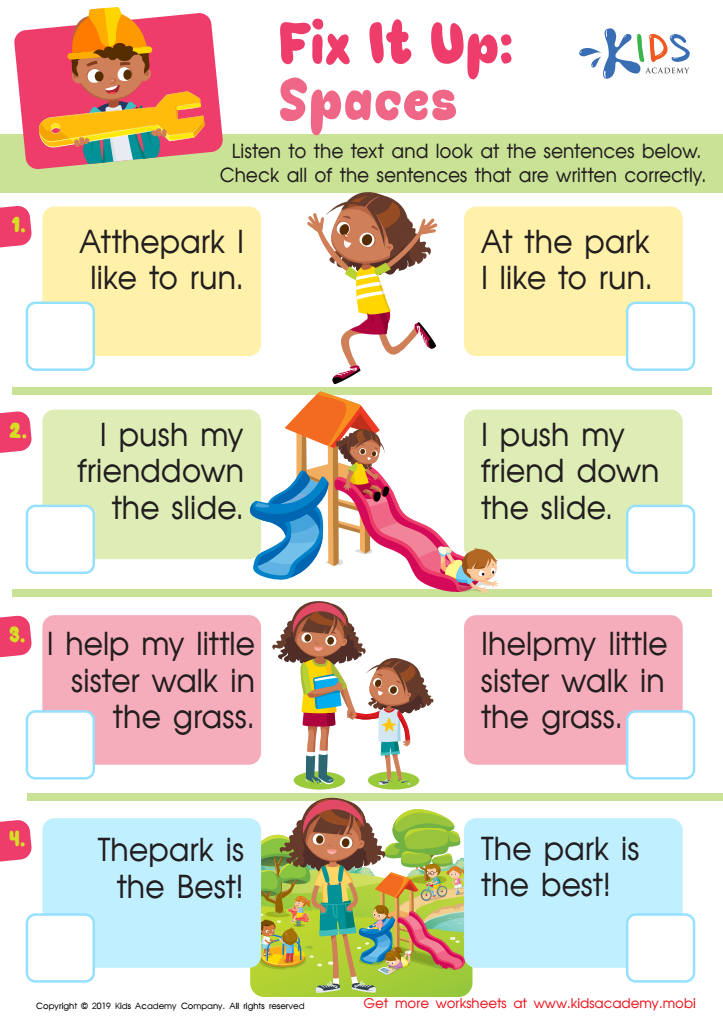
Fix Spaces Worksheet

How to Capitalize Worksheet



.jpg)




Parents and teachers should place a strong emphasis on punctuation usage for children ages 4-8 because it forms a critical foundation for literacy and communication skills. Early exposure to proper punctuation helps children understand how sentences are structured, ultimately enhancing their reading comprehension. Simple markers like periods, commas and question marks allow young readers to pause, understand nuances, and grasp the meaning and emotion behind a text. For instance, a question mark helps them recognize questions, prompting more thoughtful responses during reading exercises.
Moreover, early attention to punctuation lays the groundwork for effective writing skills. When children learn to use punctuation correctly, they convey their thoughts more clearly and cohesively, making it easier for others to understand and engage with their writing. This boosts their confidence and encourages more thorough expression of ideas.
Lastly, understanding punctuation fosters better listening and speaking skills. By seeing how punctuation influences the rhythm and tone of written language, children develop a keen sense for how to vary their vocal pitch and pauses during oral storytelling or conversation, enhancing their overall communication abilities. Thus, focusing on punctuation in the early educational stages equips children with essential, lifelong literacy and communication competencies.








