Rhyming skills development Worksheets for Ages 4-8
5 filtered results
-
From - To
Enhance your child's literacy journey with our Rhyming Skills Development Worksheets, designed for ages 4-8! Engaging and accessible, these worksheets provide fun activities that promote phonemic awareness, reading skills, and vocabulary development. Through delightful exercises like matching rhyming words, filling in blanks, and creative writing prompts, children will learn to identify and produce rhymes effectively. This essential skill not only fosters a love for language but also boosts their confidence in reading and writing. Perfect for at-home learning or classroom activities, our rhyming worksheets ensure young learners have a blast while mastering this foundational skill. Start their rhyming adventure today!
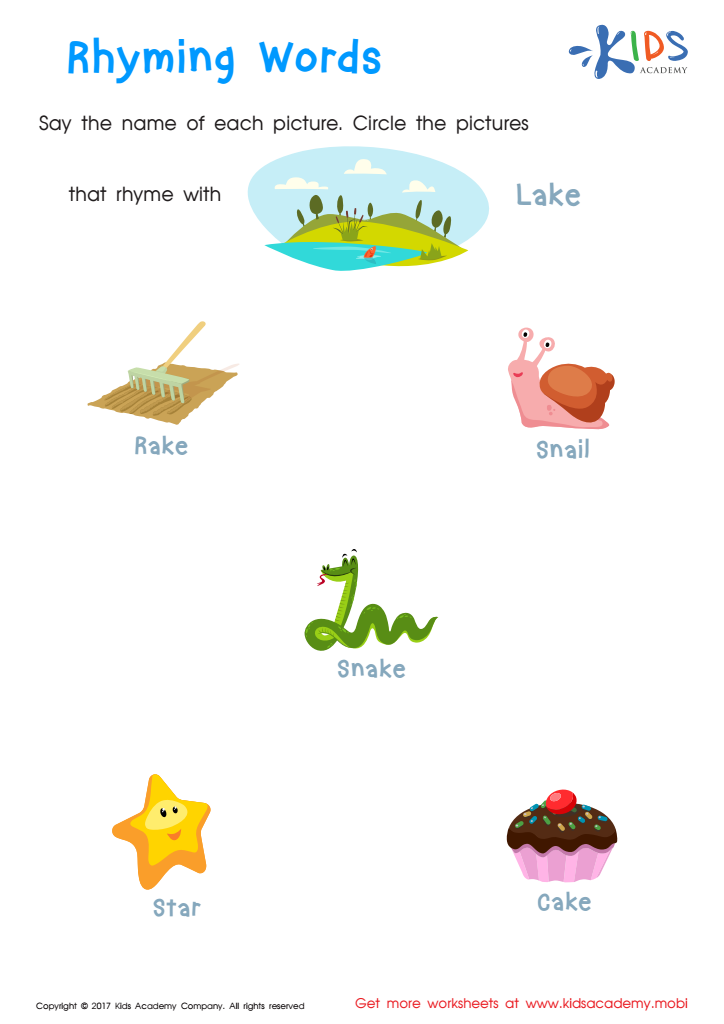
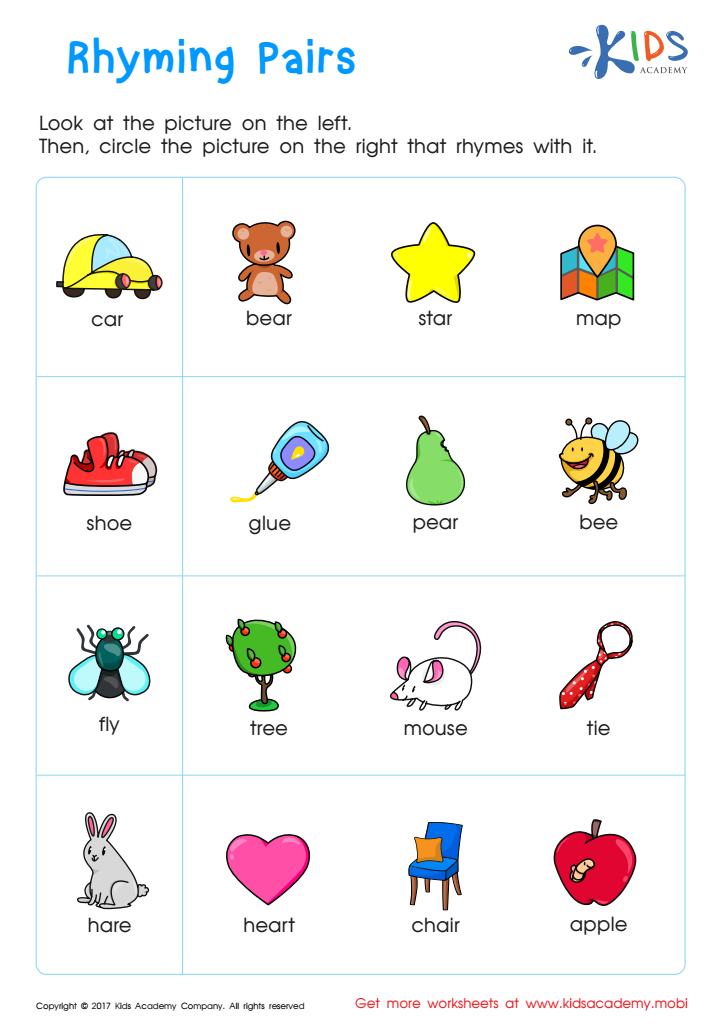
Rhyming Words Rhyming Worksheet
 Assign to My Students
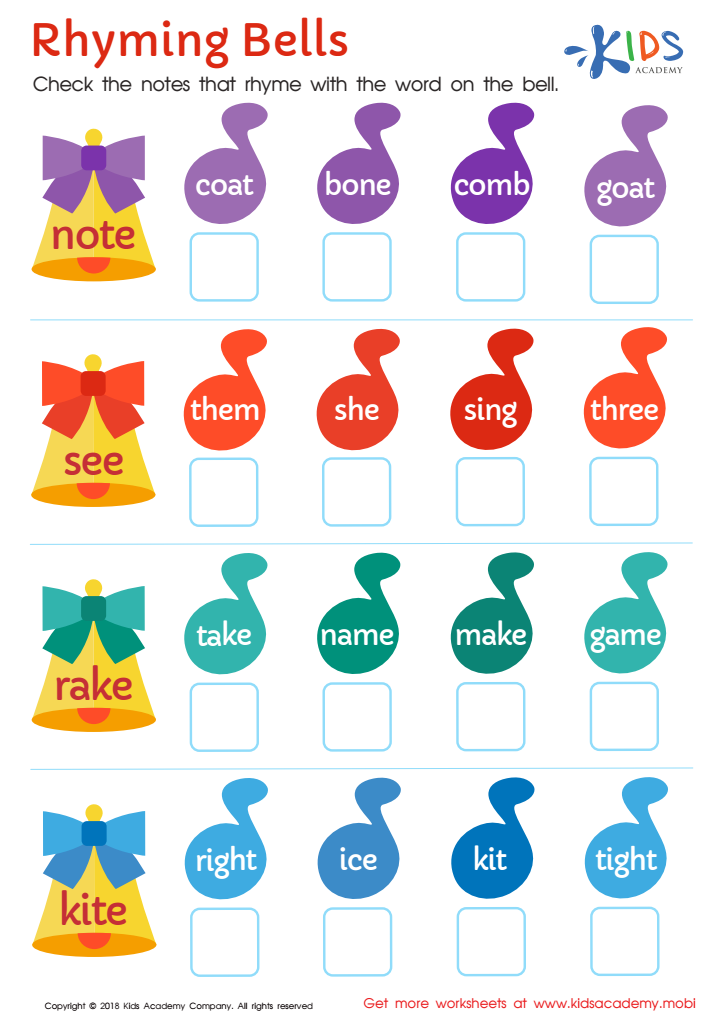
Rhyming Bells Worksheet
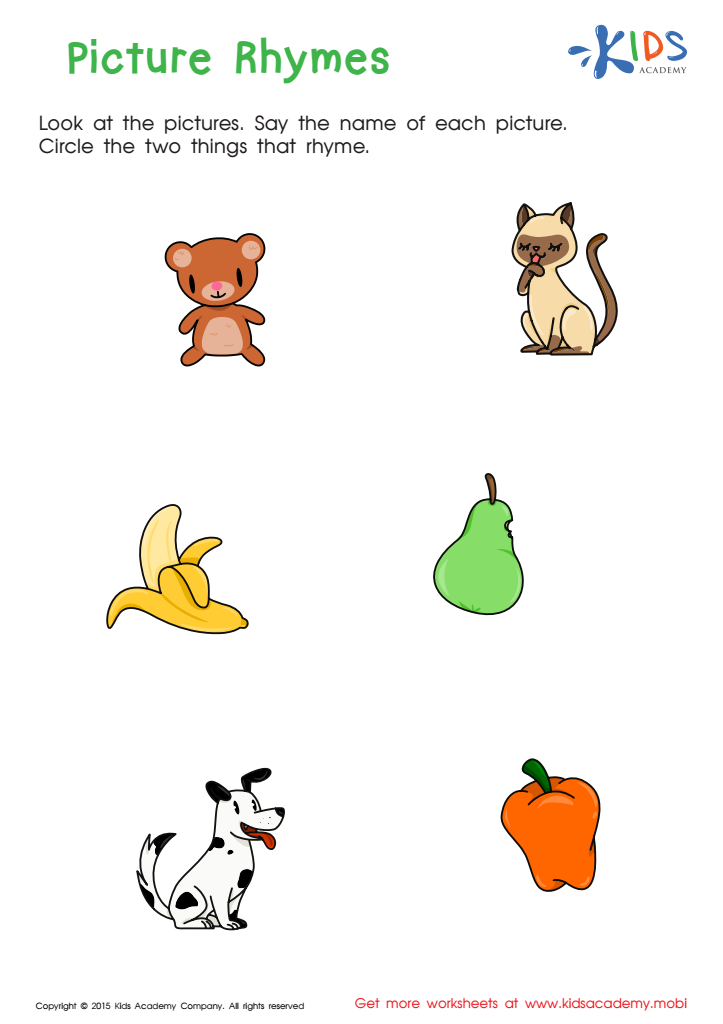
First Words: Picture Rhymes Worksheet
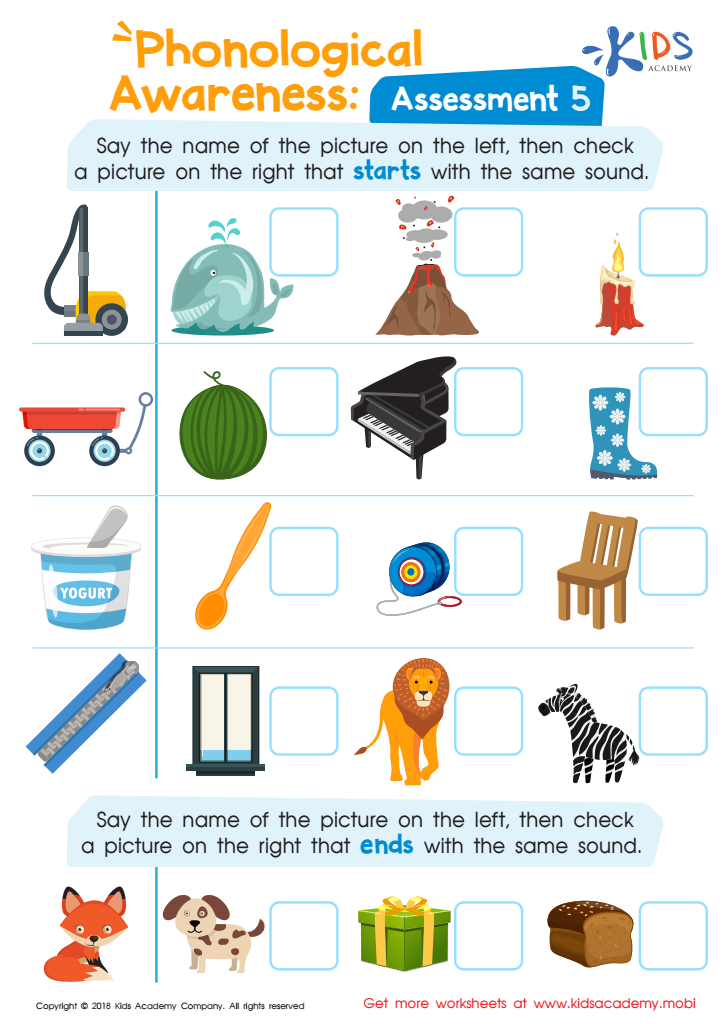
Phonological Awareness: Assessment 5 Worksheet






Rhyming skills development for children aged 4-8 is crucial for several reasons. Firstly, rhyming enhances phonemic awareness, which is essential for learning to read. When children recognize and produce rhyming words, they develop the ability to play with sounds in language, facilitating better comprehension when they encounter new words. This foundational skill helps bridge the gap between spoken and written language.
Moreover, engaging with rhymes fosters vocabulary expansion and linguistic creativity. Children learn to manipulate sounds and syllables, encouraging them to experiment with language, which can spark a love for reading and writing. Rhymes also play a significant role in memory retention, as the rhythmic and melodic nature of rhymes makes words easier to remember.
In addition, rhyming activities often occur in group settings, such as during storytime or interactive games, promoting social skills and collaboration. This engaged learning cultivates a positive environment, making literacy activities enjoyable. Furthermore, understanding rhymes supports later literacy skills—like spelling and decoding—amplifying a child's overall academic trajectory. For parents and teachers alike, nurturing rhyming skills is not just about sound; it's an essential stepping stone toward a child’s linguistic development and confidence in language arts.








