
Times table reinforcement Worksheets for Ages 4-8
4 filtered results
Difficulty Level
Grade
Age
-
From - To
Subject
Activity
Standards
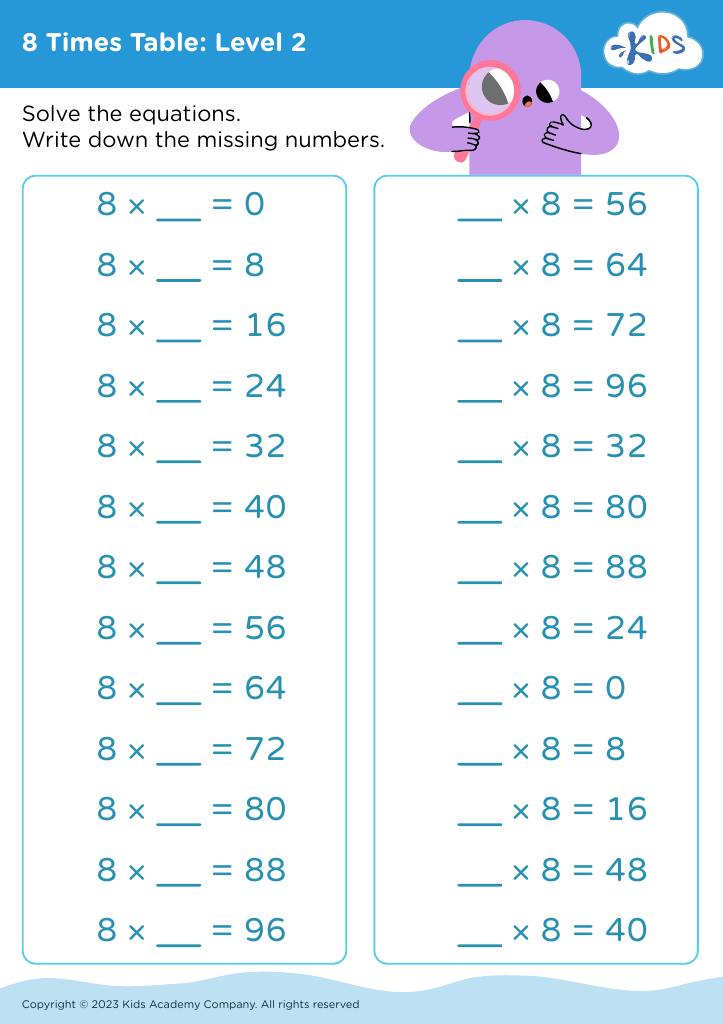
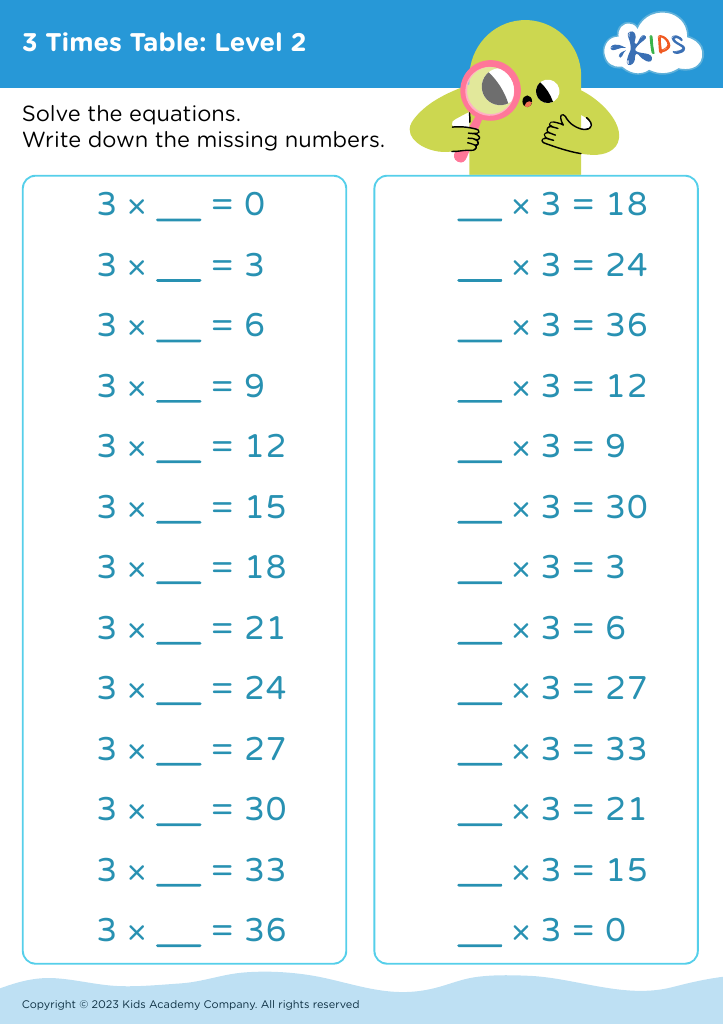
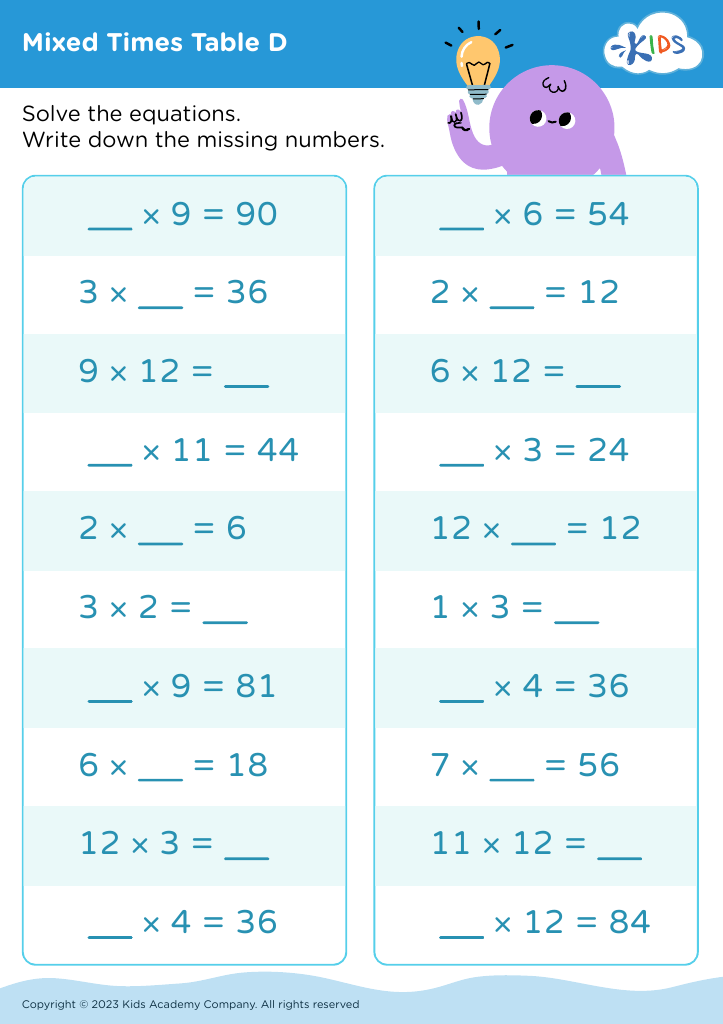
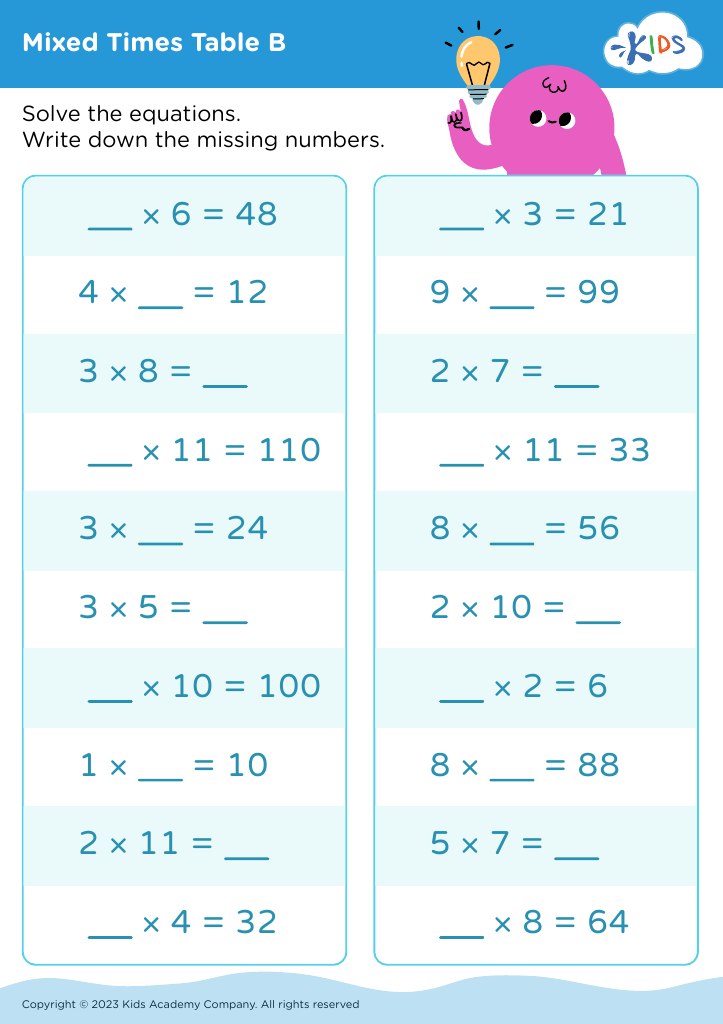
Enhance your child's math skills with our "Times Table Reinforcement Worksheets" designed specifically for ages 4-8. These engaging worksheets offer a fun and interactive way for young learners to master multiplication concepts while building their confidence. Our resources include a variety of activities that cater to different learning styles, ensuring children can grasp the essentials of times tables through visuals, puzzles, and games. Each worksheet is crafted to be both educational and enjoyable, making math practice an exciting adventure. Perfect for home or classroom use, these materials will set a strong foundation for your child's future math success!
Favorites
With answer key
Interactive
Join Kids Academy for Free
Who is primarily going to use this learning content?







.jpg)
Reinforcing times tables for children aged 4-8 is crucial for several reasons. First and foremost, a strong foundation in multiplication enhances overall mathematical understanding, setting the stage for more advanced concepts. During these formative years, children develop essential cognitive skills, and mastering times tables helps them boost their problem-solving abilities and confidence.
Additionally, early exposure to multiplication promotes number sense, allowing children to see relationships between numbers. This reinforcement aids in recognizing patterns, making calculations more intuitive. It becomes a building block for various academic subjects beyond math, as many areas, including science and finance, rely upon multiplication skills.
Integrating fun and engaging methods for reinforcement—like games and songs—encourages a positive attitude toward mathematics and reduces anxiety often associated with this subject. Active participation from parents and teachers fosters a supportive learning environment where children feel motivated to practice and excel.
Finally, trends show that strong math skills correlate with better academic performance later on, making multiplication mastery a vital investment in a child's education and future. Cultivating these skills in young learners equips them with the tools they need not just for classroom success but for navigating daily life challenges effectively.








