Understanding base ten Worksheets for Ages 4-8
3 filtered results
-
From - To
Discover the engaging "Understanding Base Ten Worksheets" designed specifically for children ages 4-8. These worksheets provide a fun and interactive way for young learners to grasp essential math concepts, such as place value and grouping. Through colorful visuals and playful activities, children can strengthen their understanding of the base ten system, laying a solid foundation for future math skills. Whether in the classroom or at home, these resources make it easy to foster a love for mathematics while boosting confidence. Explore our collection to support your child’s mathematical journey today! Perfect for parents and educators alike.
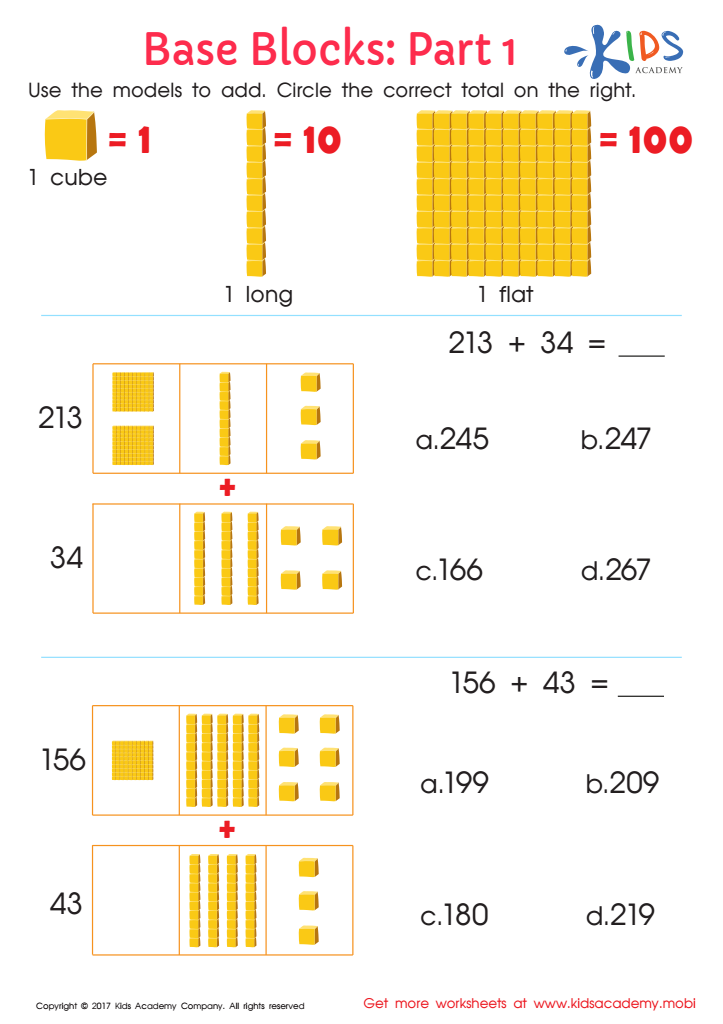
Base Ten Blocks Worksheet: Part 1
 Assign to My Students
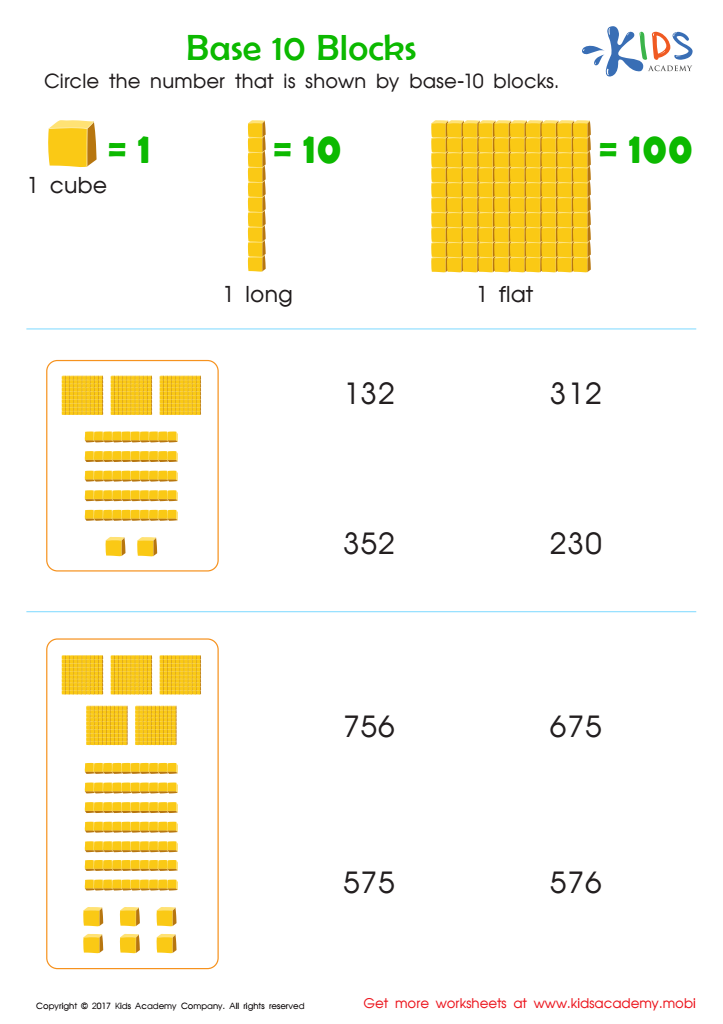
Base Ten Blocks Worksheet
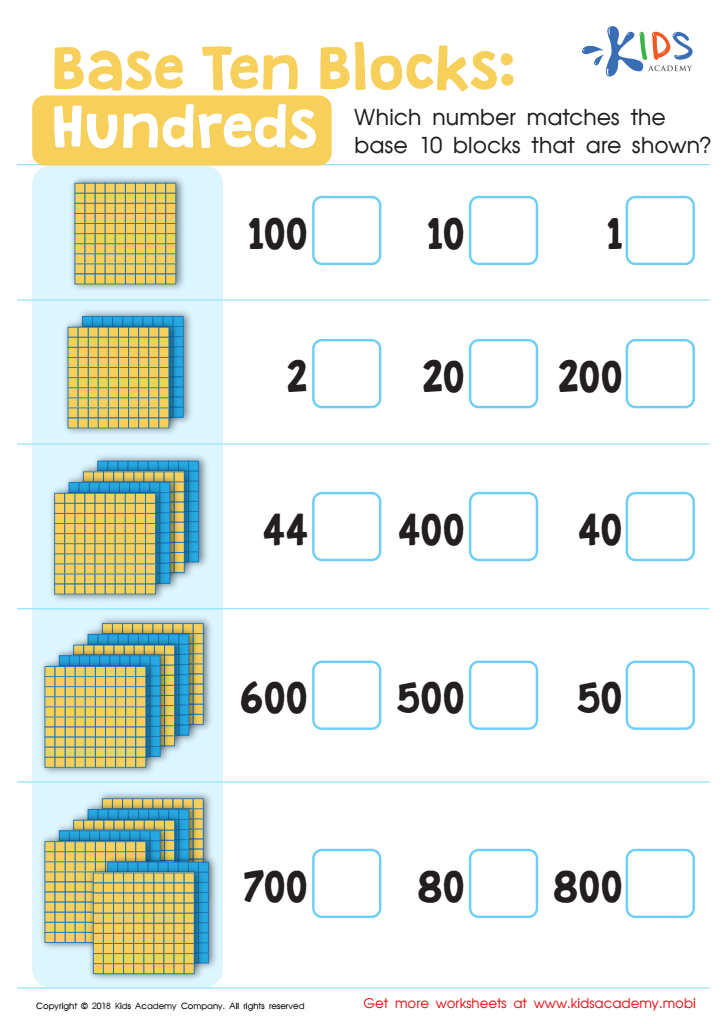
Base Ten Blocks: Hundreds Worksheet








Understanding the base ten system is crucial for children ages 4-8 as it forms the foundation for all future mathematics learning. At this developmental stage, children are transitioning from concrete notions of numbers to more abstract concepts. Familiarity with the base ten system helps children understand counting, addition, subtraction, and even the beginnings of multiplication.
When children grasp the concept of grouping numbers into tens and ones, they can more easily comprehend larger numbers and perform calculations more efficiently. This foundational understanding promotes number sense and makes it easier for them to understand more complicated math concepts in later grades, such as place value and multi-digit arithmetic.
Moreover, a strong grasp of the base ten system enhances problem-solving abilities, fosters critical thinking skills, and increases confidence in math—a subject many struggle with in school. For parents and teachers, emphasizing base ten not only aids direct math skills but also supports overall cognitive development, encouraging logical reasoning and analytical skills. Furthermore, well-prepared students are more likely to engage with and enjoy math, helping to foster a lifelong positive relationship with the subject. In essence, focusing on base ten strengthens overall learning and equips children for ongoing academic success.








