
Understanding laws Worksheets for Ages 4-8
4 filtered results
Difficulty Level
Grade
Age
-
From - To
Subject
Activity
Standards
Our "Understanding Laws" worksheets for ages 4-8 offer a fun and engaging way to introduce young learners to the basics of rules and regulations! Designed to develop critical thinking and social awareness, these worksheets cover topics such as community guidelines, fairness, and the importance of following rules. Through age-appropriate activities, children learn why laws exist and how they help maintain order. These worksheets complement early education, encouraging respectful behavior and responsible citizenship while laying a foundation for future learning. Ideal for both classroom and home settings, they make learning about laws accessible and enjoyable for youngsters.
Favorites
With answer key
Interactive
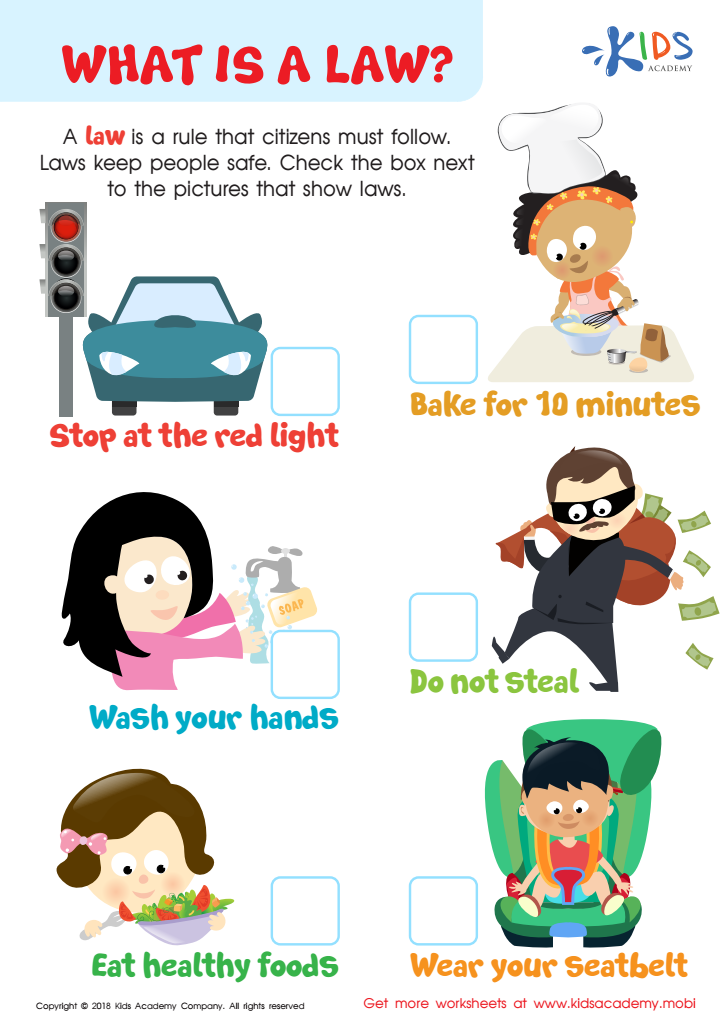
What is a Law? Worksheet
Encourage your students to think about the laws they abide by - at home, school, and the playground. Explain the importance of laws in keeping us safe, then ask them to check the box next to the pictures depicting different laws in a worksheet.
 Assign to My Students
What is a Law? Worksheet
Worksheet
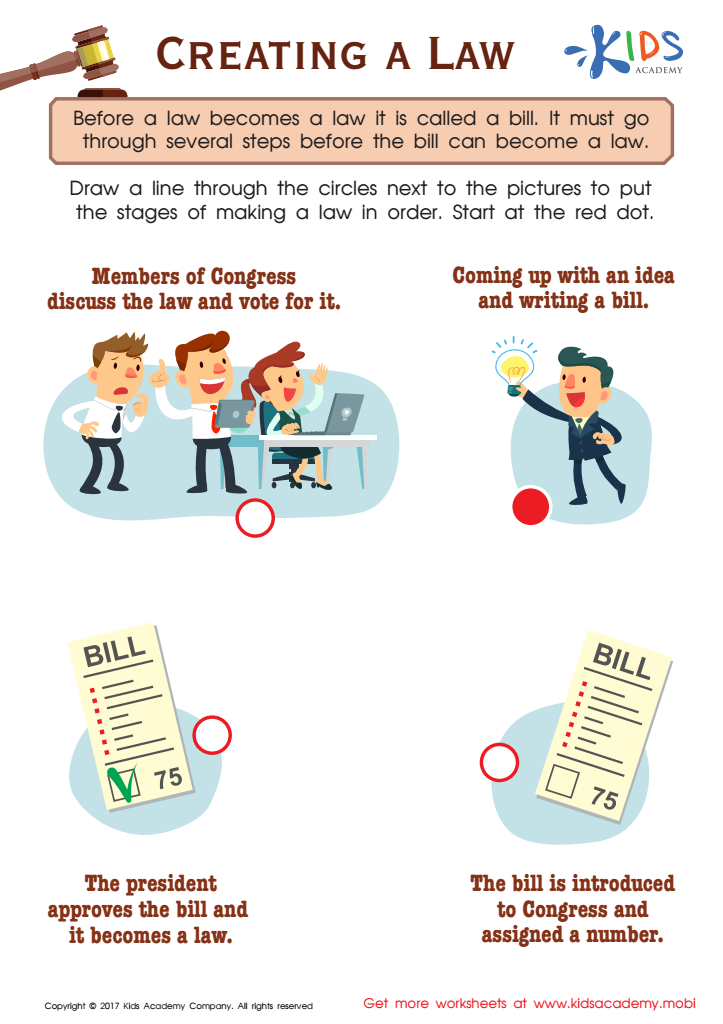
Creating a Law Worksheet
Help your child understand how laws are made with this Creating a Law Worksheet. Perfect for young learners, it covers the lawmaking process with fun pictures and simple language. Get an exciting insight into democracy and teach kids the importance of laws!
Creating a Law Worksheet
Worksheet
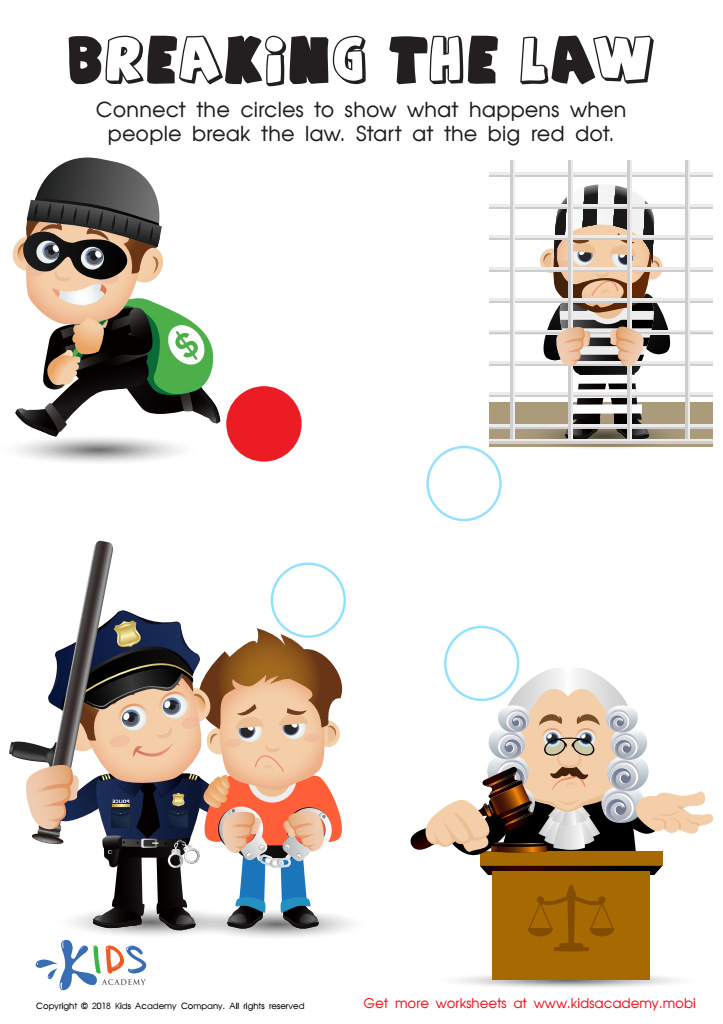
Breaking the Law Worksheet
Explain to your child why people go to jail. Show them this worksheet; it illustrates the stages a criminal goes through from breaking the law to receiving their punishment. Guide them in connecting the circles from the big red dot. Finish with a discussion on why it's important to follow the law.
Breaking the Law Worksheet
Worksheet
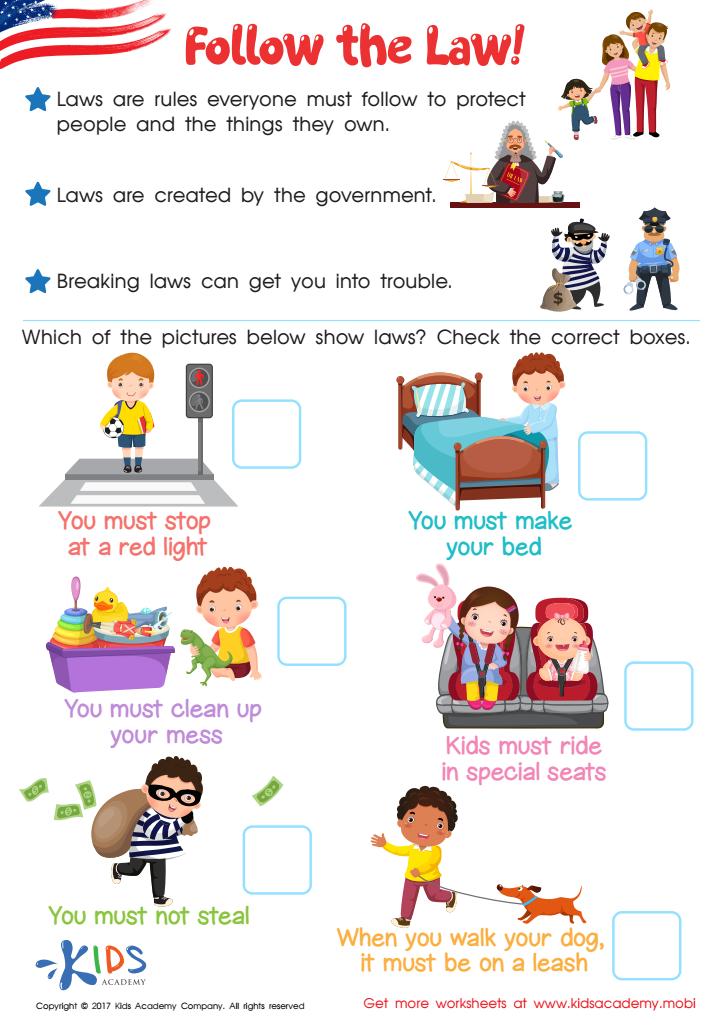
Follow the Law Worksheet
Kids should understand the difference between laws and household rules. Worksheets for 2nd grade review these differences, teaching kids more about life in their community. Breaking the law can lead to harsh consequences, so understanding the rules of home and public spaces is essential.
Follow the Law Worksheet
Worksheet
Join Kids Academy for Free
Who is primarily going to use this learning content?






Understanding laws, even for children aged 4-8, is crucial for numerous reasons and parents and teachers play a vital role. At this formative age, children are learning the basics of social interaction, right and wrong, and the foundational concepts of justice and fairness. By introducing them to simple laws and rules, parents and teachers help to develop their moral compass and social awareness.
Children need to understand, on their level, why certain behaviors are acceptable or unacceptable. Knowing the basics of rules helps them comprehend the importance of safety—like why they must wear seat belts or why hitting others is wrong. This knowledge translates into respectful and law-abiding behavior as they grow.
Moreover, fostering an early understanding of laws aids in building responsible citizens who respect societal norms and the rights of others. For teachers, incorporating these lessons into the classroom can build a harmonious environment where children understand the value of cooperation and mutual respect.
Parents who discuss rules and consequences at home tend to raise more conscientious children. A consistent approach from both parents and teachers means children receive a unified message, reinforcing their learning. Therefore, understanding laws at this young age lays the groundwork for ethical development and responsible future citizens.








