Understanding light sources Worksheets for Ages 4-8
6 filtered results
-
From - To
Explore the fascinating world of light sources with our "Understanding Light Sources Worksheets" designed for ages 4-8! These printable worksheets provide engaging, age-appropriate activities that help young learners identify and differentiate between natural and artificial light sources. Through fun exercises and vivid illustrations, children will discover how light influences their everyday lives. Each worksheet fosters critical thinking and enhances observational skills while making learning about light enjoyable. Perfect for classroom or home use, these resources encourage curiosity and creativity in young minds. Illuminate your child's understanding of science with our vibrant worksheets today!
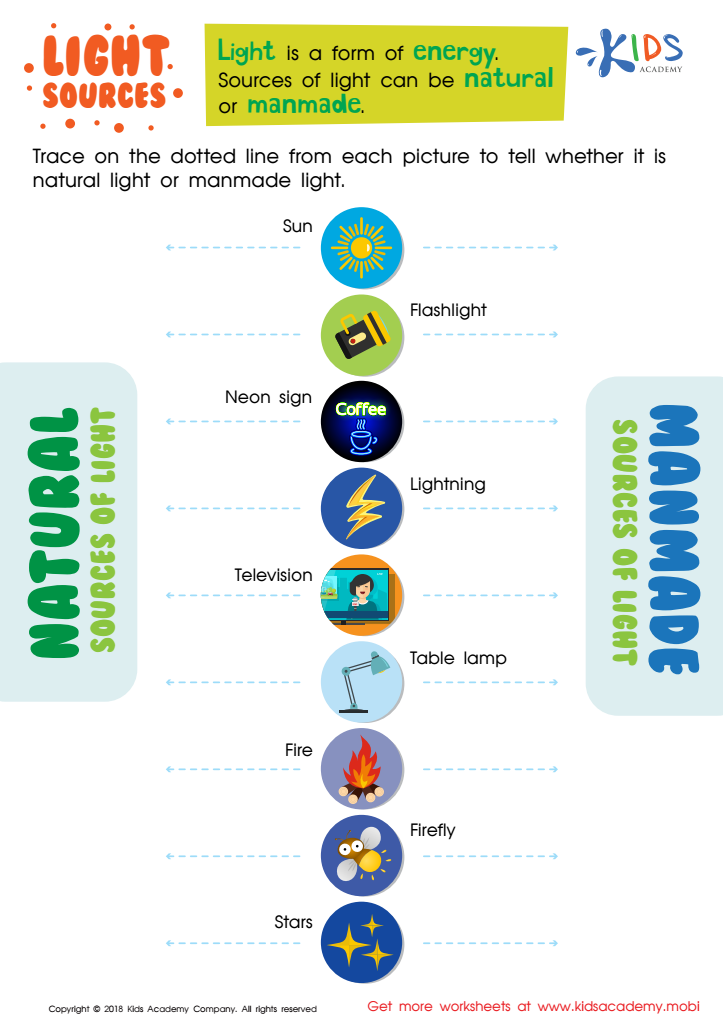
Natural and Manmade Light Sources Worksheet
 Assign to My Students
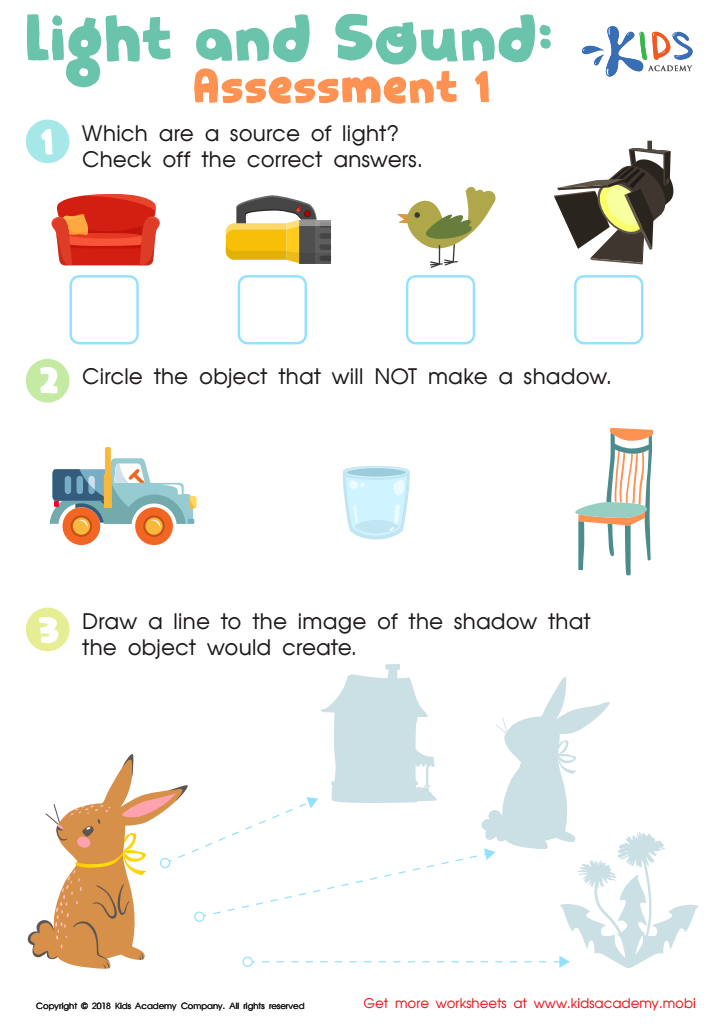
Light and Sound: Assessment 1 Worksheet
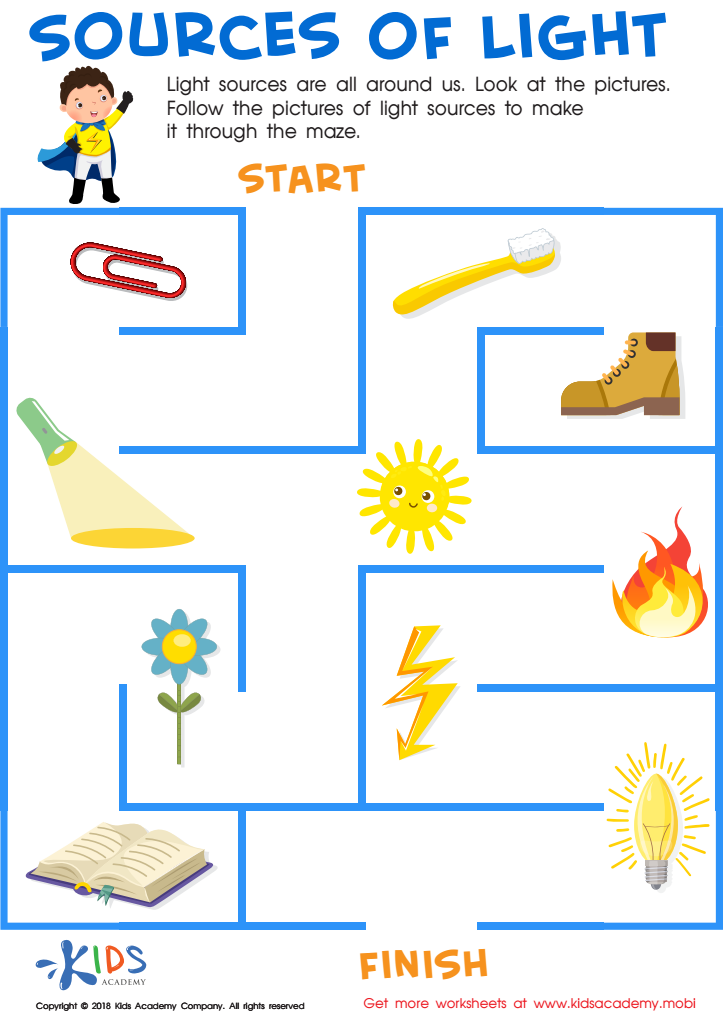
Sources of Light Worksheet
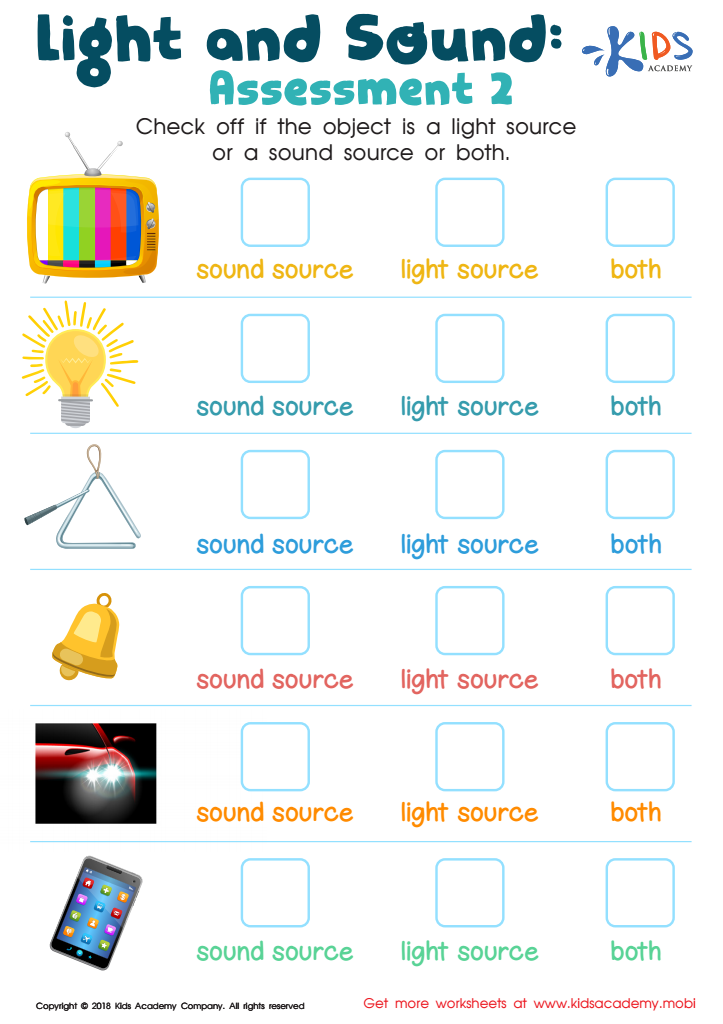
Light and Sound: Assessment 2 Worksheet
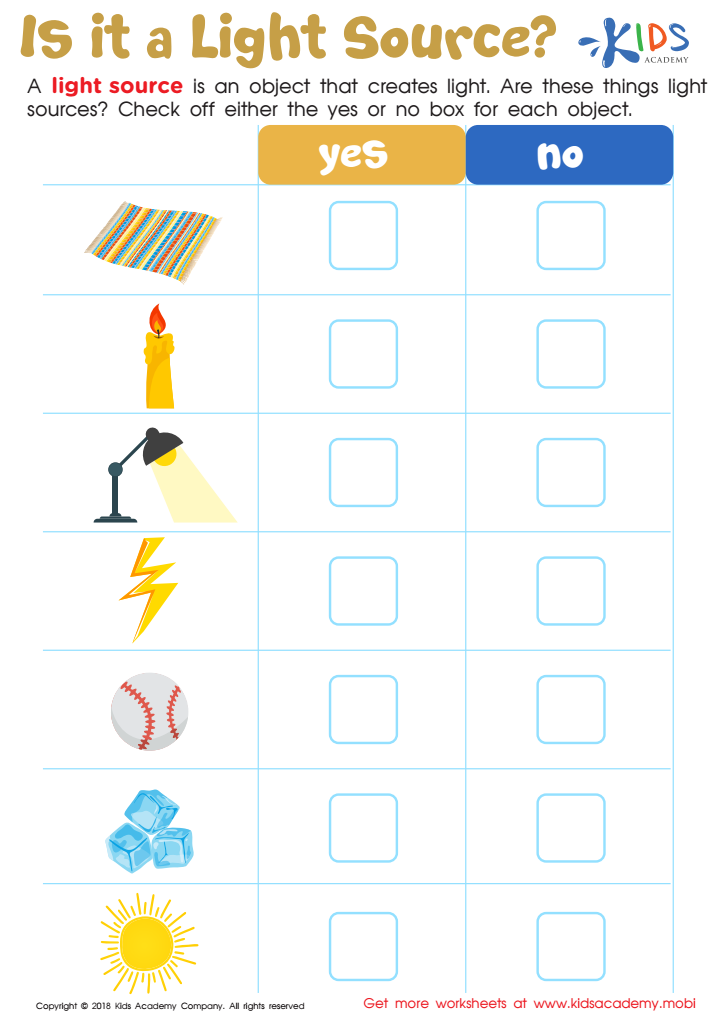
Is It a Light Source? Worksheet
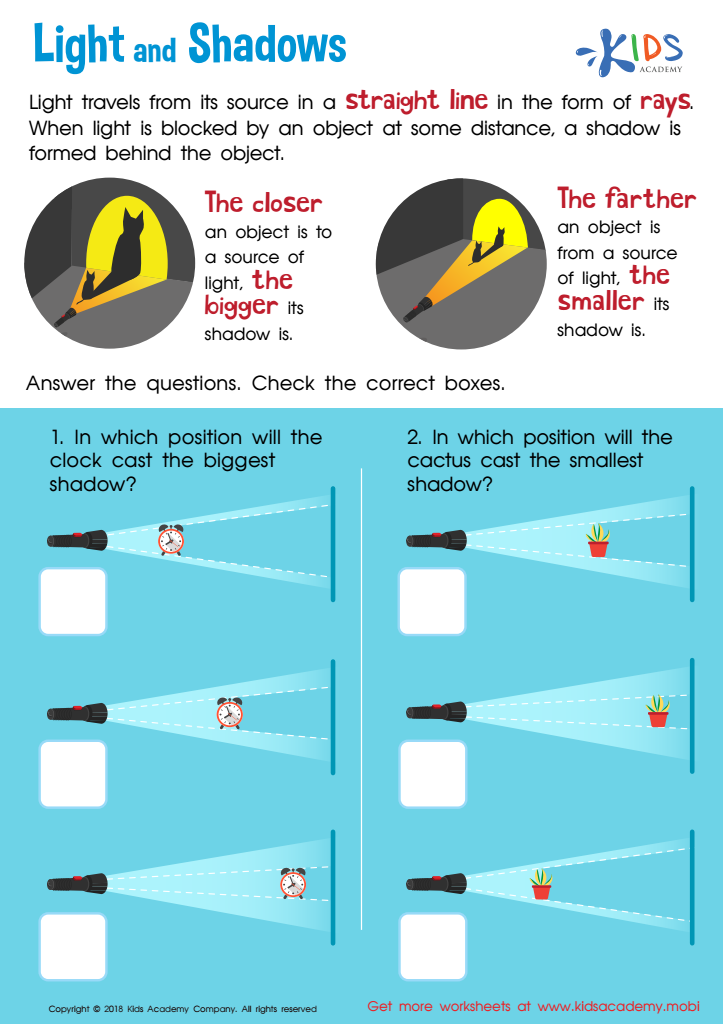
Light and Shadow Worksheet for Grade 3







Understanding light sources is crucial for children aged 4-8 because it forms the foundation for their scientific literacy and curiosity. At this age, children are naturally inquisitive, and exploring concepts like light sources can significantly enhance their learning experiences. Recognizing different light sources—such as the sun, lamps, flashlights, and fire—helps them grasp essential concepts of energy and its transformations.
Engaging with light sources also permits children to investigate cause and effect. For example, what happens when a light is blocked? This inquiry fosters critical thinking and enhances observational skills. Moreover, learning about natural and artificial light sources connects to everyday experiences, making the science relevant and approachable.
Furthermore, discussions about light sources can promote safety awareness—understanding the differences between safe and unsafe light sources, such as avoiding looking directly at the sun or handling hot bulbs.
Incorporating activities based on light sources can also spark an interest in broader STEM (Science, Technology, Engineering, and Mathematics) fields, encouraging creativity and problem-solving skills. Empowering children with knowledge about light not only forms a vital part of their education but also supports lifelong learning habits. Hence, parents and teachers should emphasize this fundamental aspect of science in early childhood education.








