
Understanding magnetism Worksheets for Ages 4-8
4 filtered results
Difficulty Level
Grade
Age
-
From - To
Subject
Activity
Standards
Explore the fascinating world of magnetism with our engaging worksheets designed for children aged 4 to 8! These educational resources introduce key concepts of magnetism through fun and interactive activities. From recognizing magnetic and non-magnetic materials to understanding basic magnetic properties, these worksheets provide hands-on learning experiences. Ideal for classroom use or at-home learning, each activity encourages curiosity and scientific thinking while enhancing fine motor skills. Take your child's understanding of science to new heights with our colorful, easy-to-follow worksheets that make learning about magnetism exciting and enjoyable! Perfect for parents and teachers looking to inspire young minds!
Favorites
With answer key
Interactive
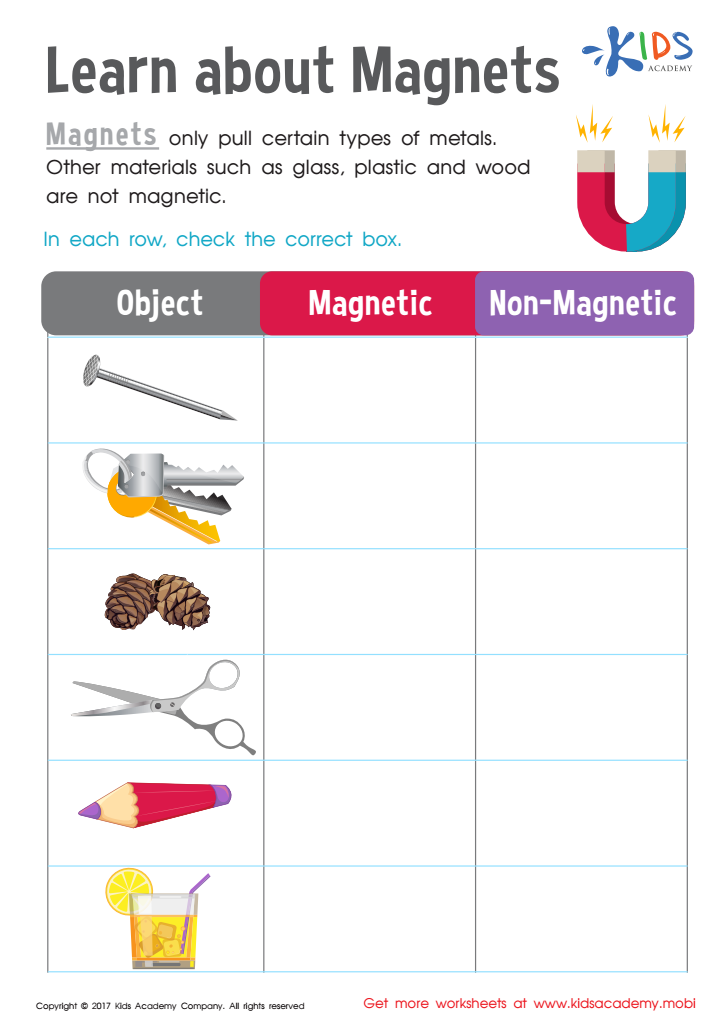
Magnetic Or Not Worksheet
Kids will love discovering the magical power of magnetism with this fun worksheet.
Uncover the magic of magnetism with this fun worksheet! Kids will love identifying objects that are magnetic and those that are not. Objects made of metal and those that aren't can be identified, helping your child to gain valuable practice and explore the mysterious power of magnetism!
 Assign to My Students
Magnetic Or Not Worksheet
Worksheet
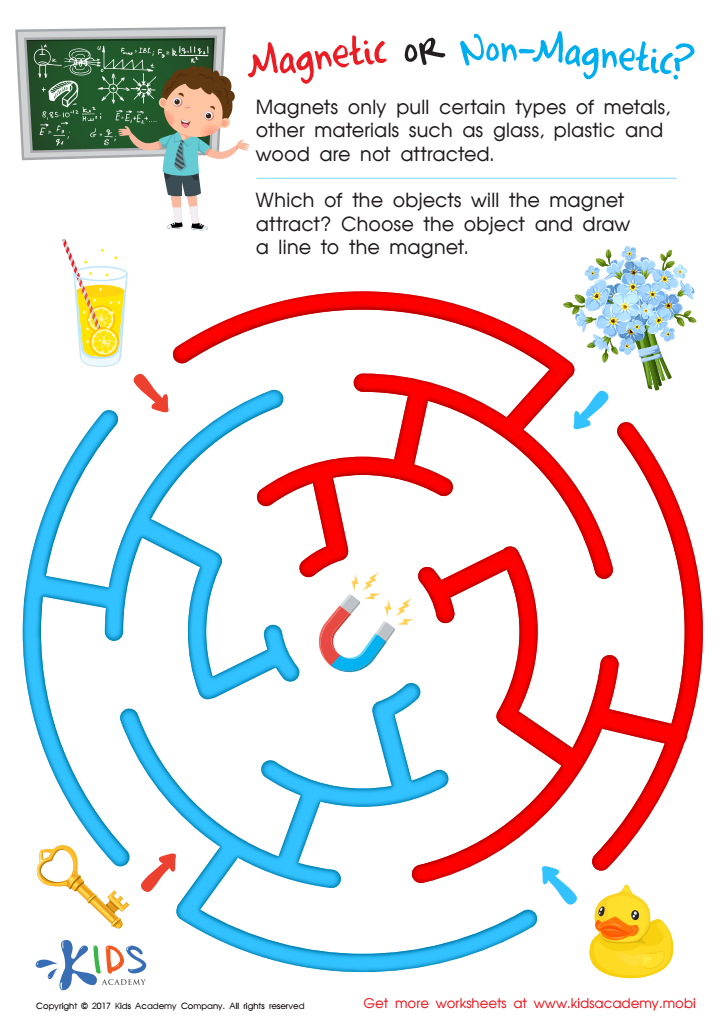
Magnetic or Non–Magnetic Worksheet
Introduce your child to magnetism with this fun maze! Read the summary to explain the concept, then help them find the magnetic object as they navigate the maze. It's a great way to learn and have fun!
Magnetic or Non–Magnetic Worksheet
Worksheet
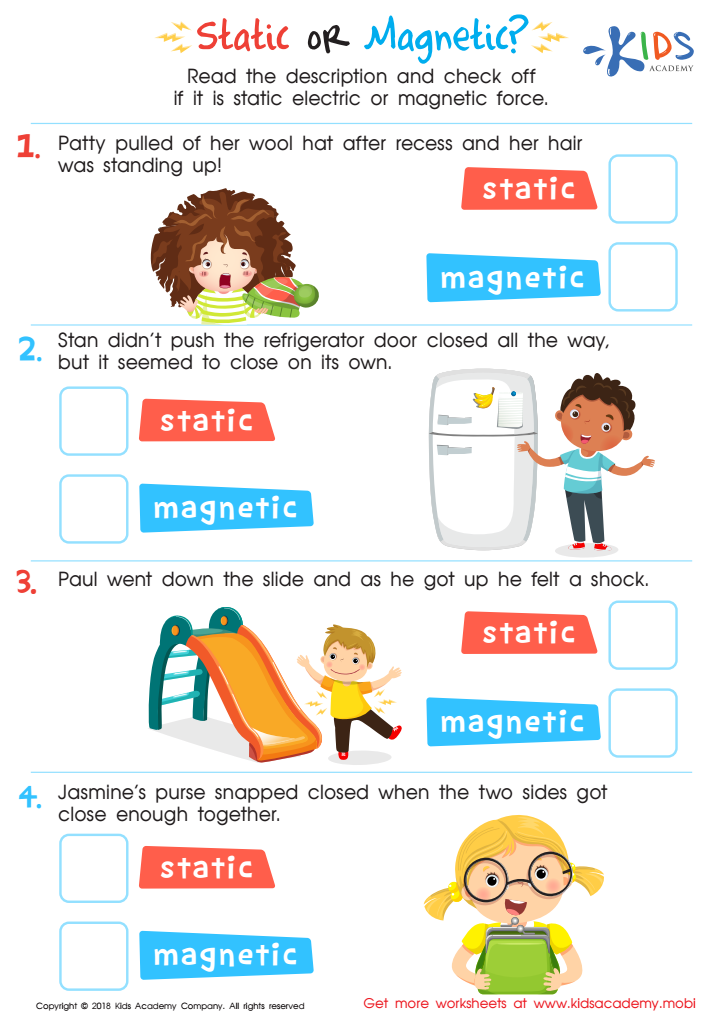
Static or Magnetic Printable Worksheet
Ever wondered if a situation involved static or magnetic force? This printable worksheet has the answer! Read the scenarios and check out the illustrations to decide which force is in play for each. Learn about these two amazing forces with this fun activity!
Static or Magnetic Printable Worksheet
Worksheet
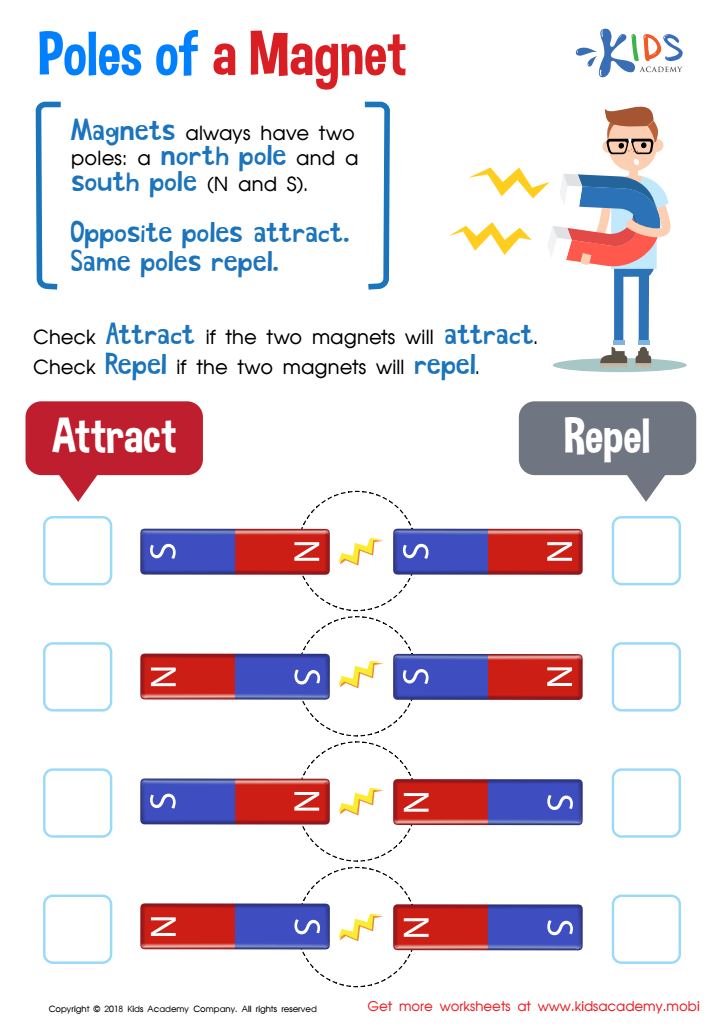
Magnet Poles Attract or Repel Worksheet
Kids can learn about magnets using this fun worksheet! They'll identify the polarities of magnets and see if they attract or repel. Pictures of magnets will help them understand the concept and get them excited about scientific exploration!
Magnet Poles Attract or Repel Worksheet
Worksheet
Join Kids Academy for Free
Who is primarily going to use this learning content?






Understanding magnetism is crucial for children ages 4-8 because it builds a foundational knowledge of science and enhances their curiosity about the world around them. At this age, children are naturally inquisitive, and introducing concepts like magnetism can stimulate their imagination and encourage hands-on exploration. Magnetism serves as an essential principle in various everyday phenomena—from how refrigerator magnets work to the functioning of various toys and electronic devices.
Moreover, learning about magnetism fosters critical thinking and problem-solving skills. Interactive activities, such as experimenting with magnets of different sizes and shapes, allow children to make observations, draw conclusions, and engage in scientific reasoning. This experiential learning helps engage multiple senses and reinforces cognitive development.
Additionally, teaching magnetism can lay the groundwork for future scientific learning. Early exposure to scientific concepts cultivates an interest in STEM (Science, Technology, Engineering, and Mathematics) fields, encouraging a workforce that is proficient in these essential areas. For parents and teachers, supporting children in understanding magnetism not only enriches their knowledge base but also nurtures an enduring love for learning and exploration that can last a lifetime. Investing in early scientific literacy ultimately benefits the child and the community.








