Understanding sequencing Worksheets for Ages 4-8
14 filtered results
-
From - To
Unlock your child's potential with our 'Understanding Sequencing Worksheets for Ages 4-8!' Our thoughtfully designed worksheets help young learners grasp the concept of sequences, improving their cognitive and analytical skills. Engage your child with fun activities that teach them to arrange events in logical order, enhancing their comprehension and storytelling abilities. Perfect for ages 4-8, these worksheets make learning an enjoyable adventure. They are ideal for both classroom environments and at-home practice, providing a solid foundation for academic success. Foster your child's critical thinking and problem-solving with our expertly crafted sequencing worksheets!
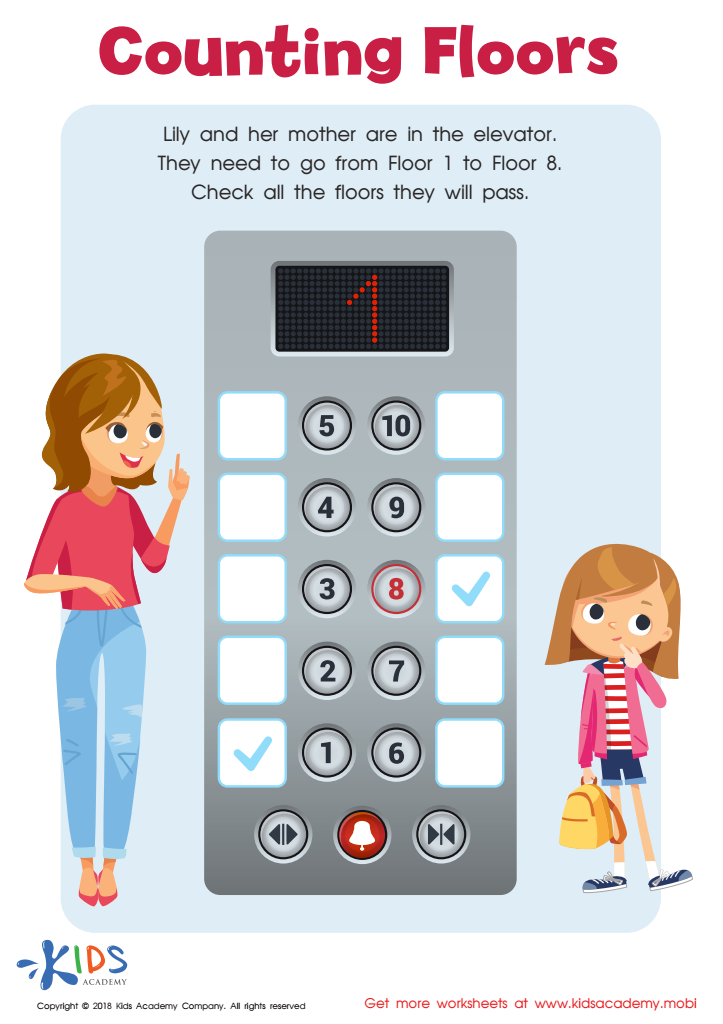
Counting Floors Worksheet
 Assign to My Students
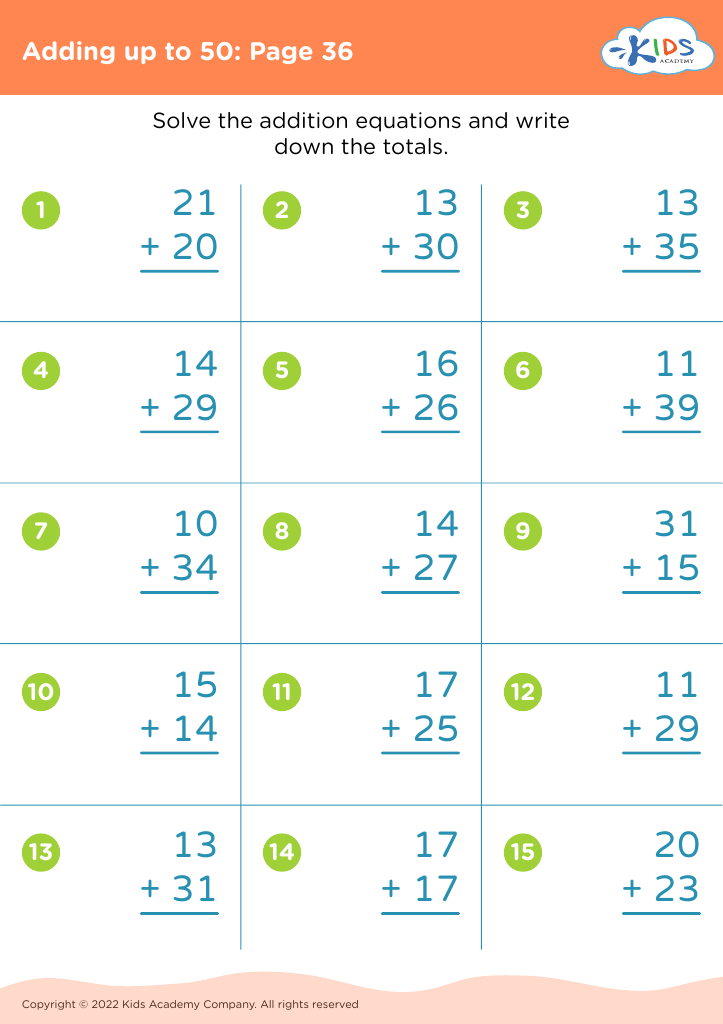
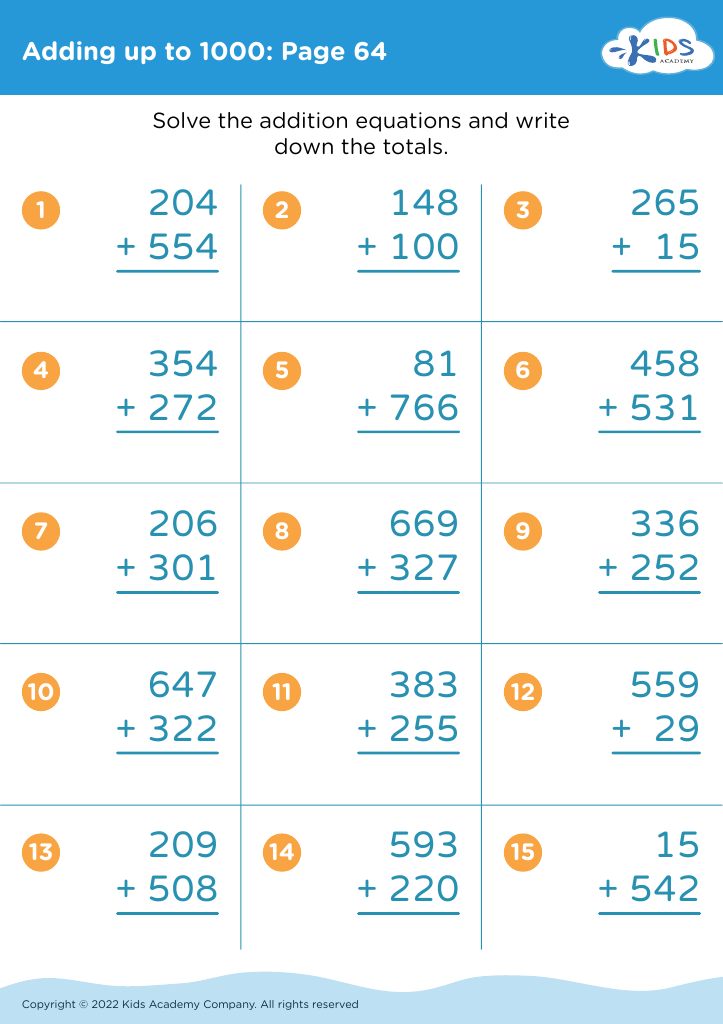
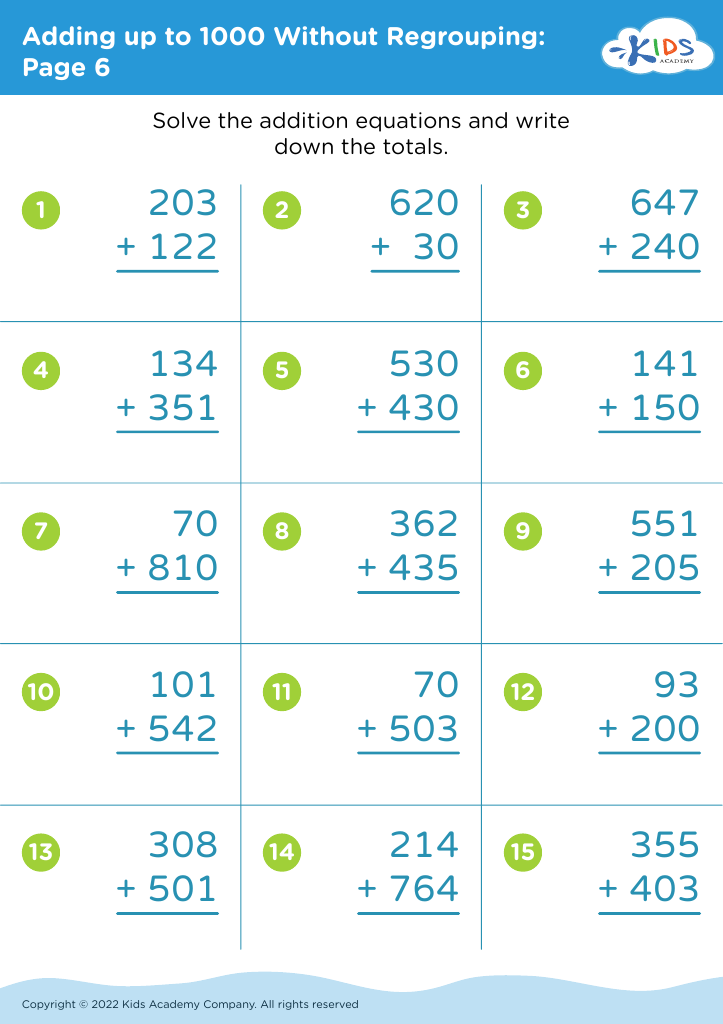

One More Jumps In Worksheet
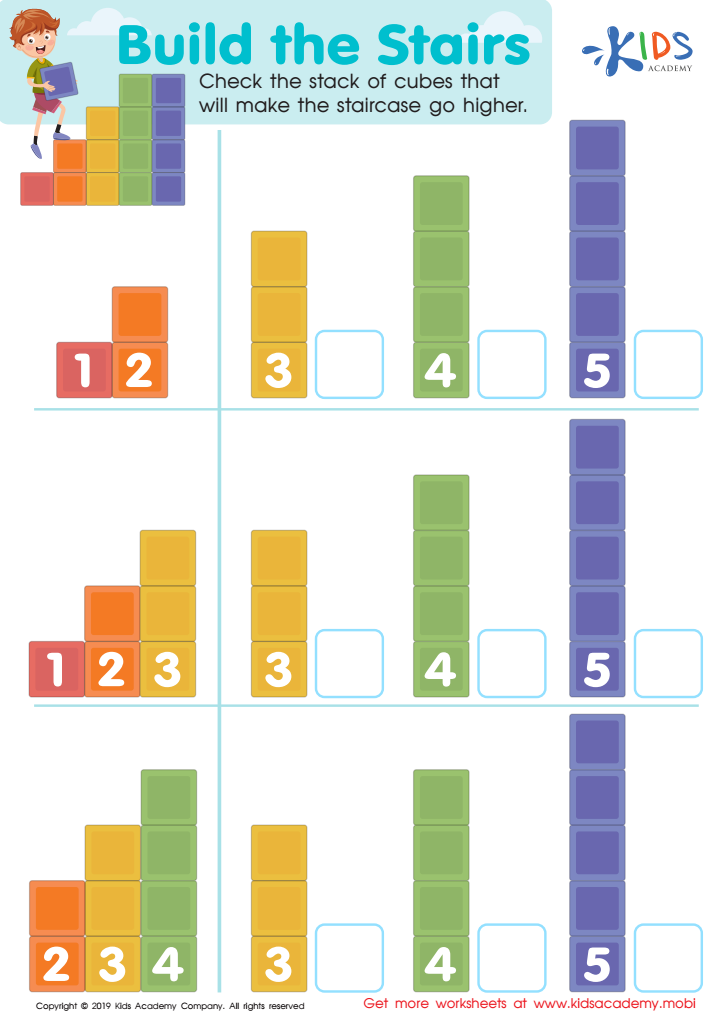
Build the Stairs Worksheet
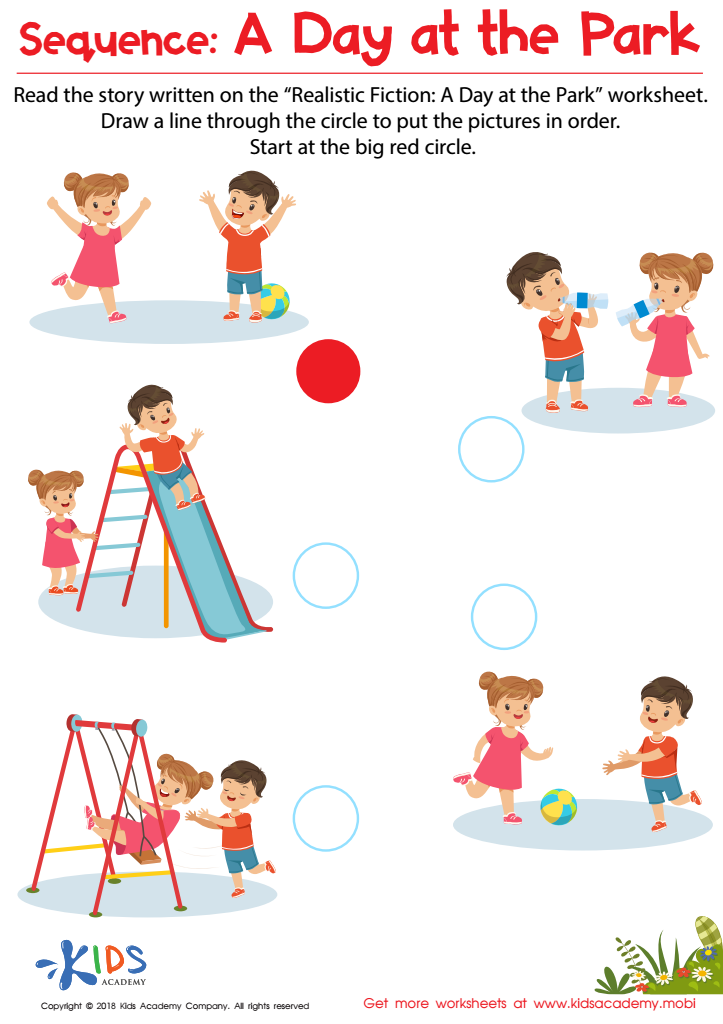
Sequence: A Day at the Park Worksheet
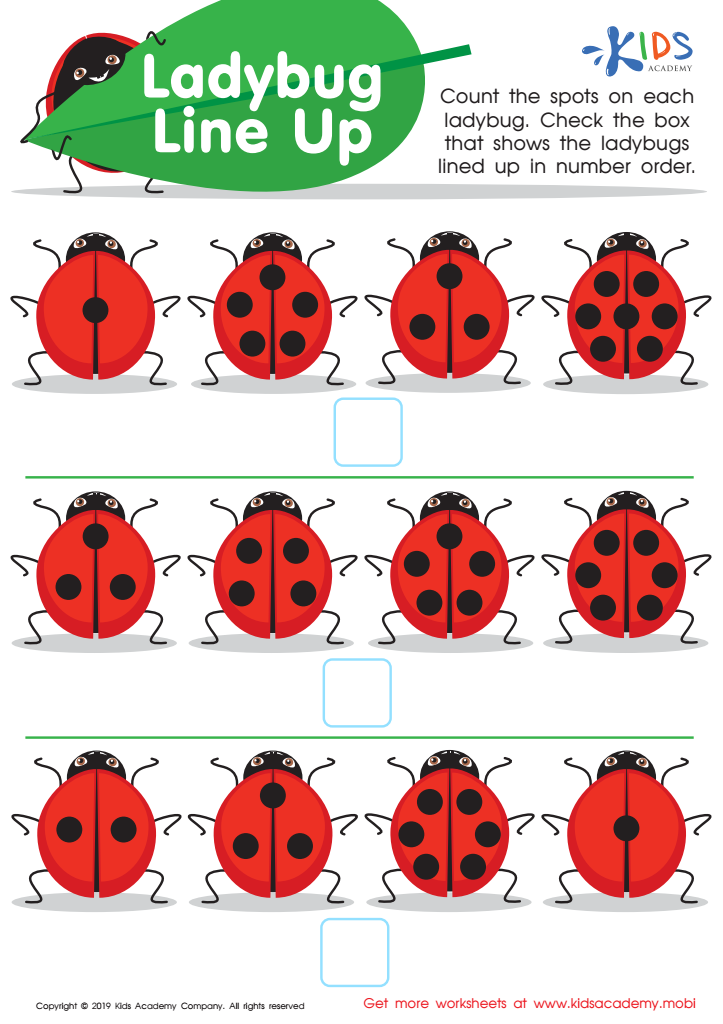
Ladybug Line Up Worksheet
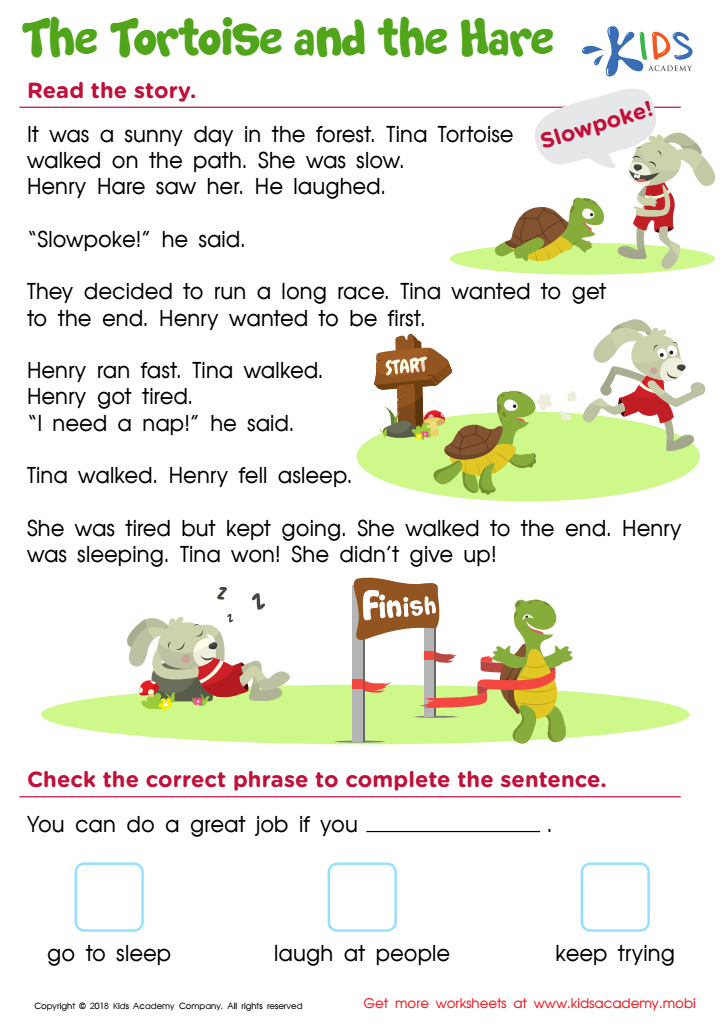
The Tortoise and the Hare Worksheet








Understanding sequencing is crucial for children ages 4-8, as it underpins many essential academic and life skills. Firstly, sequencing helps with language development. By organizing words and sentences in the right order, children can effectively communicate their thoughts and understand stories. This skill also extends to reading comprehension where they need to follow the plot and grasp the story's beginning, middle, and end.
In mathematics, sequencing underlies the ability to understand number order, arithmetic processes, and problem-solving. Recognizing patterns and the sequence of operations are fundamental for grasping basic math concepts. Sequencing also aids in the development of logical thinking and memory. Children learn to arrange events logically, enhancing their capacity to plan and execute tasks systematically.
Moreover, sequencing impacts daily life skills like following routines or instructions, which are critical for fostering independence and responsibility. For instance, understanding sequences helps a child dress themselves, pack school bags, or participate in multi-step activities.
Caring about sequencing from a young age sets a firm foundation for more complex thoughts and tasks, promoting cognitive development. Teachers and parents can support this by engaging children in activities like storytelling, number games, and routine-based tasks, laying the groundwork for lifelong learning and functional independence.








