Basic Math Skills Adding 2-digit Numbers Worksheets for Ages 4-8
3 filtered results
-
From - To
Enhance your child's math abilities with our engaging Basic Math Skills Adding 2-Digit Numbers worksheets designed for ages 4-8. These activities make learning to add exciting and intuitive. Featuring colorful illustrations and a variety of problems, these worksheets reinforce essential addition concepts, helping young learners master 2-digit addition in a fun way. Perfect for home or the classroom, our resources cater to different learning styles, fostering confidence and independence in early learners. With consistent practice, children will build a strong foundation in math, setting them up for future success. Explore our collection today and watch your child's skills improve!
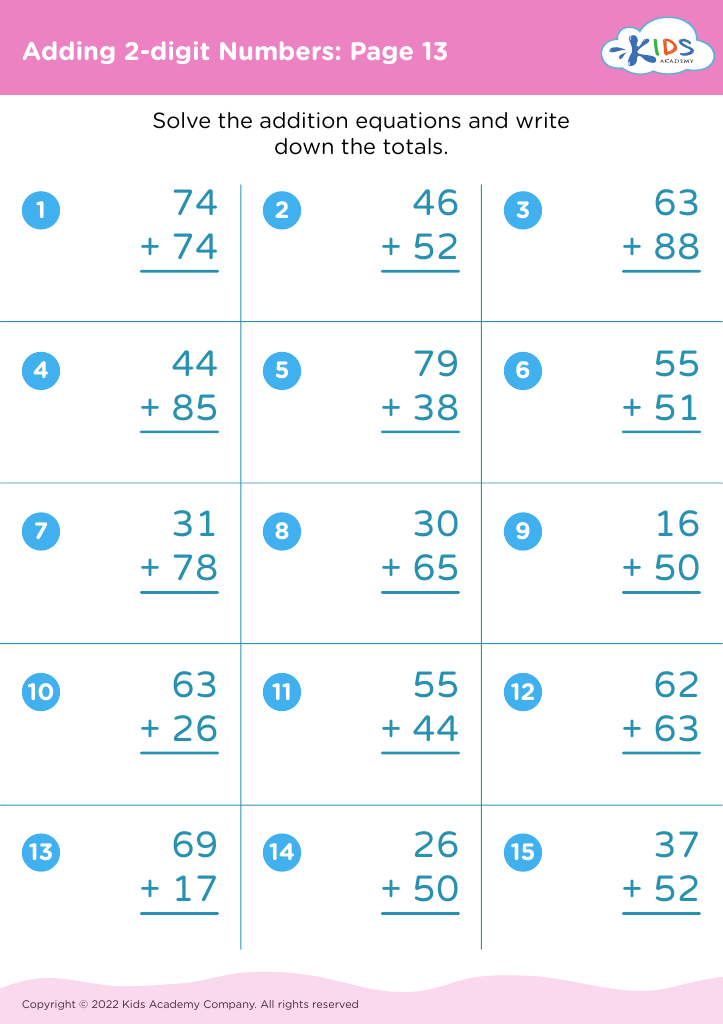
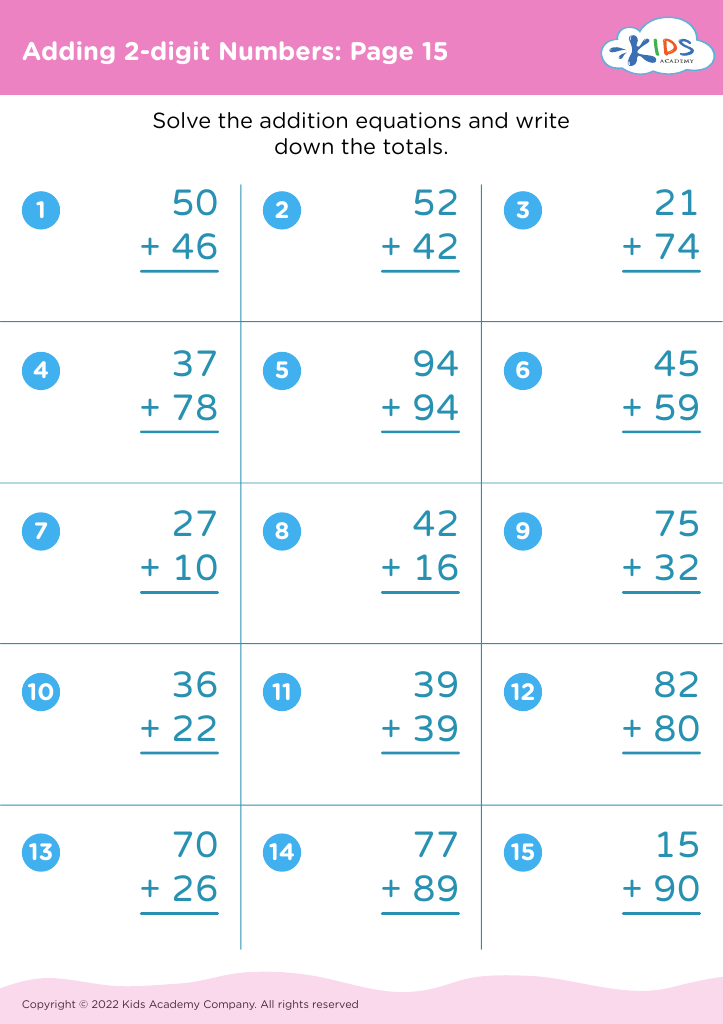
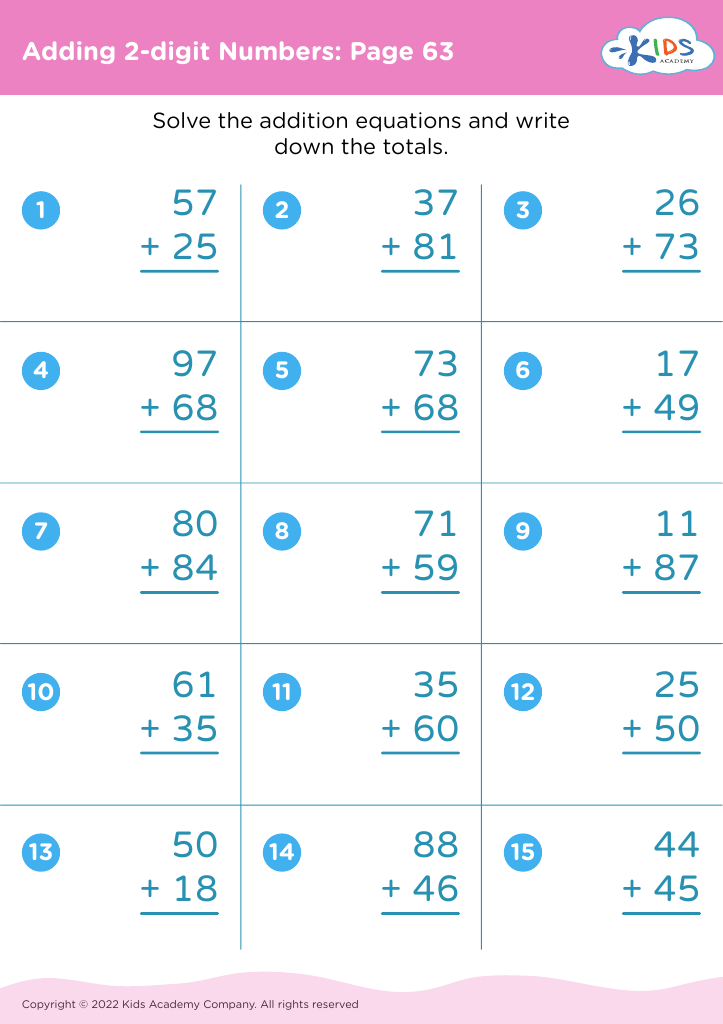








Basic math skills, including the ability to add 2-digit numbers, are foundational for young learners aged 4-8. These skills are crucial for several reasons. Firstly, the ability to manipulate numbers builds confidence and encourages a positive attitude toward mathematics. Boosting this confidence is particularly important during these early years, as it sets the tone for future learning and school experiences.
Secondly, mastering 2-digit addition fosters critical thinking and problem-solving abilities. Children will apply these skills not only in academic scenarios but also in everyday life situations, such as handling money, time management, and understanding quantities in real-life contexts.
Additionally, the development of these skills promotes cognitive growth. Engaging in math activities strengthens neural connections in the brain, enhancing overall cognitive functions. This understanding helps facilitate learning in other subjects, as math is interconnected with various disciplines.
Finally, teachers and parents play an essential role in nurturing these skills. By creating a supportive learning environment, they can offer hands-on activities, games, and encouragement that spark interest and enthusiasm for math. Investing time in helping children grasp basic math concepts not only enriches their learning journey but also lays a solid groundwork for future academic success.








