Fraction comparison Adding 2-digit Numbers Worksheets for Ages 4-8
3 filtered results
-
From - To
Explore our exciting "Fraction Comparison & Adding 2-Digit Numbers Worksheets" specifically designed for ages 4-8! These engaging worksheets seamlessly blend the basics of fraction comparison with the fundamentals of adding 2-digit numbers. Perfect for young learners, the activities promote essential math skills while keeping learning fun and interactive. Children will confidently tackle comparing fractions and mastering addition, setting a strong foundation for future mathematical success. Visit Kids Academy to access, download, and print these colorful, creative, and educational worksheets today. Empower your child's math journey with our expertly crafted resources!
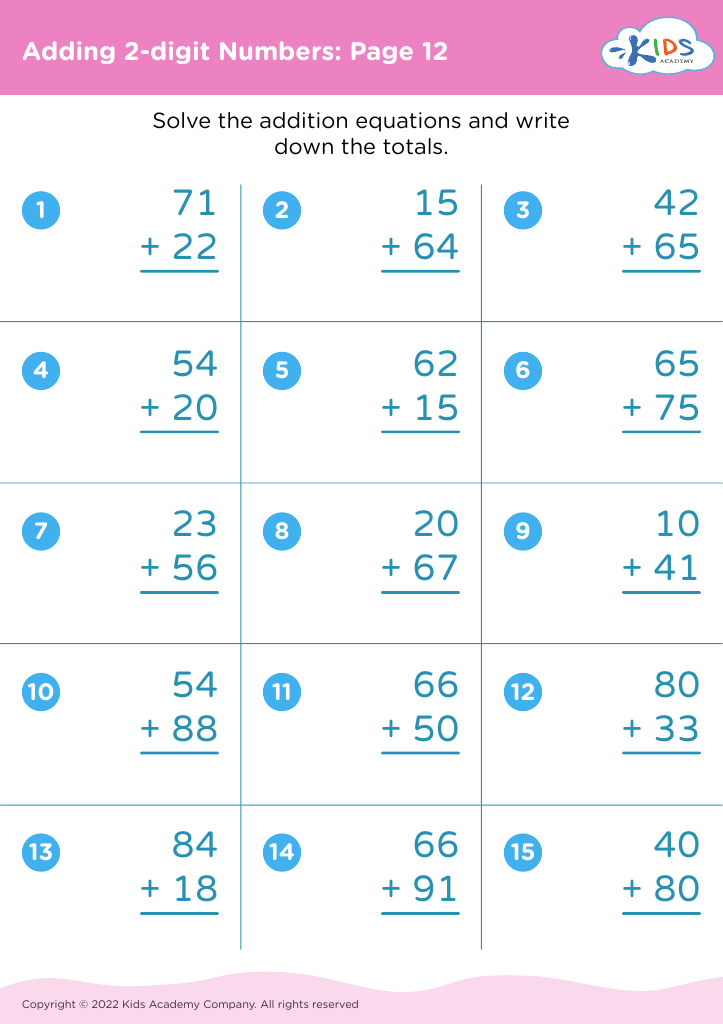
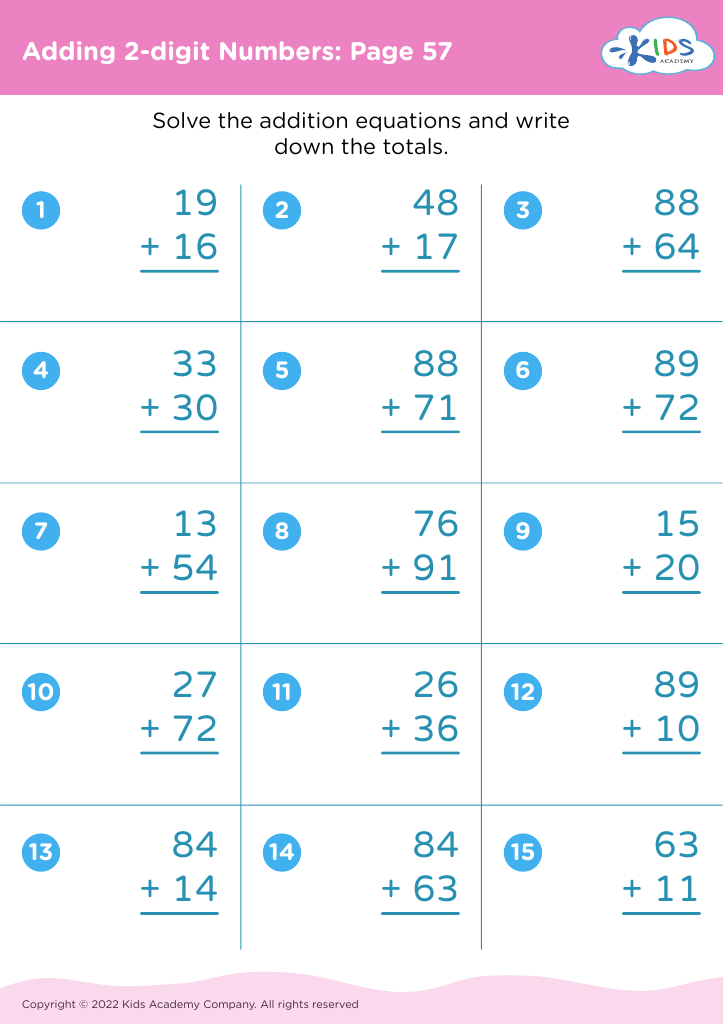
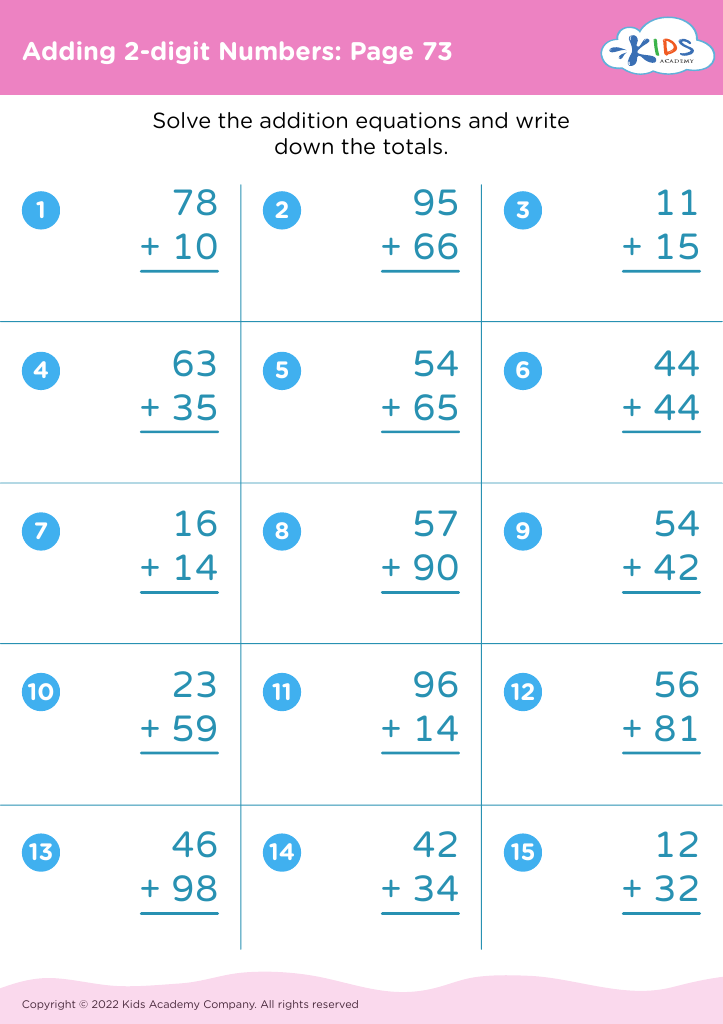








Caring about teaching fraction comparison and adding 2-digit numbers to children aged 4-8 is crucial because these foundational math skills set the stage for future academic success and everyday problem-solving. Understanding fractions early on enhances a child's number sense by bridging the gap between whole numbers and parts of a whole. This not only enriches their grasp of more complex mathematical concepts later, such as algebra and geometry, but also empowers them to apply fractions in real-world situations, like dividing a pizza or sharing candies.
Likewise, mastering the addition of 2-digit numbers is vital as it builds confidence and competence in basic arithmetic. This skill emphasizes the importance of place value and regrouping, which are cornerstones for advanced calculations like multiplication and division. It also instills patience, attention to detail, and perseverance, qualities that extend beyond mathematics to other academic subjects and life experiences.
Moreover, early success in math can foster a child’s love for learning and boost self-esteem, reducing educational disparities from a young age. Positive engagement from parents and teachers can cultivate a supportive learning environment, turning potentially intimidating math concepts into enjoyable and rewarding challenges. Thus, early focus on these skills equips children with the tools they need for long-term scholastic achievement and everyday efficiency.








