Identifying shapes Adding 2-digit Numbers Worksheets for Ages 4-8
4 filtered results
-
From - To
Enhance your child's math and shape recognition skills with our engaging "Identifying Shapes and Adding 2-Digit Numbers Worksheets" designed for ages 4-8. These worksheets combine foundational geometry awareness with essential addition practices. Your little learners will explore various shapes while simultaneously mastering the addition of two-digit numbers, allowing them to develop critical thinking and problem-solving abilities in a fun, interactive way. Perfect for home or classroom use, these resources are perfect for reinforcing math concepts and shape identification. Download the worksheets today and make learning enjoyable as your child builds confidence in both math and geometry!
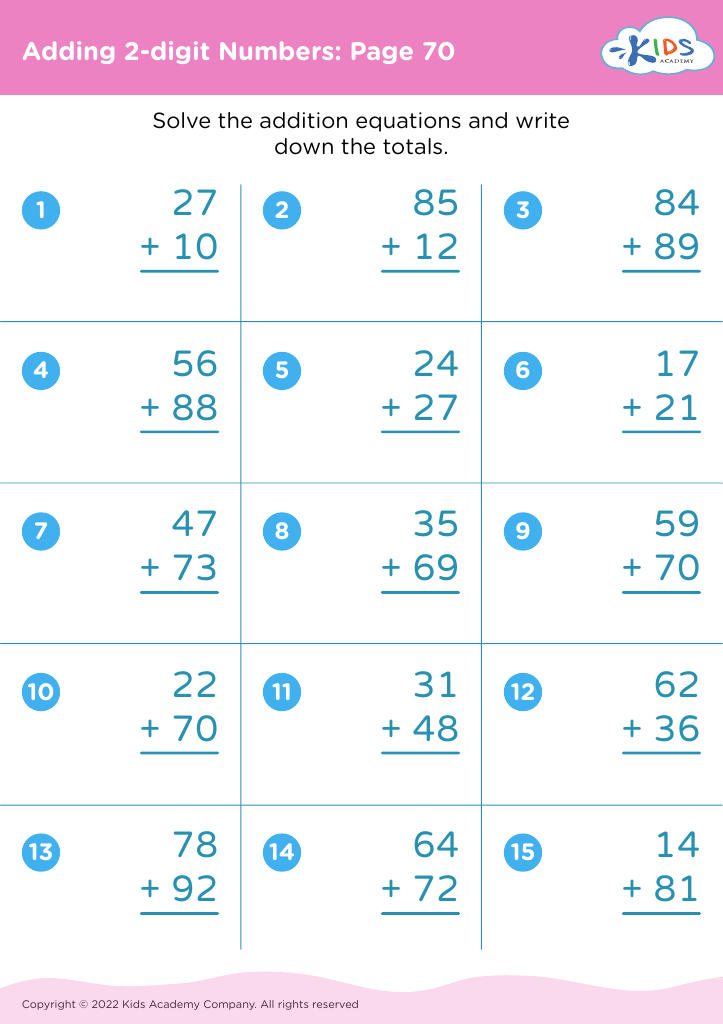
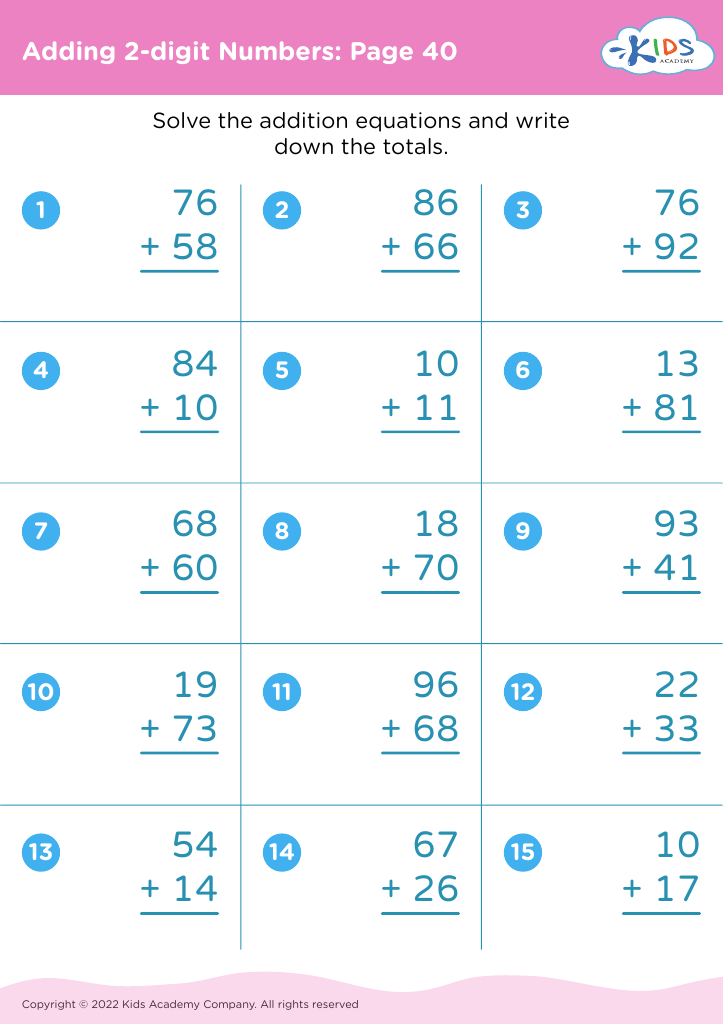
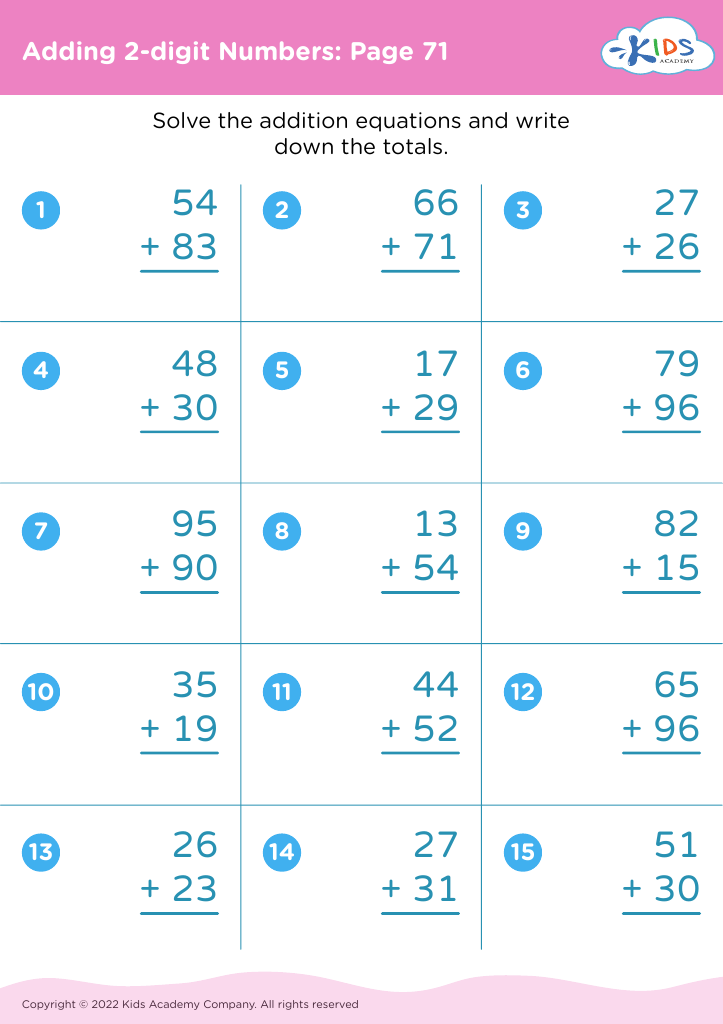
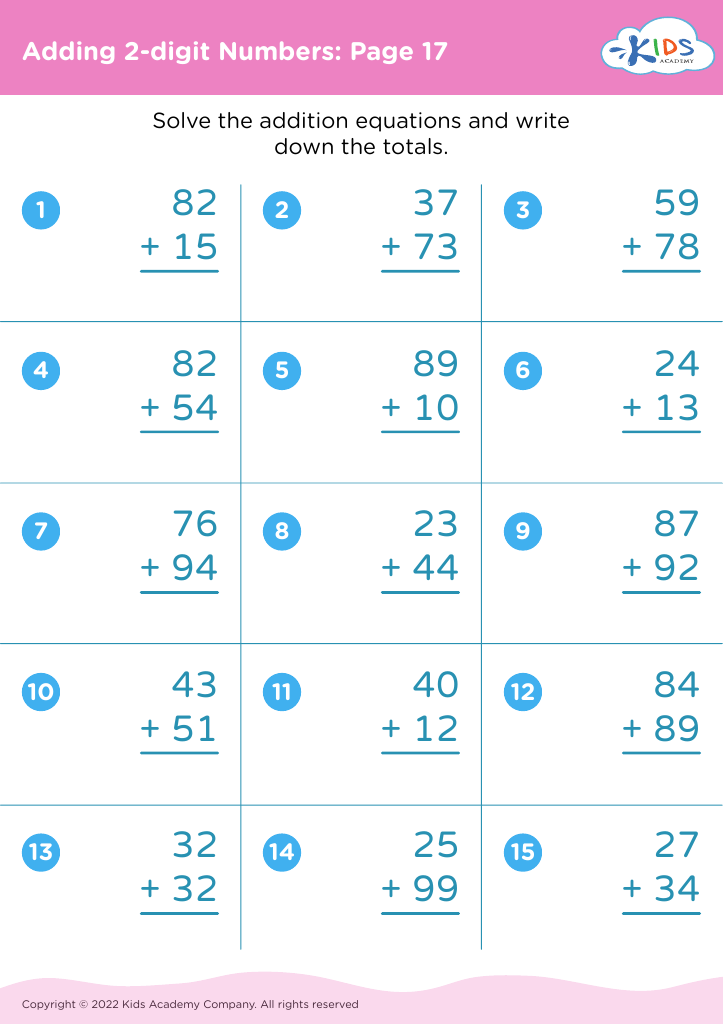








Identifying shapes and adding 2-digit numbers are foundational skills that significantly contribute to a child's cognitive and academic development. For young learners aged 4-8, recognizing shapes enhances visual-spatial awareness, helping them understand the world around them and fostering creativity. This skill is essential not just in mathematics, but also in subjects such as art, science, and everyday problem-solving.
As children move on to adding 2-digit numbers, they build a crucial understanding of numeracy and develop strategies for mental math. This process strengthens their mathematical foundations as they learn to manipulate numbers and understand place value, which are essential for advancing to more complex arithmetic. Mastery in these areas boosts their confidence, promotes critical thinking, and prepares them for real-world applications such as budgeting and time management.
Moreover, recognizing the importance of these skills can foster collaboration between parents and teachers in nurturing a positive learning environment. Engaging children in fun, interactive activities related to shapes and numbers can make learning enjoyable and fulfilling. Overall, investing time in these basic skills is essential for equipping young learners with the confidence and ability they need for future educational success.








