Number Recognition Adding 2-digit Numbers Worksheets for Ages 4-8
13 filtered results
-
From - To
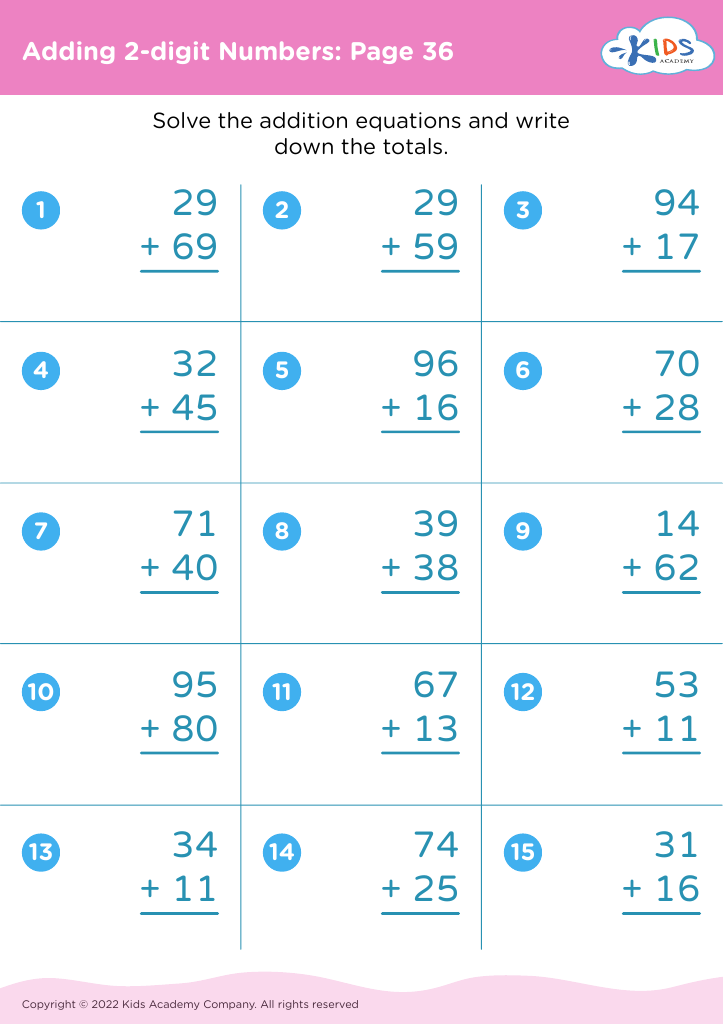
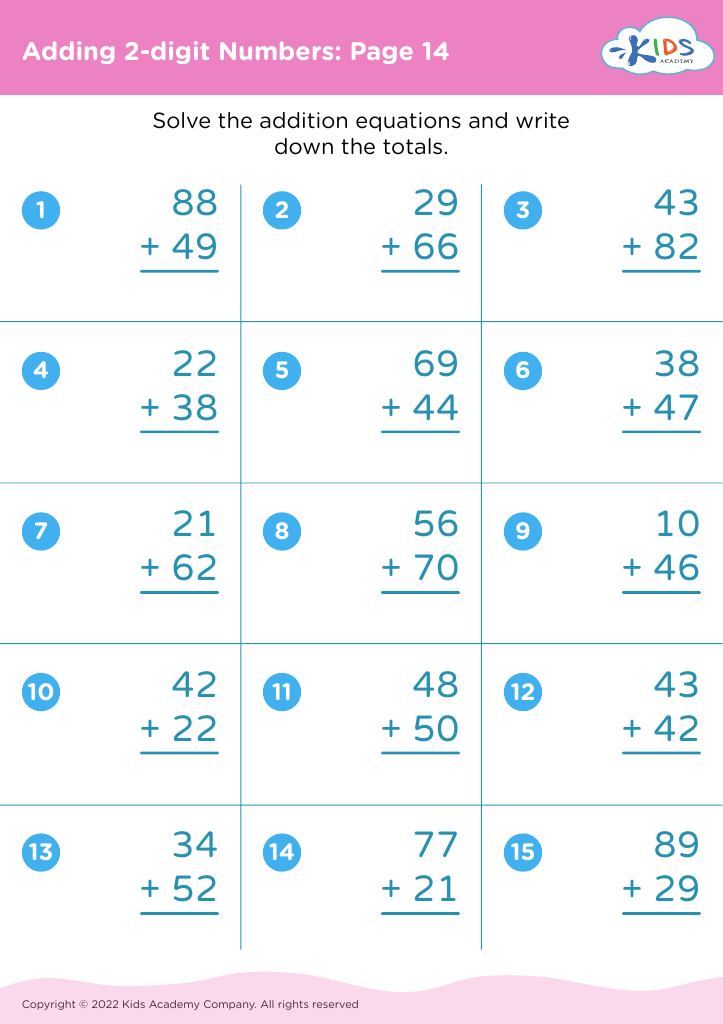
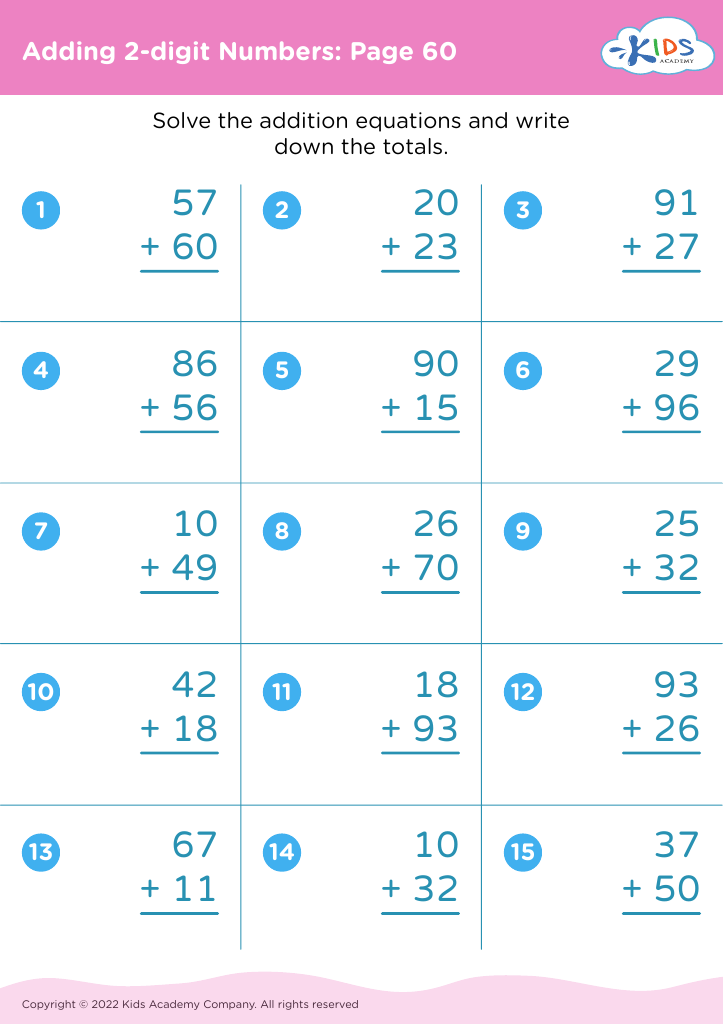
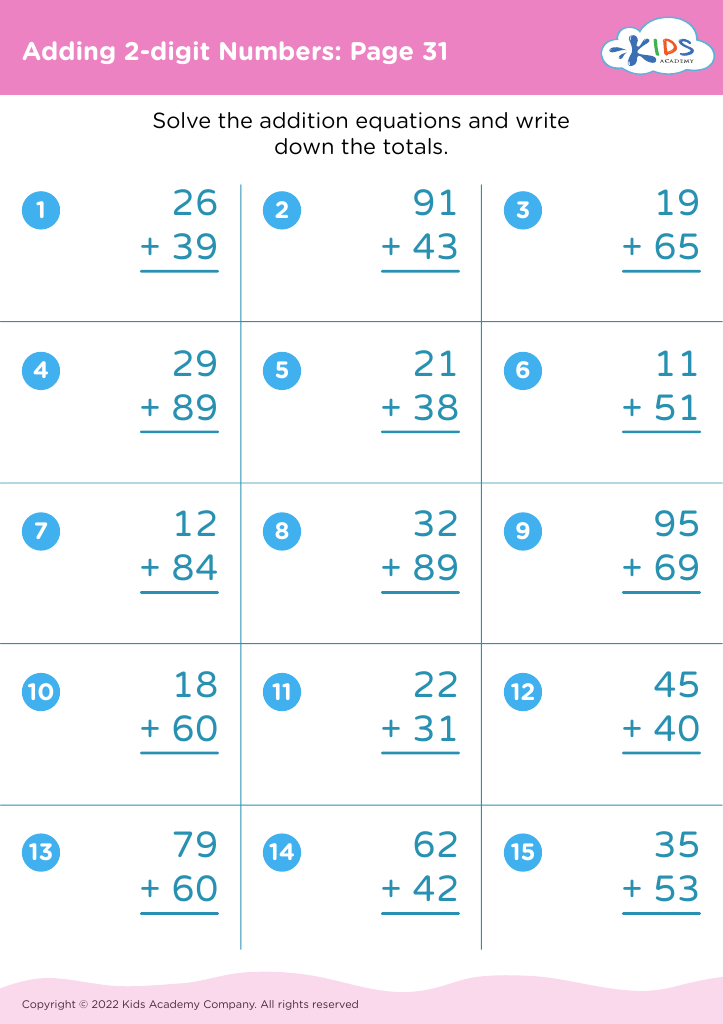
Our Number Recognition Adding 2-digit Numbers Worksheets are designed for children ages 4-8 to enhance their math skills. These engaging and educational worksheets help young learners master number recognition and addition with 2-digit numbers. Each worksheet provides a variety of fun exercises to make learning interactive and enjoyable. By incorporating colorful visuals and clear instructions, our worksheets ensure that children develop confidence in their mathematical abilities. Perfect for parents and teachers alike, these worksheets offer a valuable resource to support kids in their early math journey. Unlock your child's potential with our expertly crafted worksheets today!
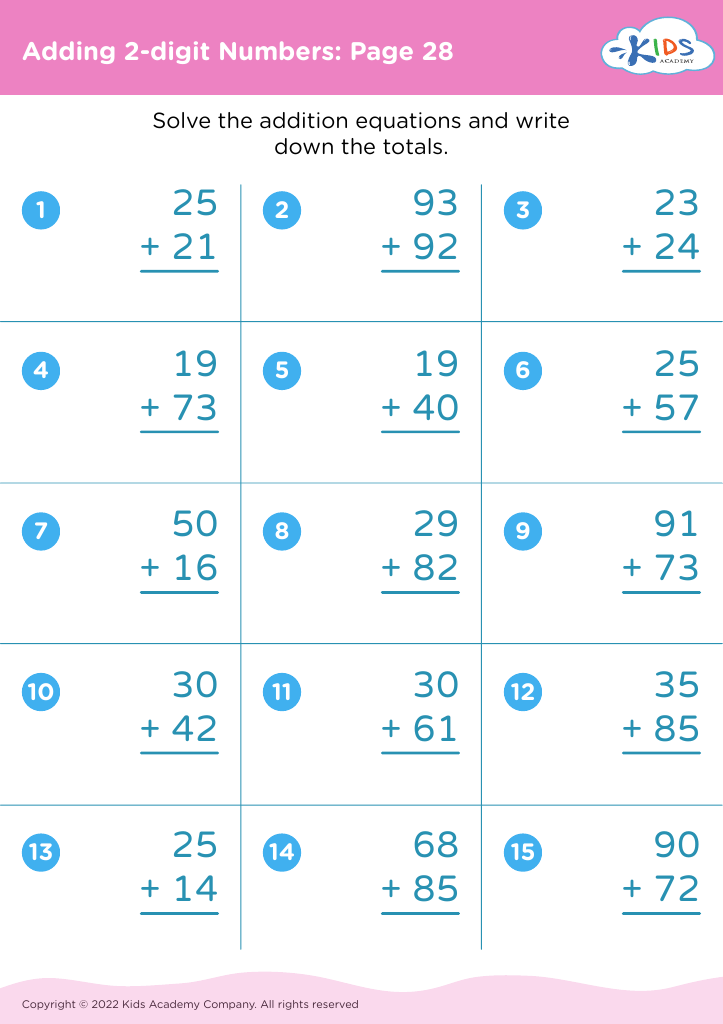
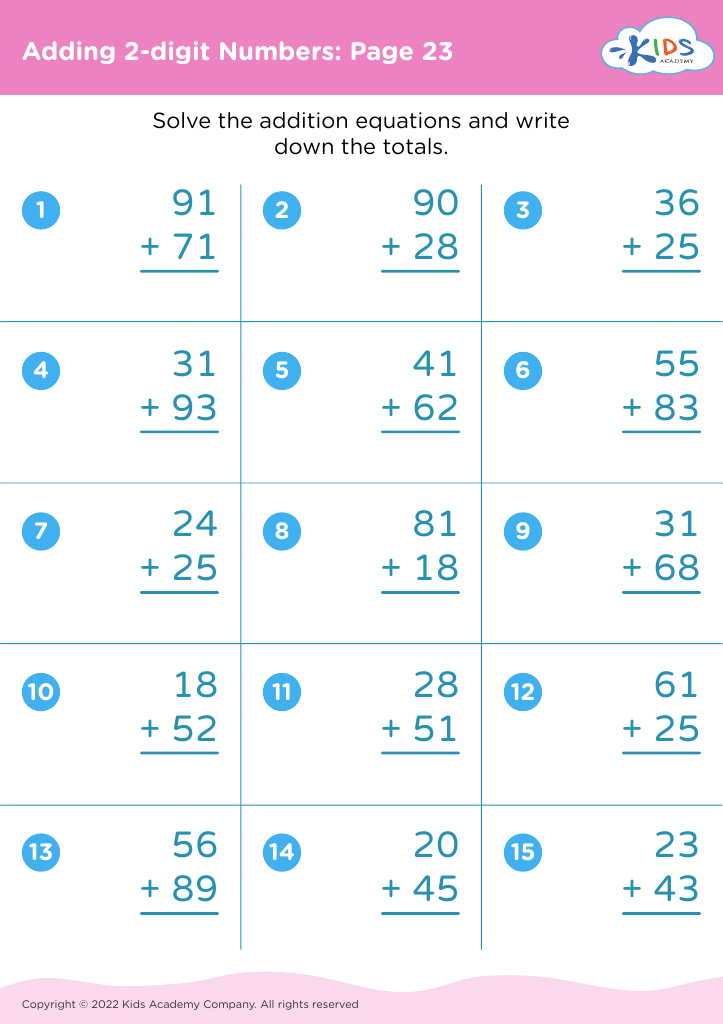
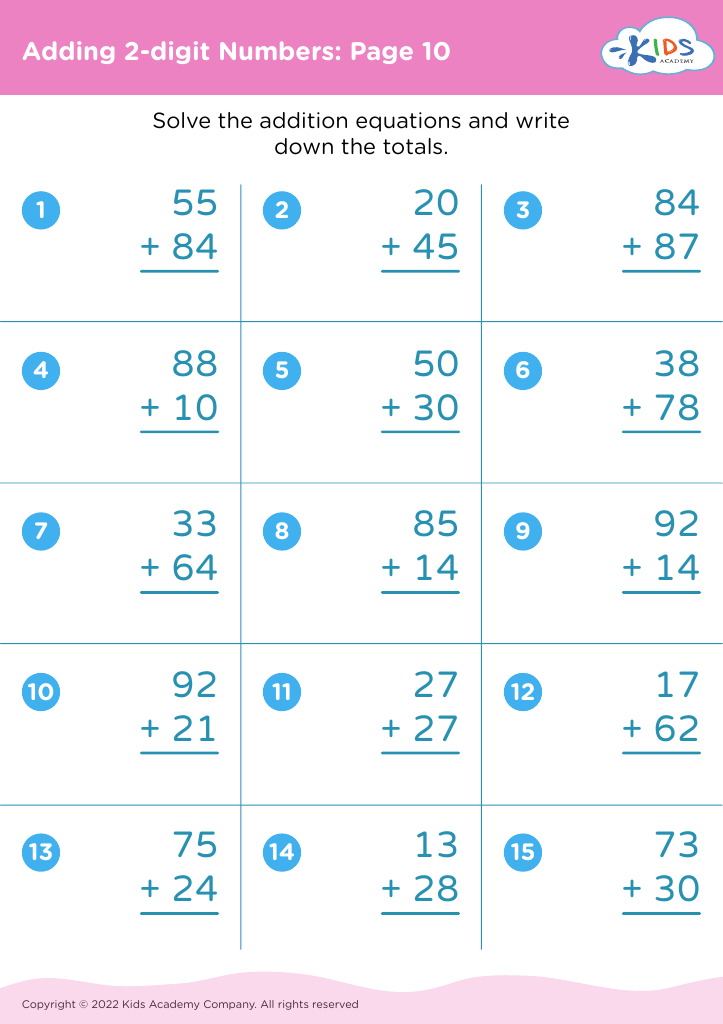
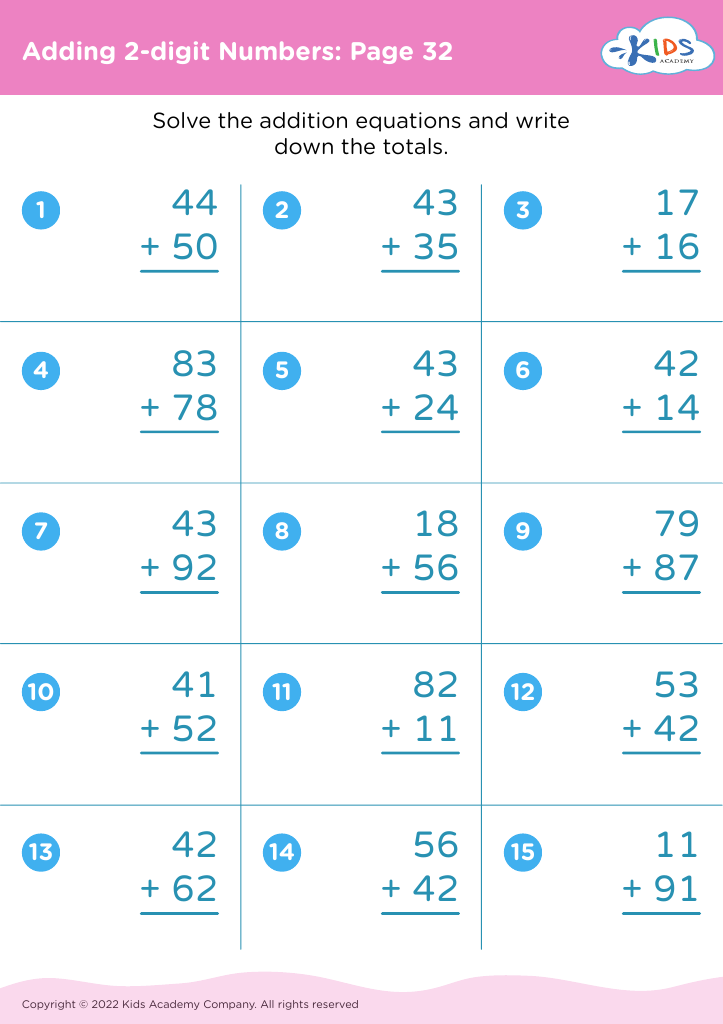
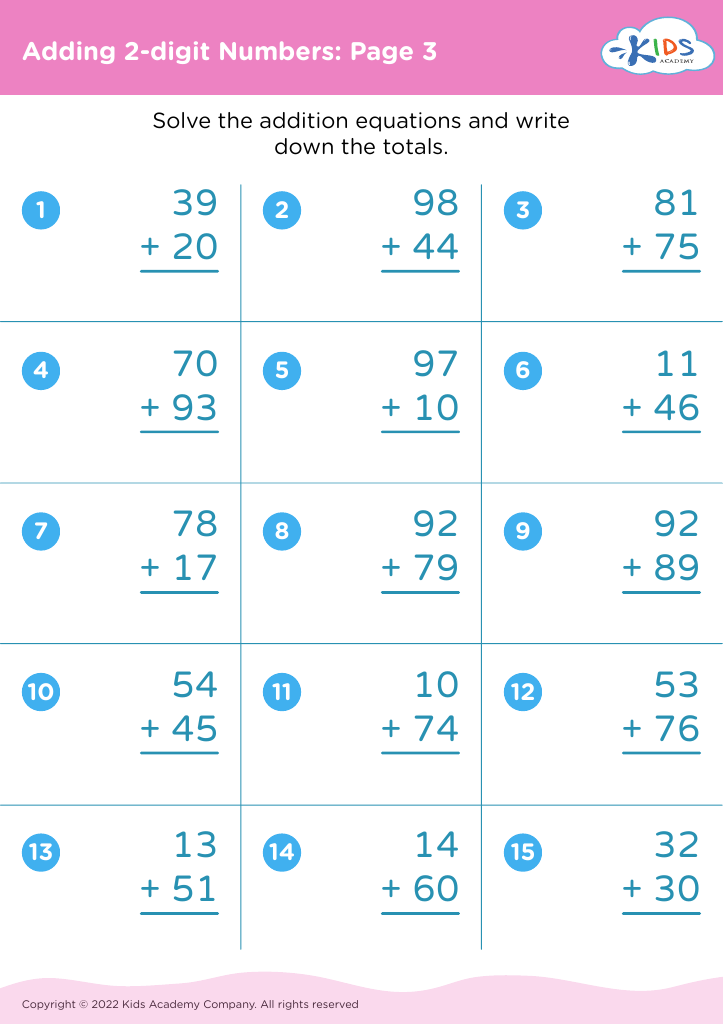
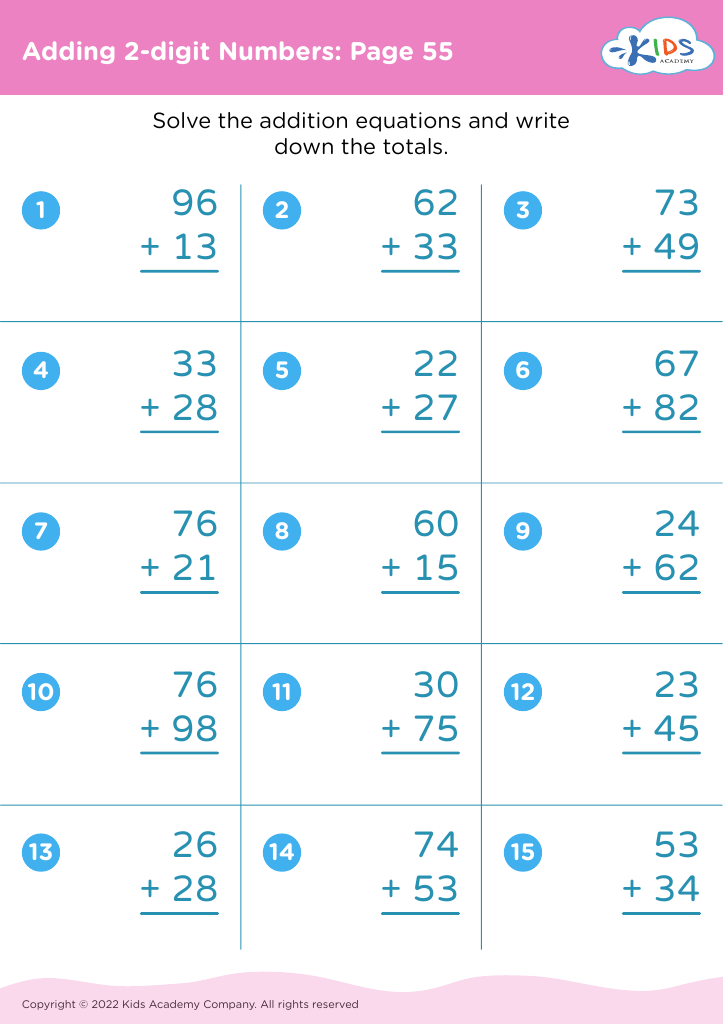
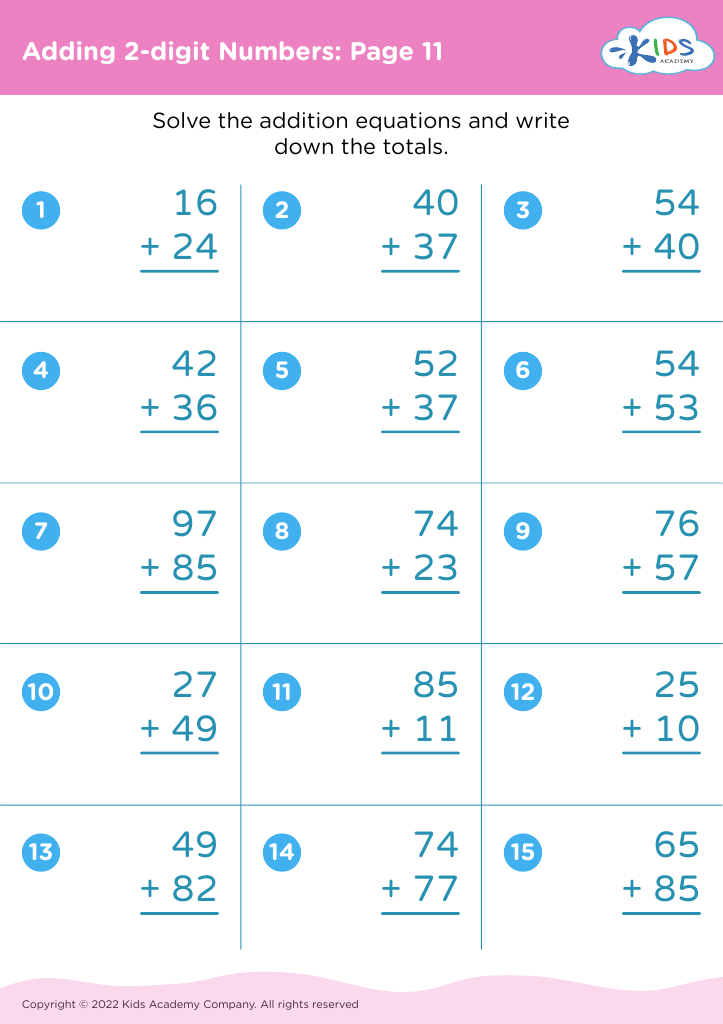
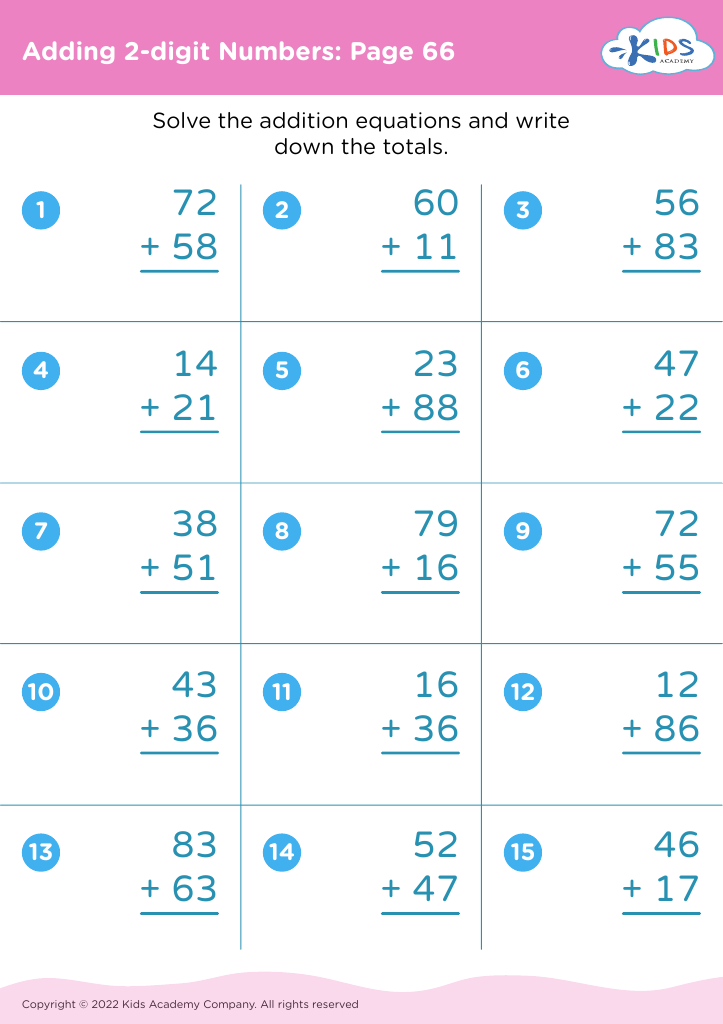
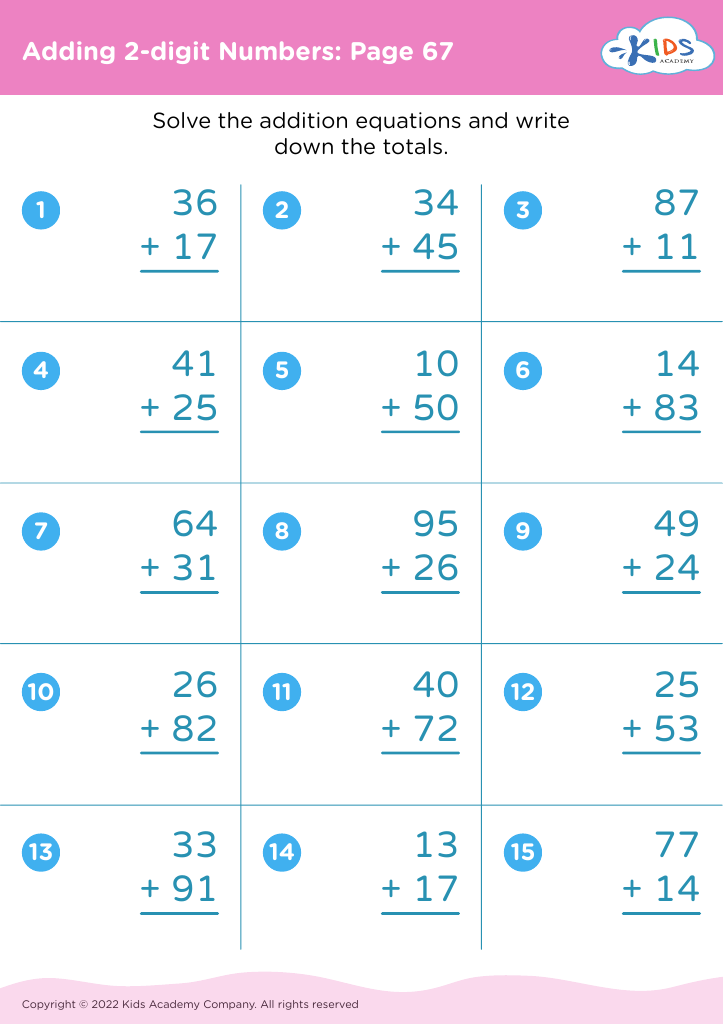








Parents and teachers play pivotal roles in shaping foundational skills in young children, and number recognition and adding 2-digit numbers are critical components of early mathematical education, especially for ages 4-8. Understanding numbers and their significance forms the bedrock of math literacy, which is essential for navigating everyday tasks and educational milestones.
First, number recognition helps children identify and differentiate between numerals. Mastery of this skill fosters confidence, as kids feel empowered to tackle basic arithmetic, which in turn is crucial for more complex problem-solving skills. For example, without recognizing that '34' is distinct from '43,' grasping other math concepts would be significantly more challenging.
Adding 2-digit numbers introduces children to the principles of place value, enhancing their understanding that numbers are constructed from different digits representing ones, tens, etc. This foundational knowledge propels them toward mental math abilities, improving their capacity to manipulate numbers effectively. Furthermore, engaging in such arithmetic exercises promotes cognitive development by strengthening memory and logical reasoning skills.
Lastly, an early focus on number skills sets the stage for academic success. Being proficient in basic math encourages positive attitudes towards future learning, lowering anxiety, and fostering a growth mindset. By valuing number recognition and elementary calculation at ages 4-8, parents and teachers ensure children are equipped with essential life skills and a strong foundation for curricular progression.








