Understanding patterns Adding 2-digit Numbers Worksheets for Ages 4-8
4 filtered results
-
From - To
Welcome to our "Understanding Patterns Adding 2-Digit Numbers Worksheets" designed specifically for children aged 4-8. These engaging worksheets focus on helping young learners recognize patterns in arithmetic, enhancing their addition skills with two-digit numbers. Through interactive exercises, children will explore how to add numbers by identifying patterns and relationships, making math both fun and intuitive. Our thoughtfully crafted materials support early math development while fostering critical thinking and problem-solving abilities. Ideal for home or classroom use, these worksheets are an excellent resource for nurturing a strong mathematical foundation. Start your child's learning journey today with exciting pattern-based activities!
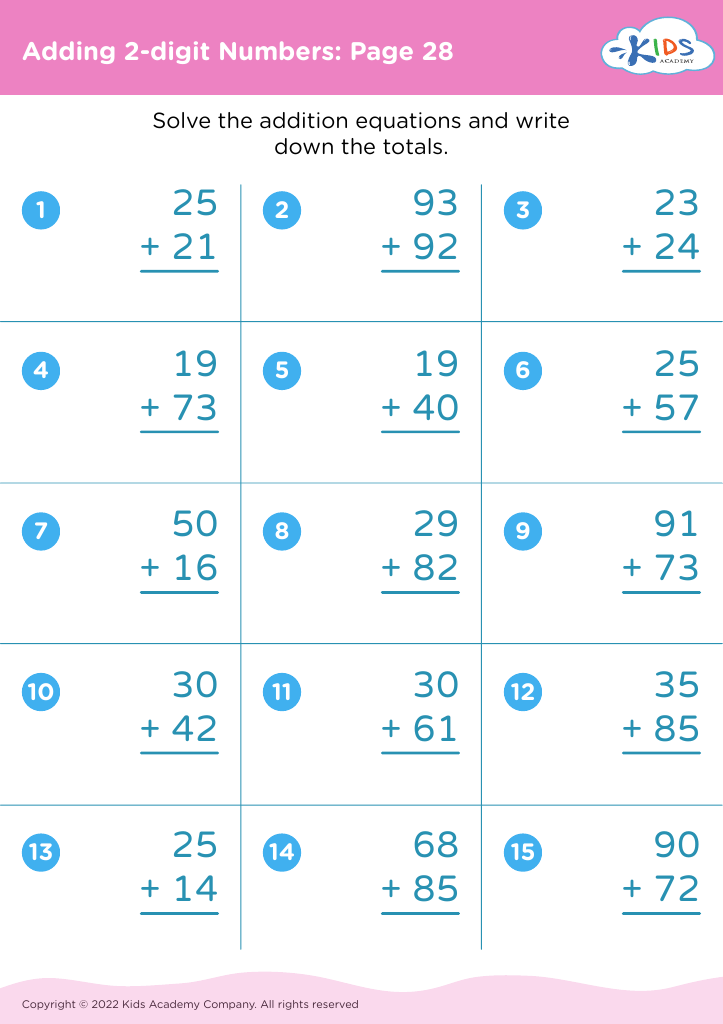
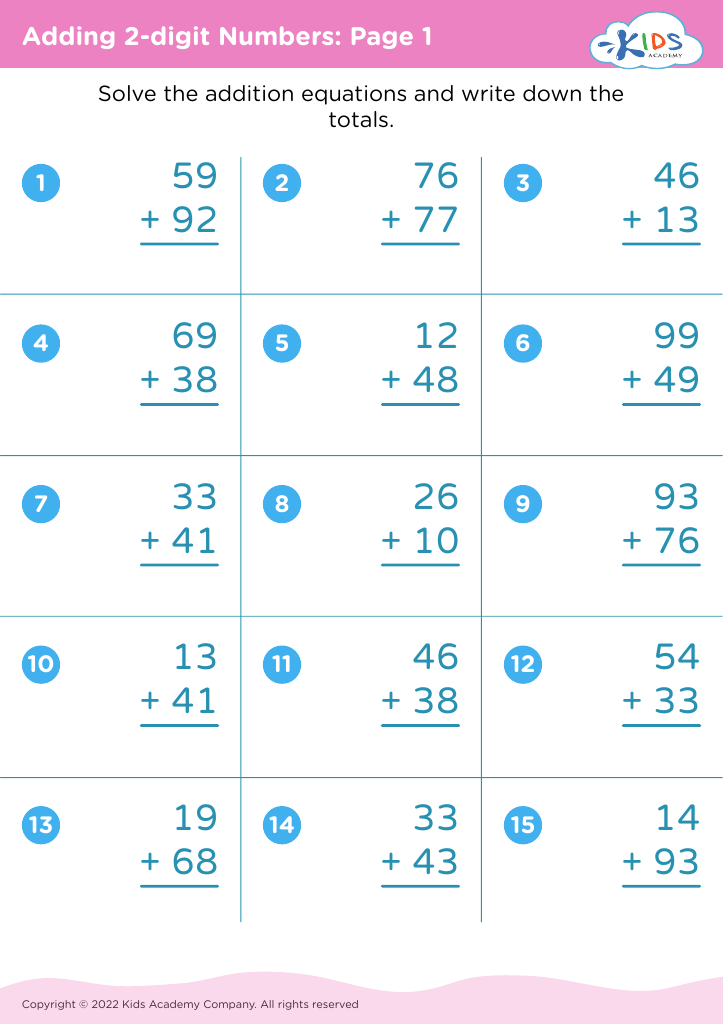
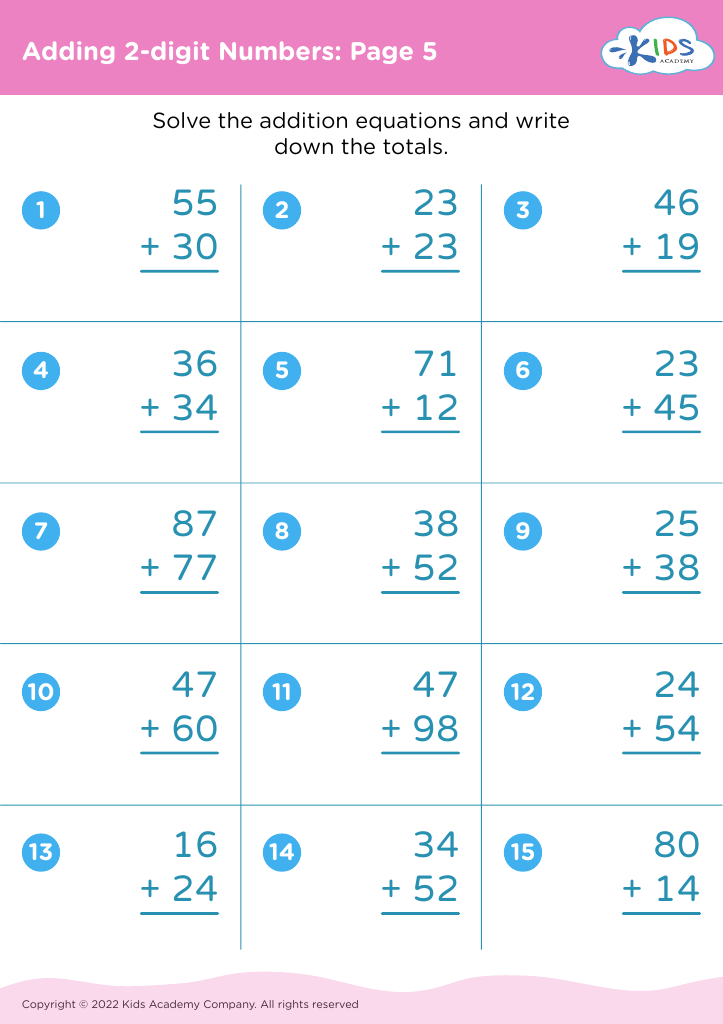
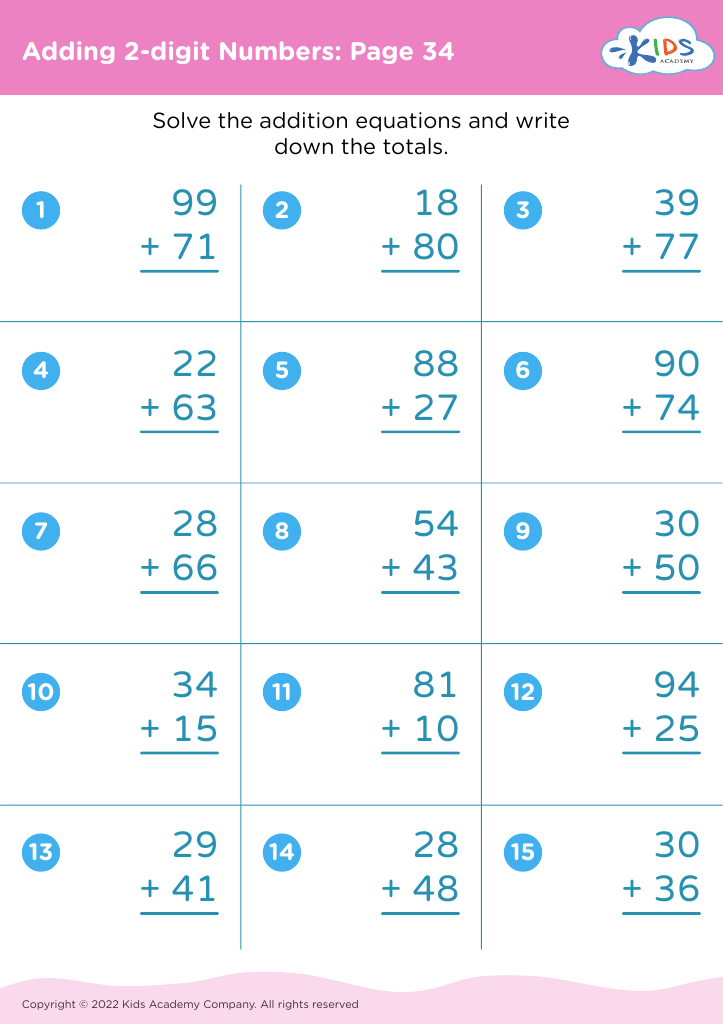








Understanding patterns and adding 2-digit numbers is crucial for children aged 4-8 because it lays the foundation for their mathematical development and cognitive skills. When parents and teachers prioritize this concept, they help children recognize relationships between numbers. This recognition is vital as it promotes critical thinking and problem-solving abilities that are applicable beyond mathematics.
By grasping patterns, children can develop strategies for addition, making the process less intimidating and more intuitive. For example, identifying patterns allows them to recognize when to group numbers or utilize "making ten" strategies, which simplifies calculations. Early exposure to these ideas fosters a deeper understanding of numerical relationships and prepares them for more advanced mathematical concepts in the future.
Moreover, nurturing these skills at this age enhances overall confidence in their academic abilities. Engaging young learners in pattern recognition and addition can make math enjoyable, promoting a positive attitude toward the subject. This, in turn, encourages a lifelong interest in learning and critical thinking. When educators and parents collaborate to support children in this area, they build a strong mathematical foundation that will benefit them throughout their educational journey.








