Understanding symmetry Adding 2-digit Numbers Worksheets for Ages 4-8
5 filtered results
-
From - To
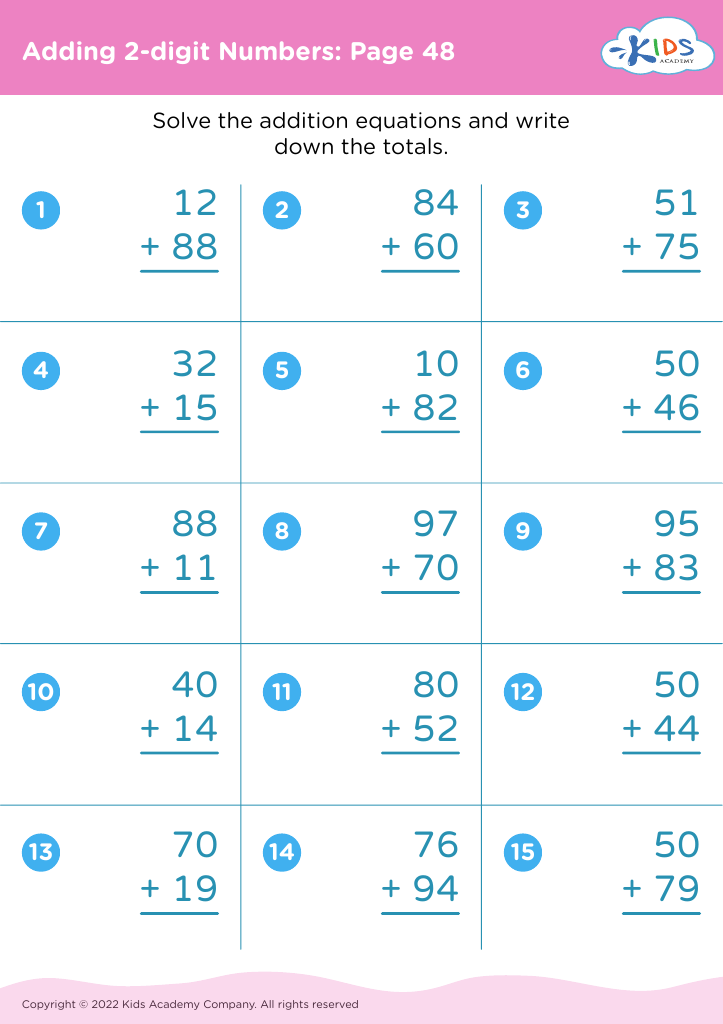
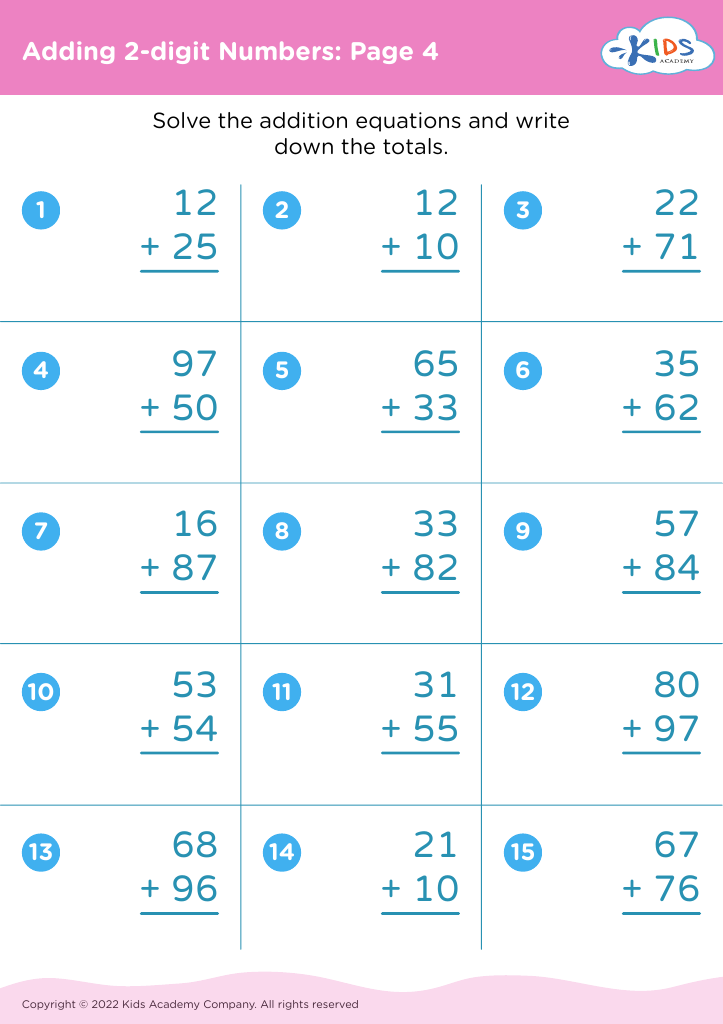
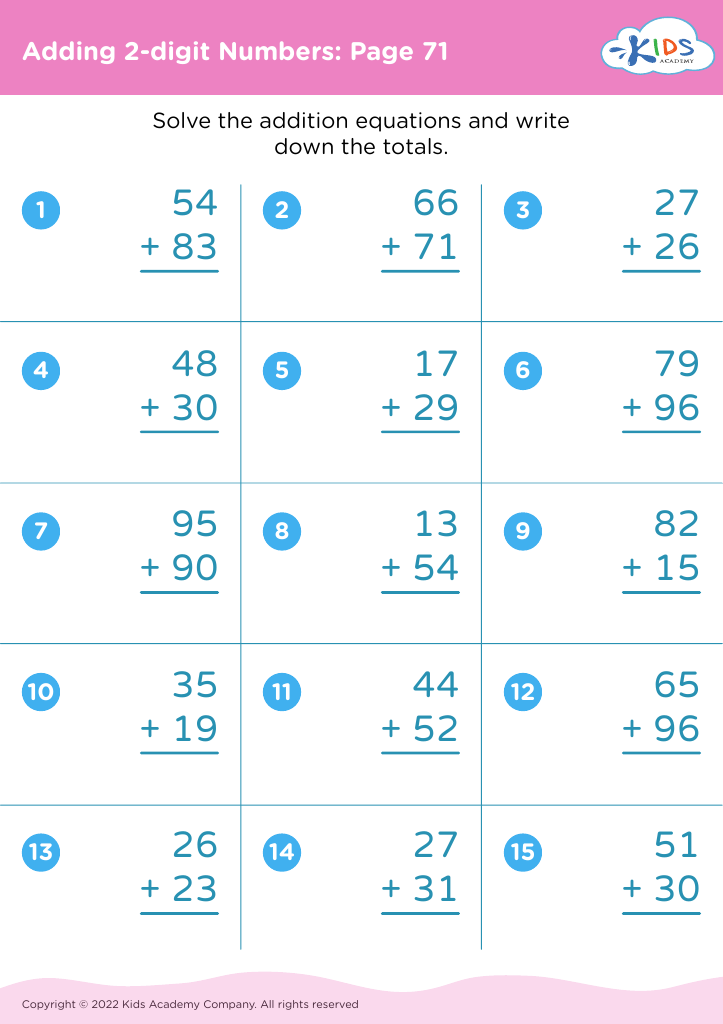
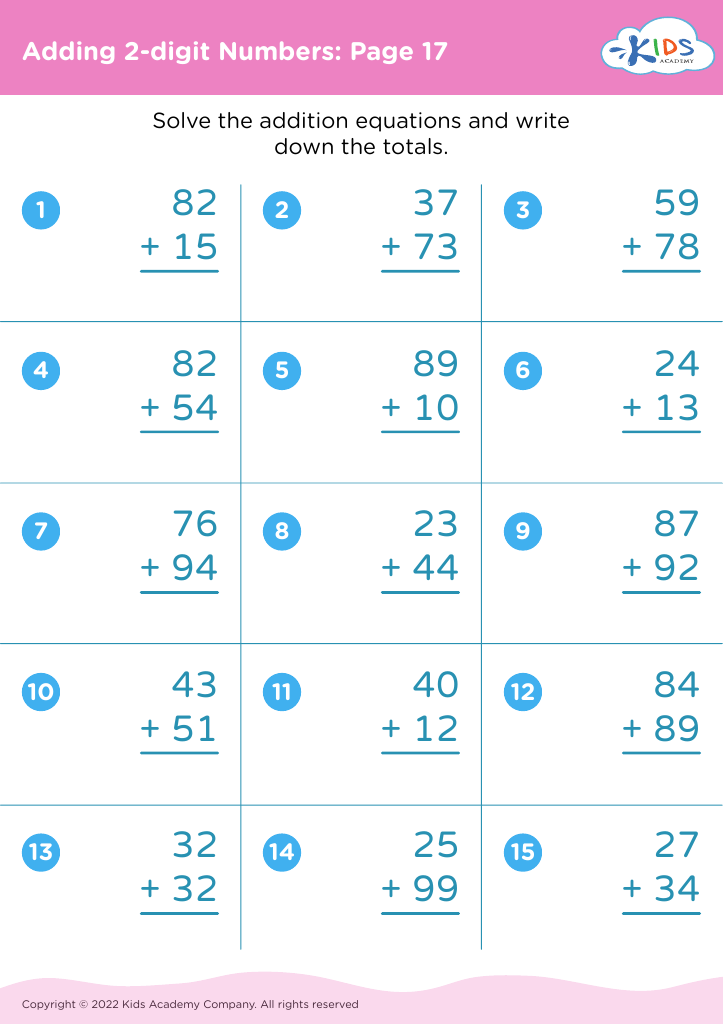
Introduce young minds to the fascinating world of symmetry with our "Understanding Symmetry Adding 2-digit Numbers Worksheets for Ages 4-8". These engaging worksheets effortlessly blend creative symmetry concepts with fundamental math skills, helping children grasp balance and harmony while mastering addition. Designed specifically for early learners, these resources feature vibrant visuals and interactive exercises, promoting both critical thinking and numerical proficiency. Perfect for educators and parents, our worksheets foster a love for learning, ensuring kids build a strong mathematical foundation. Explore our collection and watch your child’s confidence and skills blossom today!
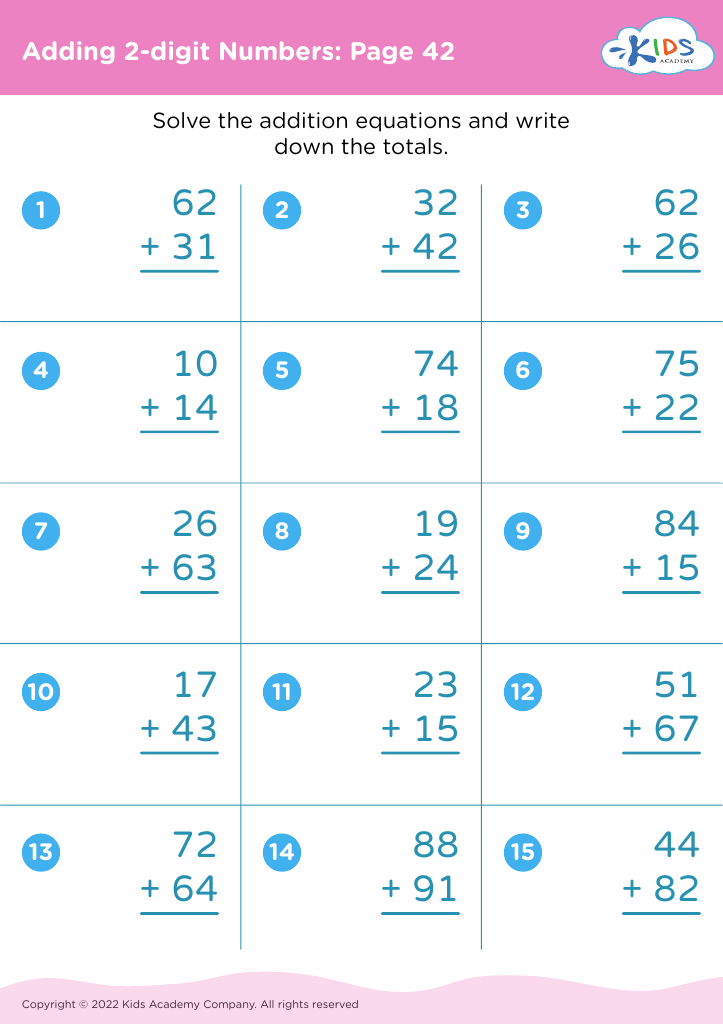








Understanding symmetry and adding 2-digit numbers are fundamental concepts in early childhood education for several beneficial reasons. Symmetry introduces children to essential aspects of geometry and spatial awareness. When children recognize and understand symmetry, they are honing their abilities to observe, describe, and predict patterns in the world around them—a skill which extends beyond math to art, science, and even everyday problem solving.
Incorporating the addition of 2-digit numbers promotes number sense, which is a cornerstone for all future mathematical learning. By mastering this skill, children learn to understand and manipulate larger numbers, grasp place value concepts, and develop logical thinking abilities. It fosters both their arithmetic fluency and confidence, making it easier for them to tackle more complex operations like subtraction, multiplication, and division as they progress.
Early developing proficiency in these areas also lays down a positive academic foundation. Parents and teachers who emphasize these skills can nurture a child’s intellectual curiosity and resilience, encouraging a love for learning that persists throughout their academic journey. These early interactions with concepts of symmetry and arithmetic encourage young learners to explore, recognize patterns, and develop a precise and critical approach to thinking—attributes that are beneficial both academically and in daily life. Thus, investing time and effort in these basic skills equips children with the tools they need for a bright educational future.








