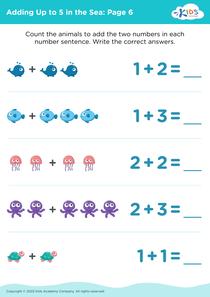
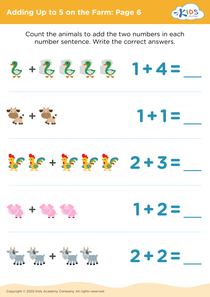
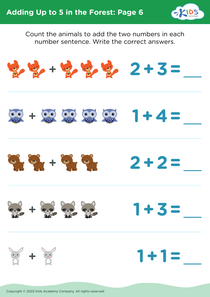
Animal identification Adding at the Zoo Worksheets for Ages 4-8
8 filtered results
-
From - To
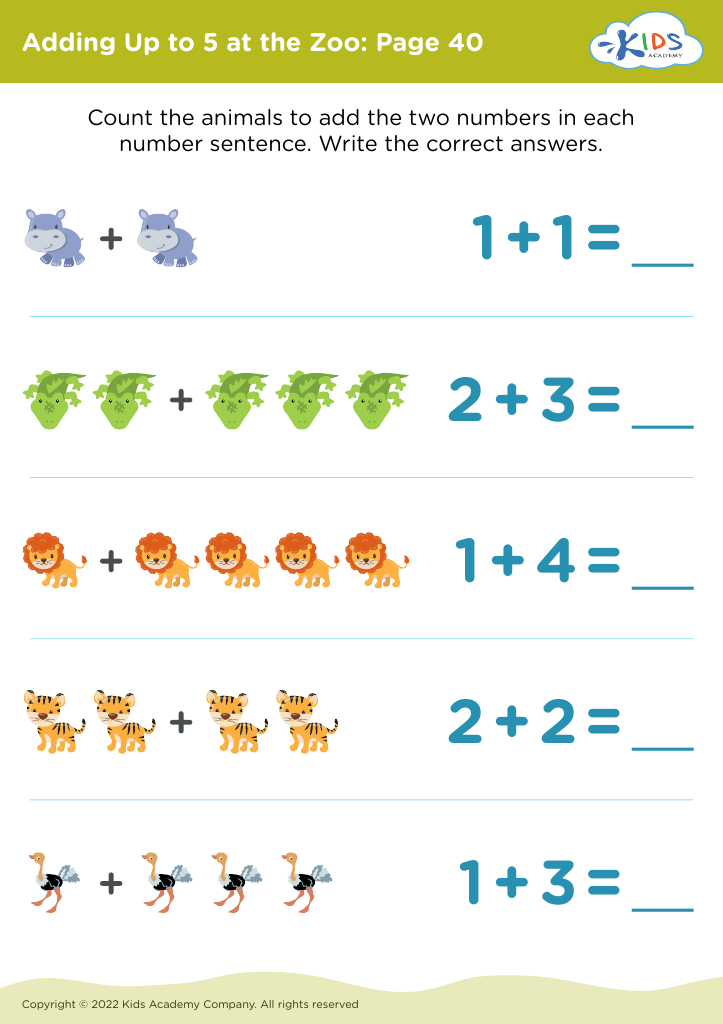
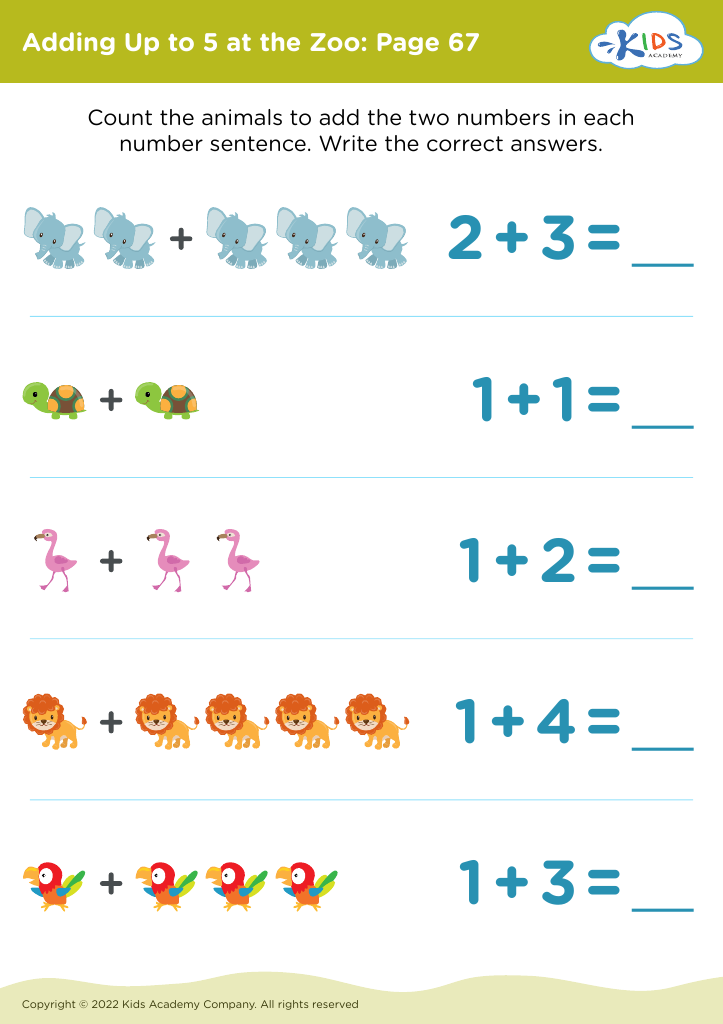
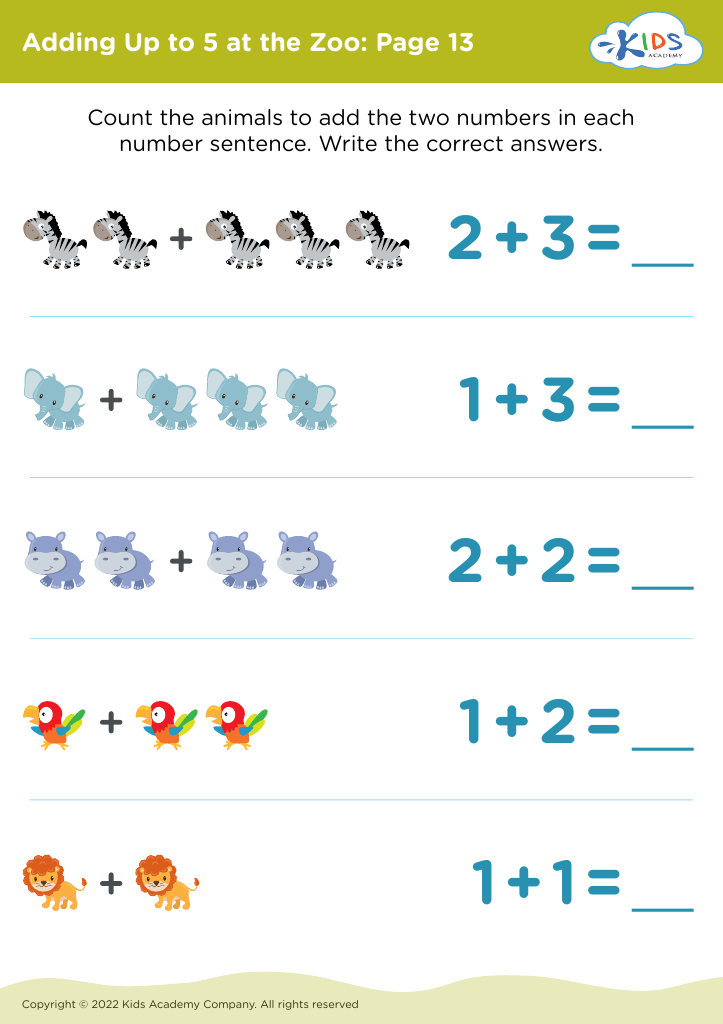
Enhance your child's math skills with our "Animal Identification Adding at the Zoo Worksheets for Ages 4-8." These fun and educational worksheets are designed to captivate young learners through colorful zoo animal-themed activities. Children will practice counting and basic addition while identifying various animals, boosting their mathematical proficiency and animal recognition skills. Perfect for kindergarten and elementary students, these engaging exercises foster a love for learning through play. Ideal for both classroom use and homeschooling, our worksheets provide a delightful way for kids to develop fundamental math concepts and a deeper appreciation for wildlife.
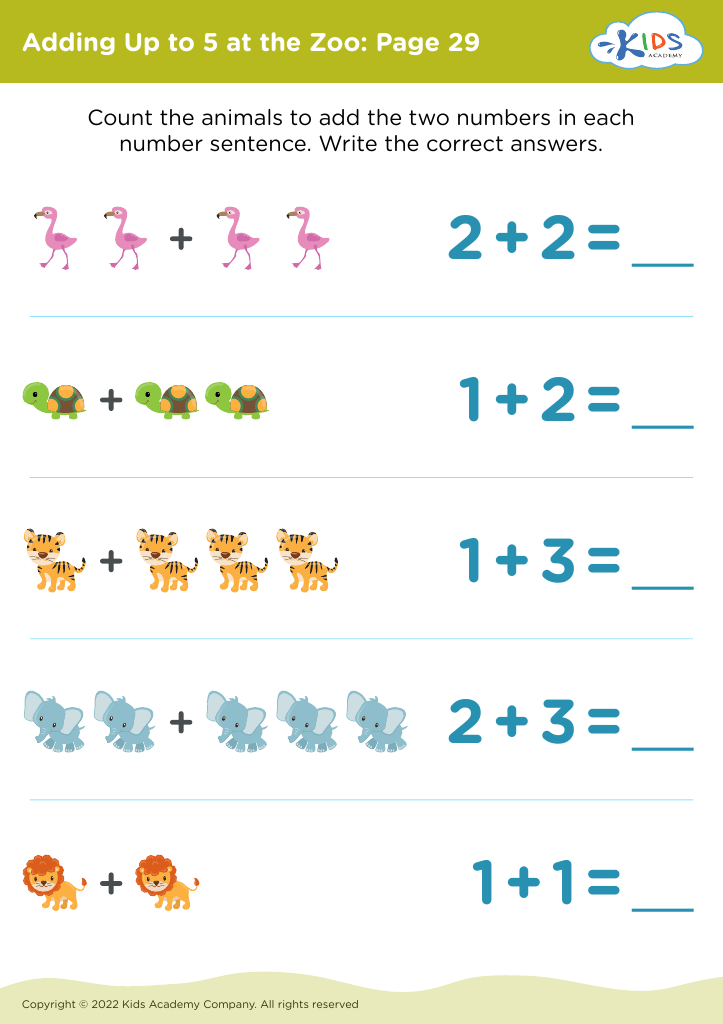
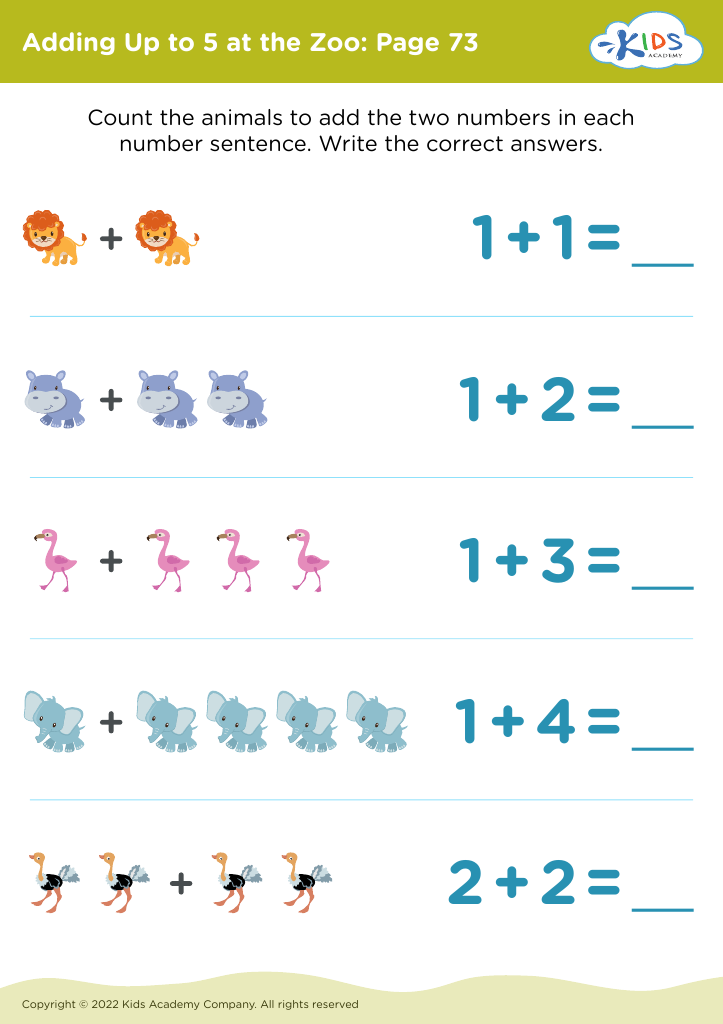
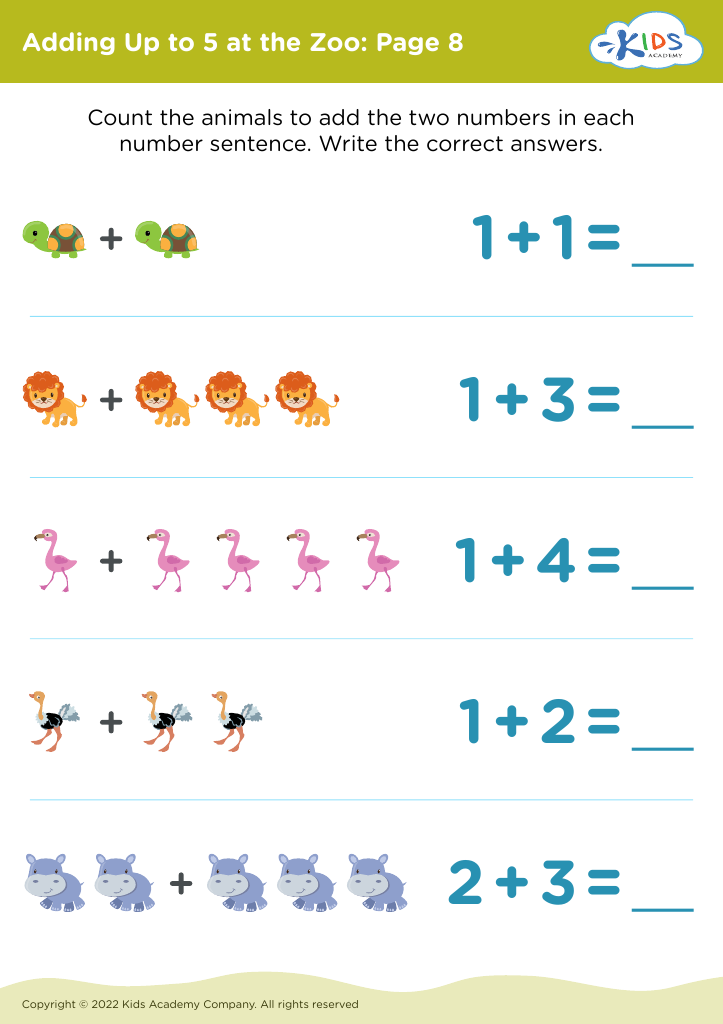
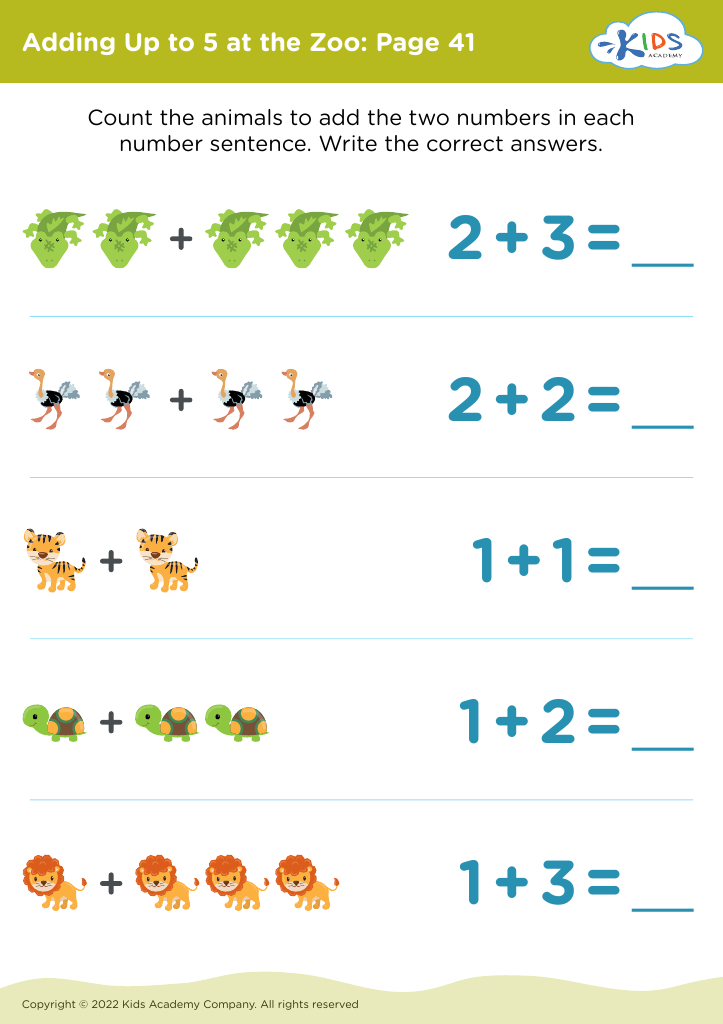
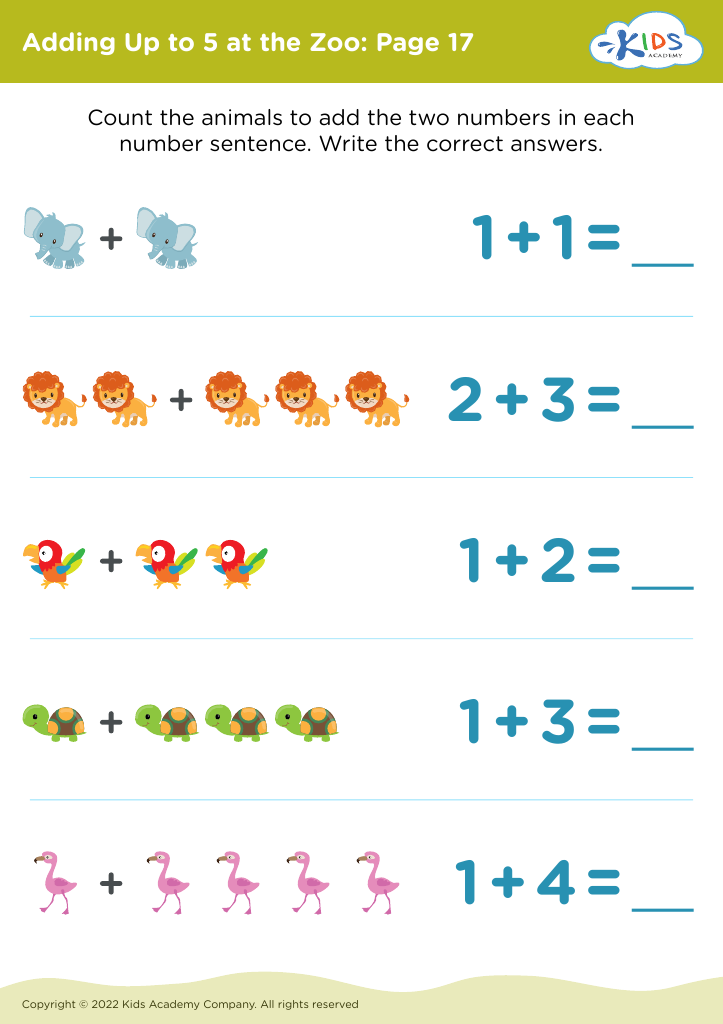



Animal identification activities at the zoo for children ages 4-8 offer numerous educational and developmental benefits, making them highly valuable for parents and teachers. Firstly, these activities encourage observational skills, fostering children's attention to detail as they carefully watch animals and note distinguishing features. This skill can significantly benefit their future learning abilities, including reading comprehension and critical thinking.
Secondly, by recognizing and naming different animal species, children expand their vocabulary and language skills. Interactive learning environments like zoos provide an engaging context where new words are tied to visual and experiential memories. Understanding animal behaviors and habitats also spark curiosity and foster a lifelong love of learning and nature.
Moreover, such activities integrate well with interdisciplinary learning, encompassing science, geography, and even art. Learning about animals introduces basic biological concepts and environmental stewardship, highlighting the importance of biodiversity and conservation. This early introduction cultivates respect for living beings and promotes empathy, helping children grow into responsible and compassionate individuals.
Socially, these activities offer an excellent platform for collaborative learning. Kids often interact and share knowledge with each other, strengthening social bonds and teamwork skills.
In essence, animal identification activities are not just educational; they are holistic learning experiences that nurture cognitive, language, social, and emotional development, providing children with a well-rounded foundation for future growth.