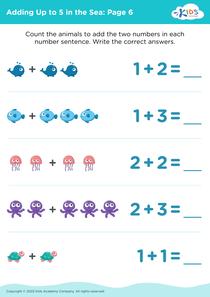
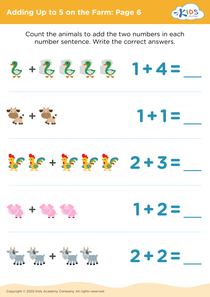
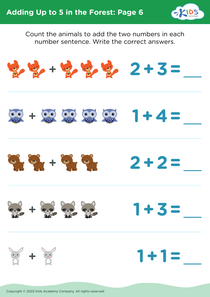
Basic addition practice Adding at the Zoo Worksheets for Ages 4-8
3 filtered results
-
From - To
Welcome to our "Basic Addition Practice: Adding at the Zoo" worksheets designed for children ages 4-8! These engaging worksheets inspire young learners to explore addition in a fun and interactive way. Featuring adorable zoo animals, kids will enjoy solving simple addition problems while enhancing their math skills. The colorful and vibrant illustrations make learning enjoyable, helping children grasp fundamental math concepts. Each worksheet is carefully crafted to build confidence in addition, making it perfect for home or classroom use. Prepare your little ones for math success with our playful and educational resources that foster a love for learning!
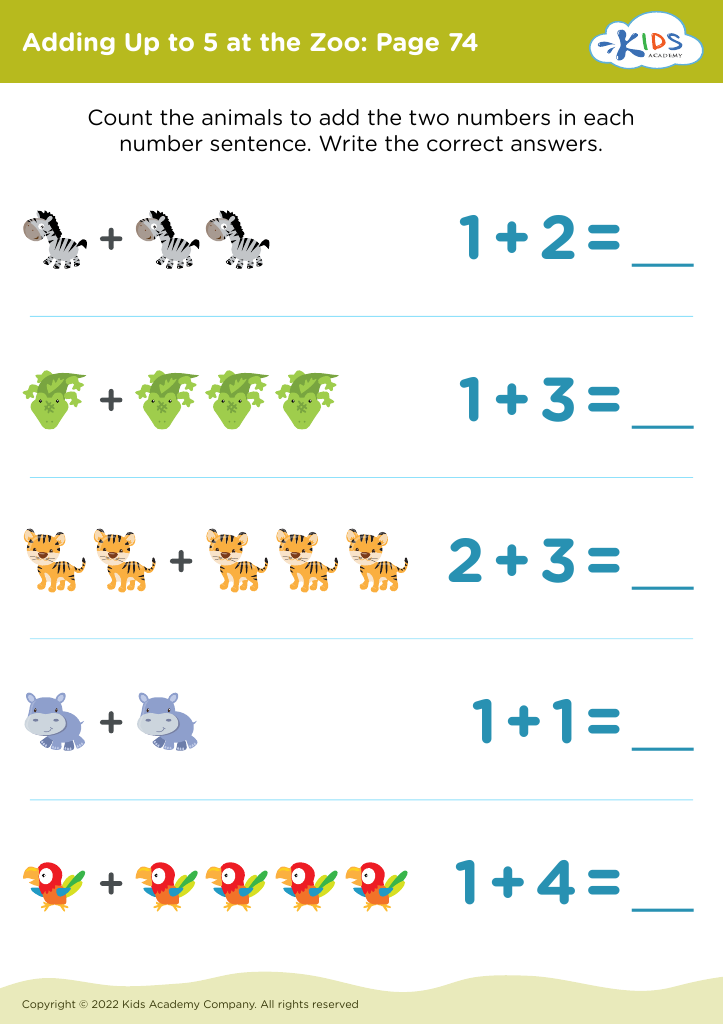
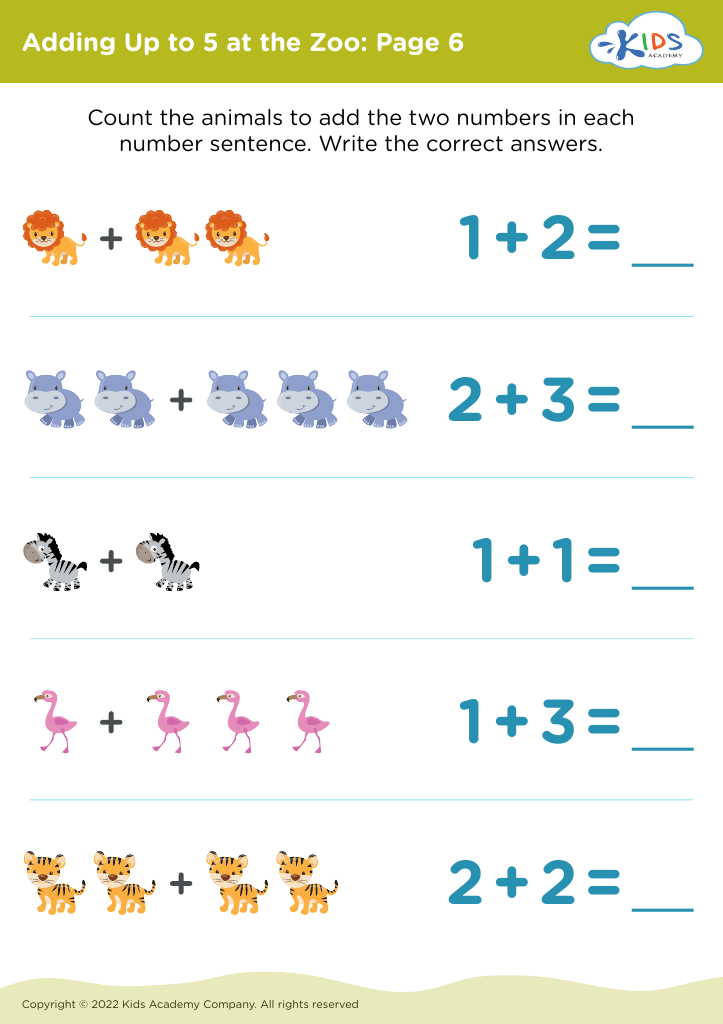
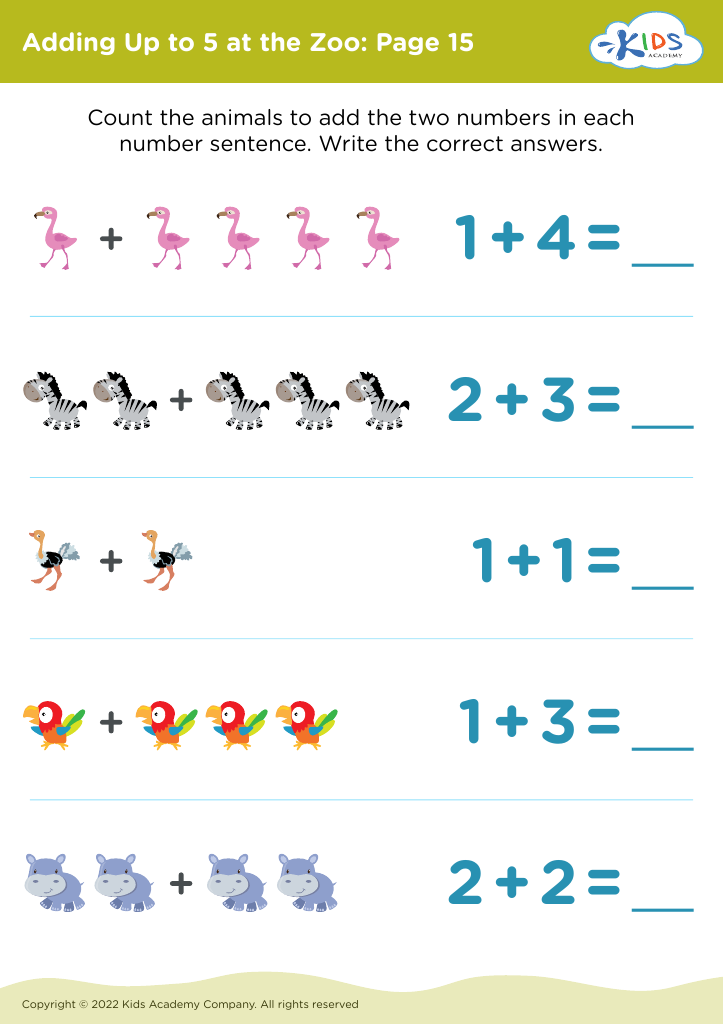



Basic addition practice, like "Adding at the Zoo," is essential for young learners aged 4-8 for several reasons. First and foremost, it lays the foundation for critical math skills. Early proficiency in addition contributes to a child's overall confidence in mathematics, setting them up for future academic success. Engaging activities, such as those themed around a zoo, capture children's interest, making learning enjoyable and memorable.
Moreover, practicing addition enhances cognitive development by promoting problem-solving skills and logical thinking. When children engage with fun, relatable contexts like animals, they not only learn mathematical concepts but also develop a love for learning. It encourages active participation, enabling children to visualize numbers and understand the concept of quantity through hands-on experiences.
For parents and teachers, prioritizing basic addition practice fosters communication and bonding opportunities. Activities like these can be integrated into everyday life, allowing parents to engage with their children in meaningful ways. Additionally, as children master these skills, they are more likely to feel motivated and eager to take on more challenging concepts. Ultimately, by emphasizing basic addition practice, parents and teachers equip children with essential skills for both academic achievement and lifelong learning.