Basic arithmetic practice Adding at the Zoo Worksheets for Ages 4-8
4 filtered results
-
From - To
Welcome to our "Adding at the Zoo Worksheets" designed specifically for children ages 4-8! These engaging worksheets transform basic arithmetic practice into a fun adventure. Your little ones will explore the zoo while learning to add, honing their math skills through vibrant, animal-themed problems. With a variety of exercises at different difficulty levels, children can practice single and double-digit addition within the context of their favorite wildlife. Ideal for both home and classroom use, these worksheets reinforce essential math concepts in an interactive way, promoting a positive learning experience. Download now and watch your child's confidence in math soar!
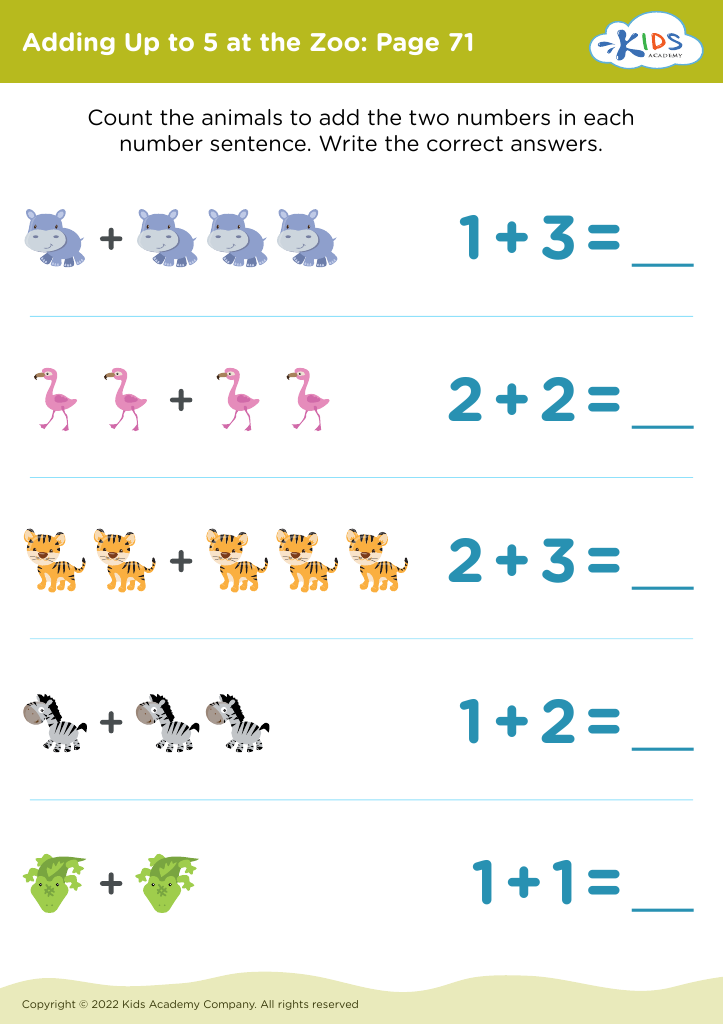
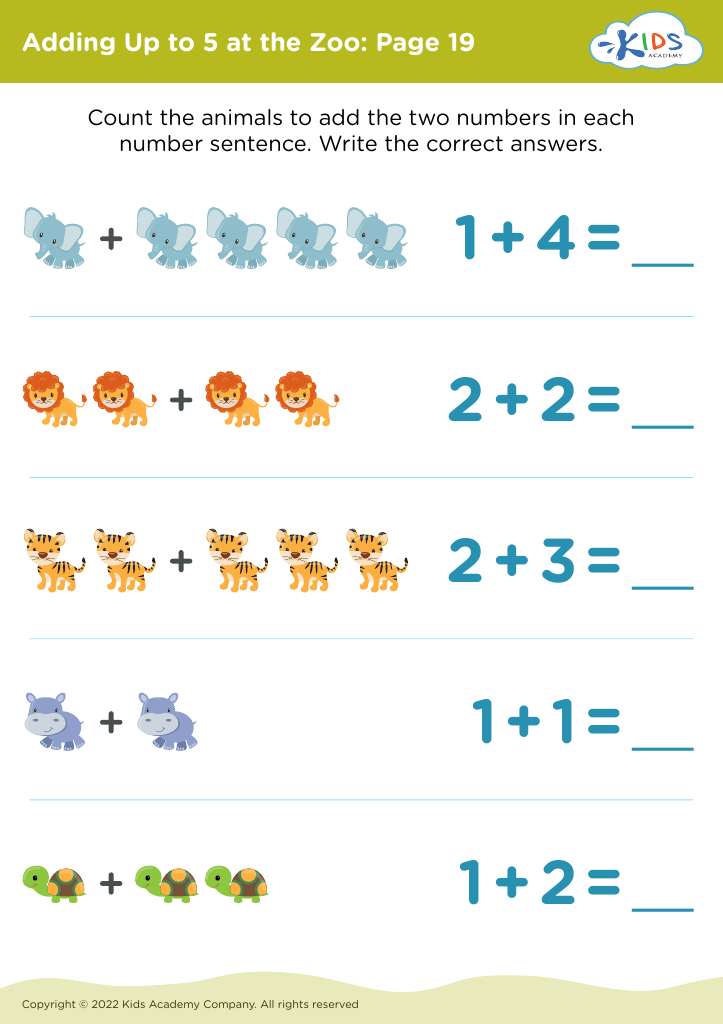
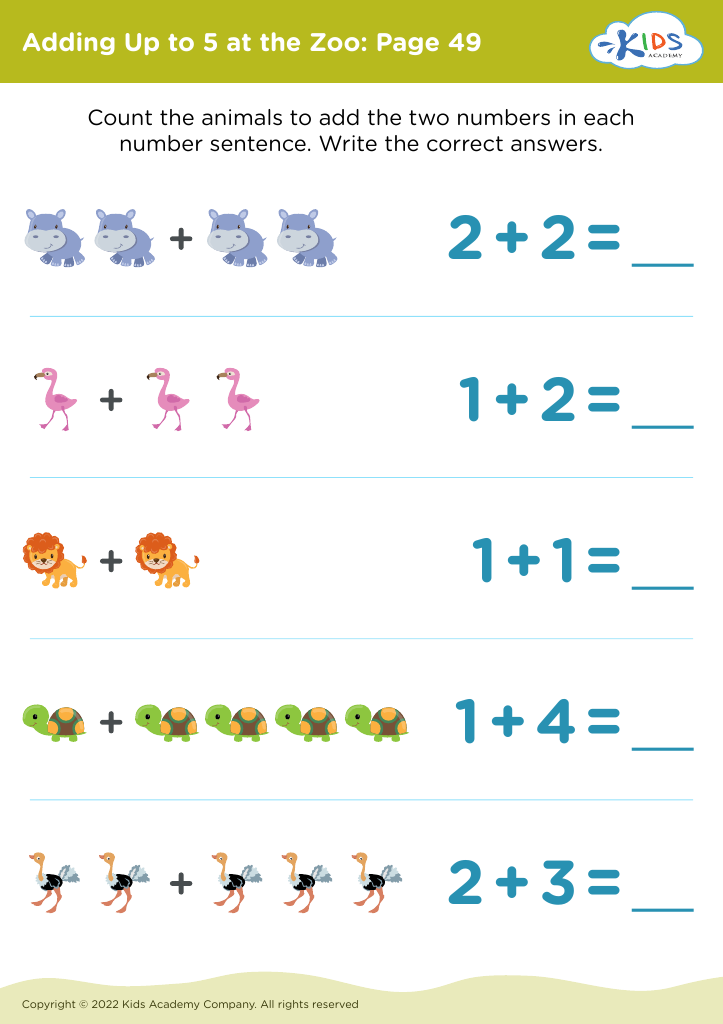
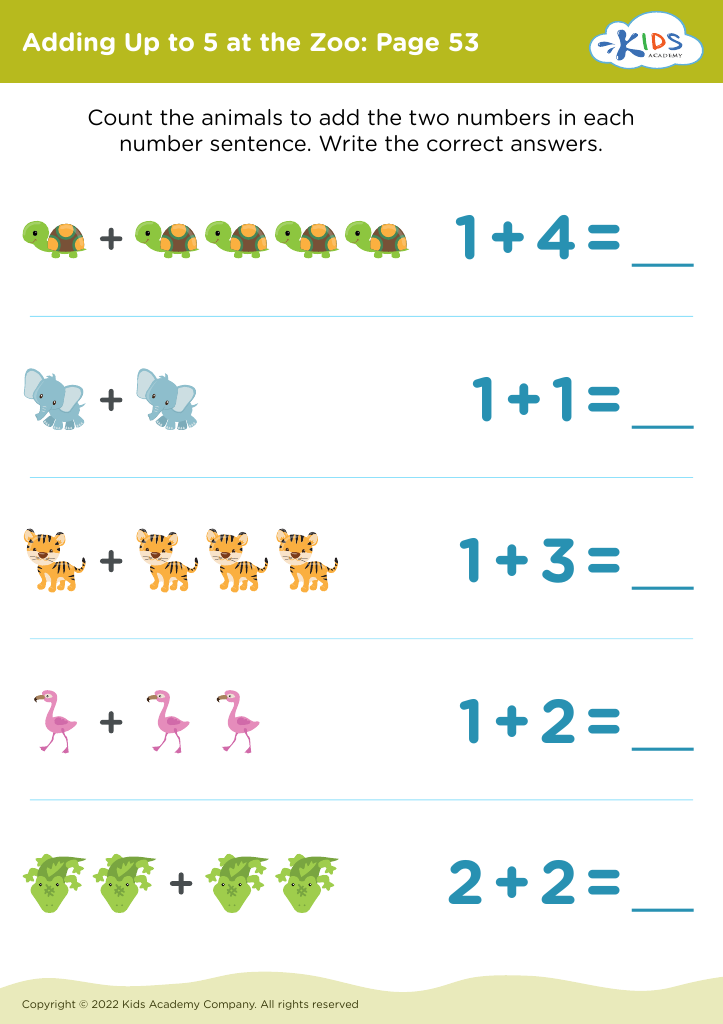



Parents and teachers should prioritize basic arithmetic practice, such as the "Adding at the Zoo" activity, for children ages 4-8 because it methodically builds foundational math skills in a fun and engaging way. Early introduction to mathematics sets the groundwork for more complex concepts in later grades. Adding at the Zoo creatively integrates animals and playful scenarios, capturing children’s attention while reinforcing essential addition skills. This thematic approach helps make abstract numbers more relatable, encouraging positive associations with math.
Moreover, engaging arithmetic concepts can develop critical thinking skills and improve cognitive abilities. It also promotes hand-eye coordination and fine motor skills if it includes activities like counting physical tokens or animal figures. This kind of practice fosters a positive attitude towards problem-solving and math, combating anxiety that children might develop around the subject.
Incorporating playful, real-world scenarios encourages children to understand the practical applications of these skills, making learning more meaningful. By caring about these early arithmetic experiences, parents and teachers can facilitate a supportive environment where children feel confident and excited about mathematics, nurturing their lifelong learning journey.