Fine Motor Skills Adding in the Forest Worksheets for Ages 4-8
5 filtered results
-
From - To
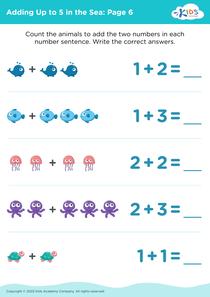
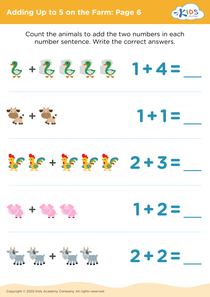
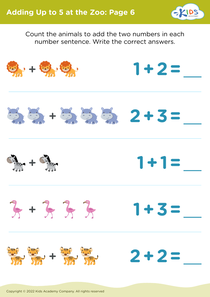
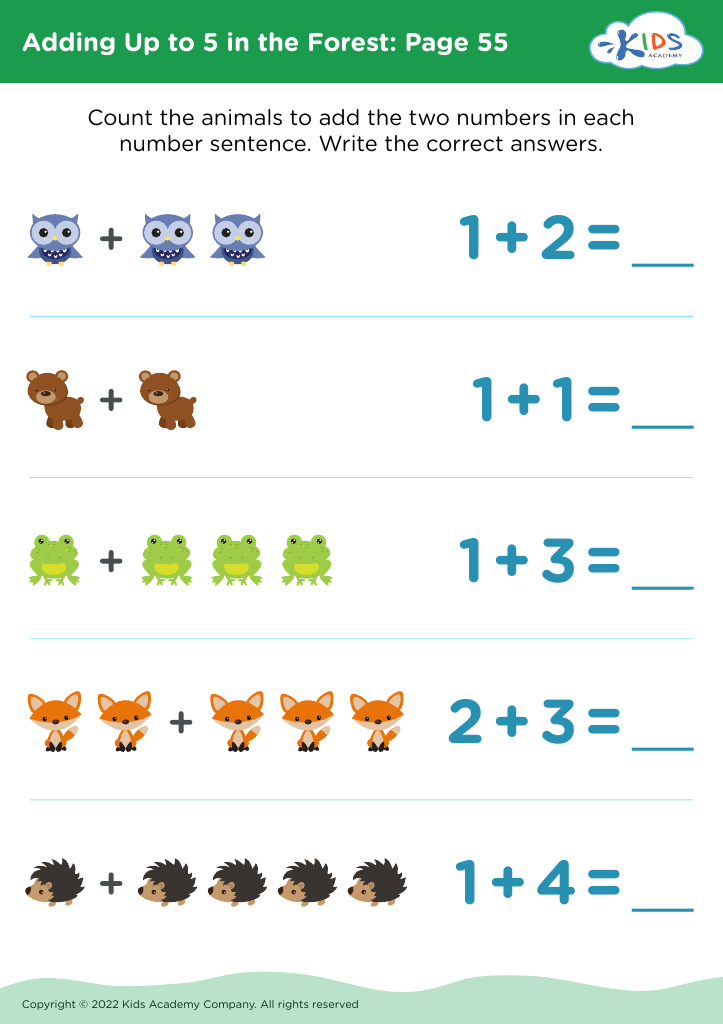
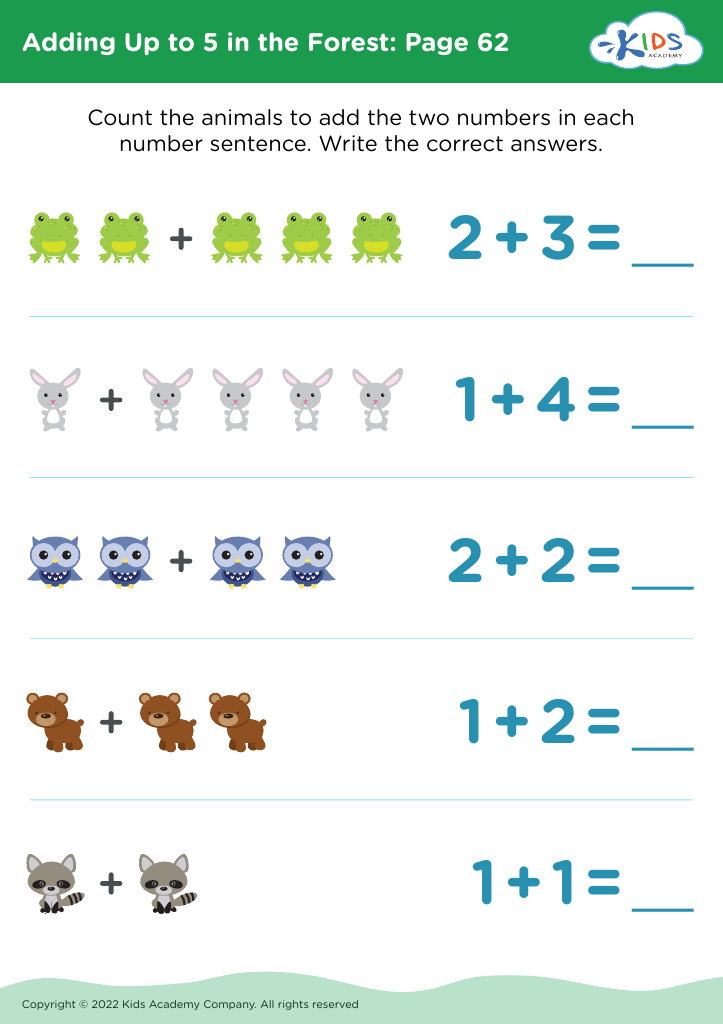
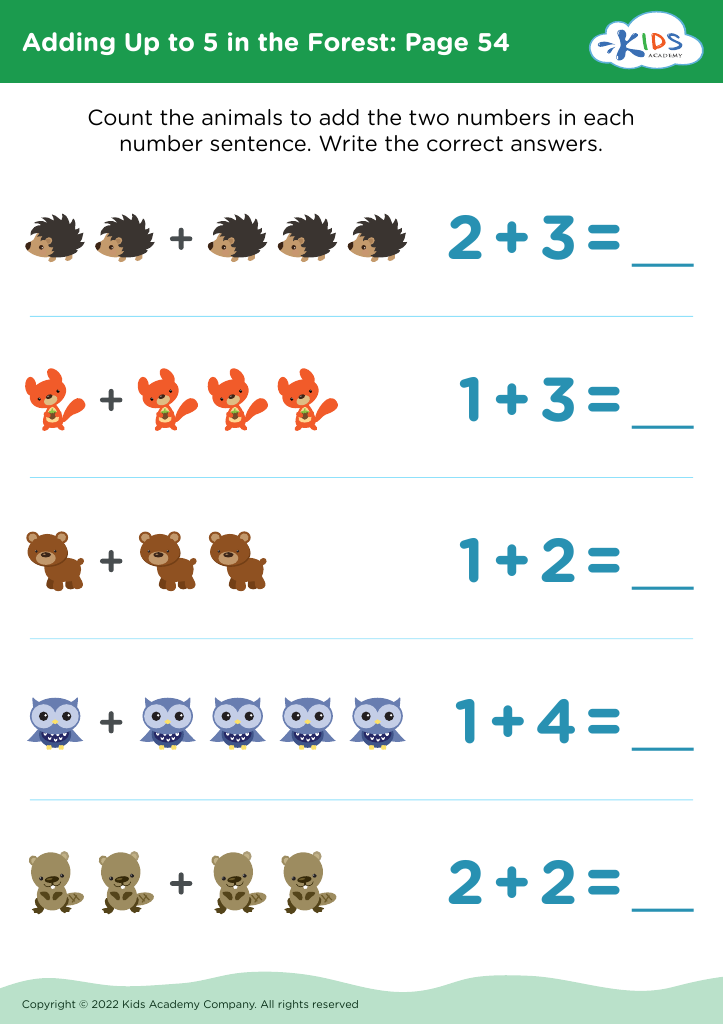
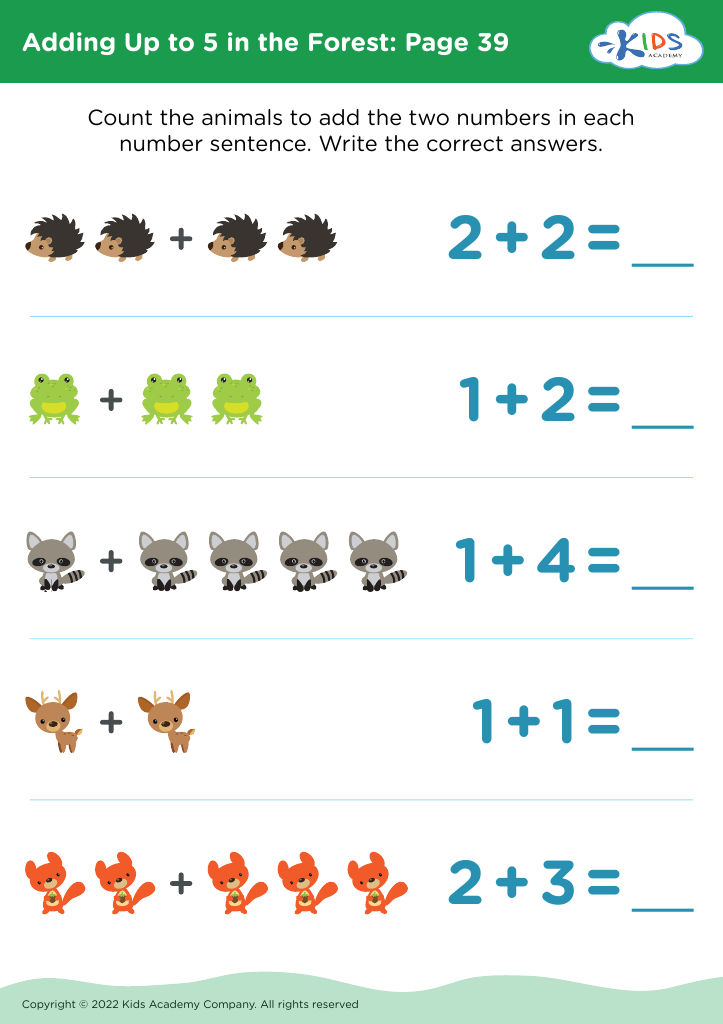
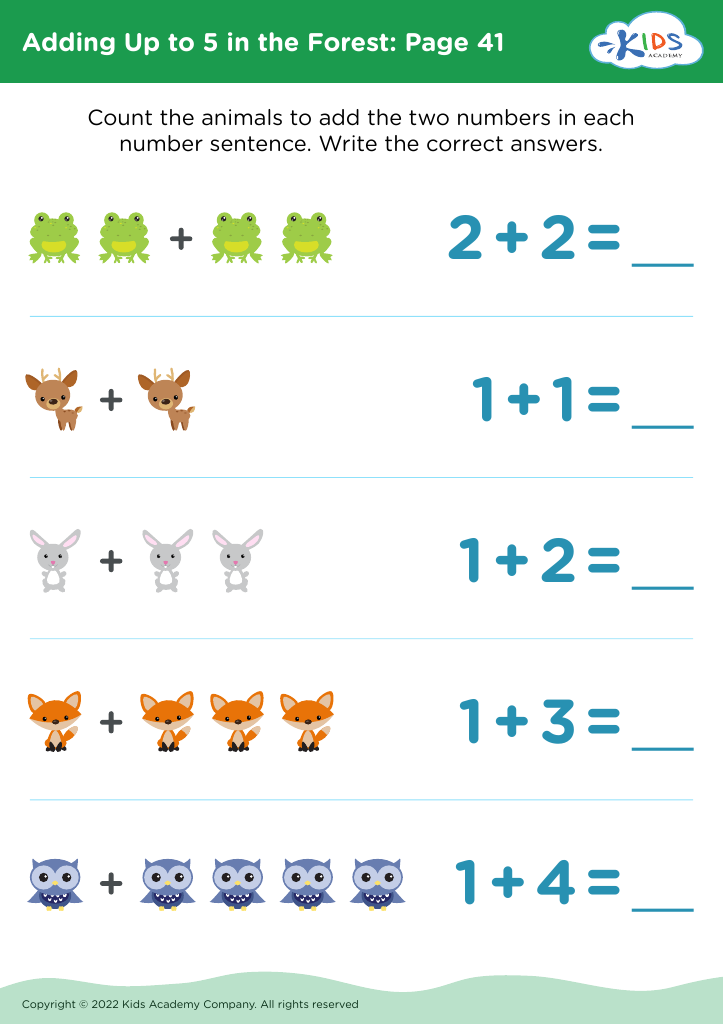
Welcome to our "Fine Motor Skills Adding in the Forest Worksheets" designed for children aged 4-8! These engaging activities seamlessly combine math learning with the joy of nature. Kids will practice addition while enhancing their fine motor skills through fun, hands-on exercises. Each worksheet invites young learners to trace, cut, and color, fostering tactile exploration alongside essential math concepts. Perfect for at-home learning or classroom settings, these worksheets make developing foundational skills exciting and interactive. Dive into the forest-themed adventures and watch your child's confidence and capabilities soar as they master addition and fine motor dexterity with ease!



Parents and teachers should prioritize fine motor skills development in children ages 4-8 because these skills form the foundation for many essential tasks and learning experiences. Fine motor skills involve the coordination of small muscles in the hands and fingers, which are crucial for activities like writing, drawing, cutting, and self-hygiene.
Engaging children in activities that promote fine motor skills, such as adding in a forest setting, creates unique and interactive learning experiences. This hands-on approach not only makes learning exciting but also encourages outdoor exploration, fostering a connection with nature. While children practice counting and simple arithmetic by adding forest-related items like leaves, stones, or twigs, they develop problem-solving skills and critical thinking.
Moreover, as children manipulate objects, they enhance their dexterity and hand-eye coordination, which are pivotal for their overall development. Strengthening fine motor skills in these formative years can lead to greater confidence and independence in academic and daily tasks. Therefore, parents and teachers should embrace opportunities that integrate fine motor skill activities with engaging, real-world contexts, nurturing both cognitive and physical development for their young learners.