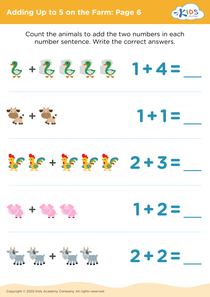
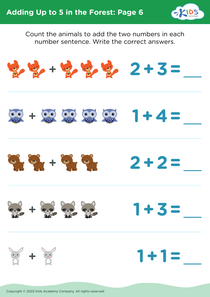
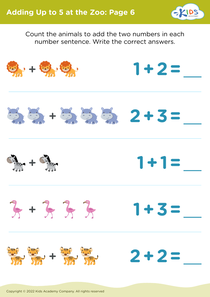
Basic Math Skills Adding in the Sea Worksheets for Ages 4-8
4 filtered results
-
From - To
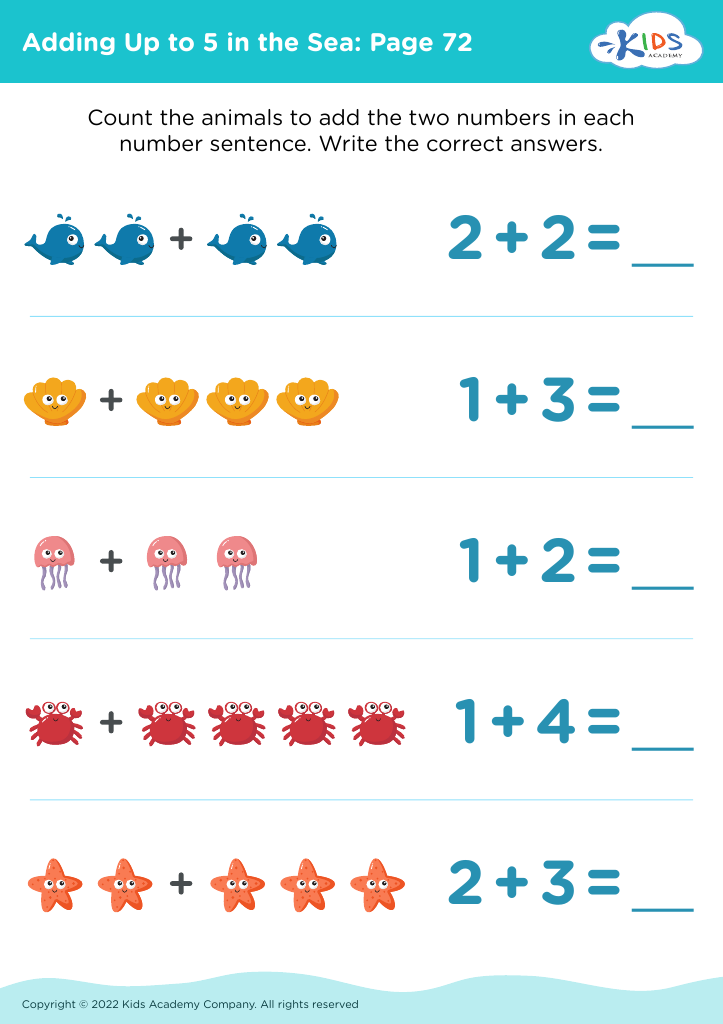
Explore our "Basic Math Skills Adding in the Sea Worksheets" designed for children ages 4-8! These engaging worksheets combine the fun of ocean-themed activities with essential addition practice. Each activity encourages young learners to enhance their math skills while exploring colorful underwater scenes filled with friendly sea creatures. Ideal for both classroom and home learning, these worksheets promote a solid understanding of basic addition in a playful and interactive way. With a variety of exercises varying in difficulty, children will enjoy learning and developing their confidence in math. Dive into fun learning and watch your child's math skills flourish!
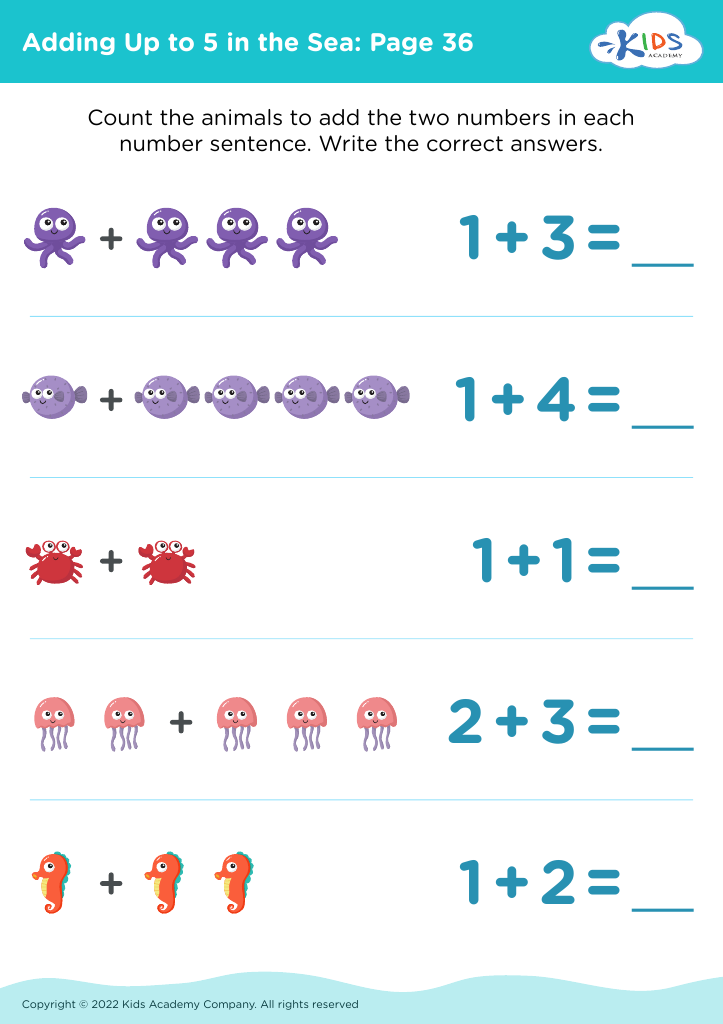
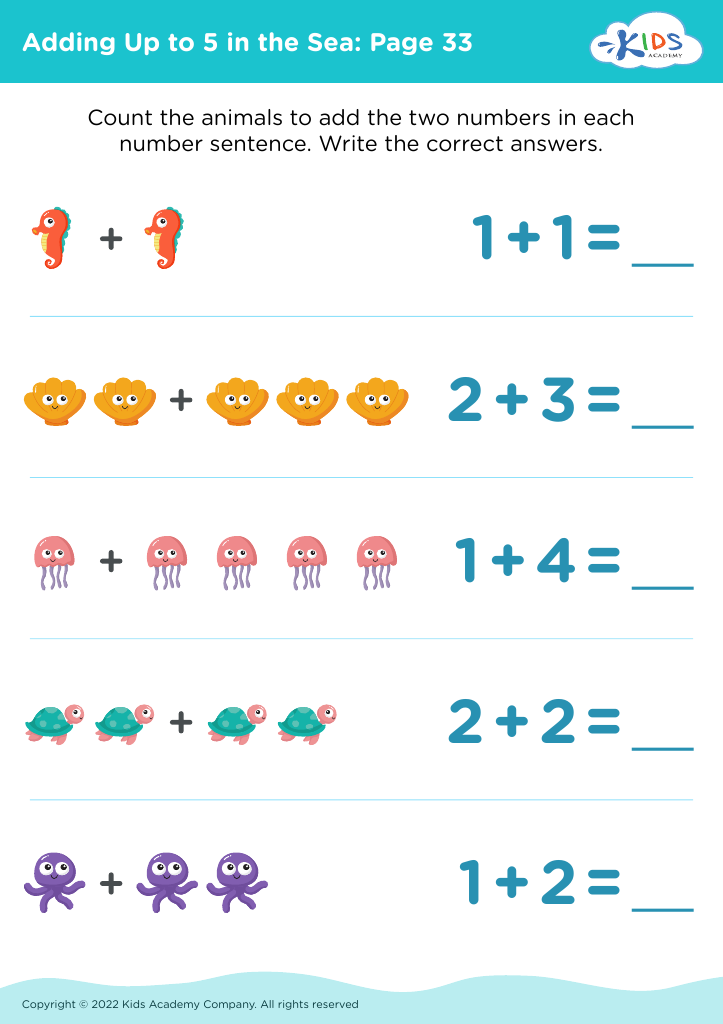
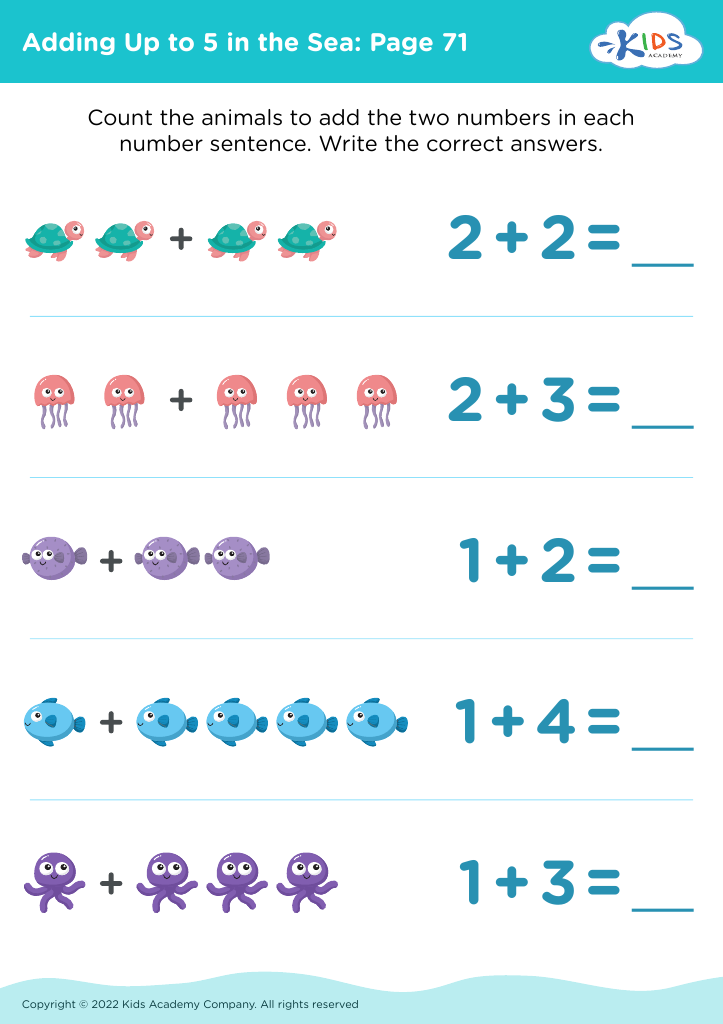



Parents and teachers should prioritize basic math skills, such as addition, for children aged 4-8 not only to build foundational numeracy but also to foster a love for learning. Mastering basic addition prepares young learners for more complex math concepts in the future and empowers them to tackle everyday problems with confidence.
Programs like "Adding in the Sea" engage young learners through playful themes and relatable scenarios, making math tangible and relevant. These programs help children understand that math is not just a subject but a tool for real-life situations, enhancing their critical thinking and problem-solving abilities.
Moreover, developing math skills at a young age can boost self-esteem and cognitive development. Kids who feel confident in their mathematical abilities are more likely to engage in higher-level learning as they grow. Also, basic math skills correlate with success in various academic disciplines, laying the groundwork for future learning.
Encouraging kids through enjoyable and interactive math experiences ensures that they can develop these essential skills while having fun. Ultimately, investing in early math education benefits their overall growth and prepares them for lifelong learning and success.