Hand-eye Coordination Adding in the Sea Worksheets for Ages 4-8
4 filtered results
-
From - To
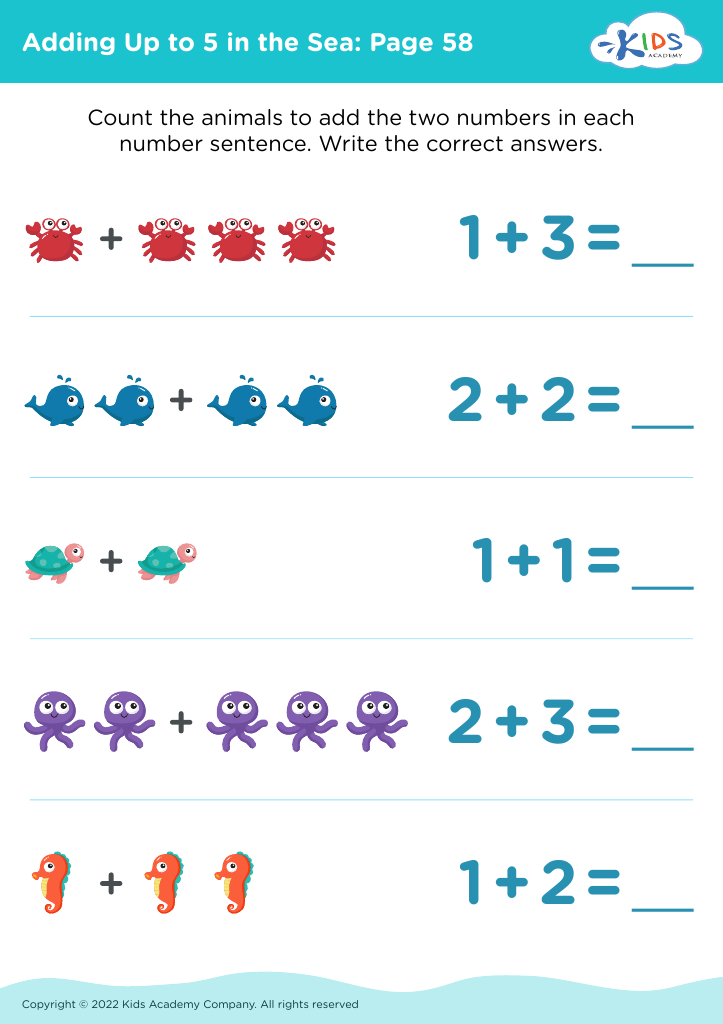
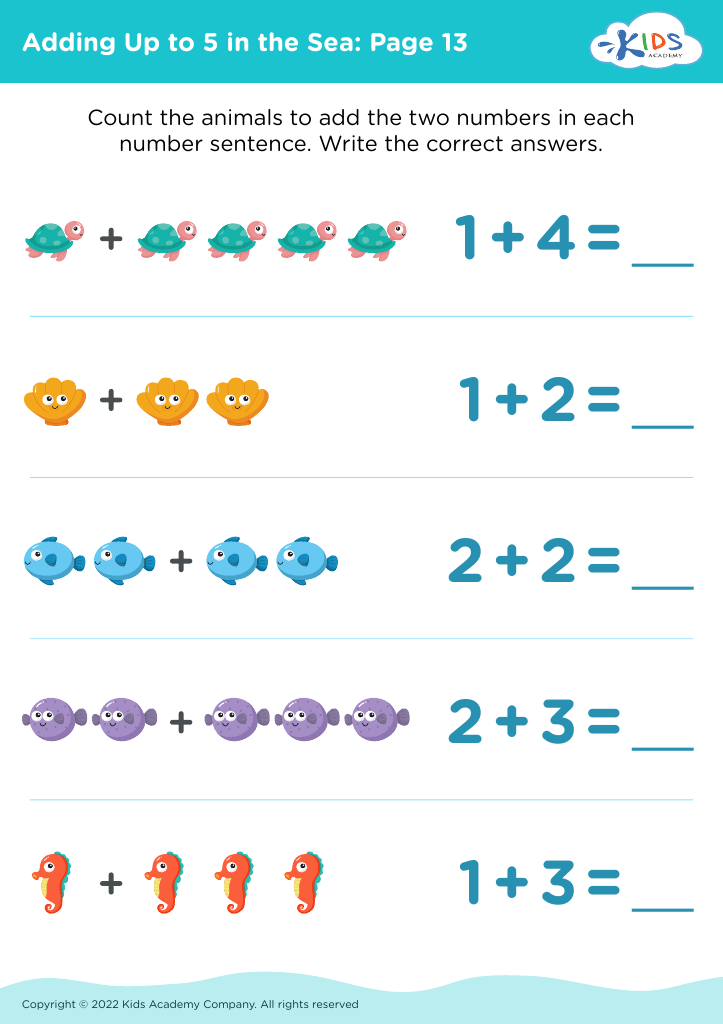
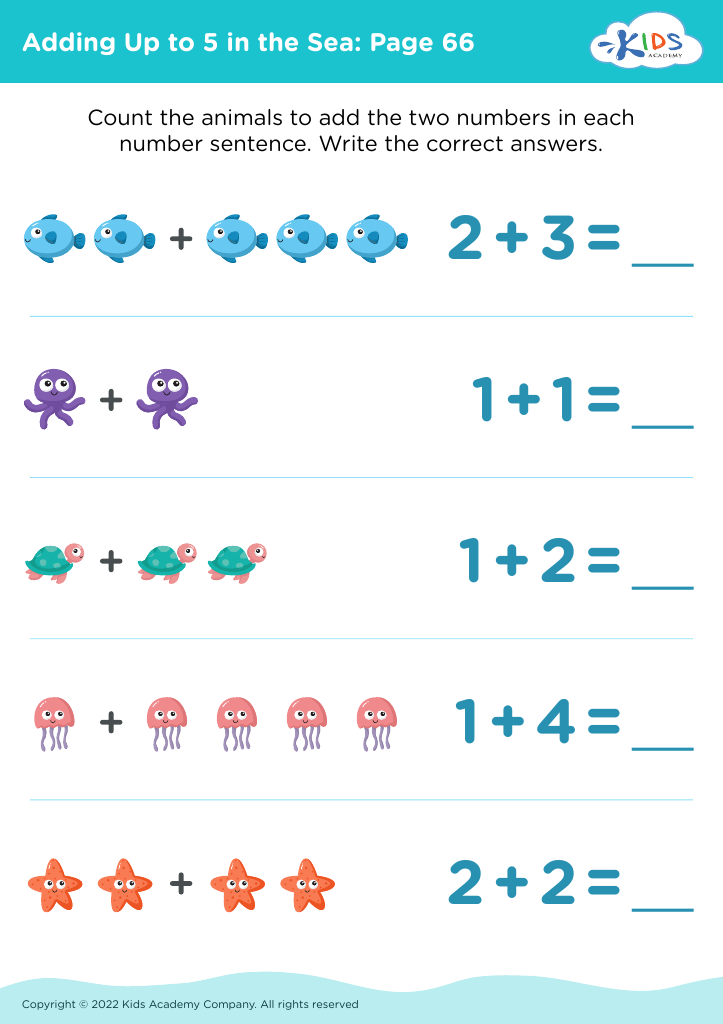
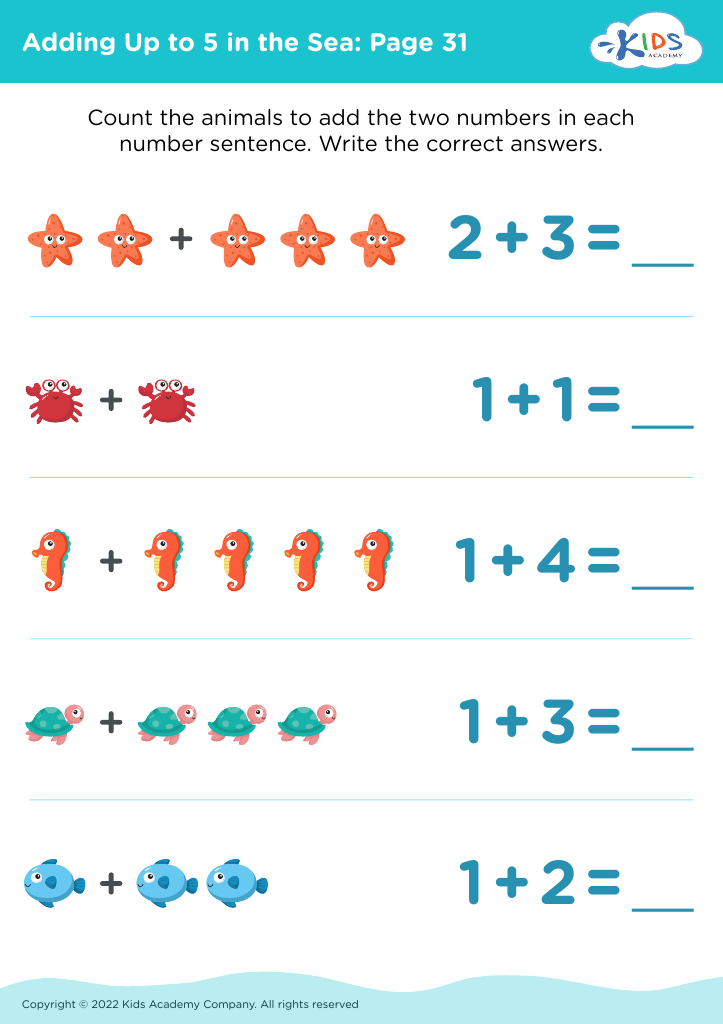
Boost your child's hand-eye coordination with our engaging "Adding in the Sea" worksheets, designed specifically for ages 4-8! These fun activities not only introduce basic math concepts like addition but also enhance fine motor skills as little ones connect the dots, trace paths, and solve colorful ocean-themed puzzles. Each worksheet offers a splash of underwater adventure, making learning enjoyable and interactive. Perfect for classroom settings or at-home practice, our resources help develop essential skills in a playful way. Dive into a world of fun and learning while helping your child master addition and improve their coordination skills today!



Hand-eye coordination is a crucial skill that develops as children grow, particularly between the ages of 4-8. It involves the ability to synchronize visual input with motor functions, essential for everyday tasks like writing, drawing, and playing sports. For parents and teachers, fostering hand-eye coordination not only supports physical development but also enhances cognitive abilities.
Engaging children in activities like “Adding in the Sea” can make learning fun while improving coordination. This activity encourages children to recognize numbers, add them, and physically manipulate objects (such as sea creatures) to solve problems. Such kinesthetic learning aids in better understanding and retention of mathematical concepts.
Furthermore, developing hand-eye coordination at this age lays a foundation for future skills necessary for academic success and sports. It boosts confidence as children improve their dexterity and accuracy, leading to a more positive attitude toward learning and physical activity.
Incorporating playful, hands-on activities can make this development seamless and enjoyable for children, thereby enhancing social skills through cooperative play. Ultimately, investing time in promoting these skills enriches children’s educational experiences and prepares them for various challenges ahead.