Sea creatures identification Adding in the Sea Worksheets for Ages 4-8
3 filtered results
-
From - To
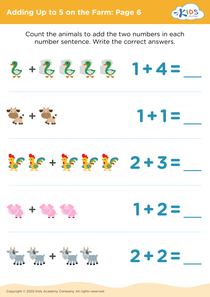
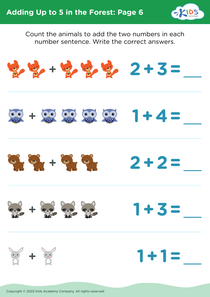
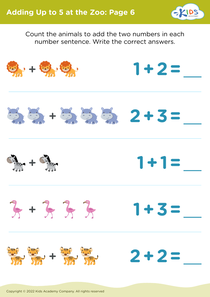
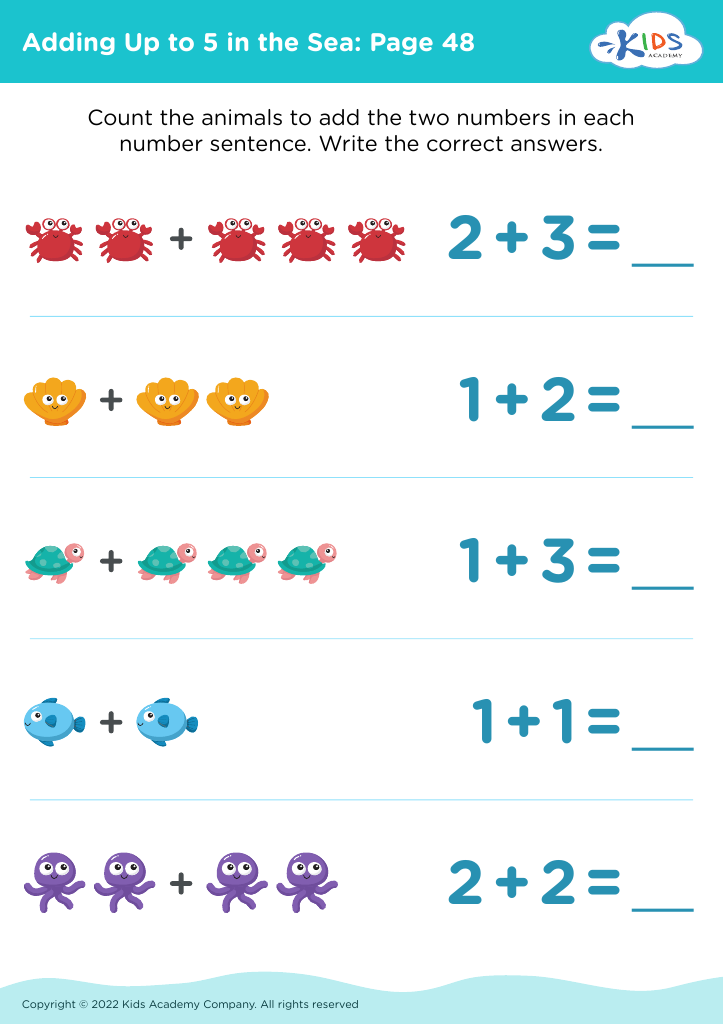
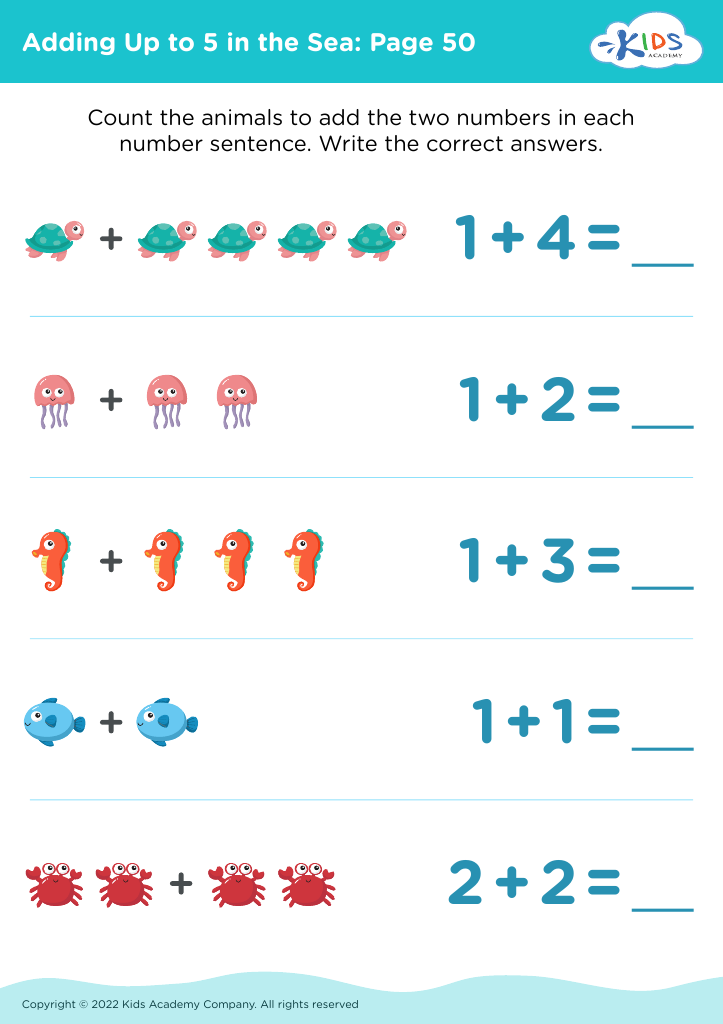
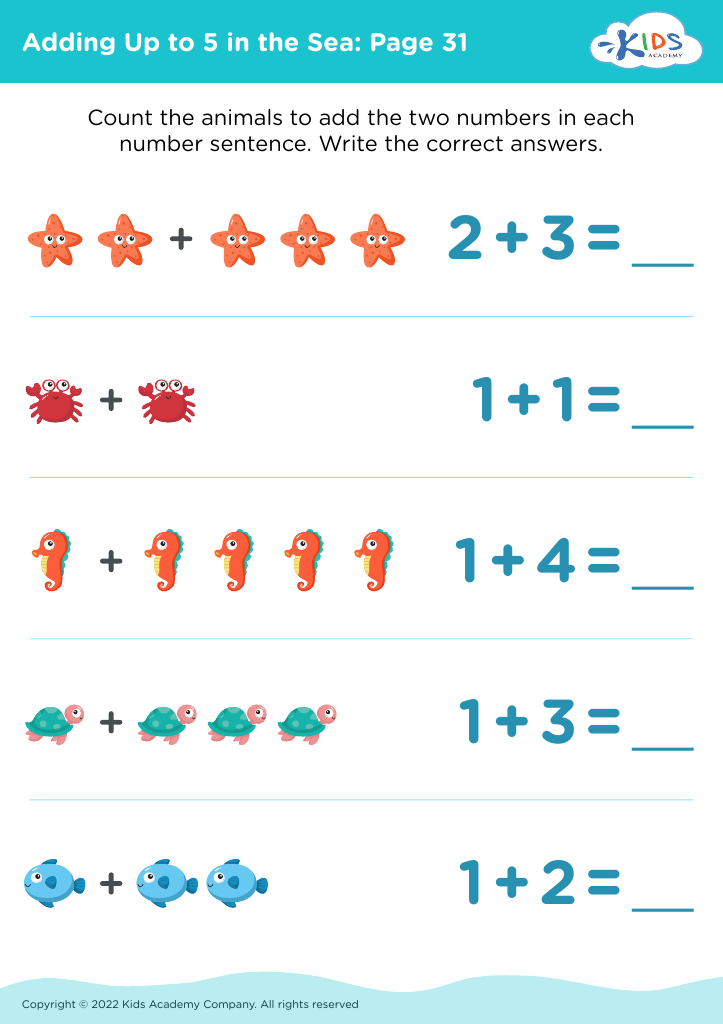
Discover the exciting Sea Creatures Identification Adding in the Sea Worksheets designed specifically for children ages 4-8! These educational activities not only teach basic addition skills but also introduce kids to fascinating marine life. With colorful illustrations and engaging exercises, these worksheets make learning fun and interactive. Ideal for young learners, these worksheets support the development of math skills, enhance curiosity about ocean creatures, and encourage critical thinking. Perfect for classroom use or at-home practice, our Sea Creatures Identification sheets provide an entertaining and educational way for young minds to explore and grow. Dive into learning today!



Introducing sea creatures and their identification to children aged 4-8 provides numerous educational and developmental benefits. Firstly, learning about various sea animals fosters curiosity and a sense of wonder about the natural world. This early fascination can spark lifelong interests in science, nature, and conservation.
At this crucial developmental stage, children are incredibly receptive to learning new vocabulary. Discussing sea creatures introduces them to new words and concepts, enhancing their language skills and cognitive development. Words like “octopus,” “dolphin,” and “coral” become part of their burgeoning vocabulary.
Additionally, sea creature identification promotes environmental awareness. Understanding that every species has a unique role in the marine ecosystem helps children grasp the importance of biodiversity and conservation. These foundational lessons can inspire them to care for the environment as they grow older.
Interactive activities, such as games or storytelling involving sea creatures, bolster social skills and cooperation among children. They learn to share information, problem-solve together, and respect different opinions.
Moreover, activities involving sea creatures cater to different learning styles. Visual learners benefit from colorful pictures and videos, auditory learners from fascinating sea sounds, and kinesthetic learners from hands-on crafts or role-playing activities.
In essence, educating young children about sea creatures is a delightful and enriching way to broaden their horizons, spark a love of learning, and instill early environmental stewardship.