Animal recognition Adding on the Farm Worksheets for Ages 4-8 - Page 2
31 filtered results
-
From - To
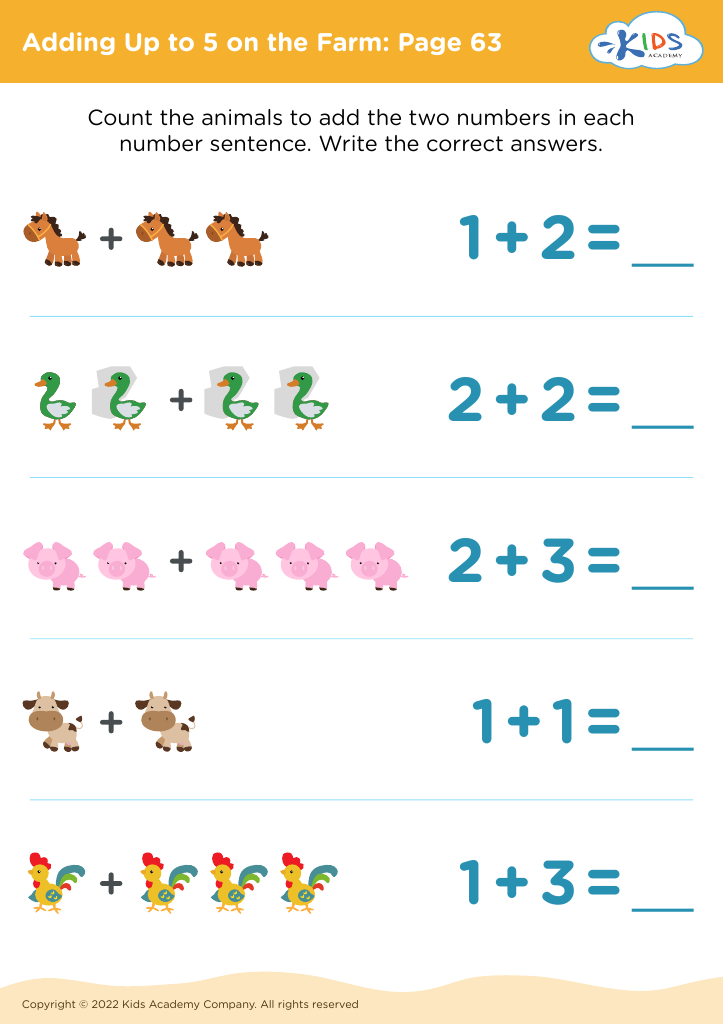
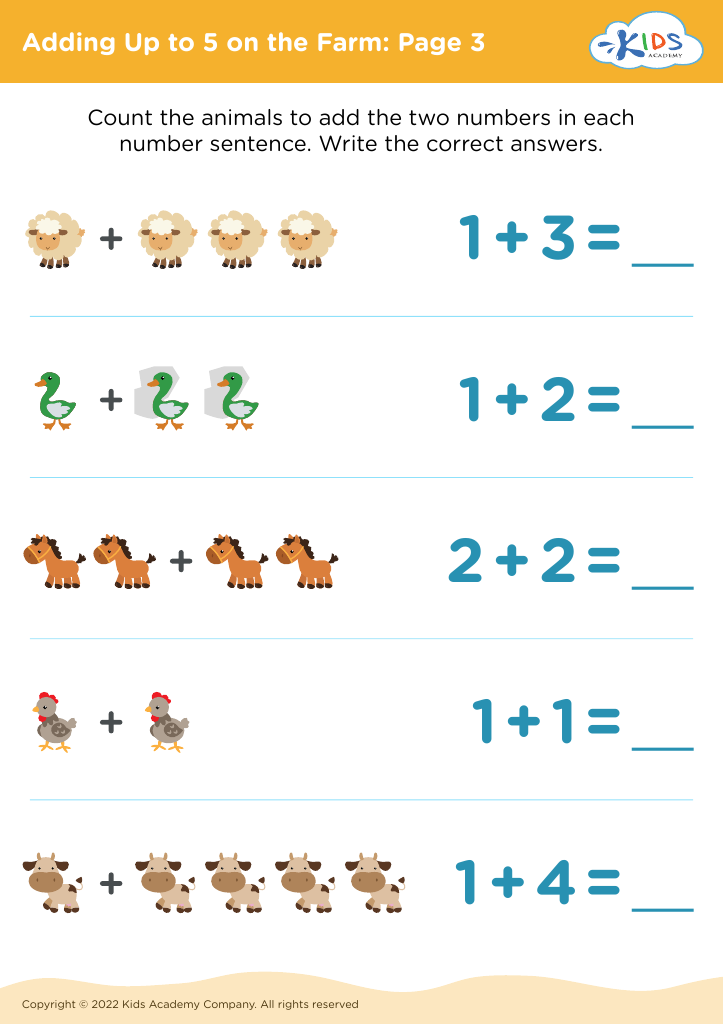
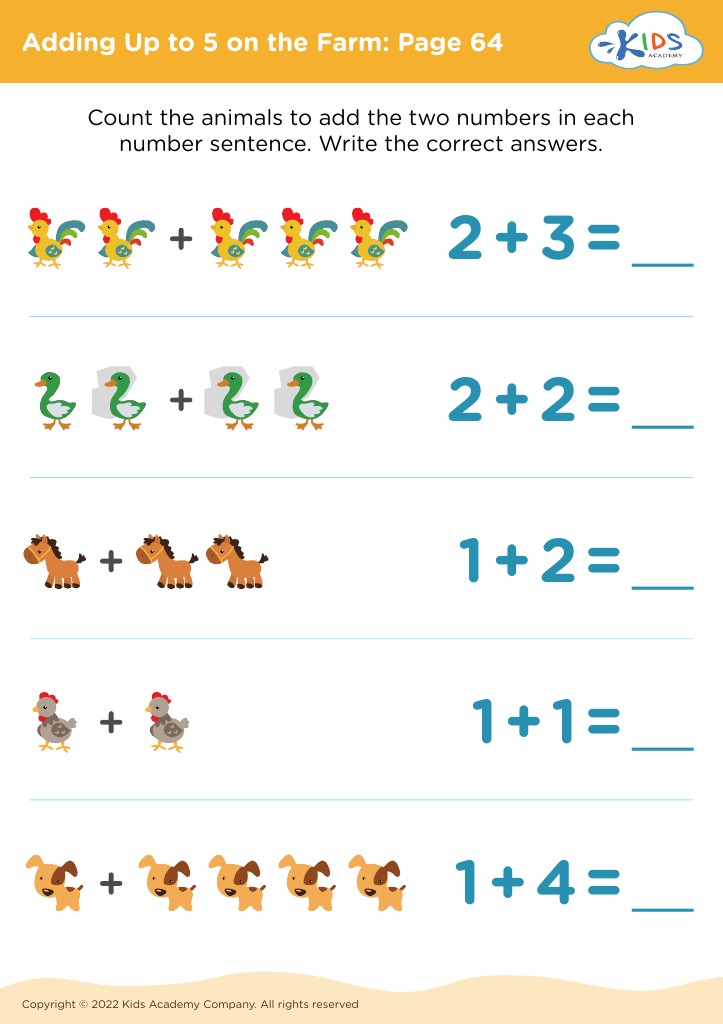
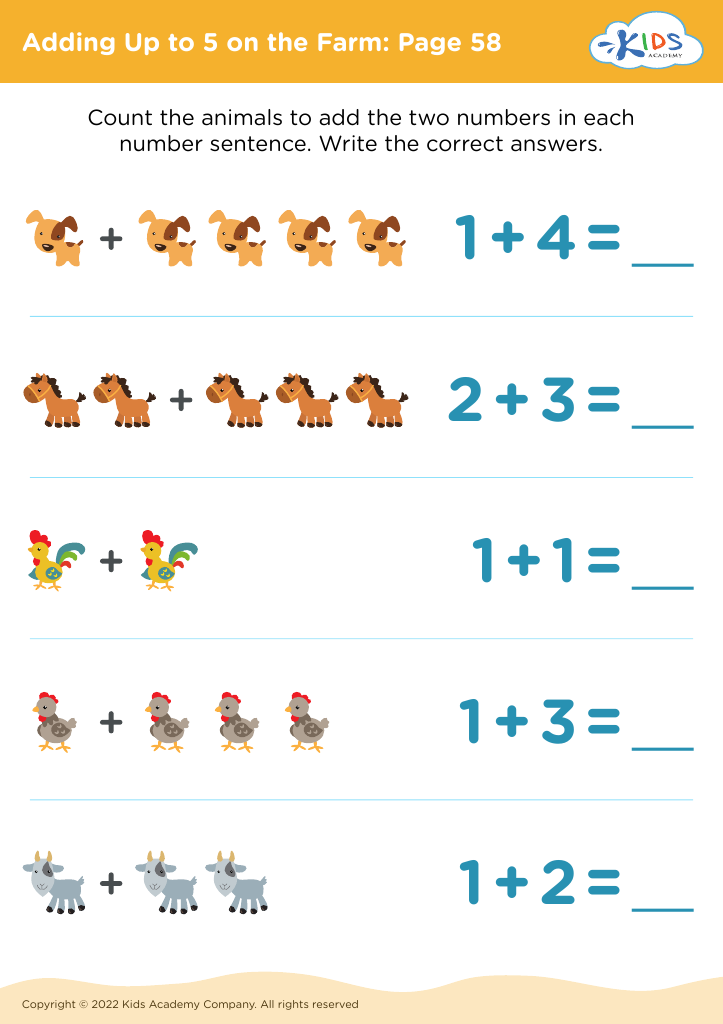
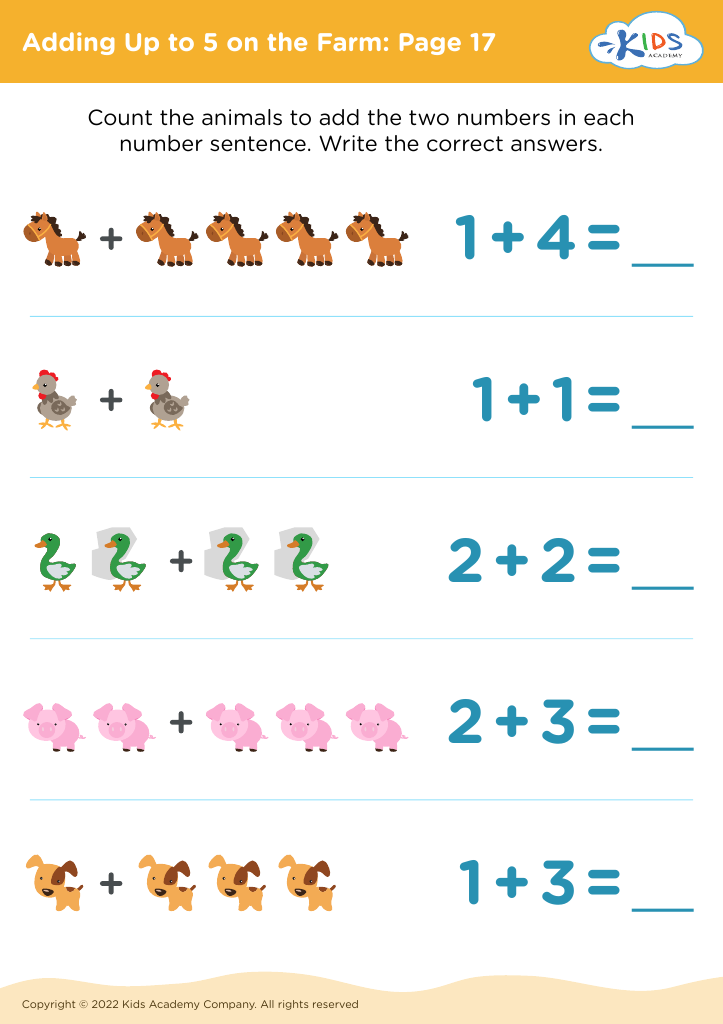
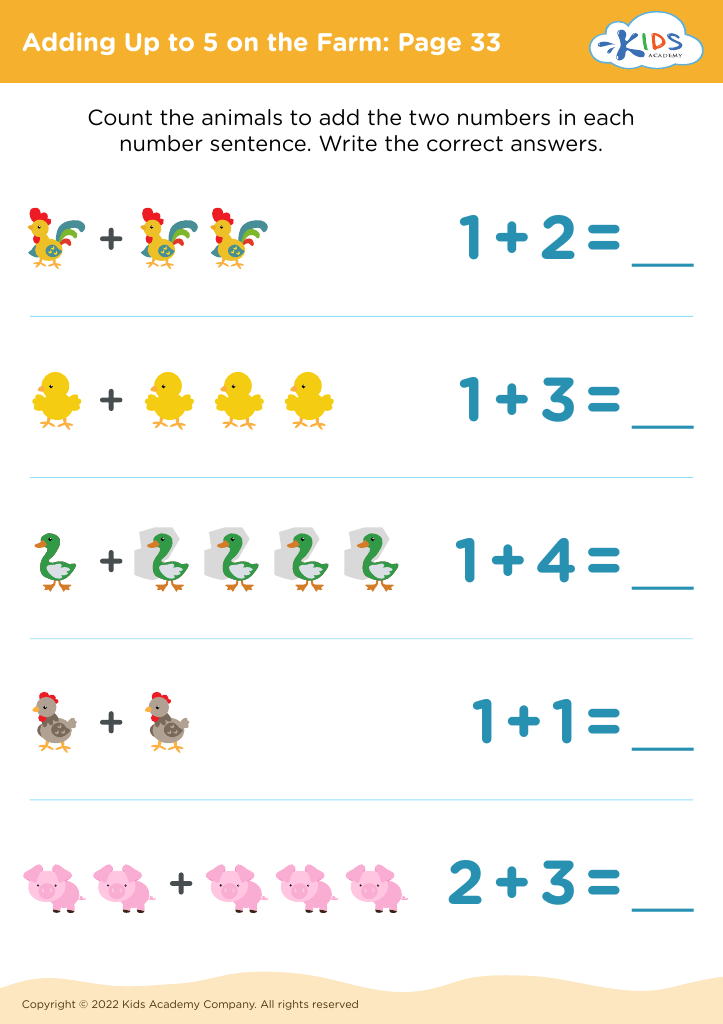
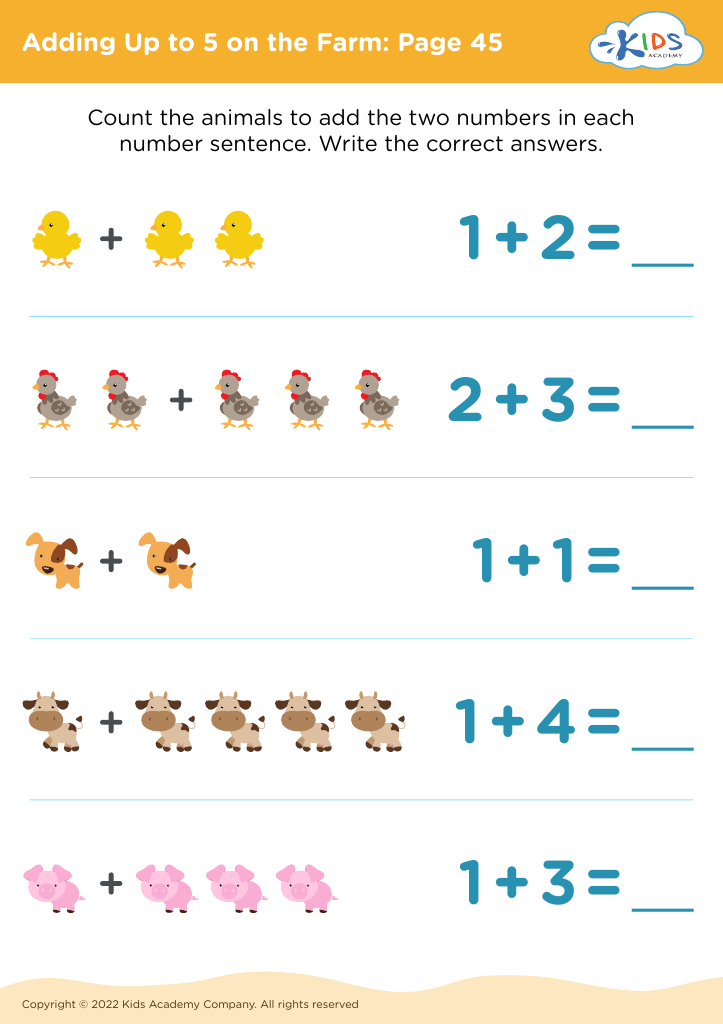



Animal recognition is an essential skill for young children, especially in a farm setting, as it fosters cognitive, social, and emotional development. For ages 4-8, understanding different animals helps children enhance their observation skills, promote curiosity, and encourage critical thinking. Recognizing animals like cows, pigs, chickens, and sheep allows children to connect with the natural world and appreciate biodiversity.
Moreover, identifying farm animals creates opportunities for rich sensory experiences. Children can engage in interactive activities, like matching animal sounds with their respective creatures, which supports auditory learning and memory. These playful interactions can also enhance language skills, as children learn new vocabulary associated with each animal and explore concepts such as habitat and animal roles in agriculture.
Additionally, recognizing animals can deepen empathy, as children start to understand the needs and behaviors of living creatures. This understanding nurtures responsible attitudes towards animals and fosters a sense of stewardship for the environment.
Lastly, learning about animals on a farm can ignite a passion for science and education. It encourages inquiry-based learning and sets the foundation for future studies in biology and ecology, thereby equipping children with knowledge and skills that extend well beyond the classroom. Parents and teachers should prioritize this foundational aspect of learning.