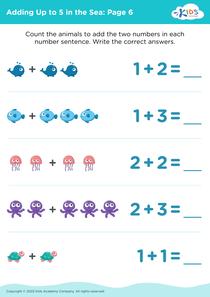
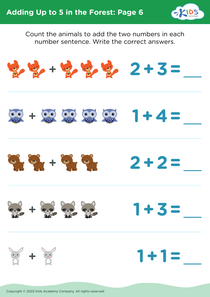
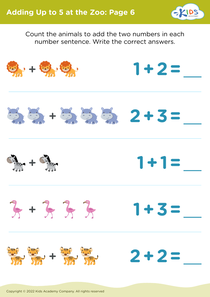
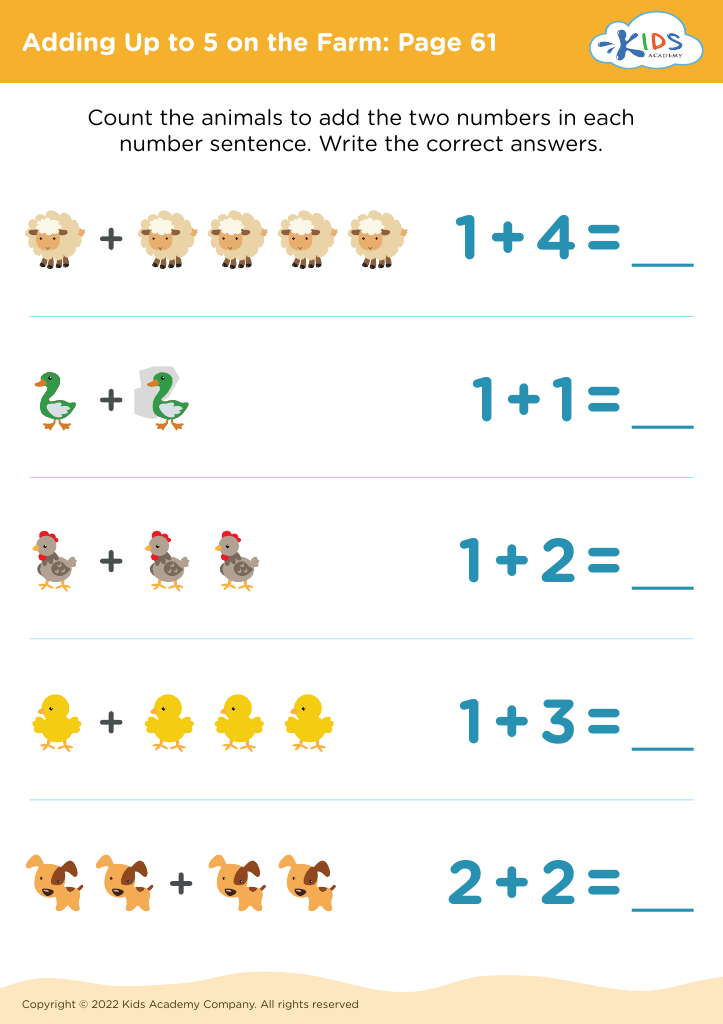
Fine motor skills (writing) Adding on the Farm Worksheets for Ages 4-8
5 filtered results
Difficulty Level
Grade
Age
-
From - To
Subject
Activity
Standards
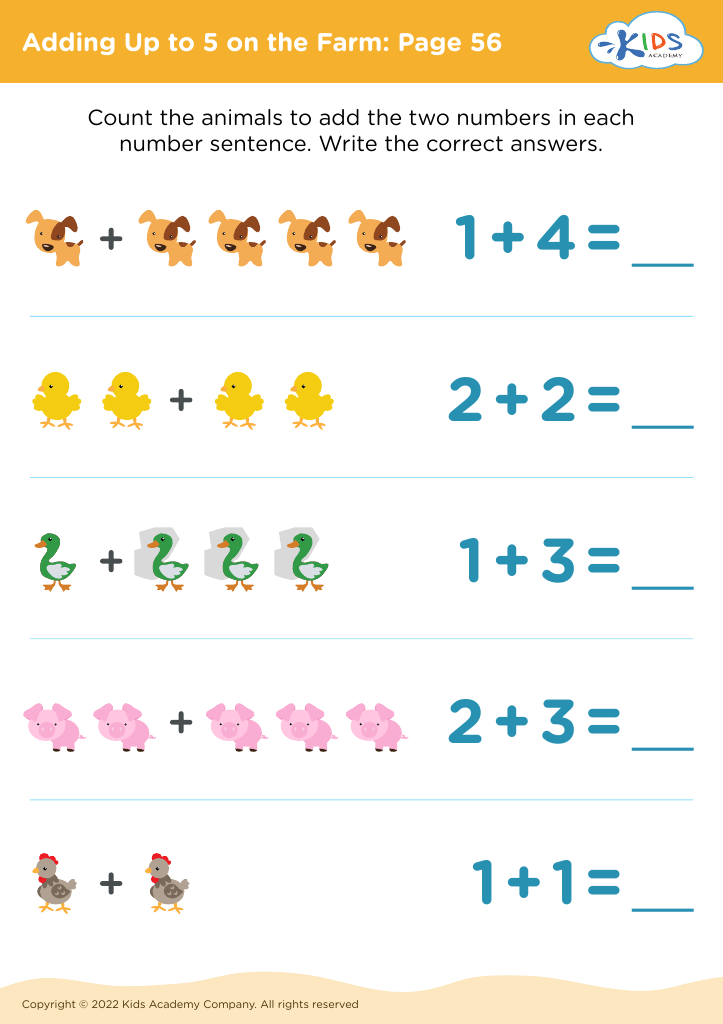
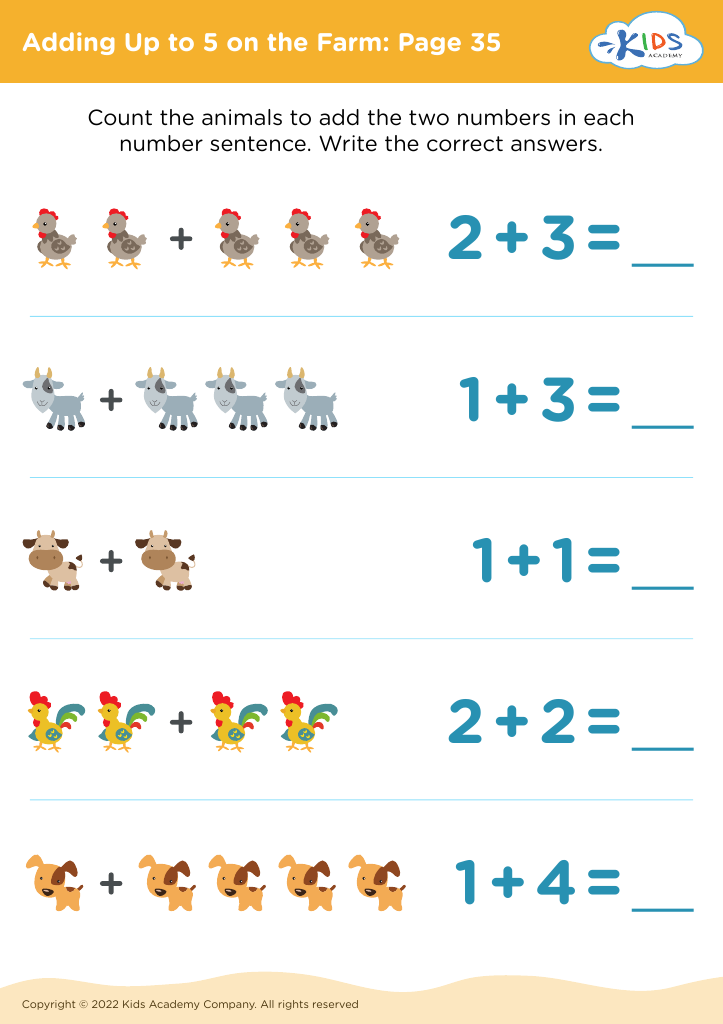
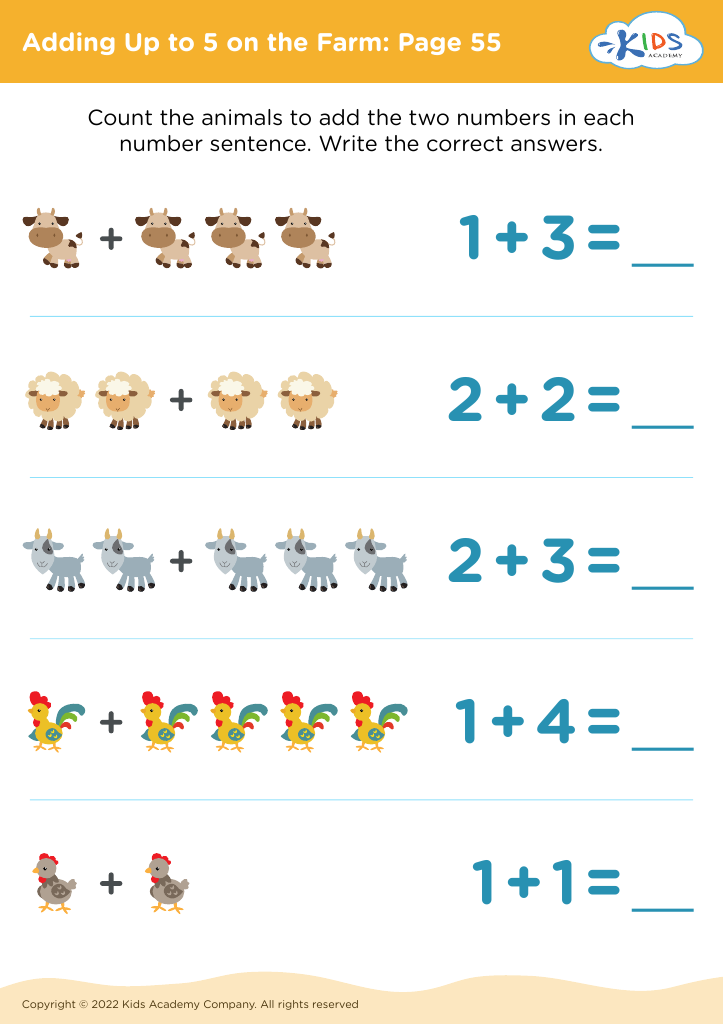
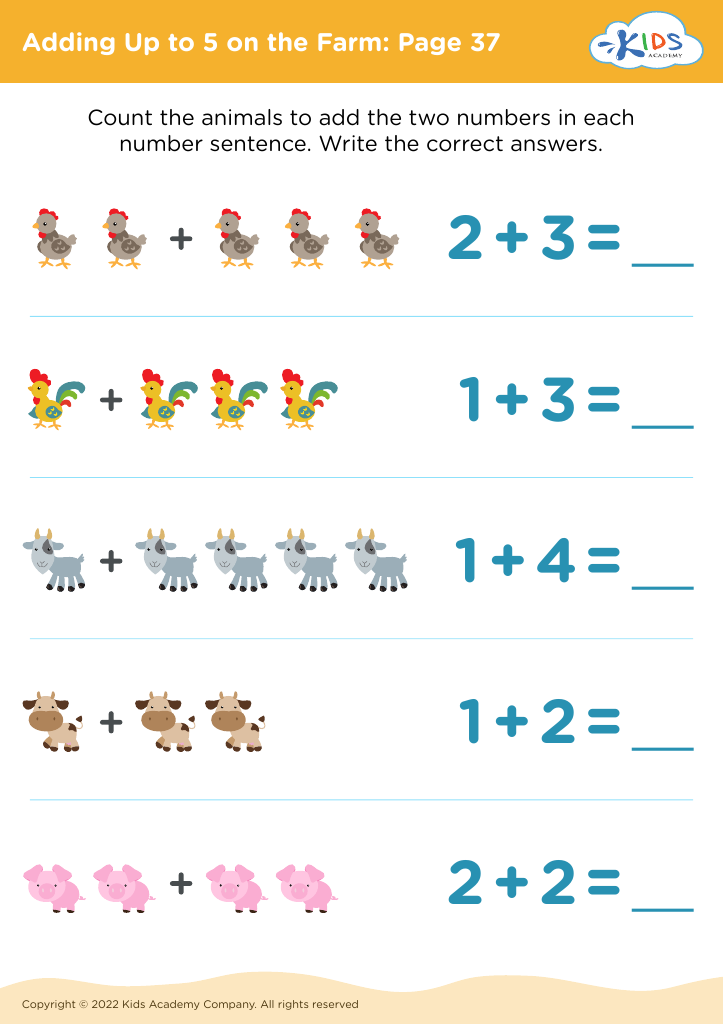
Introduce your child to the joys of math and handwriting with our "Fine Motor Skills (Writing) Adding on the Farm Worksheets"! Designed for children ages 4-8, these engaging and educational worksheets blend simple addition problems with charming farm-themed illustrations. As kids practice writing numbers and words, they also enhance their fine motor skills, setting a strong foundation for future academic success. Our worksheets provide a playful and interactive approach to learning, ensuring that kids develop crucial math and handwriting skills while enjoying every moment. Perfect for home or classroom use, these worksheets make learning fun and effective!
Favorites
With answer key
Interactive
Join Kids Academy for Free
Who is primarily going to use this learning content?



Fine motor skills, including writing, are vital for young children's development, especially between the ages of 4 and 8. These skills involve the coordination of small muscles in the hands and fingers and are crucial for tasks such as writing, buttoning clothes, and tying shoelaces. Parents and teachers should prioritize fine motor skills for several reasons.
First, developing fine motor skills helps children gain independence. The ability to perform daily tasks without assistance boosts their confidence and self-esteem. Additionally, fine motor skills are closely tied to academic success. Proper pencil grip and control enhance handwriting, which becomes increasingly important as children progress through school. Good handwriting ensures that their work is legible and that they can keep up with assignments.
Using themes like "Adding on the Farm" can make fine motor skills practice fun and engaging. By integrating familiar and enjoyable concepts like farm animals and counting activities, children are more likely to stay interested and motivated. Activities like tracing farm animal shapes, counting and adding animals, or simply coloring within the lines enhance hand-eye coordination and precision.
In the long run, strong fine motor skills set the foundation for complex tasks that they will encounter later in life. Therefore, nurturing these skills early on through engaging activities holds long-term benefits, making it a crucial aspect of early childhood education.