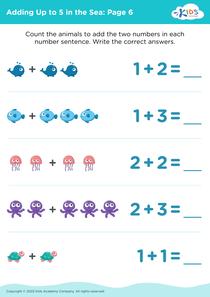
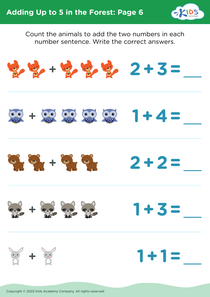
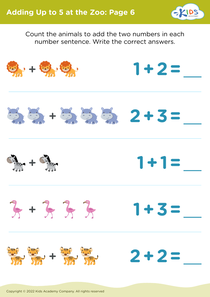
Visual Learning Adding on the Farm Worksheets for Ages 4-8 - Page 2
25 filtered results
-
From - To
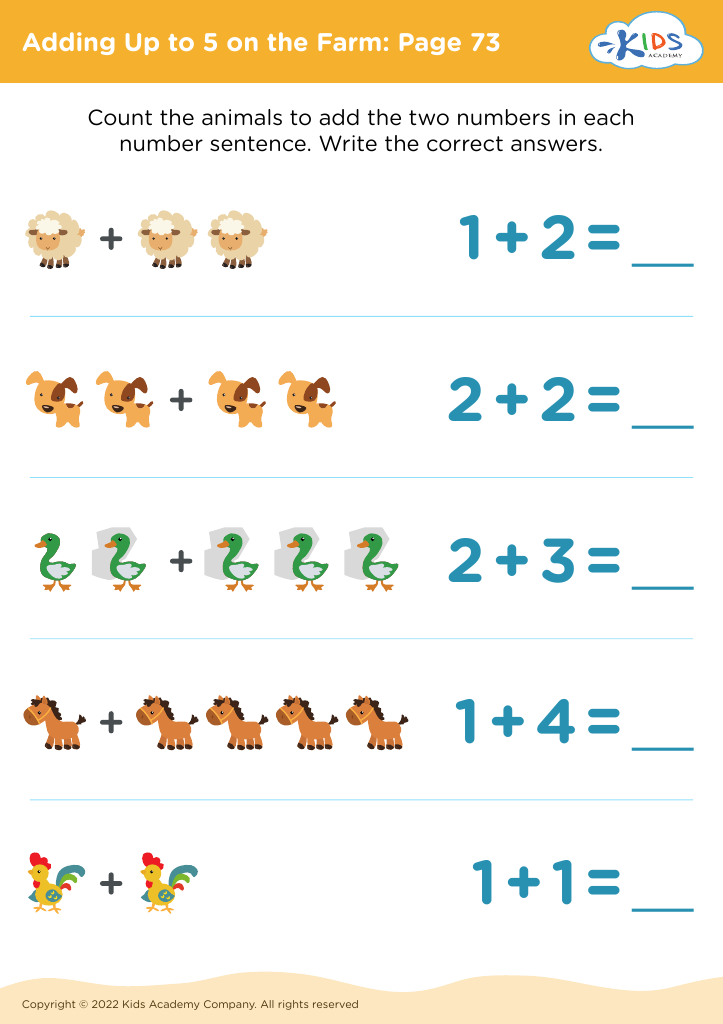



Visual learning is critical for children aged 4-8, particularly in engaging contexts like "Adding on the Farm." This method integrates vibrant visuals with hands-on experiences, making complex concepts relatable and enjoyable. Young learners often absorb information better when they can see it represented instead of just hearing it. Farm-themed visuals, such as animals, crops, and machinery, help conceptualize mathematical ideas like addition, sparking curiosity and enthusiasm.
Utilizing a familiar setting, like a farm, allows teachers and parents to connect abstract numerical concepts to real-world scenarios. Children can visualize adding apples from a tree or counting sheep, reinforcing their understanding through storytelling. This multi-sensory approach caters to diverse learning styles, accommodating visual, auditory, and kinesthetic learners alike.
Moreover, visual learning fosters critical thinking and problem-solving skills as children strategize and apply math in practical ways. It can enhance vocabulary, social skills, and collaboration as they engage in activities with peers or family members.
Ultimately, prioritizing visual learning in early education not only promotes academic success but also cultivates a lifelong love for learning. For parents and teachers, recognizing the impact of engaging and visually stimulating methods in environments such as "Adding on the Farm" is essential for nurturing confident, competent young learners.