Improve counting skills Adding up to 100 Misc Worksheets for Ages 4-8
11 filtered results
-
From - To
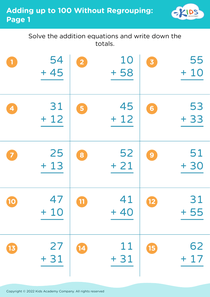
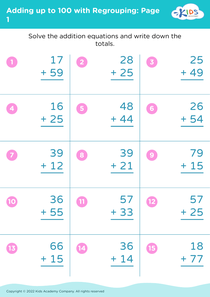
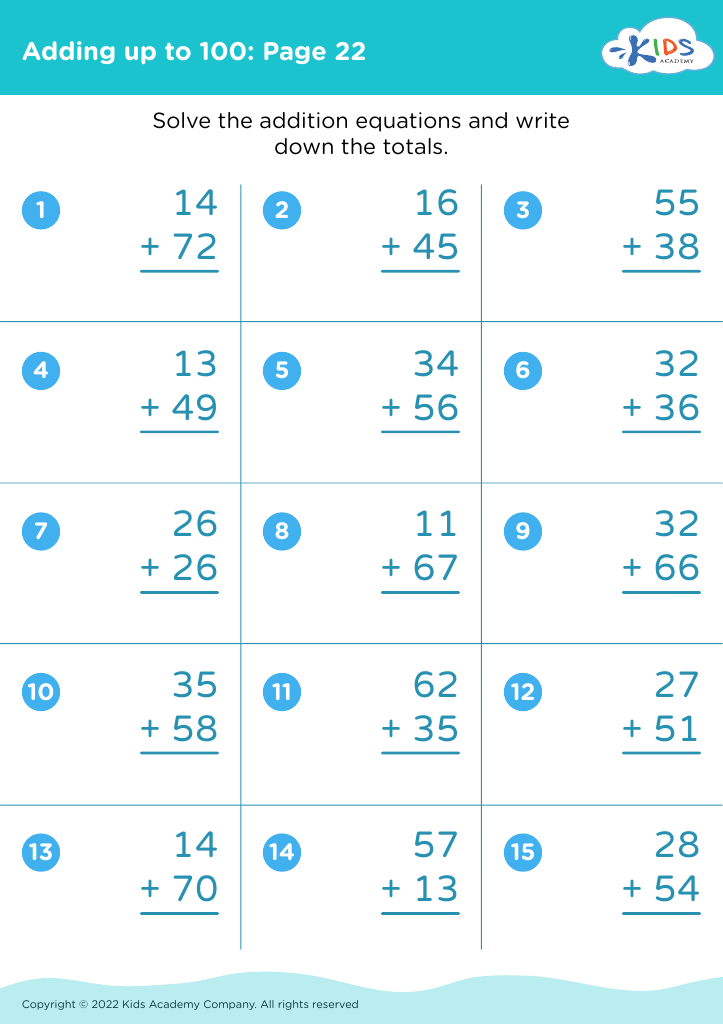
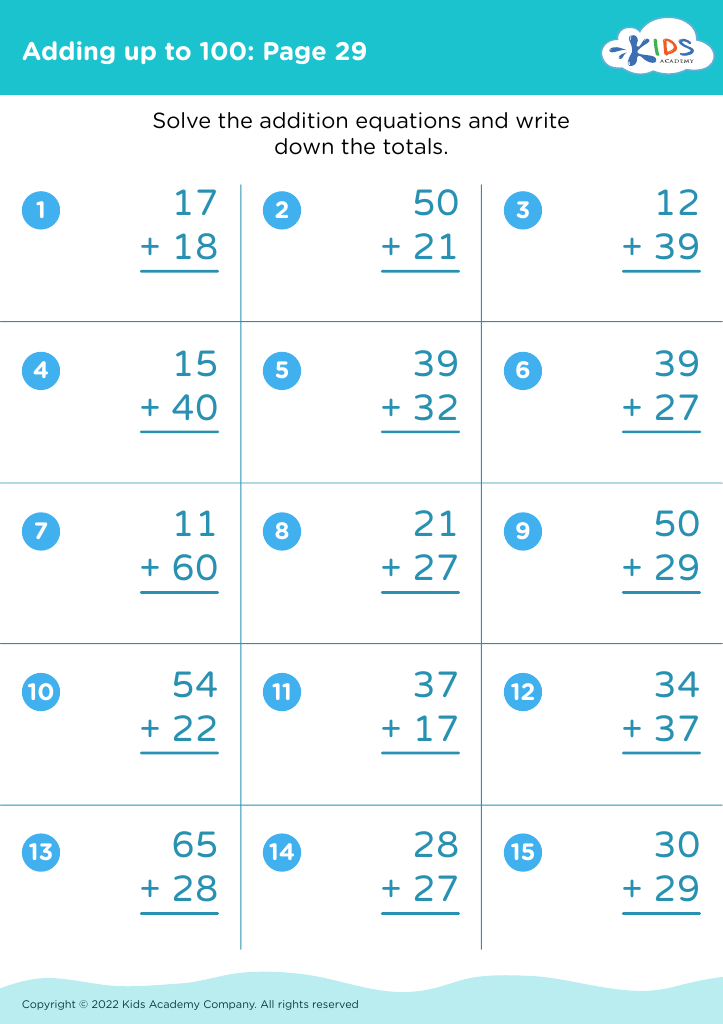
Enhance your child's counting skills with our "Adding Up to 100" miscellaneous worksheets, specifically designed for ages 4-8. These engaging resources provide a fun and interactive way for young learners to practice basic addition, improve number recognition, and develop counting proficiency. Each worksheet features colorful illustrations and varied activities that keep children motivated while they explore the world of numbers. From simple addition problems to playful games, our materials cater to different learning styles, making math enjoyable and approachable. Empower your child’s mathematical journey and lay a strong foundation for future learning with our expertly crafted worksheets!
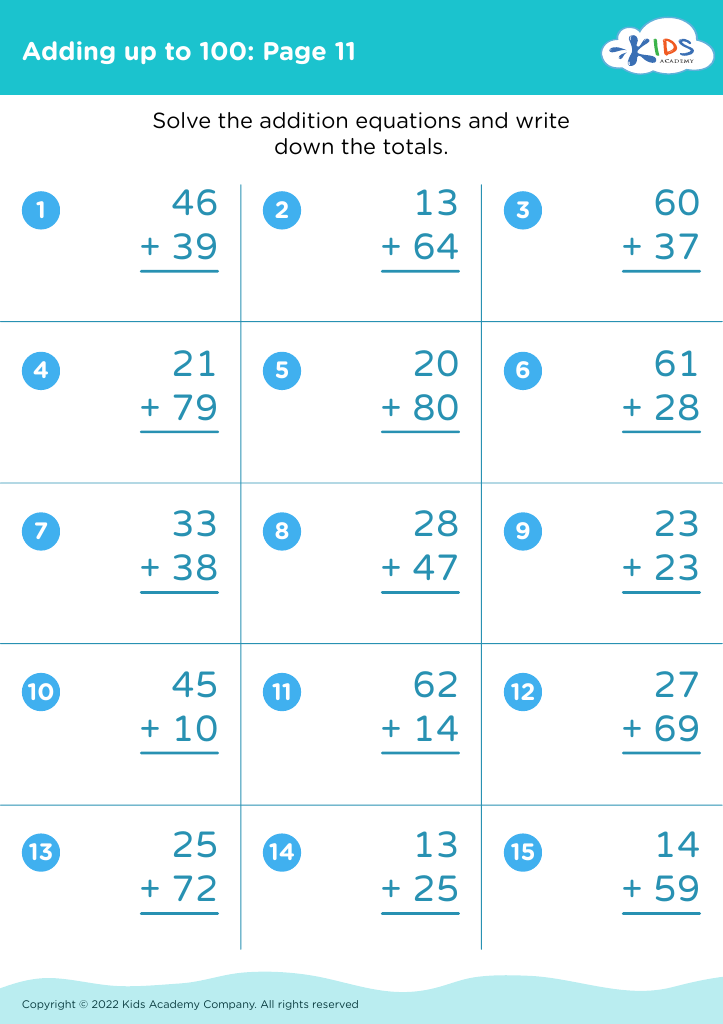
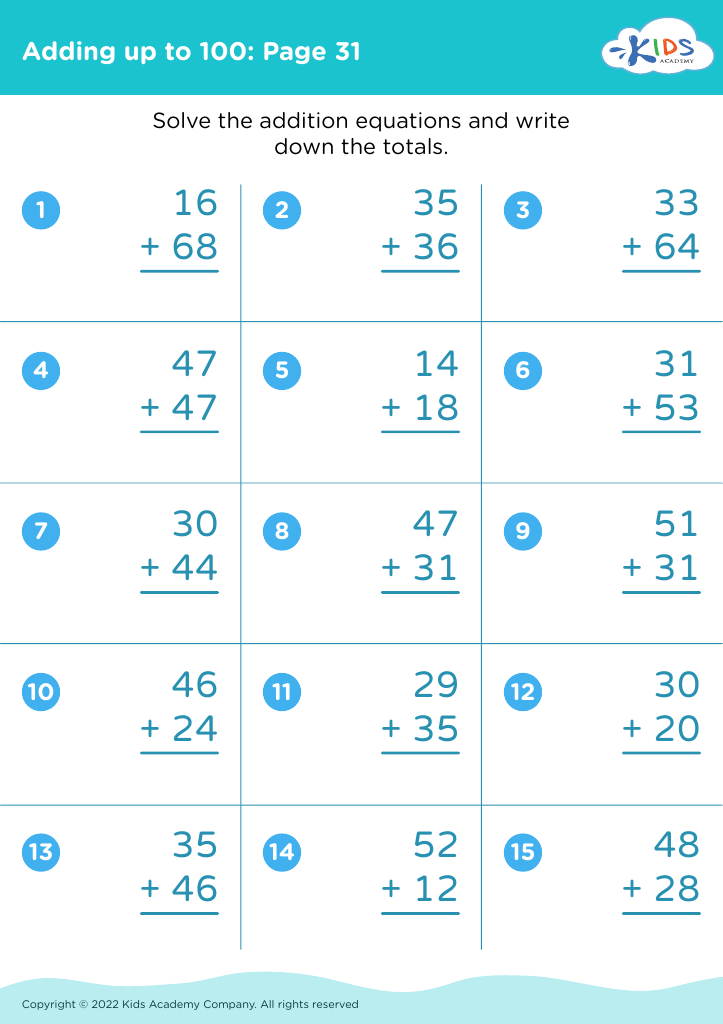
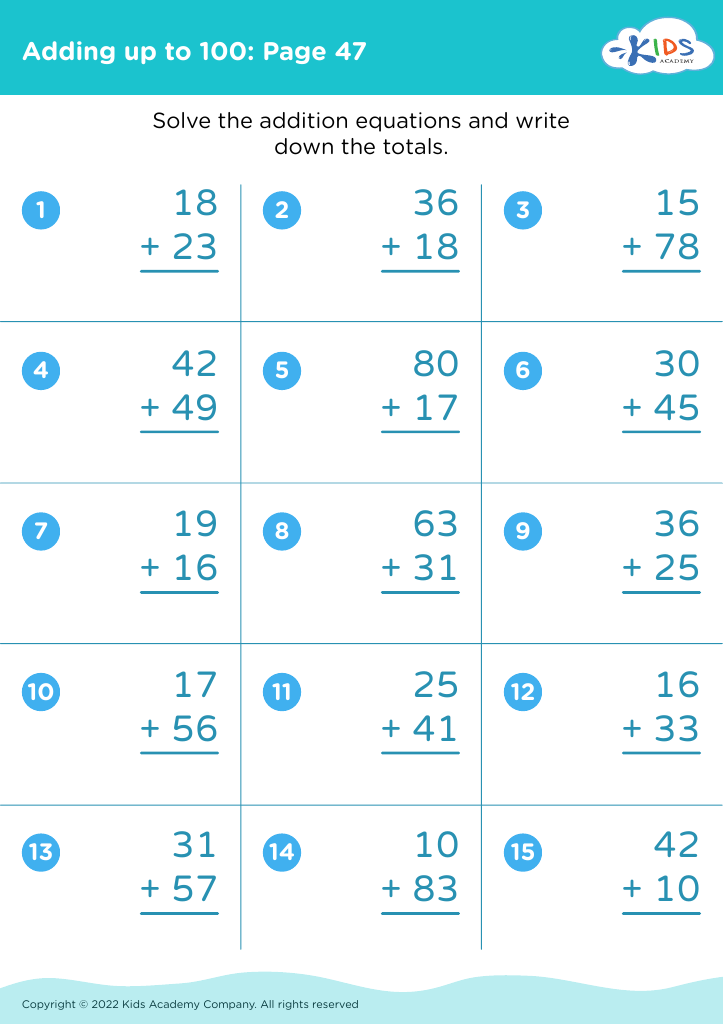
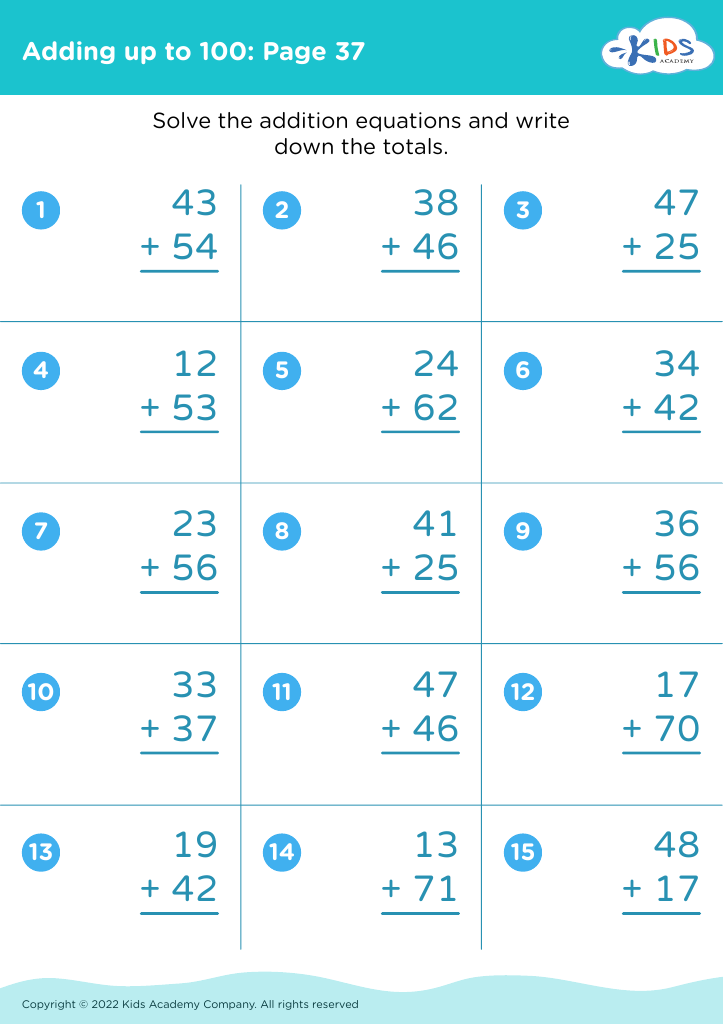
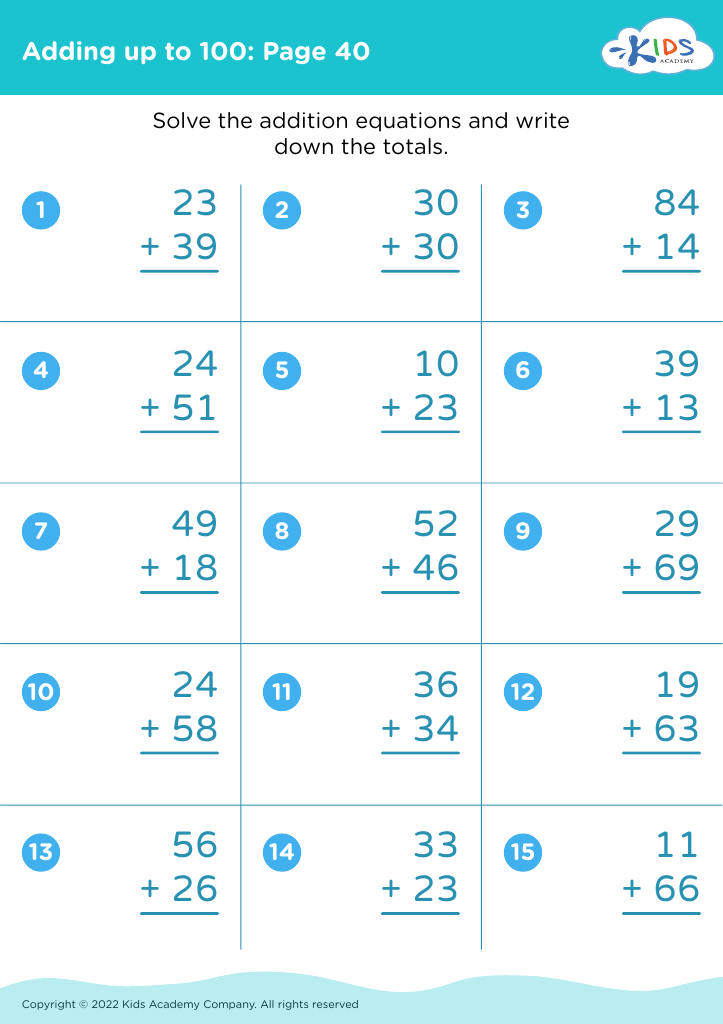
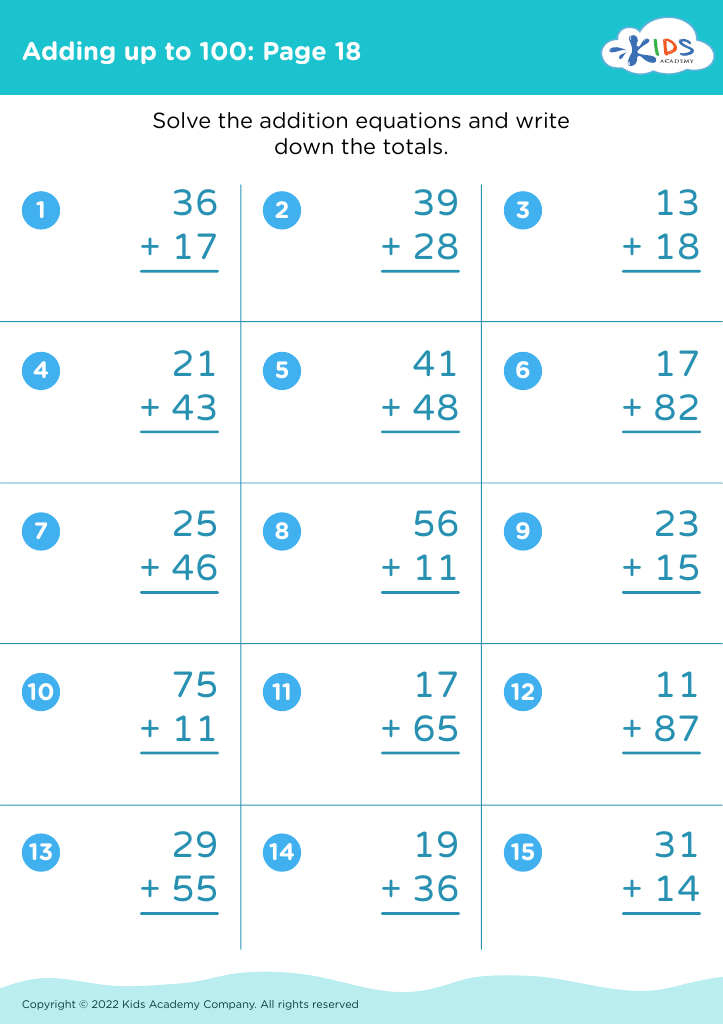
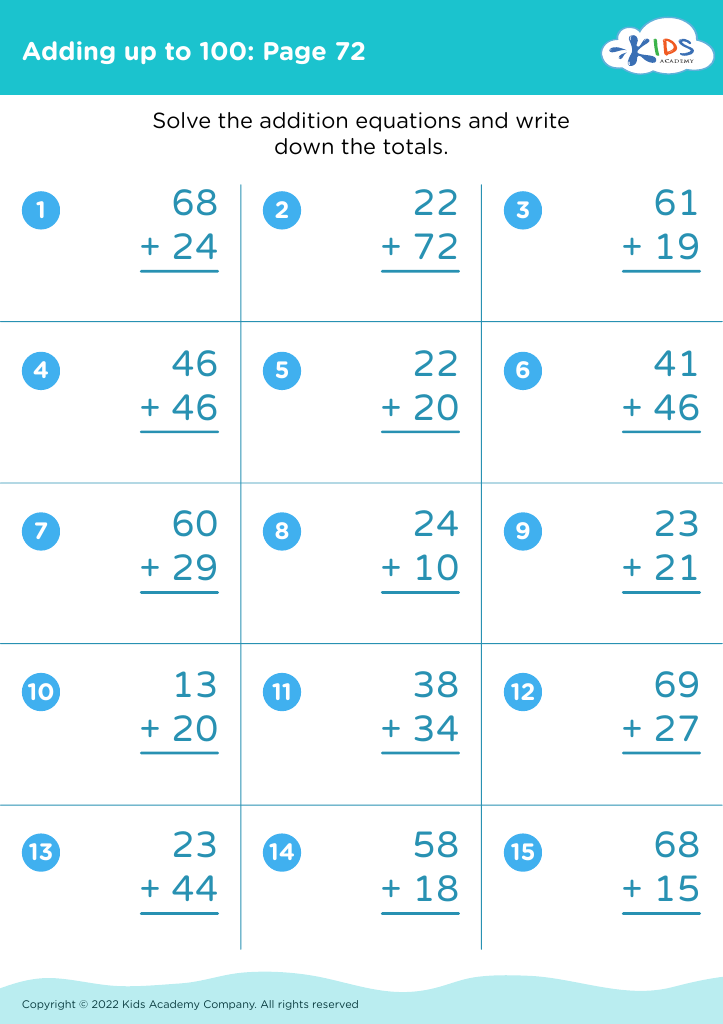
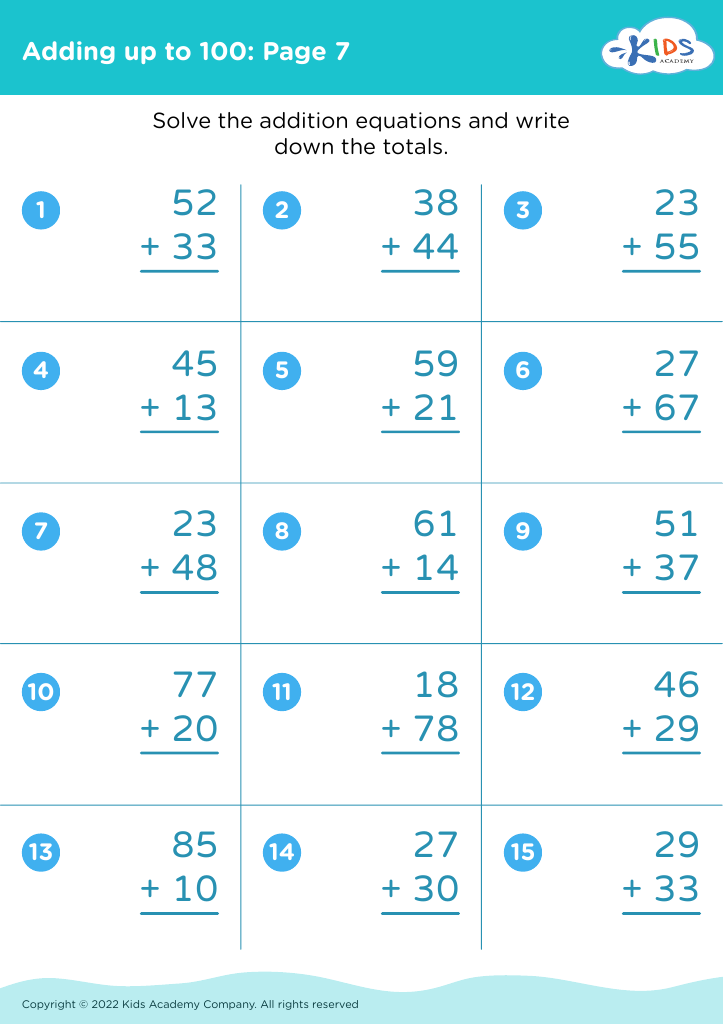
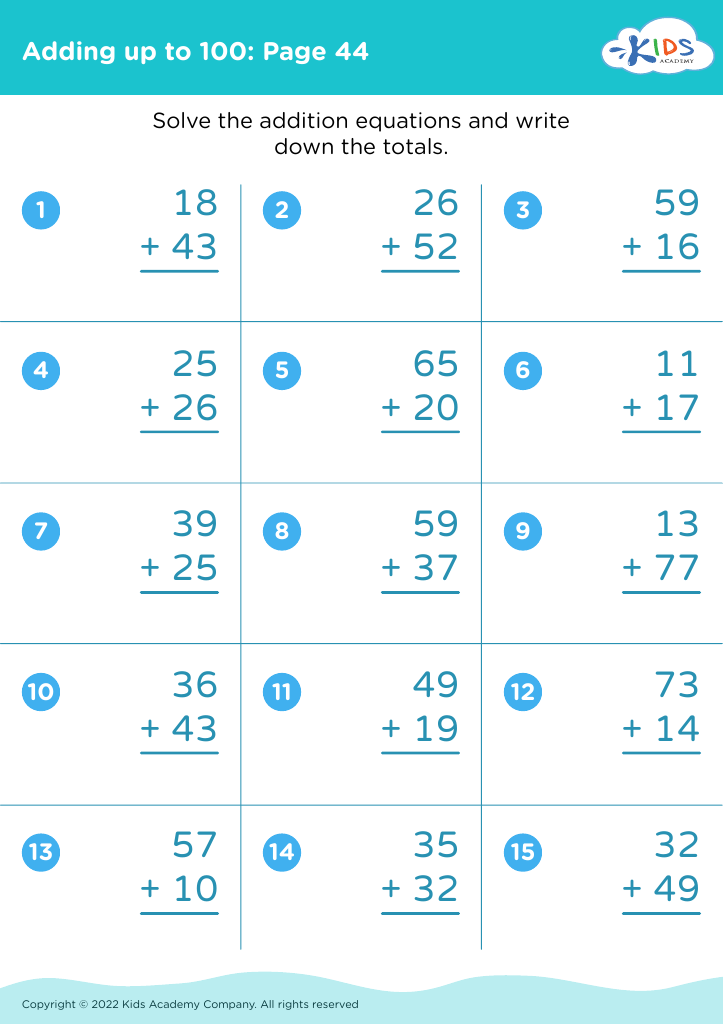


Developing strong counting skills is fundamental for children aged 4-8, as it forms the foundation for mathematical understanding and problem-solving. Parents and teachers must prioritize these skills, especially when it comes to counting up to 100, as it enhances numerical fluency essential for everyday life.
First, mastering counting instills confidence and enjoyment in math, reducing anxiety around the subject. When children can count seamlessly, they grasp concepts like addition and subtraction more easily. Learning to add up to 100 also provides a tangible metric that encourages students to engage with larger numbers, promoting critical thinking and cognitive development.
Moreover, these skills are interconnected with various curricula, from basic arithmetic to more advanced concepts later on. Teaching effective counting strategies at this early age fosters essential cognitive abilities, such as focus, memory, and spatial awareness.
Furthermore, strong counting skills enhance children's ability to make sense of their world, enabling them to manage tasks like budgeting their allowance or interpreting basic statistics. In conclusion, nurturing counting skills not only prepares children for their imminent academic journey but also equips them with lifelong skills that are vital in their everyday lives. Prioritizing these abilities empowers both learners and educators, ultimately enhancing overall educational outcomes.