Basic Addition Skills Adding up to 100 with Regrouping Worksheets for Ages 4-8
3 filtered results
-
From - To
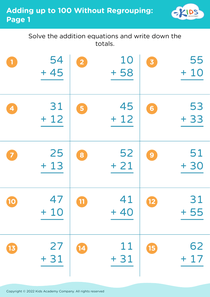
Discover our engaging "Basic Addition Skills: Adding Up to 100 with Regrouping" worksheets, designed specifically for children ages 4-8. These worksheets provide a fun and interactive way for young learners to master essential addition skills, introducing concepts of regrouping to enhance their understanding. Filled with colorful illustrations and age-appropriate problems, these resources help build confidence while promoting critical thinking and problem-solving abilities. Perfect for home or classroom use, our worksheets align with early math standards and provide step-by-step guidance for both students and educators. Boost your child's math skills today with our effective and comprehensive addition practice!
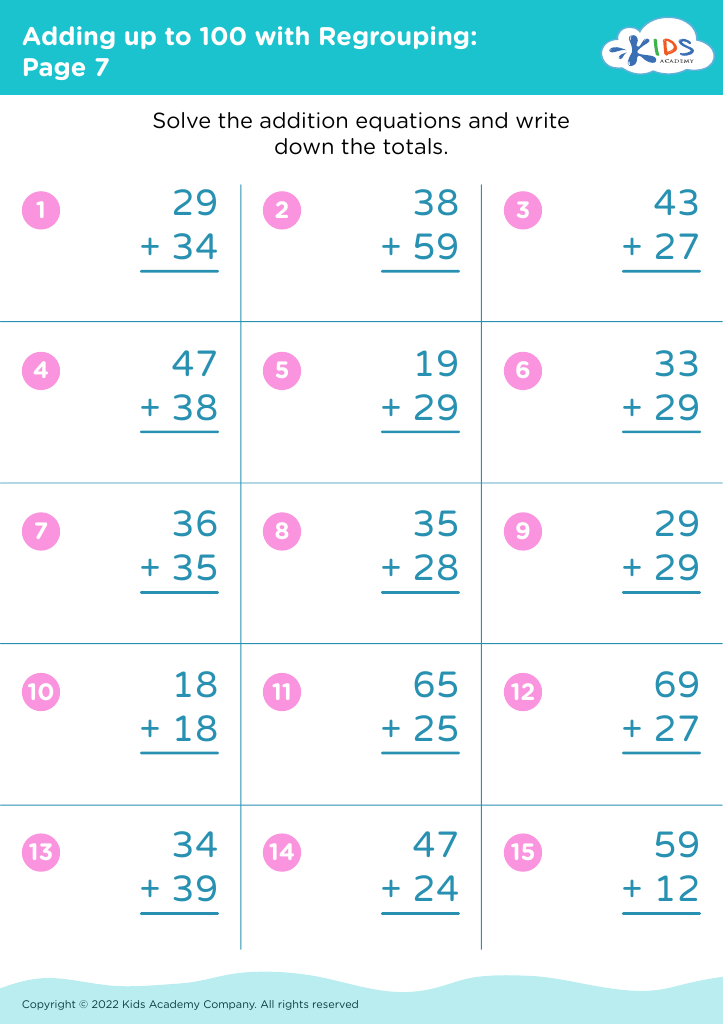
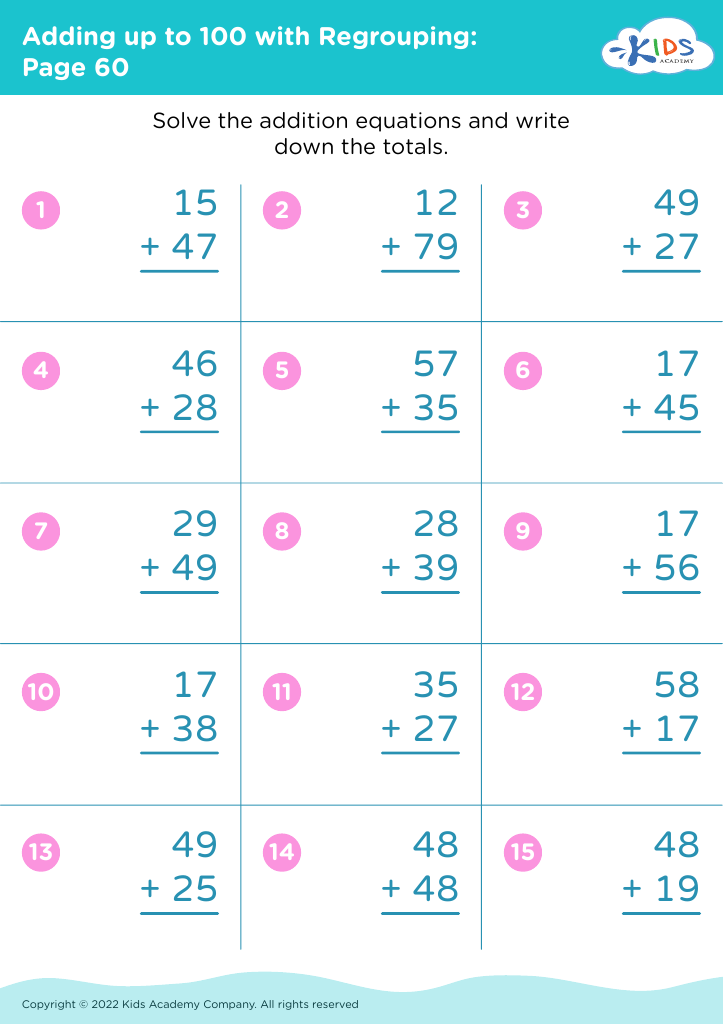
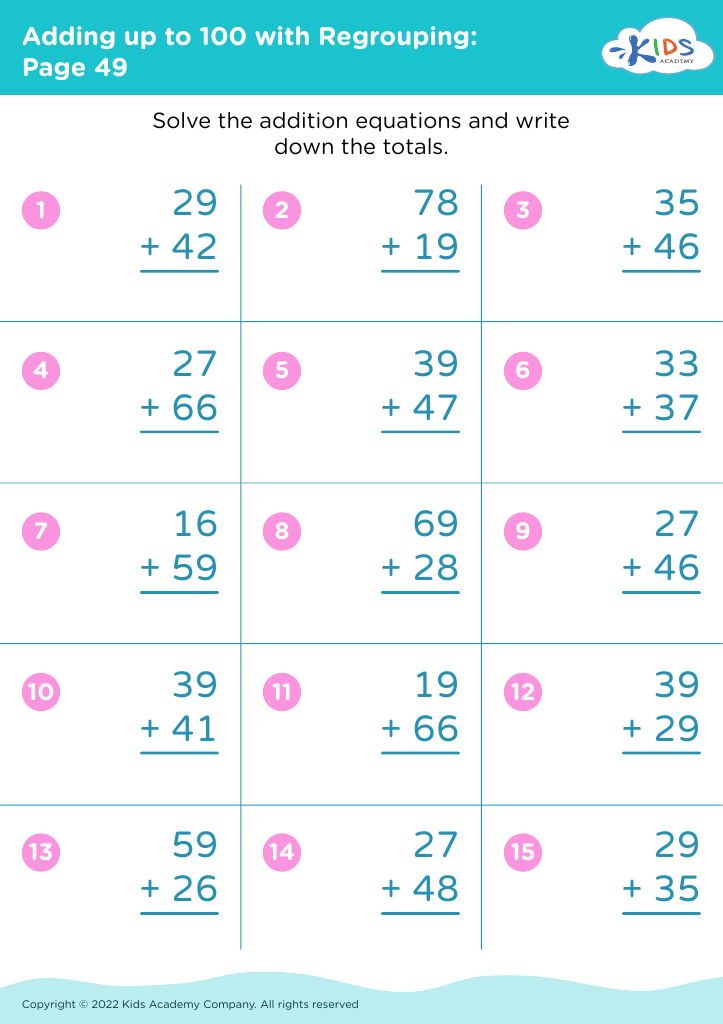




Basic addition skills, particularly adding up to 100 with regrouping, are essential for children aged 4-8 as they lay the groundwork for advanced mathematical concepts later in life. Mastering these skills fosters problem-solving abilities, critical thinking, and mental agility, which are vital not only in mathematics but across all domains of learning.
By learning how to regroup, children gain a deeper understanding of number relationships and place value, which enhances their number sense. This foundational knowledge is crucial as they transition to more complex operations such as subtraction, multiplication, and division.
Teachers and parents should be concerned about these skills because early mastery can significantly impact a child's confidence and attitude towards math. Struggles in basic addition can lead to frustration and a negative mindset about learning in general. Moreover, being proficient in addition helps children excel in everyday situations, from counting items to managing money.
Effective engagement with fun activities—like games or visual aids—can turn learning into an enjoyable experience. Investing time in reinforcing basic addition skills early sets children on a positive trajectory for lifelong learning, making it an essential focus for educators and parents alike.