Comparing Fractions Adding up to 100 with Regrouping Worksheets for Ages 4-8
9 filtered results
-
From - To
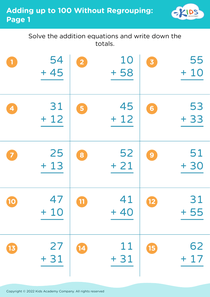
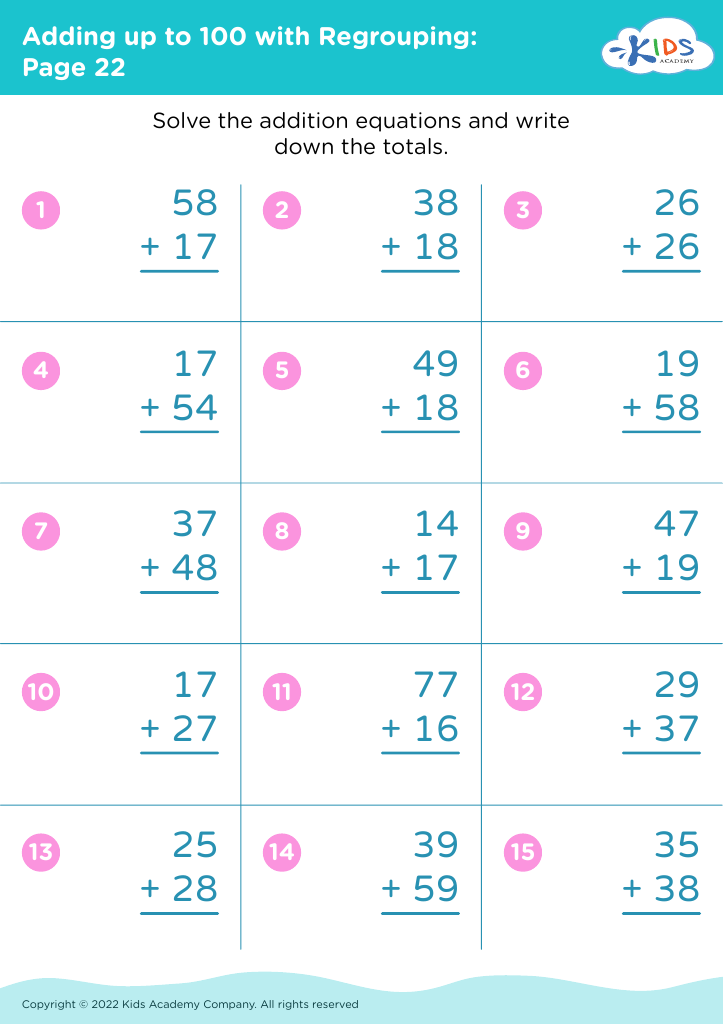
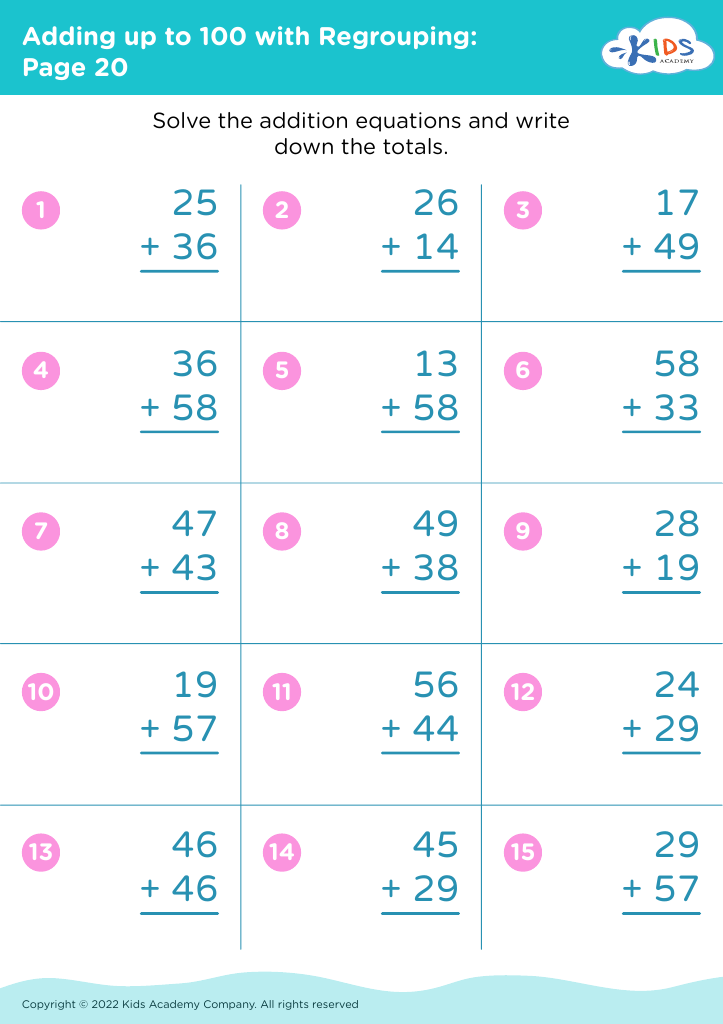
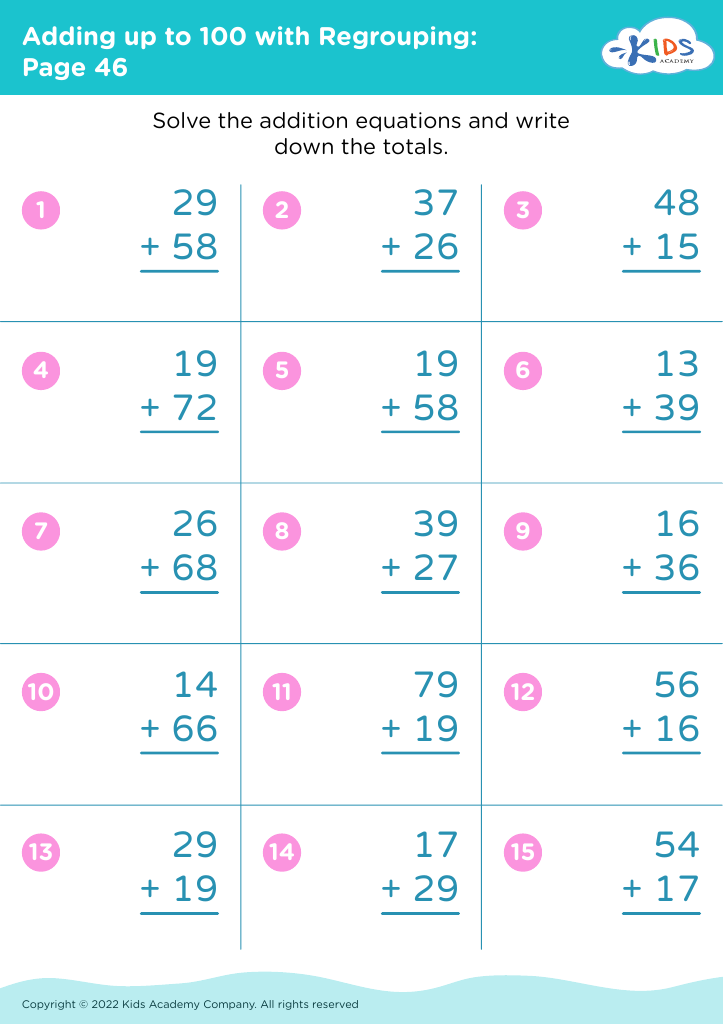
Explore our engaging "Comparing Fractions Adding Up to 100 with Regrouping Worksheets" designed for children aged 4 to 8. These interactive worksheets help young learners master the concept of comparing fractions, enhancing their understanding of numeracy while having fun. Through stimulating exercises and visual aids, kids will develop essential skills in identifying and comparing different fractions, all while tackling addition that totals 100 with regrouping strategies. Ideal for classroom activities or home learning, our worksheets foster critical thinking and problem-solving abilities in a playful, supportive environment. Get started today and make learning about fractions enjoyable and effective!
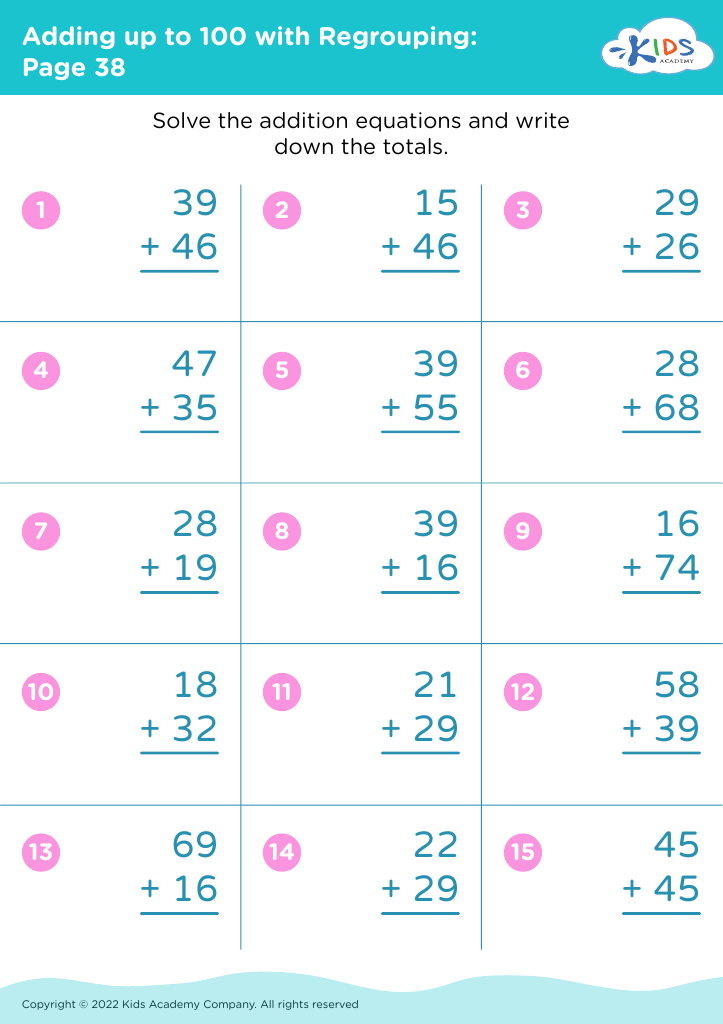
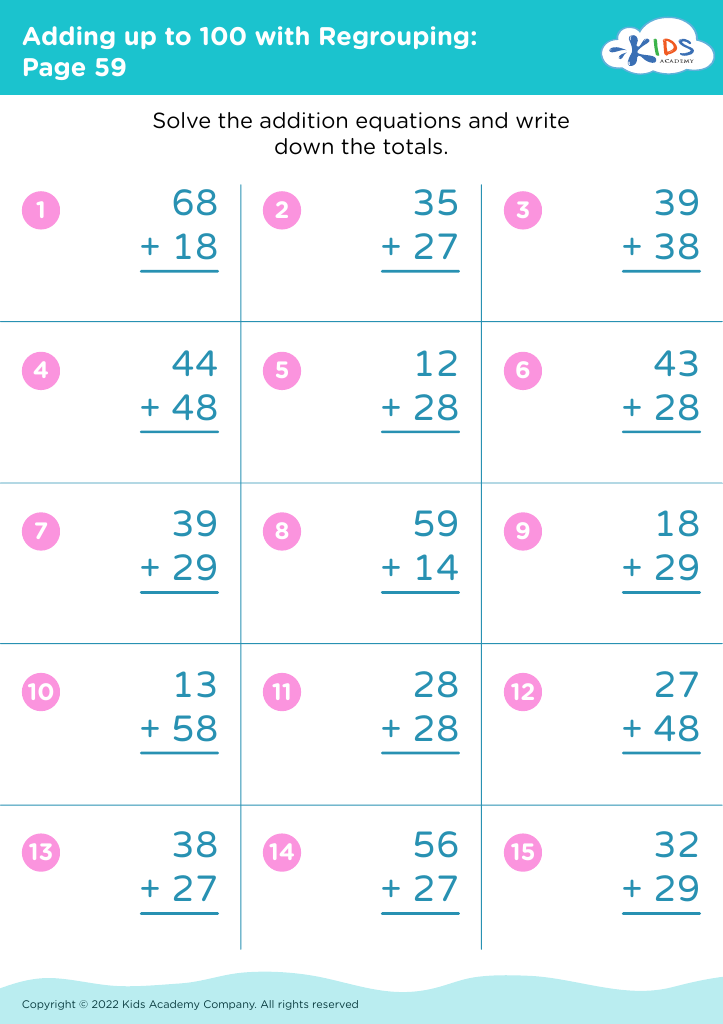
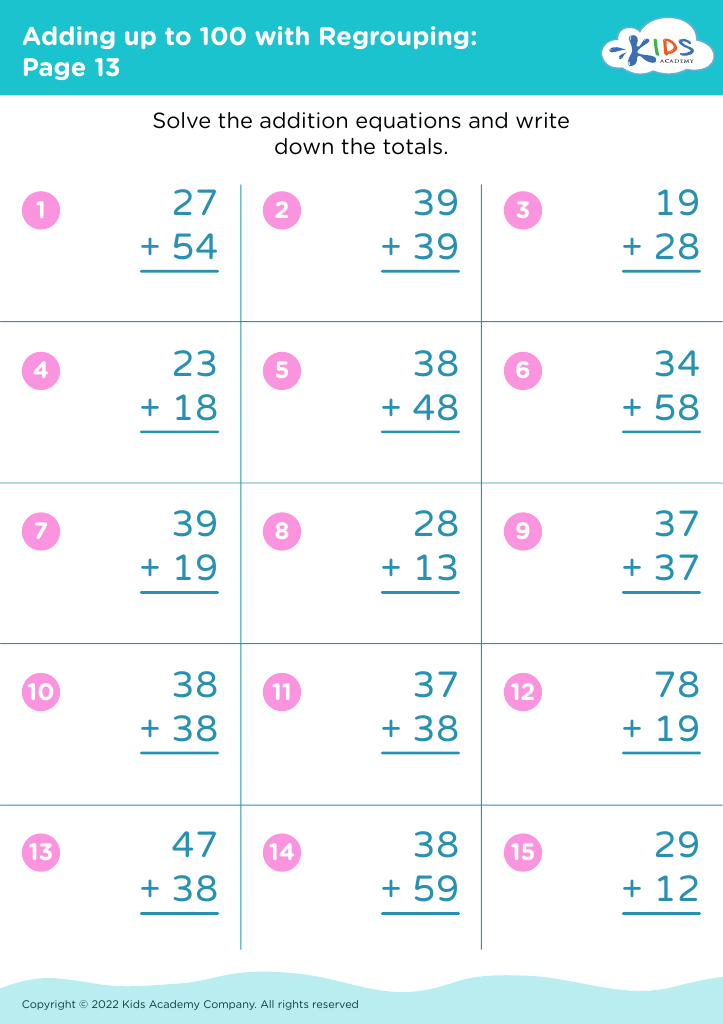
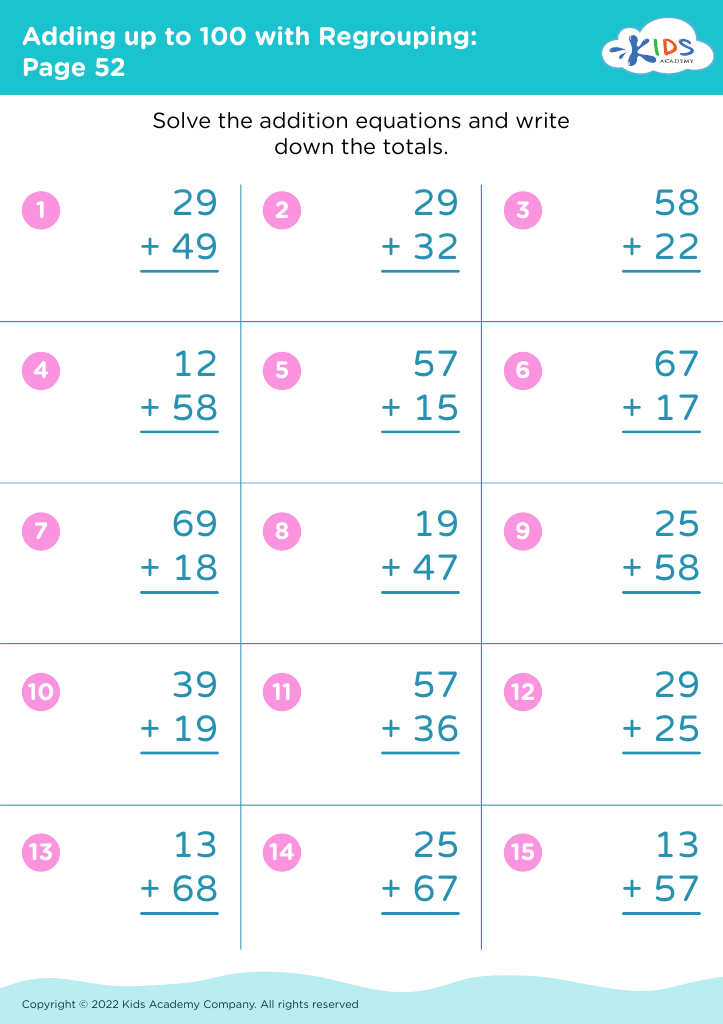
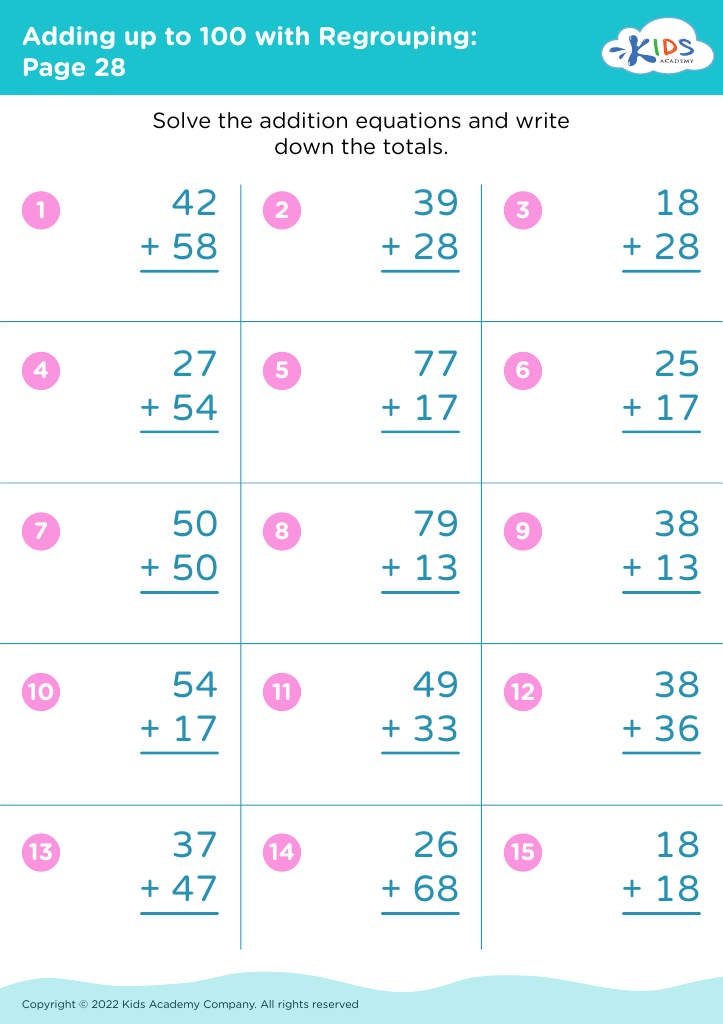
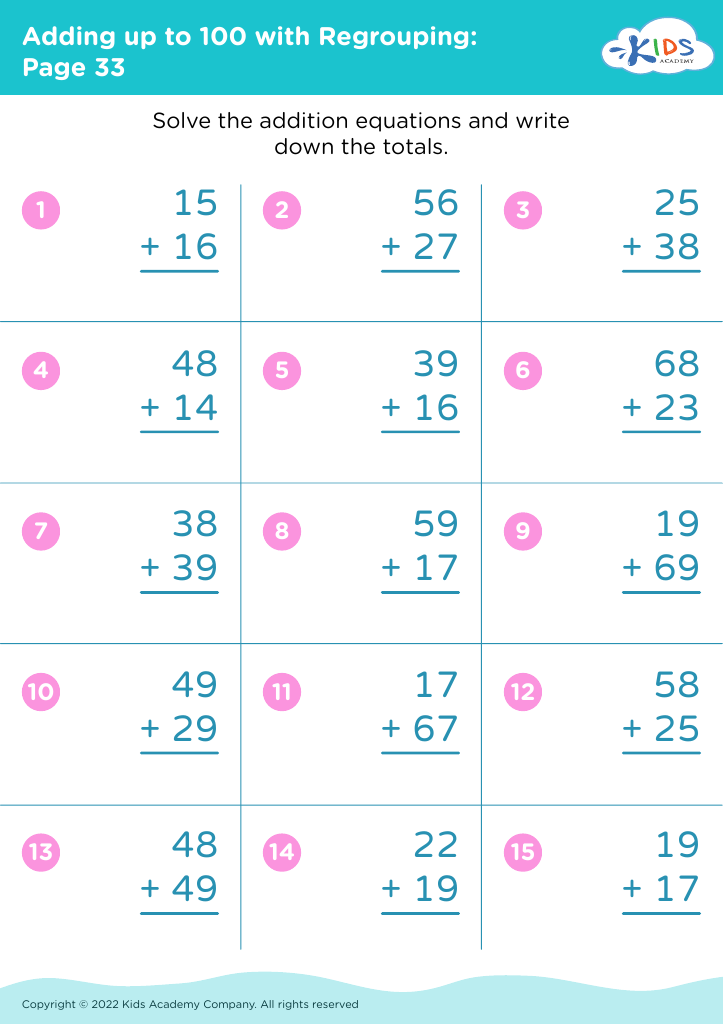




Comparing fractions and mastering regrouping when adding young learners, especially those ages 4-8, is vital for several reasons. First, it fosters critical thinking and problem-solving skills. As children compare fractions, they learn to evaluate values and develop intuition about quantity and proportion, foundational skills that extend beyond mathematics.
Second, understanding fractions lays the groundwork for more complex mathematical concepts. For example, by grasping how to compare fractions, children can transition to operations involving fractions with ease. Regrouping while adding up to 100 also reinforces the importance of place value, helping students develop a solid numerical sense, which is crucial as they progress in their education.
Furthermore, teaching these concepts in early grades encourages cooperation and communication. When students work together to solve problems, they learn to articulate their thought processes, fostering social skills while building mathematical understanding.
Finally, engaging with fractions can enhance a child’s confidence in their analytical abilities. When parents or teachers pay attention to these foundational skills, they not only support cognitive development but also instill a positive attitude towards math, promoting a lifelong appreciation for learning. Investing time in these concepts will significantly benefit children's educational journeys.