Fraction comparison Adding up to 100 with Regrouping Worksheets for Ages 4-8
3 filtered results
-
From - To
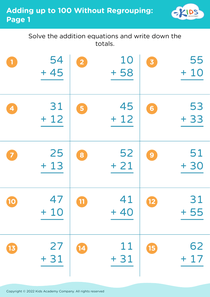
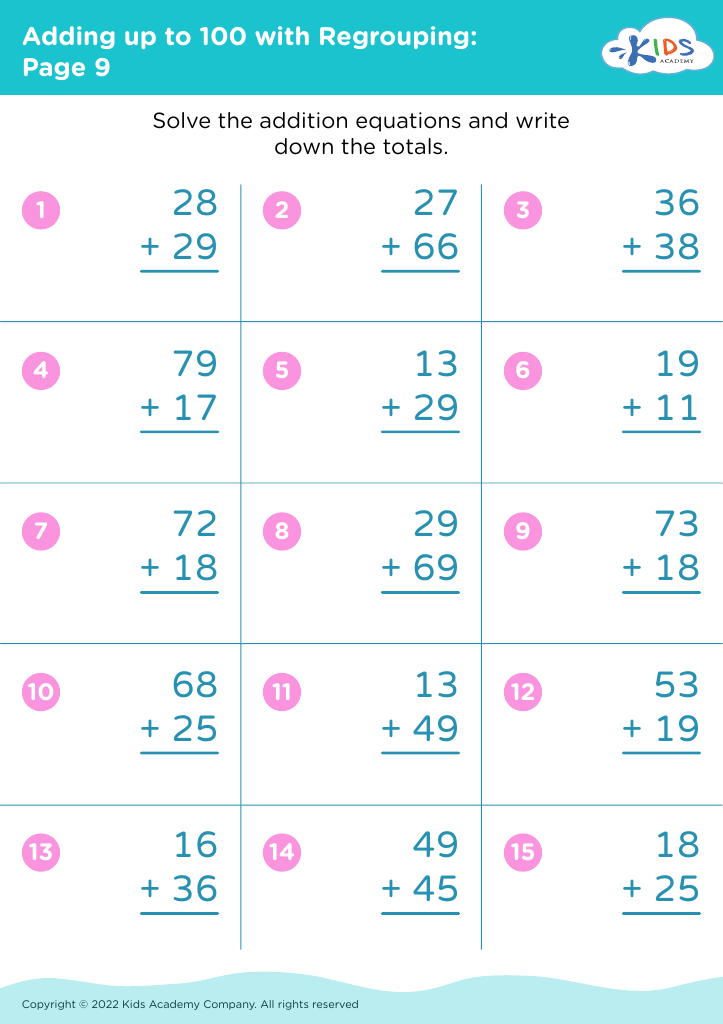
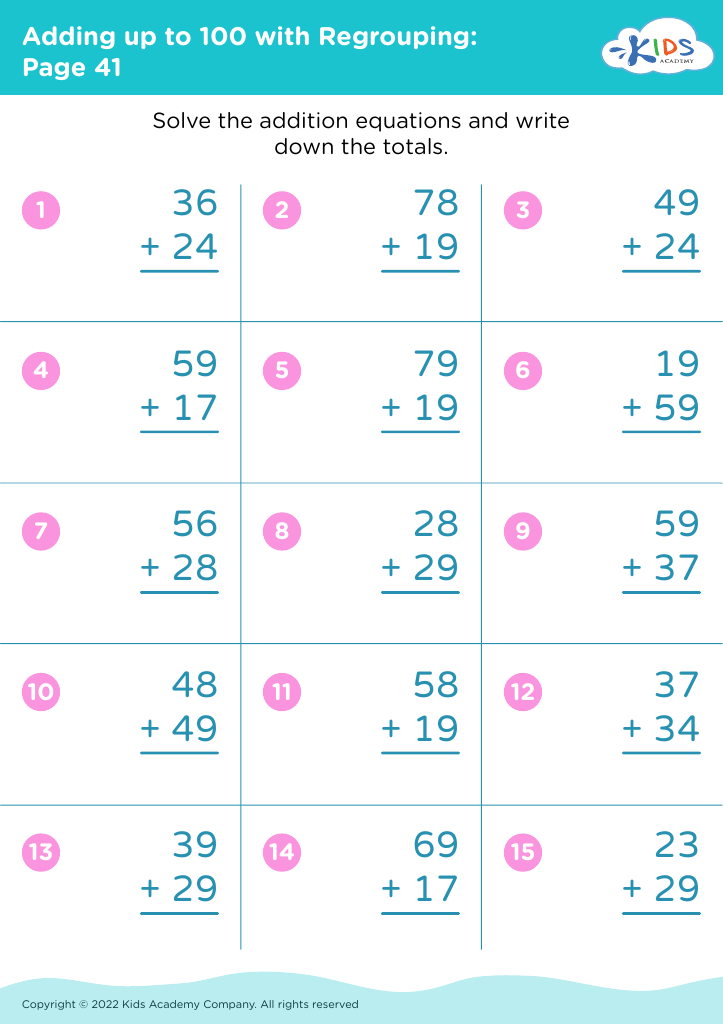
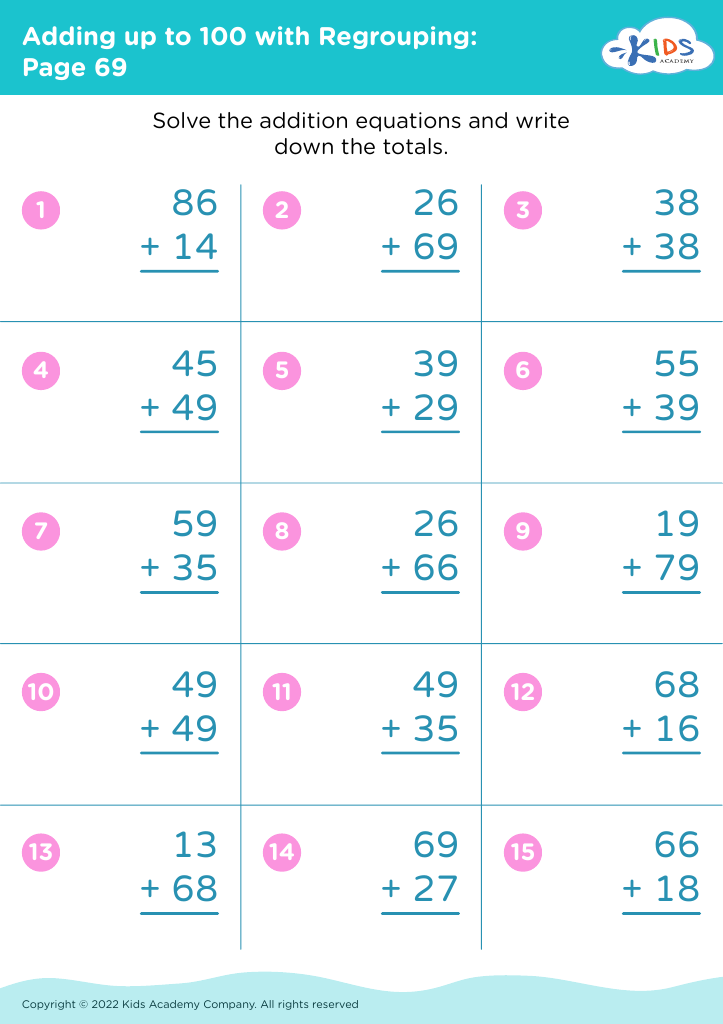
Unlock the world of fractions for young learners aged 4-8 with our engaging "Fraction Comparison: Adding up to 100 with Regrouping" worksheets. Designed to develop foundational math skills, these interactive exercises help children understand and compare fractional values while practicing addition strategies that involve regrouping. Each worksheet is crafted to enhance critical thinking, offering colorful visuals and fun problems that keep kids motivated. Perfect for home or classroom use, our materials make learning fractions enjoyable and accessible. Give your child the confidence to tackle math challenges and master fraction comparison in a playful and supportive environment. Explore the joy of learning today!




Parents and teachers should care about teaching fraction comparison and addition with regrouping, particularly for children aged 4-8, because these foundational skills greatly influence future mathematical reasoning. Understanding fractions enables children to grasp concepts of equality, proportion, and numerical relationships, providing a solid groundwork for more complex math in later years.
Fraction comparison helps children interpret quantities in relatable contexts, such as sharing pizza or dividing candy, promoting critical thinking and problem-solving skills. It's essential for developing number sense, as it requires them to evaluate, analyze, and make decisions based on their mathematical understanding.
Adding fractions that sum to 100 with regrouping introduces students to the concept of adjusting quantities to simplify problems, which fosters flexibility in mathematical thinking. It encourages them to see numbers as dynamic entities rather than static ones; for example, knowing that 70 and 30 can add to 100 encourages creativity with numbers.
By instilling these skills early, parents and teachers set children on a trajectory towards greater confidence and competence in math, alleviating future anxiety and ensuring academic success in STEM fields. Engaging with these concepts in playful, meaningful ways promotes a love for learning and mathematics that can last a lifetime.