Filters

16 filtered results

Clear all filters
Favorites
With answer key
Interactive

16 filtered results

Difficulty Level

Grade


Welcome to our "Understanding Fractions Adding Up to 100 with Regrouping Worksheets" specifically designed for young learners aged 4-8. Our engaging worksheets help children grasp the concept of fractions while mastering addition and regrouping. These interactive exercises are perfect for promoting critical thinking and improving mathematical skills in a fun and accessible way. With colorful illustrations and age-appropriate challenges, kids will gain confidence as they learn to add fractions together to total 100. Explore our resources to support your child's learning journey and lay a solid foundation for their future math success! Dive into the world of fractions today!
Check out this FREE Trial Lesson on Adding up to 100 with Regrouping for age 4-8!

Z

Favorites
With answer key
Interactive
  • 4-8
  • Understanding fractions
  • Adding up to 100 with Regrouping
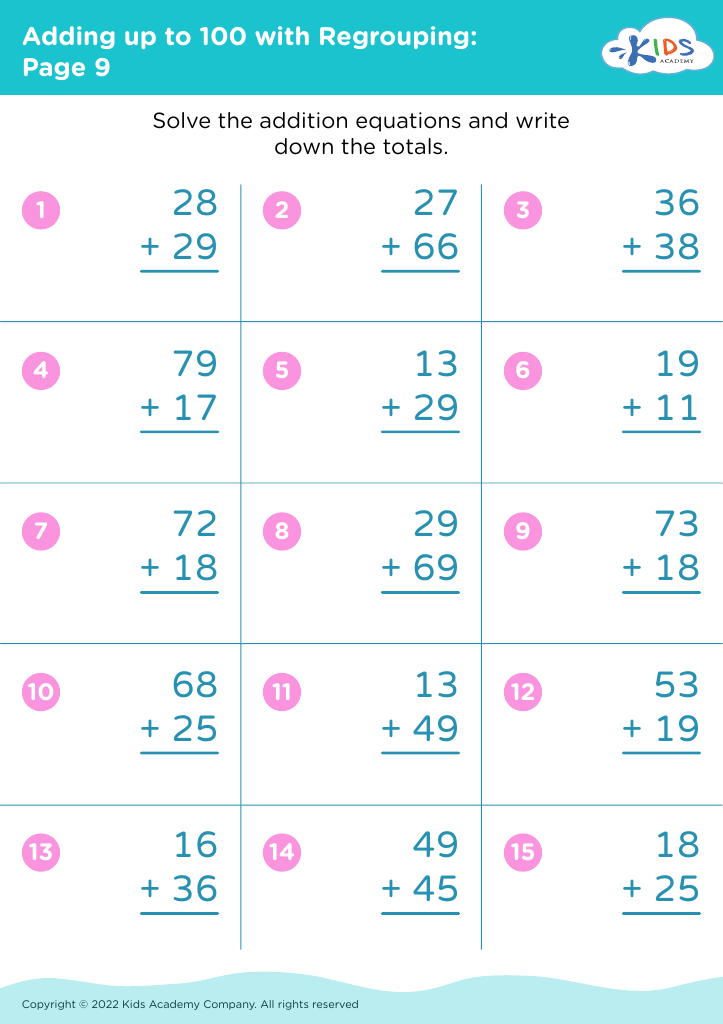
Adding up to 100 with Regrouping: Page 9
Worksheet
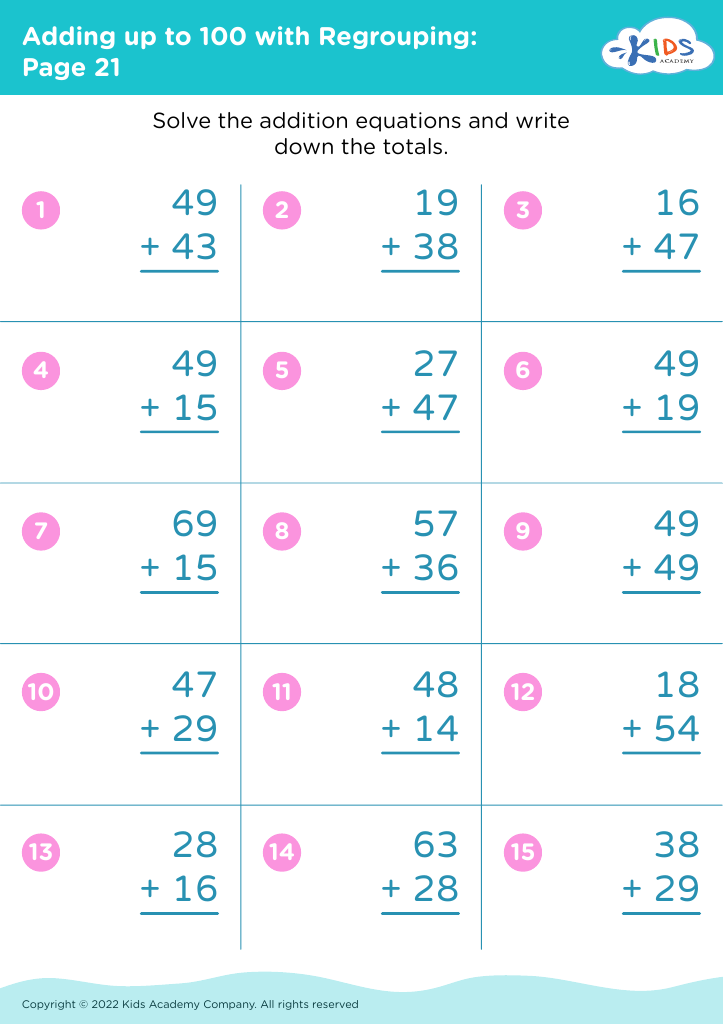
Adding up to 100 with Regrouping: Page 21
Worksheet
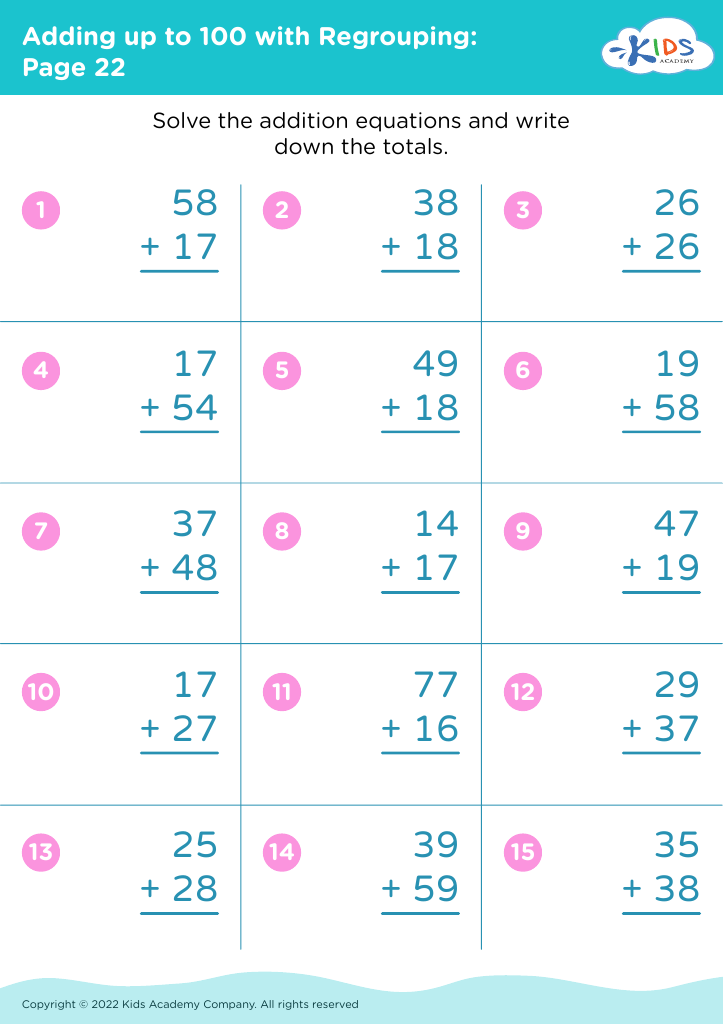
Adding up to 100 with Regrouping: Page 22
Worksheet
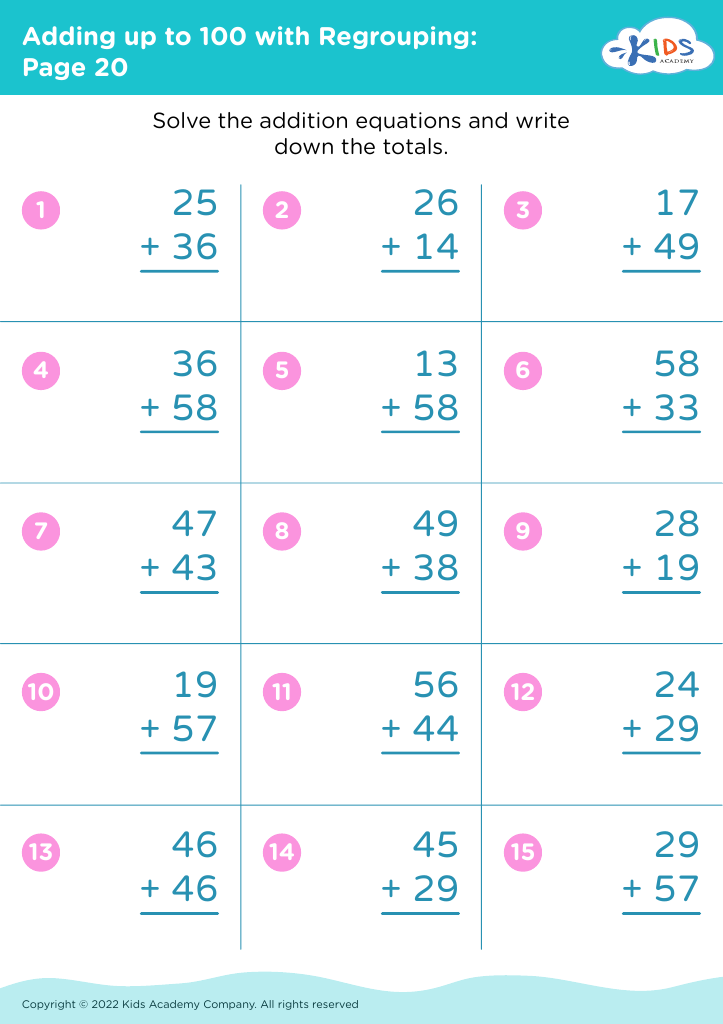
Adding up to 100 with Regrouping: Page 20
Worksheet
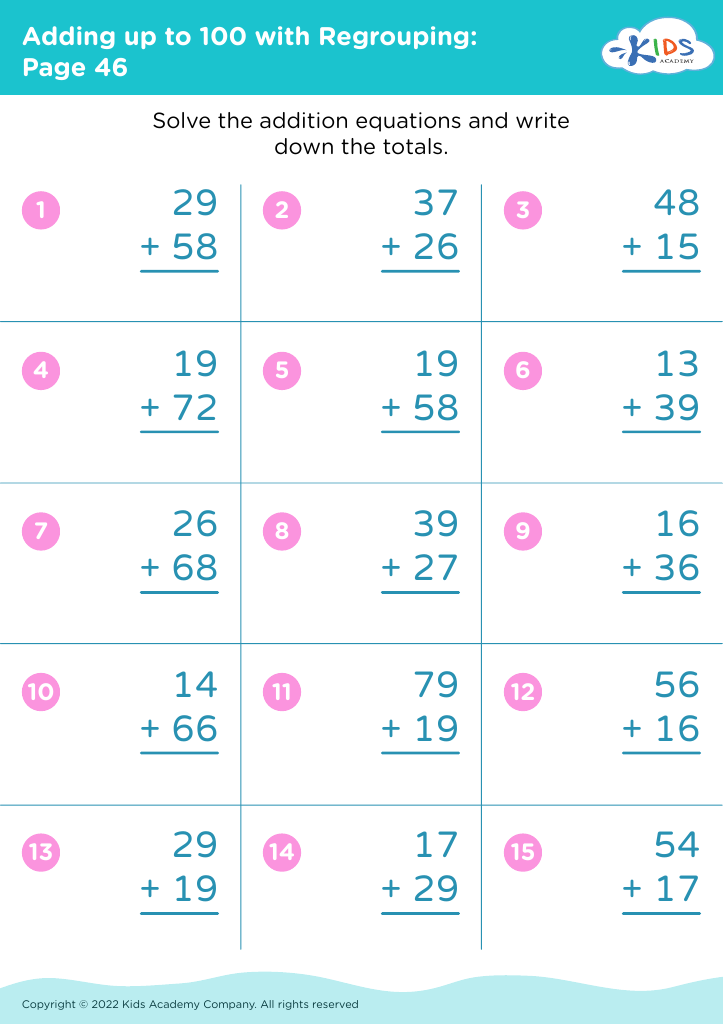
Adding up to 100 with Regrouping: Page 46
Worksheet
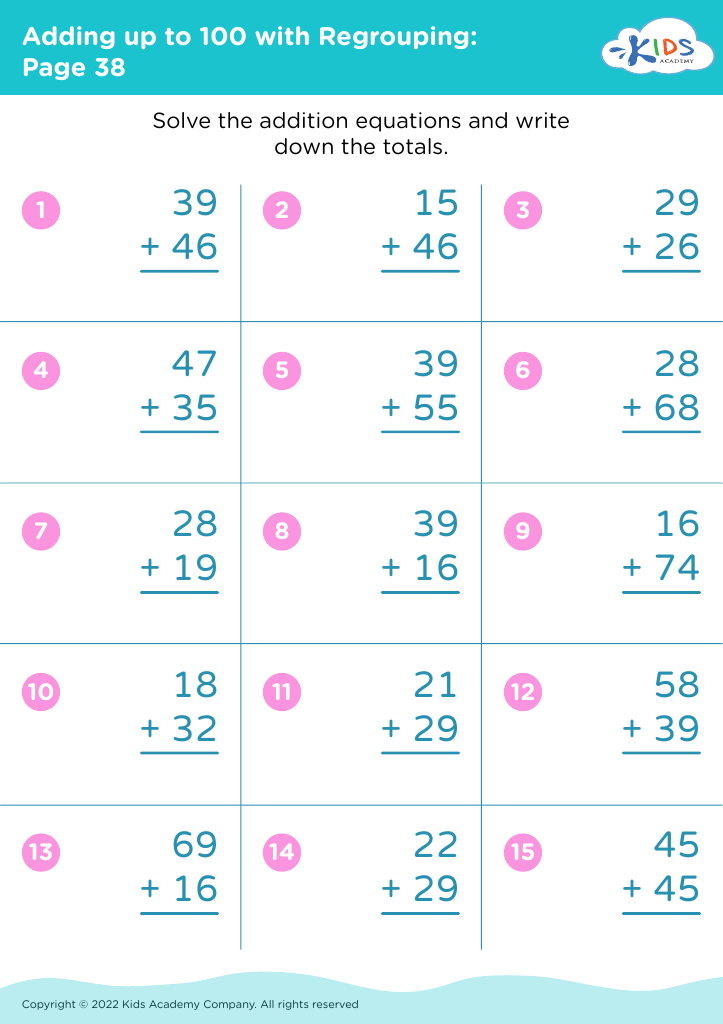
Adding up to 100 with Regrouping: Page 38
Worksheet
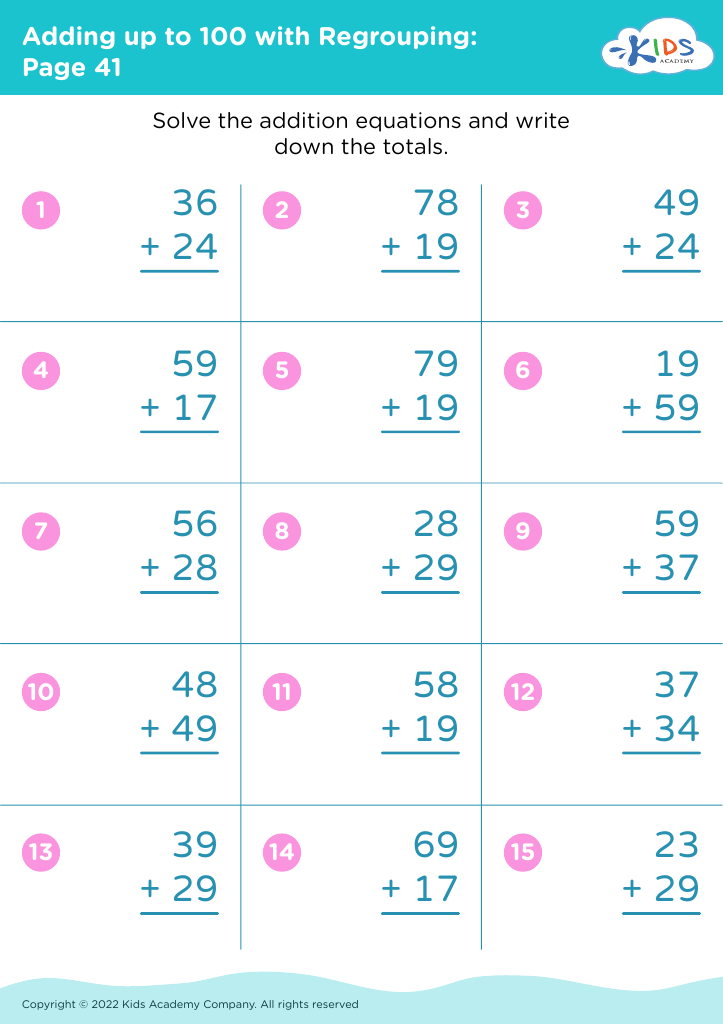
Adding up to 100 with Regrouping: Page 41
Worksheet
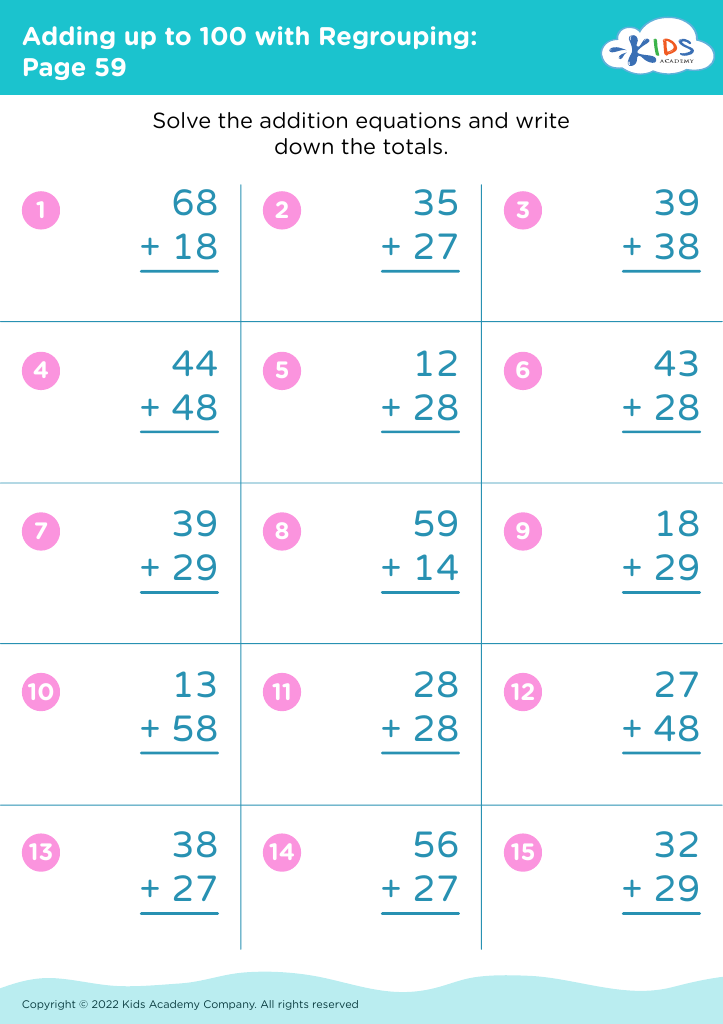
Adding up to 100 with Regrouping: Page 59
Worksheet
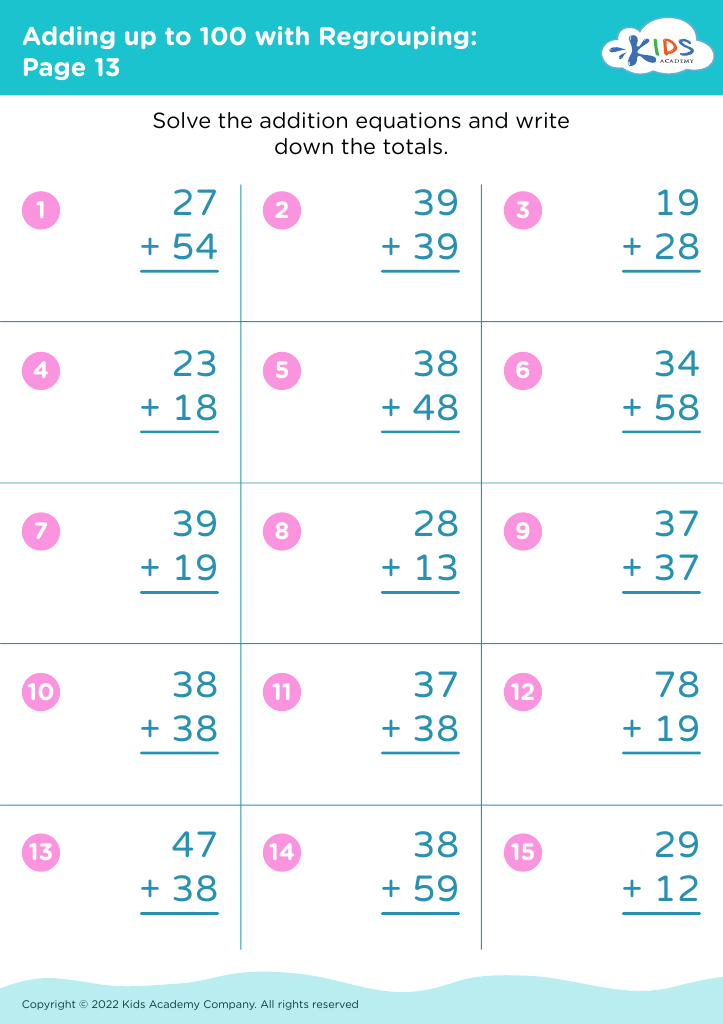
Adding up to 100 with Regrouping: Page 13
Worksheet
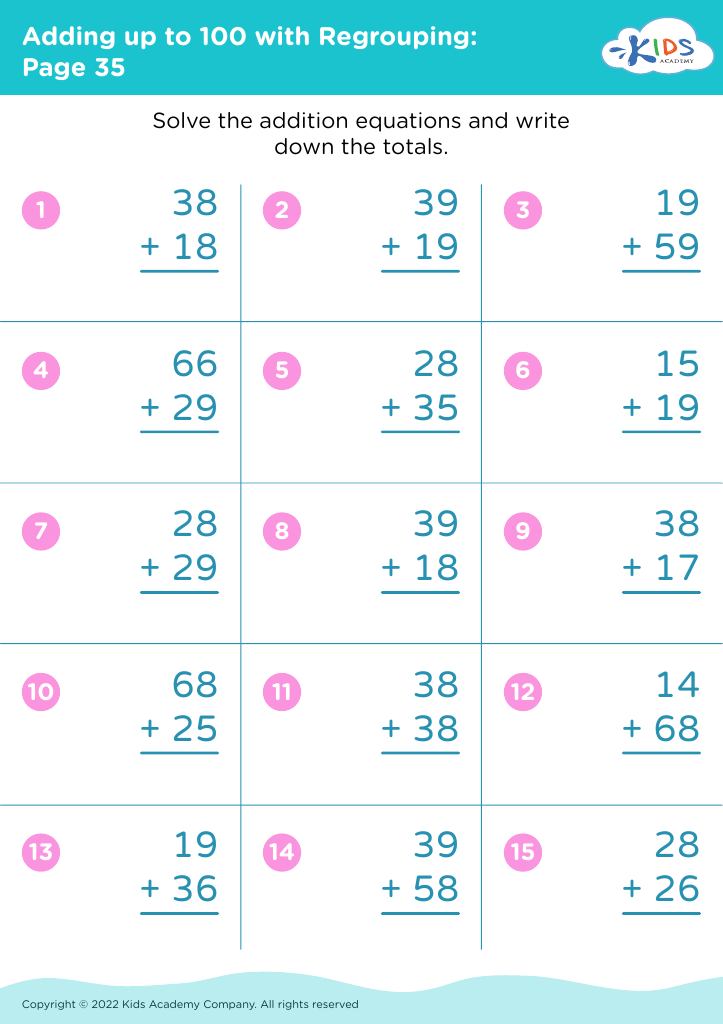
Adding up to 100 with Regrouping: Page 35
Worksheet
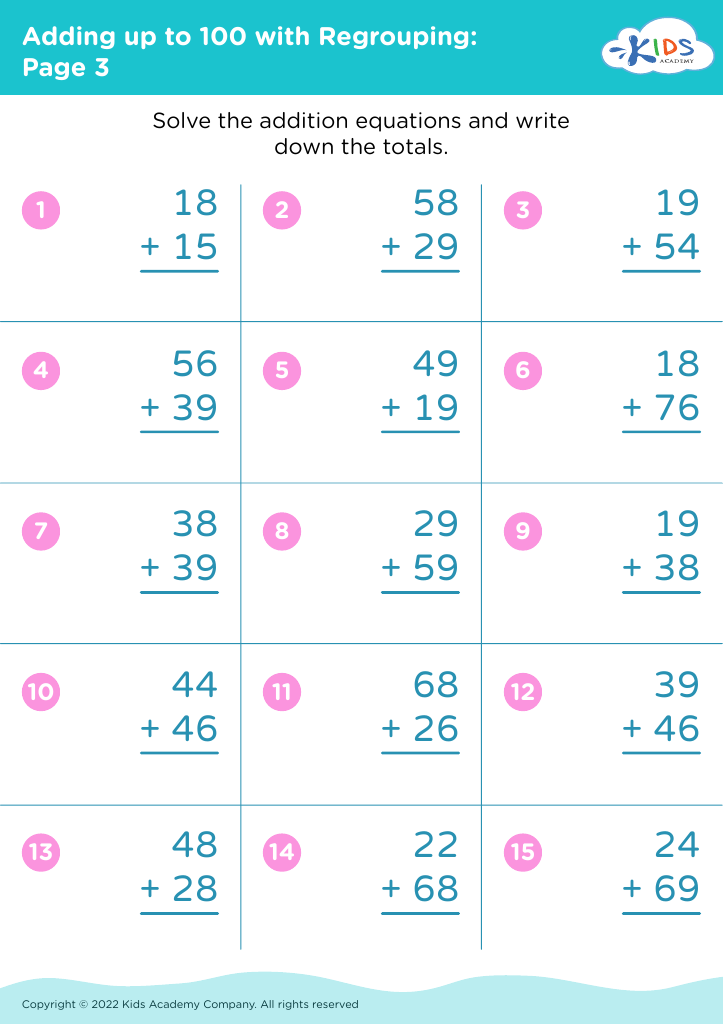
Adding up to 100 with Regrouping: Page 3
Worksheet
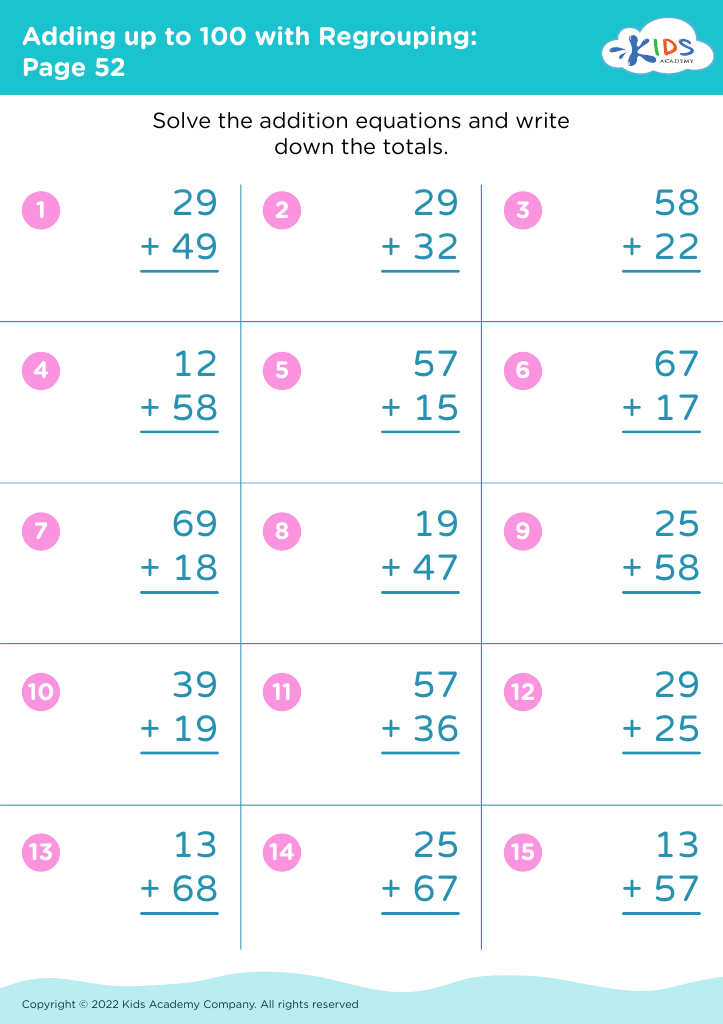
Adding up to 100 with Regrouping: Page 52
Worksheet
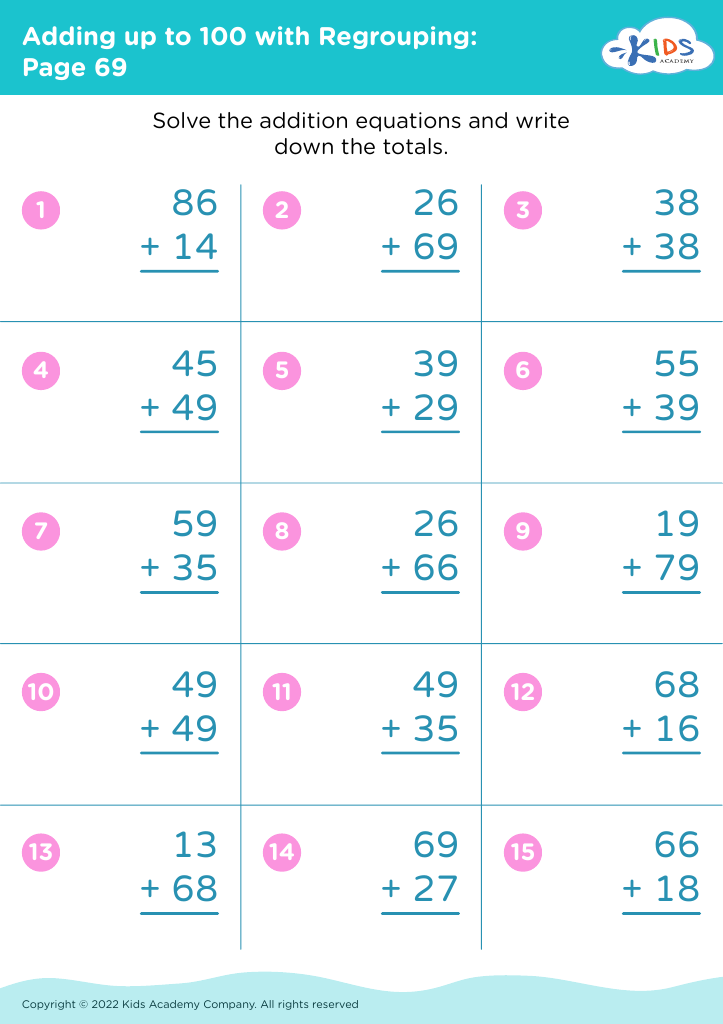
Adding up to 100 with Regrouping: Page 69
Worksheet
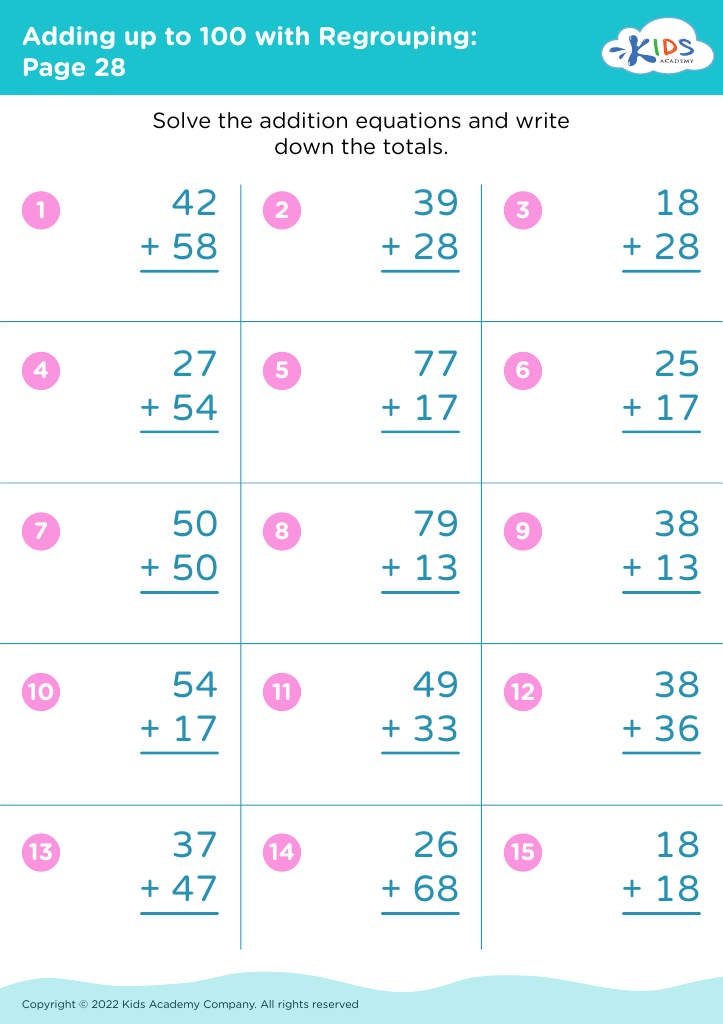
Adding up to 100 with Regrouping: Page 28
Worksheet
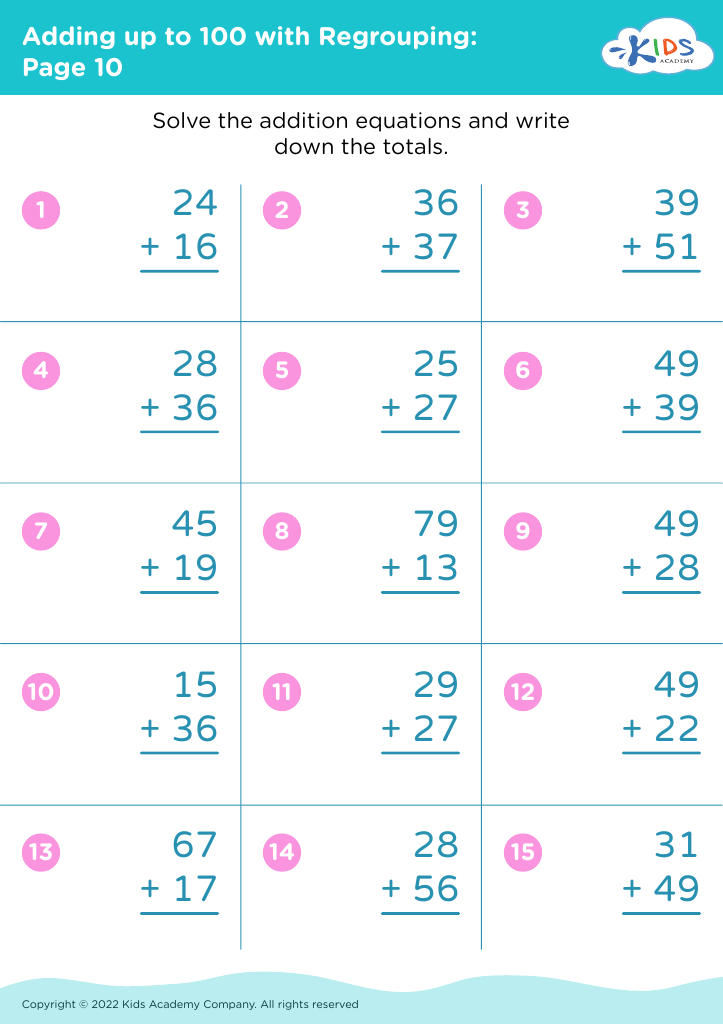
Adding up to 100 with Regrouping: Page 10
Worksheet
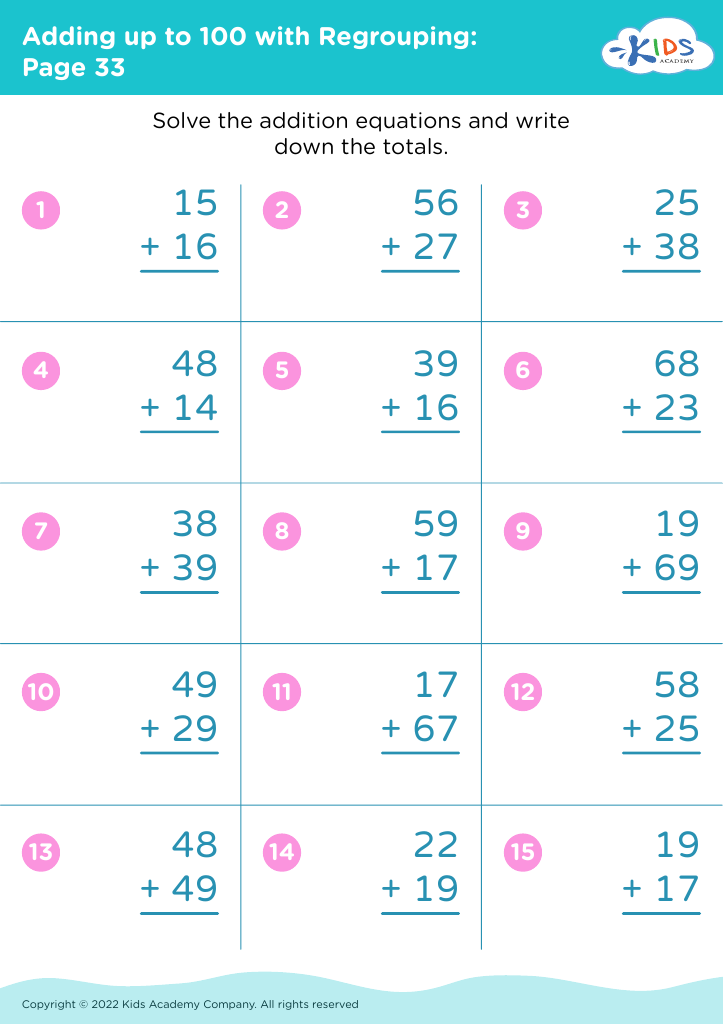
Adding up to 100 with Regrouping: Page 33
Worksheet


Understanding fractions and the ability to add them up to 100 with regrouping is crucial for children aged 4-8 for several reasons. First, early mathematical skills form the foundation for more complex concepts later on. Fractions, which represent parts of a whole, are a fundamental part of math that helps children understand division, percentage, and ratios.

Secondly, learning to add fractions that sum up to 100 with regrouping teaches children how to handle numbers flexibly. Regrouping develops critical thinking and problem-solving skills, as students find different ways to approach calculations. Mastering these skills can boost their confidence in math, making them more willing to tackle challenging problems in the future.

Additionally, understanding fractions has real-world applications, from cooking to budgeting, helping children see the relevance of what they’re learning. Parents and teachers should also recognize that engaging with fractions in fun, interactive ways—such as through games or hands-on activities—can foster a love for math, making learning enjoyable and effective.

Ultimately, nurturing these skills early on equips young learners with the tools they need for future academic success and practical life skills, ensuring they have a strong mathematical foundation.