Comparing Fractions Adding up to 100 Without Regrouping Worksheets for Ages 4-8
11 filtered results
-
From - To
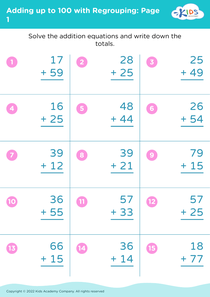
Discover our engaging "Comparing Fractions Adding up to 100 Without Regrouping" worksheets designed specifically for children ages 4-8. These worksheets provide a fun and interactive way for young learners to understand fraction comparisons while reinforcing their addition skills up to 100. Students will explore visual aids and clear examples, making fractions relatable and easier to grasp. Perfect for use at home or in the classroom, our resources help bolster math confidence and competence in early learners. Equip your child with essential math skills through our thoughtfully crafted exercises and ignite their passion for learning fractions! Start comparing Fractions today!
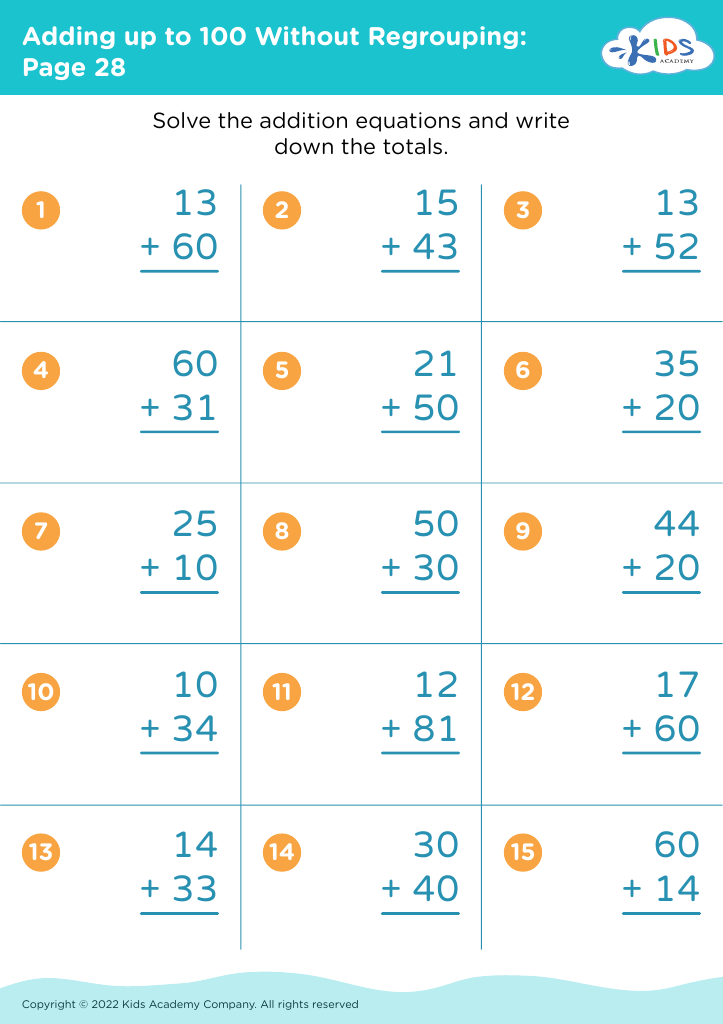
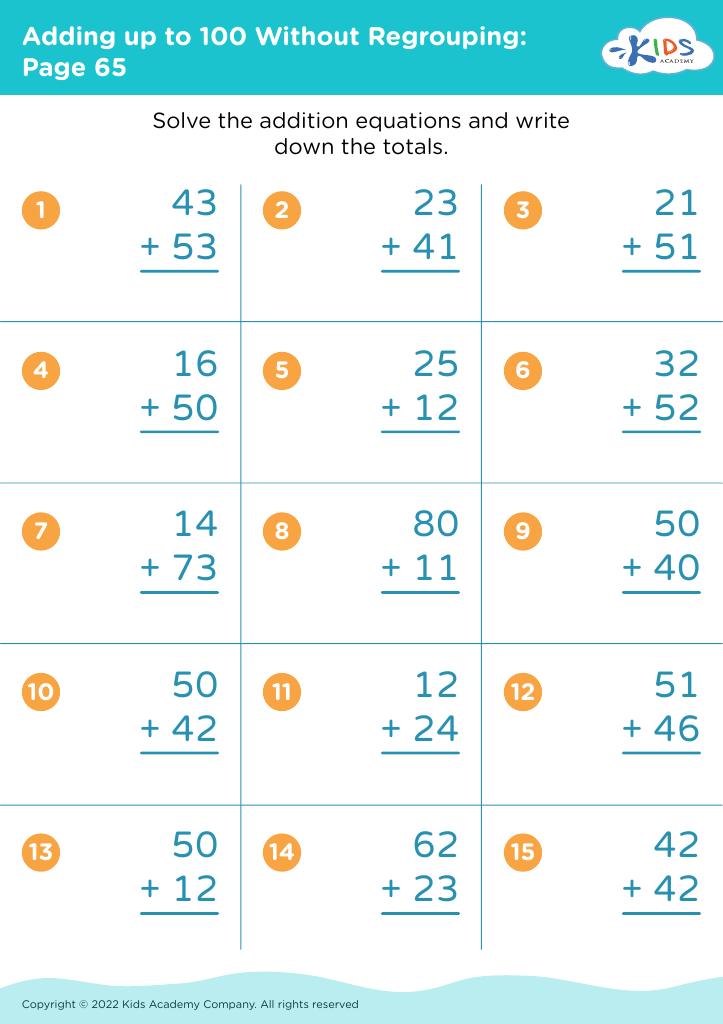
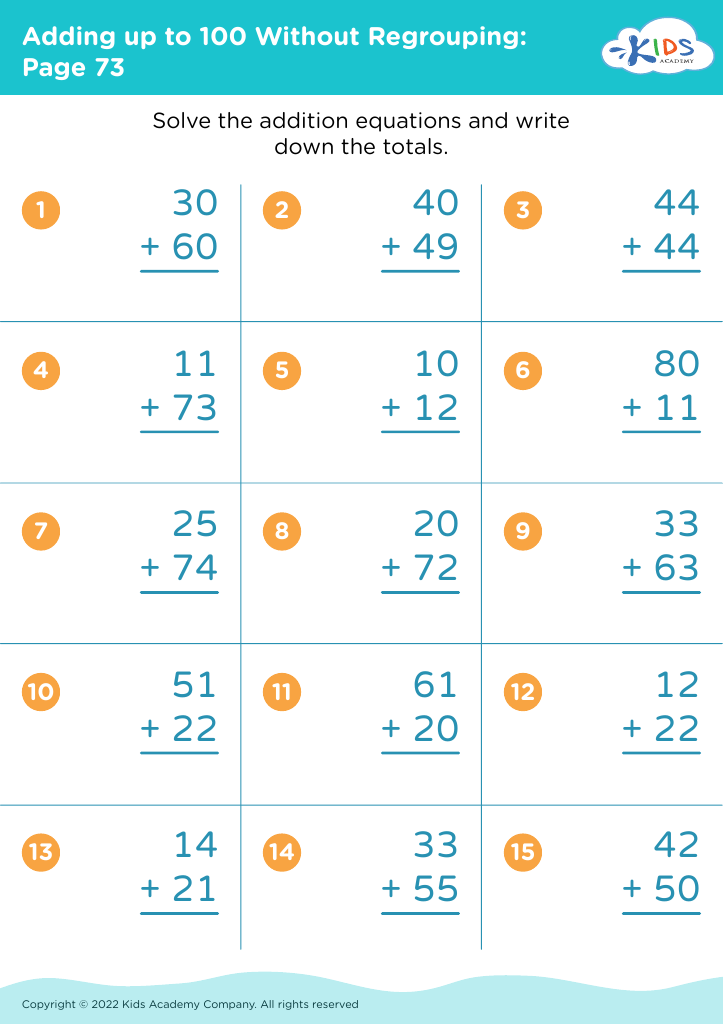
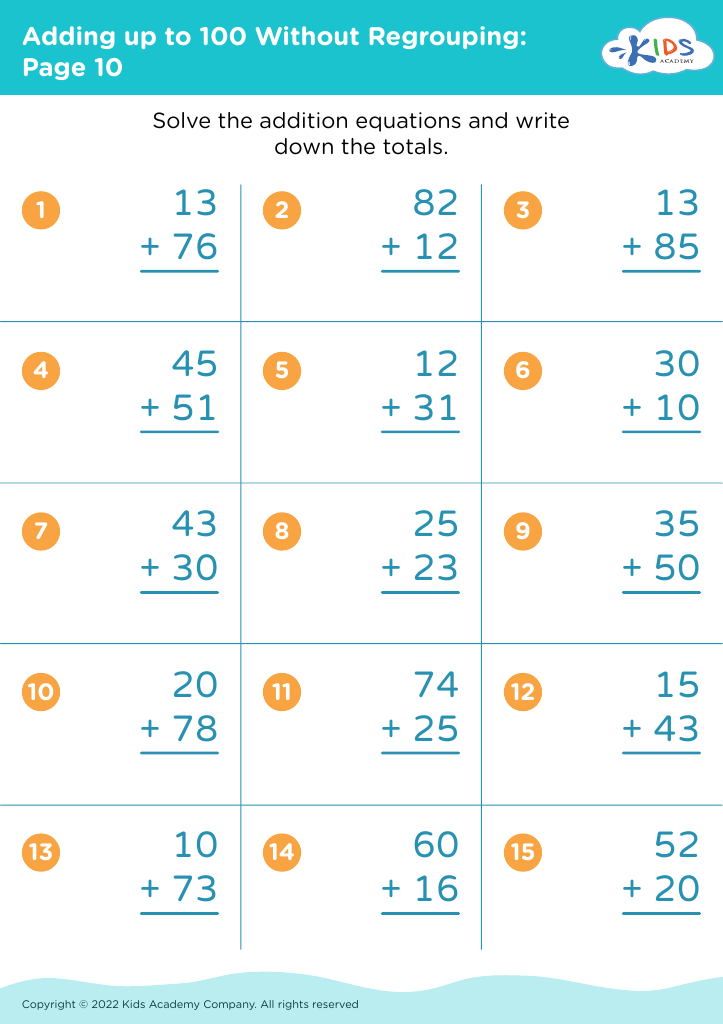
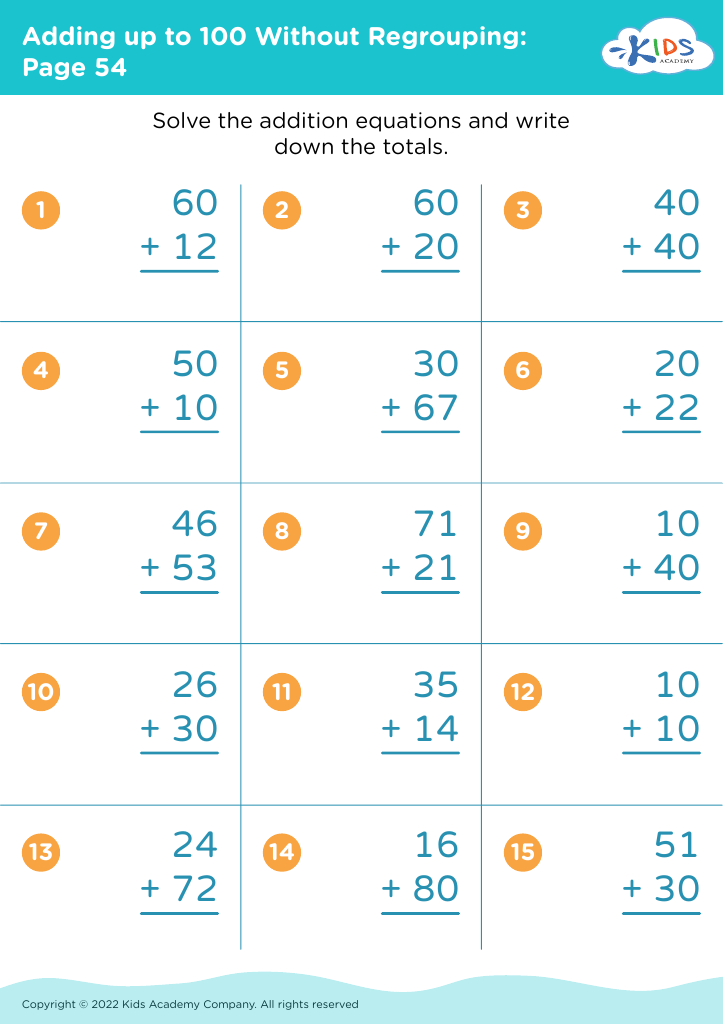
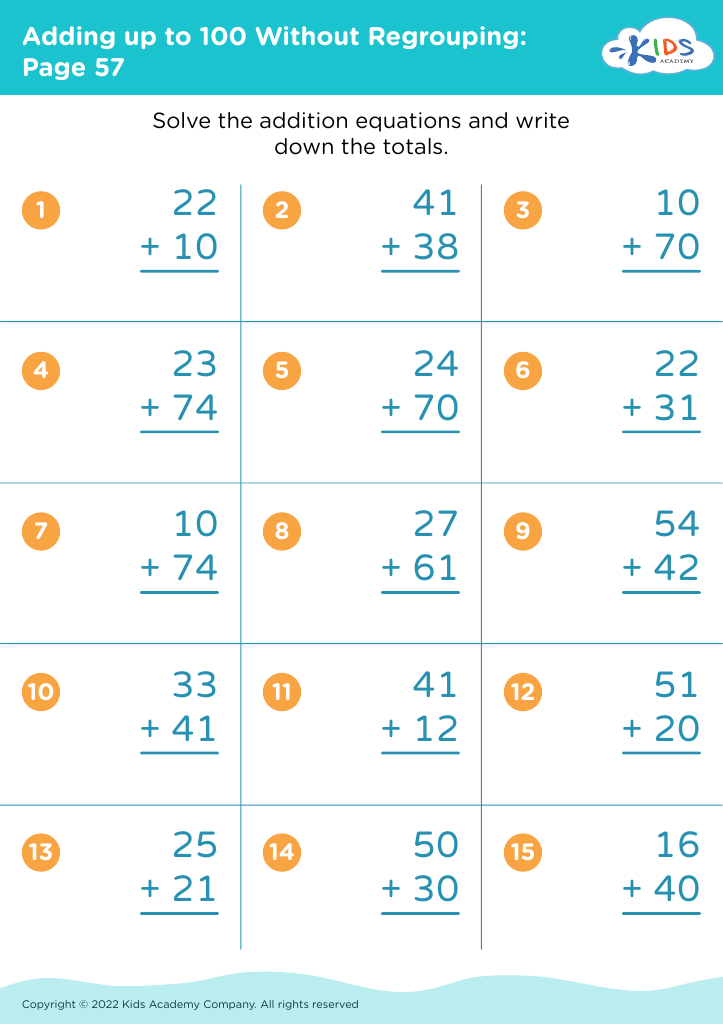
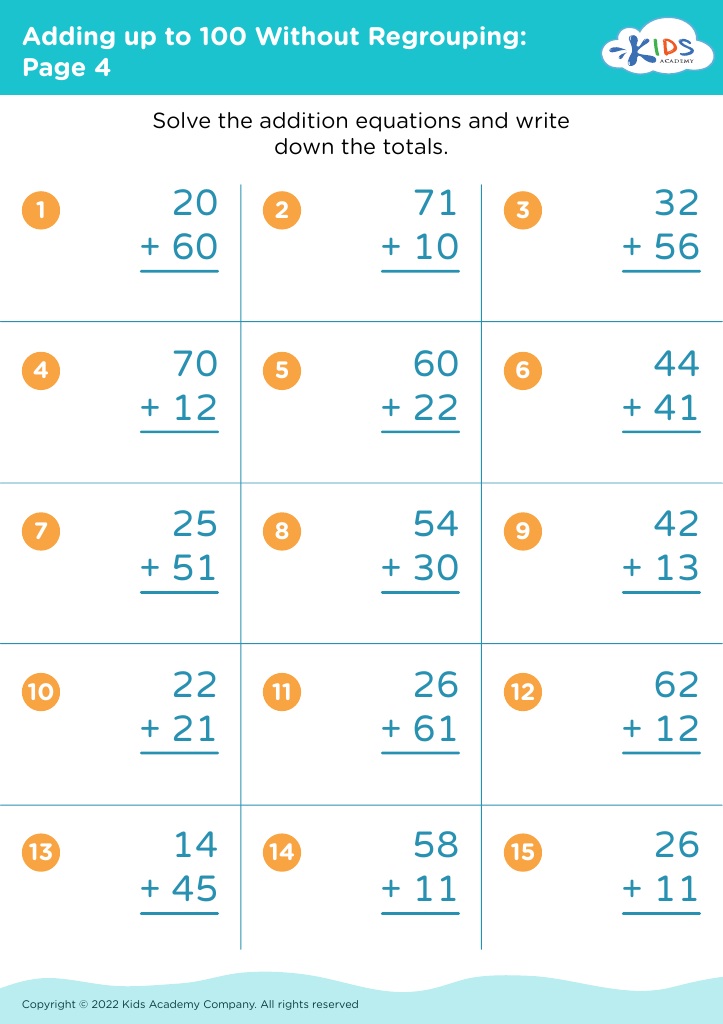
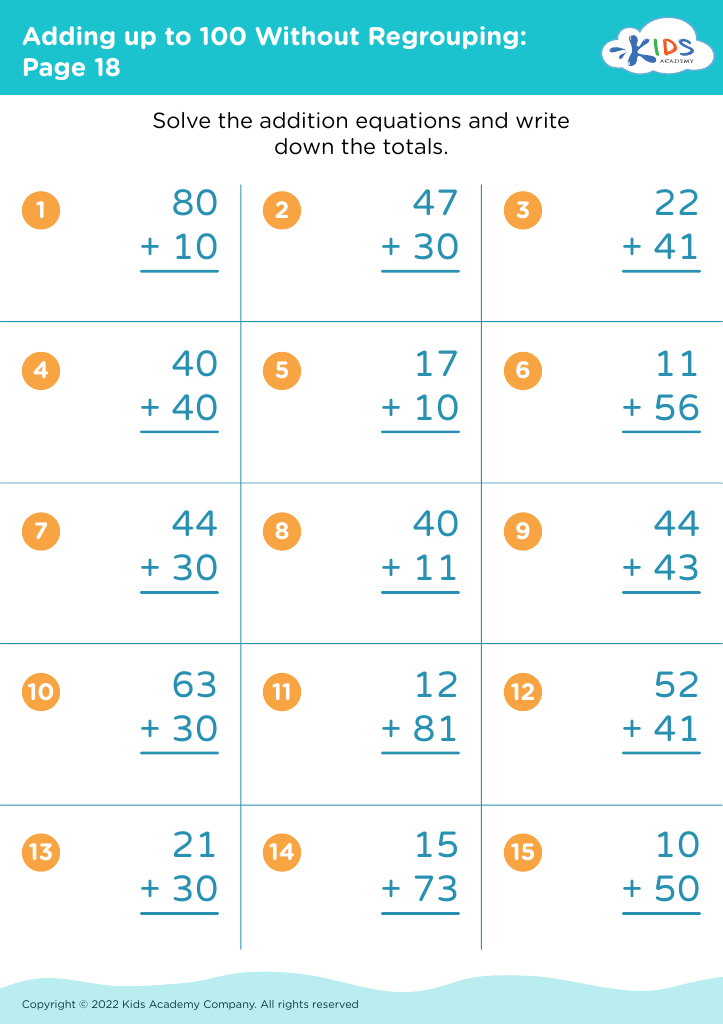
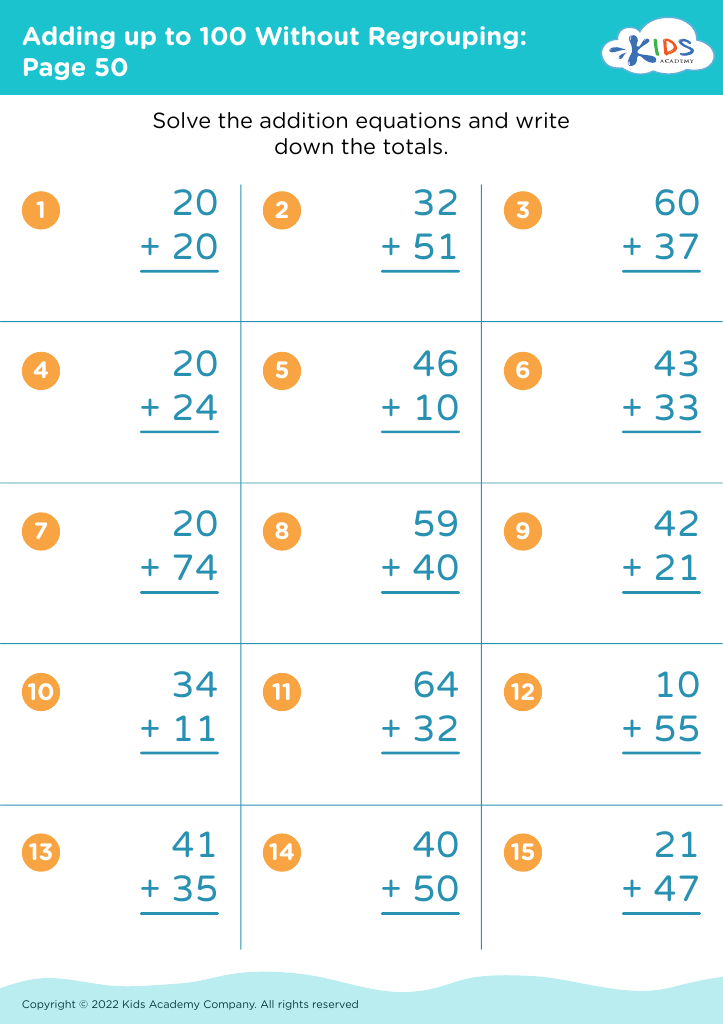
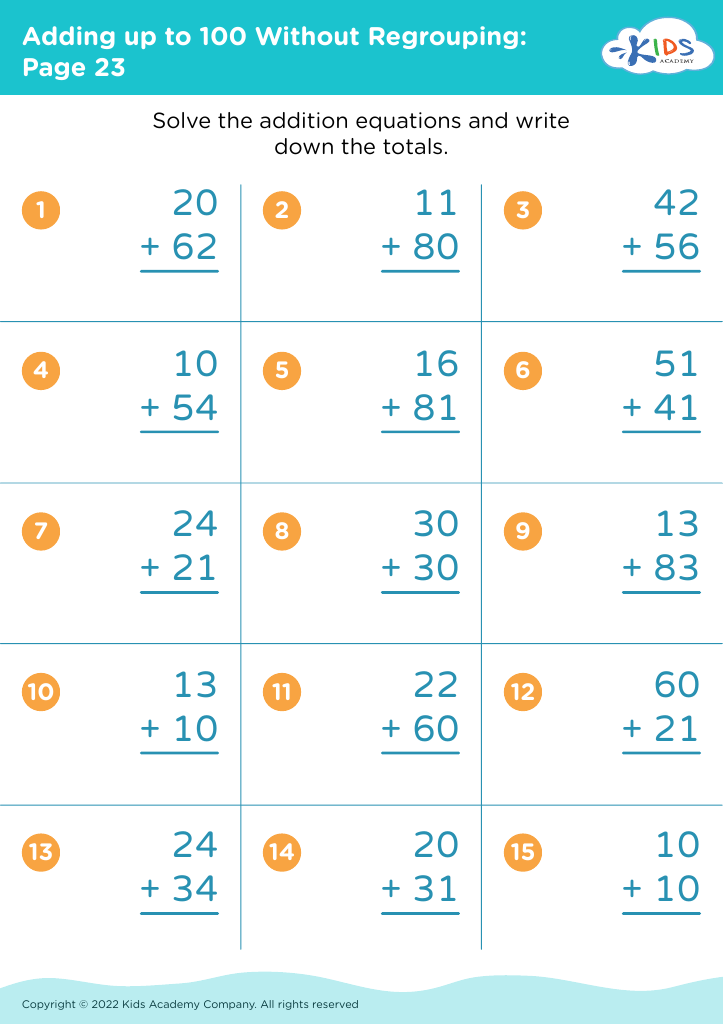
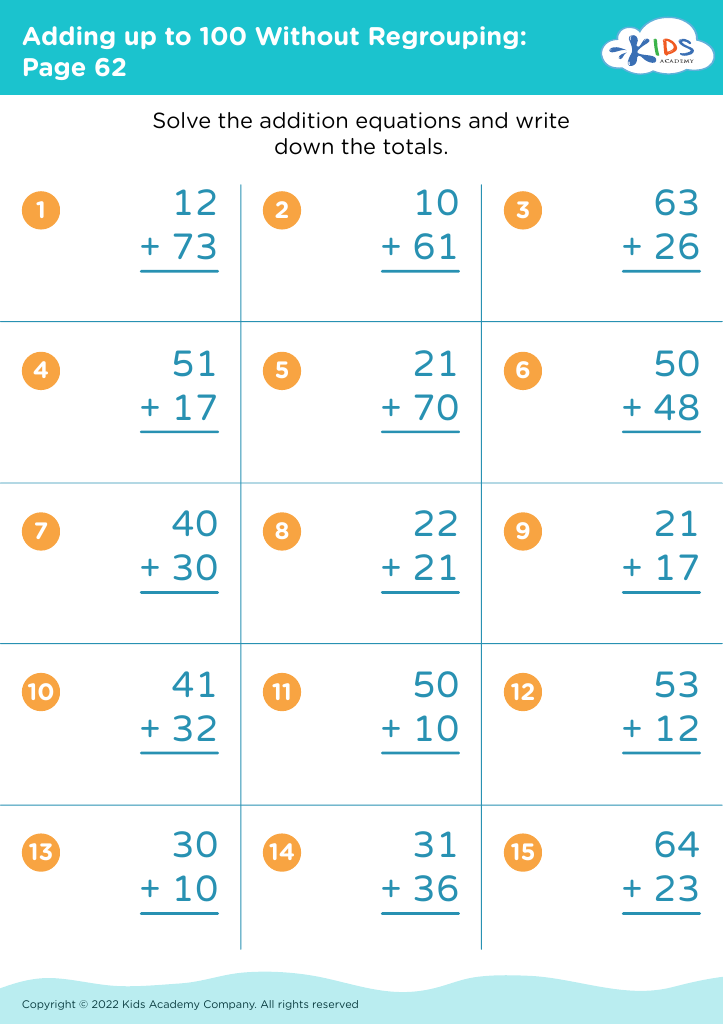




Understanding how to compare fractions, especially ones that add up to 100 without regrouping, is crucial for young learners aged 4-8. This foundational math concept develops essential skills in reasoning, problem-solving, and critical thinking. Engaging with fractions equips children with tools to compare parts of a whole, a skill used in daily life, such as cooking, shopping, or even sharing.
For parents and teachers, fostering these skills encourages emotional and intellectual development. It cultivates a deeper grasp of numerical relationships and helps them understand proportion, which are key aspects of more complex math in later years. Additionally, using fractions to explore whole numbers enforces a solid understanding of quantity, which boosts confidence in math abilities.
Moreover, understanding these concepts at an early age helps establish a strong framework for lifelong mathematical learning, reducing math anxiety in later grades and helping to promote positive attitudes toward mathematics. When children learn to compare fractions, they gain not only a mathematical skill but also the ability to critically analyze situations and make informed decisions, vital competencies for academic and personal success. Thus, emphasizing this skill should be a priority for parents and educators.