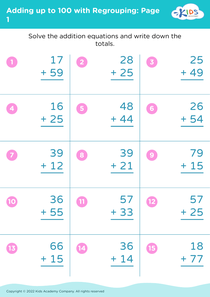
Fraction simplification Adding up to 100 Without Regrouping Worksheets for Ages 4-8
9 filtered results
-
From - To
Our "Fraction Simplification Adding up to 100 Without Regrouping Worksheets for Ages 4-8" are designed to introduce young learners to the basics of fractions and addition. These engaging and colorful worksheets help kids understand how to simplify fractions and perform simple addition without the need for regrouping. Each activity is carefully crafted to suit the developmental stages of children aged 4-8, making math both fun and educational. By working through these worksheets, children will gain confidence in their math skills and build a solid foundation for future learning. Perfect for classroom use or at-home practice!
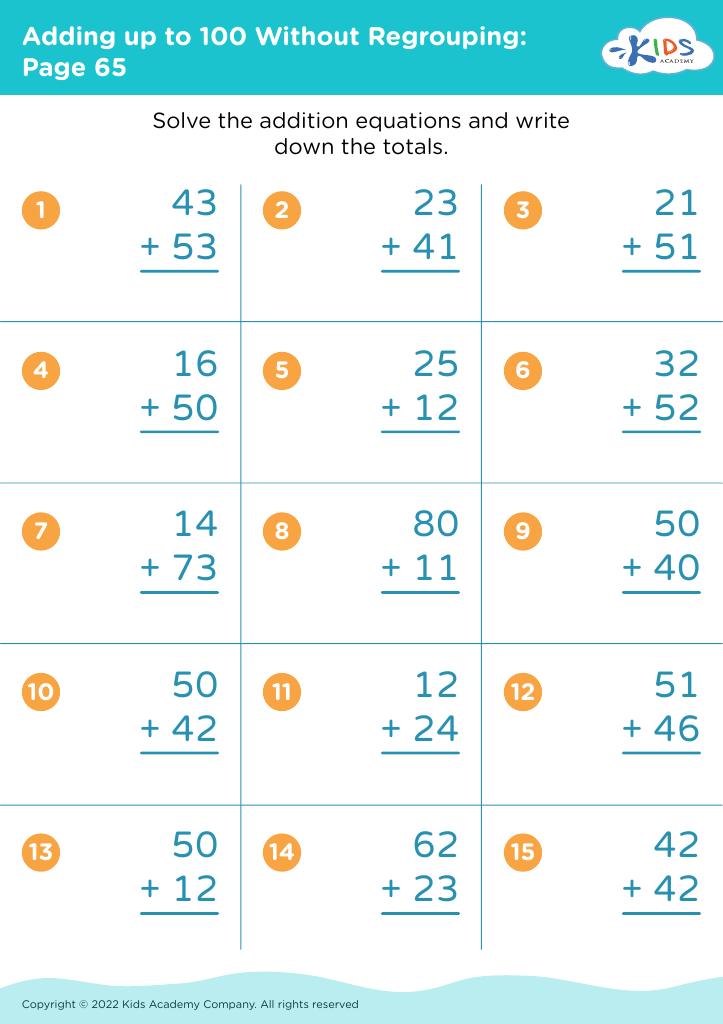
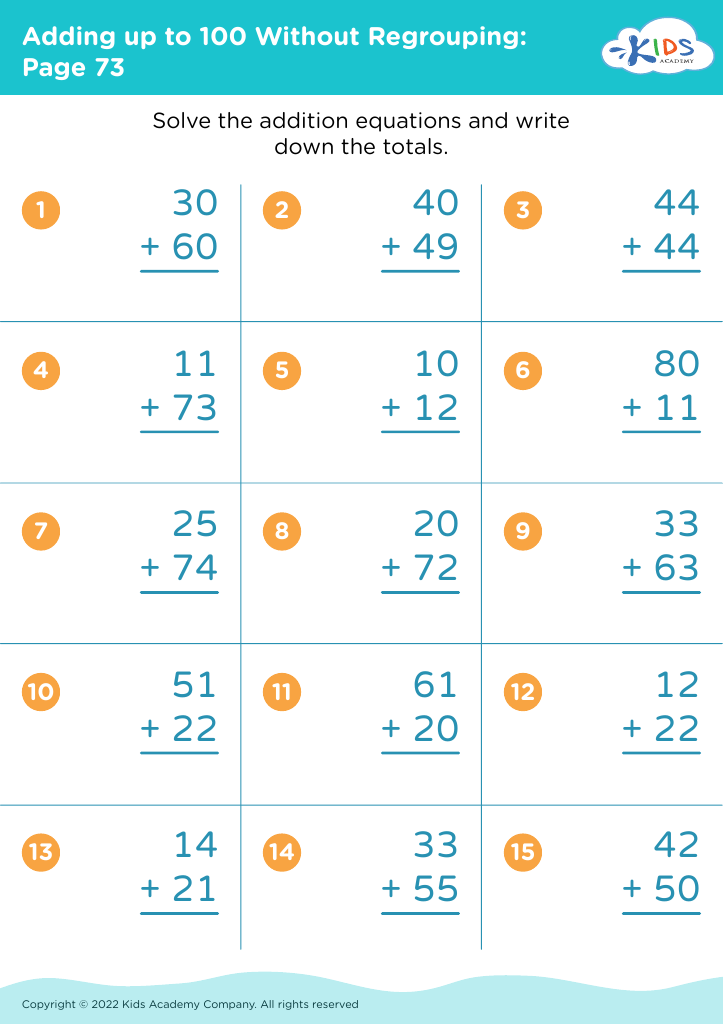
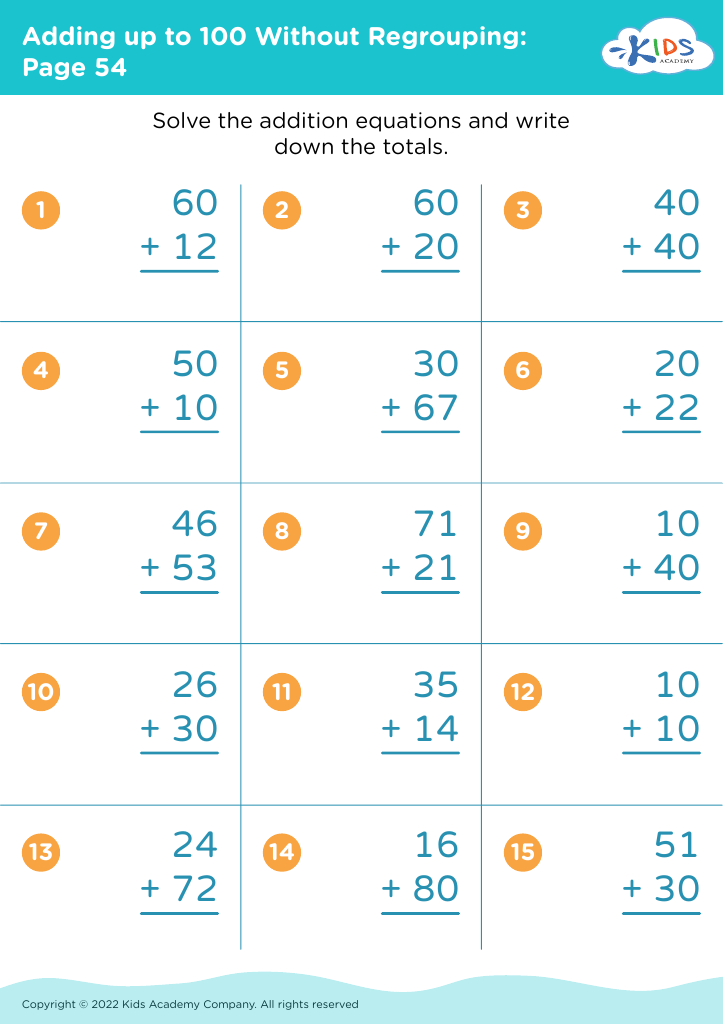
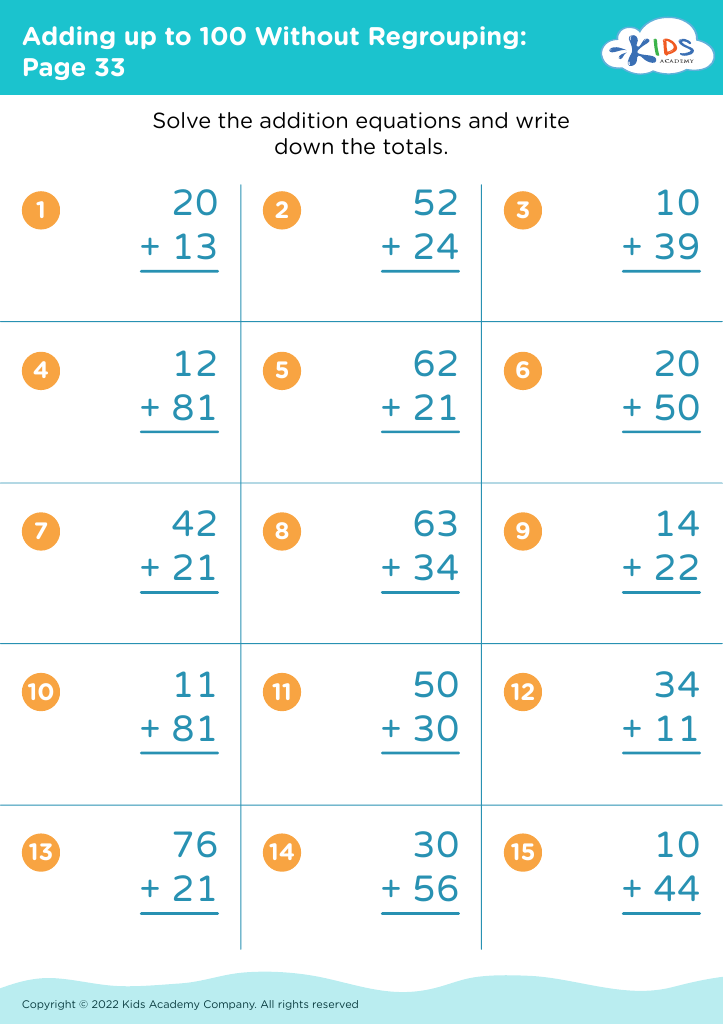
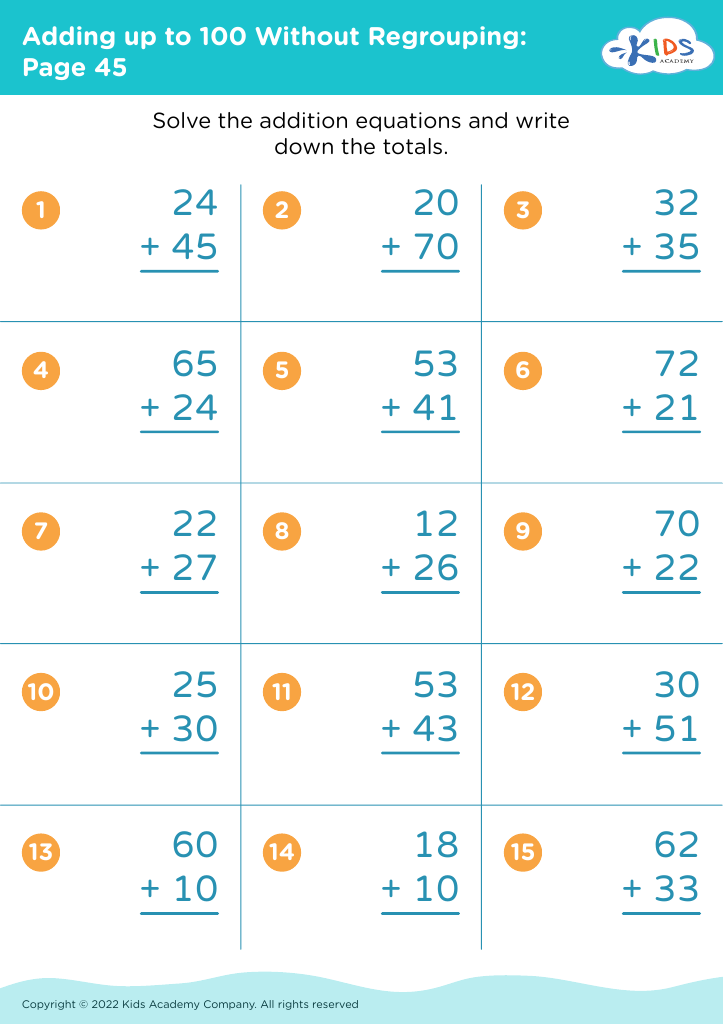
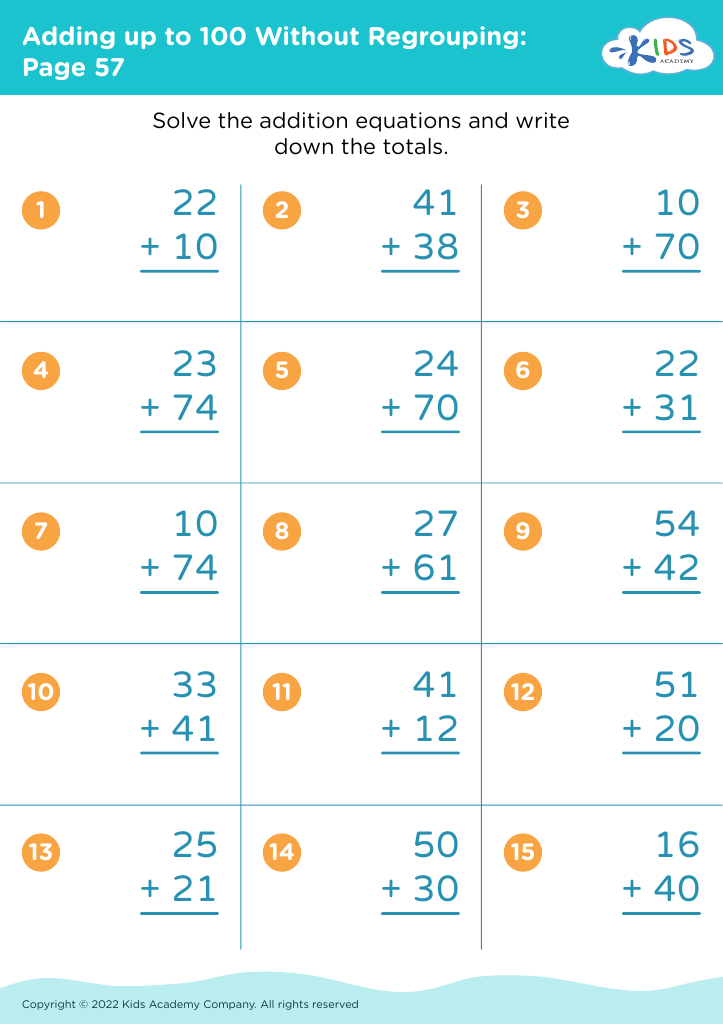
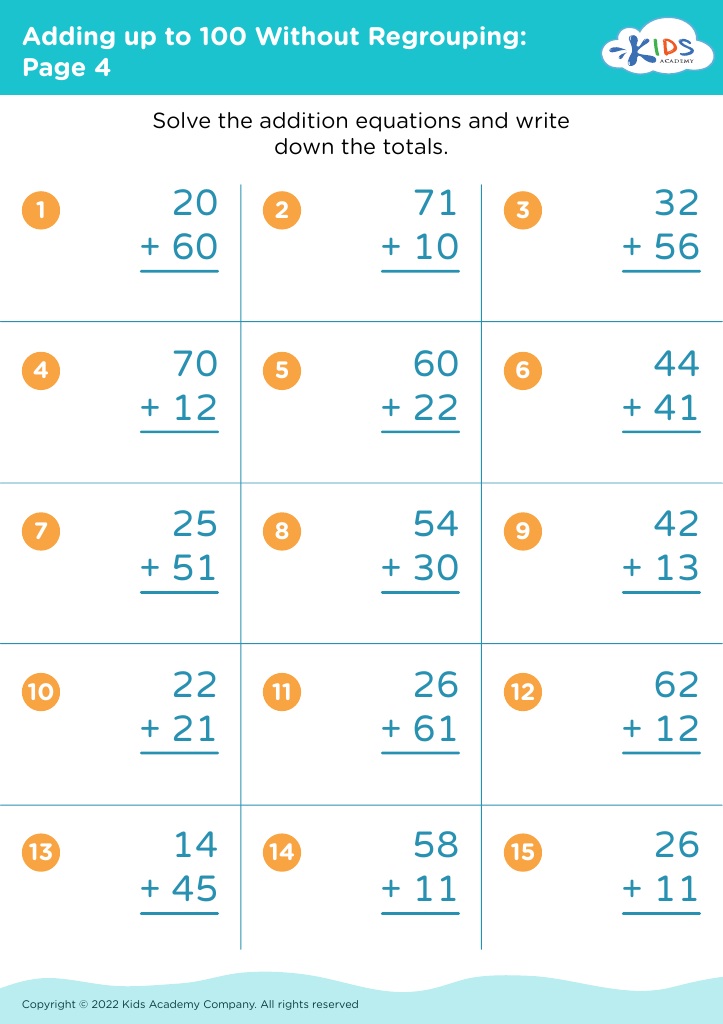
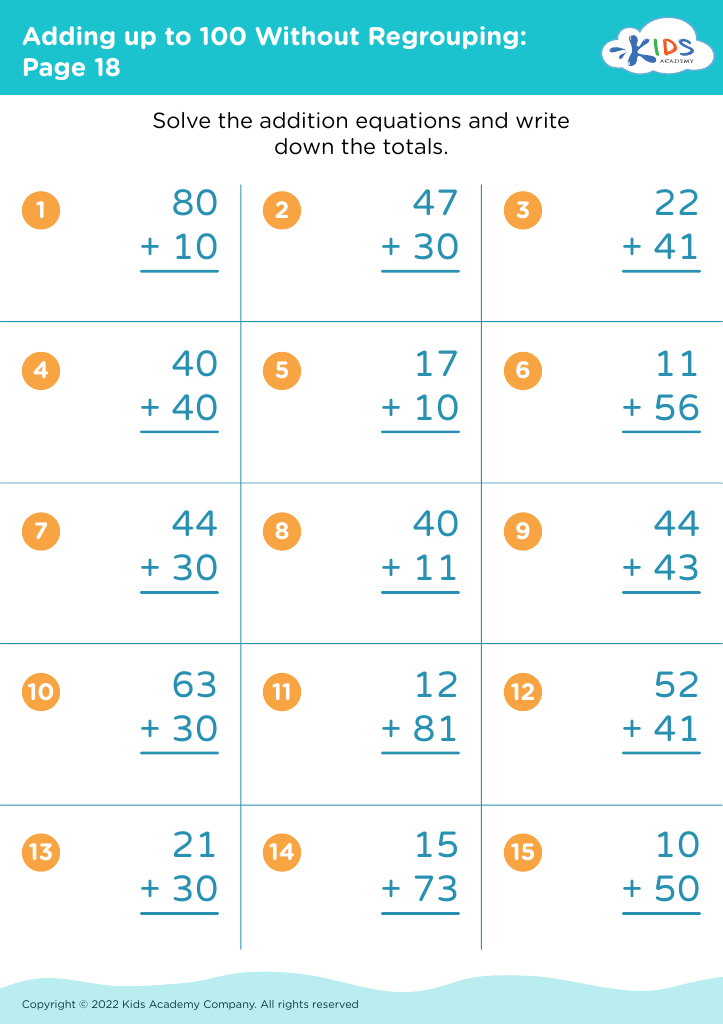
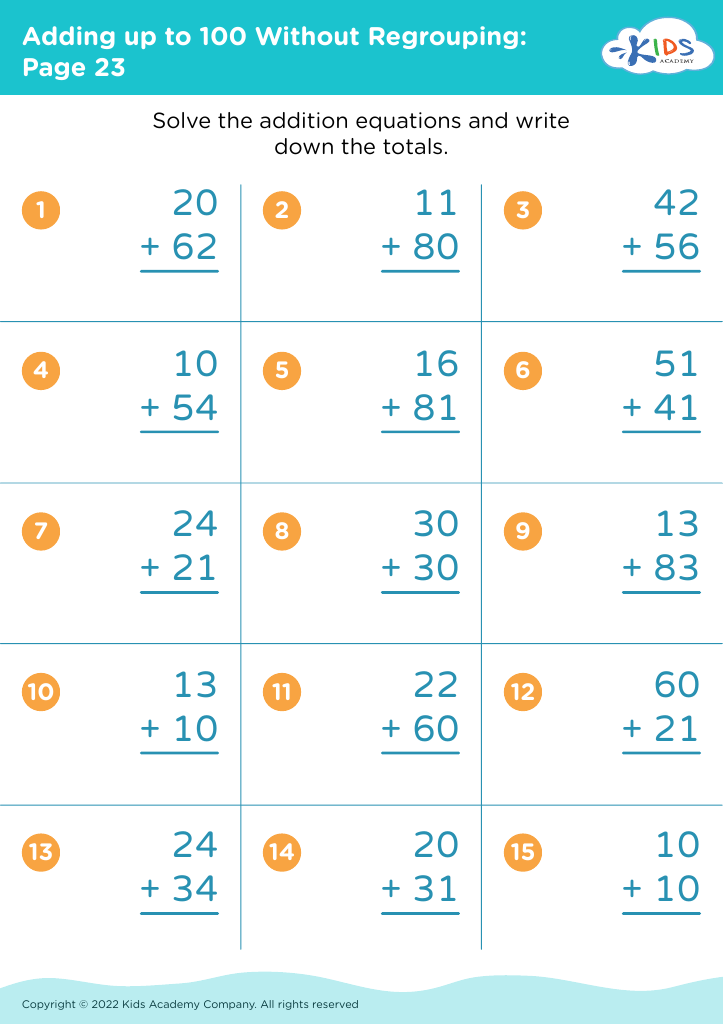




Teaching fraction simplification and addition up to 100 without regrouping to young children, aged 4-8, builds essential mathematical foundations early. Here’s why it matters:
-
Fundamental Skills: Understanding fractions and simple addition are key math skills that form the groundwork for more complex topics. Fraction simplification helps children grasp the concept of parts of a whole, which is foundational for advanced mathematics, including ratios, proportions, and algebra.
-
Cognitive Development: Engaging with these concepts enhances children's numeric fluency and problem-solving abilities. Simple fraction work and adding numbers to 100 without regrouping (carrying) strengthen mental arithmetic, which is crucial for quick, accurate calculation skills.
-
Confidence Building: Mastery of basic math concepts boosts confidence in young learners, encouraging a positive attitude toward learning. Success in early math helps reduce anxiety and fosters persistence in tackling challenging problems later on.
-
Practical Application: Real-world tasks often involve fractions and addition, such as cooking, shopping, or dividing items among friends. Recognizing and simplifying fractions, as well as performing straightforward addition, prepares children for everyday decision-making.
Overall, these foundational skills not only contribute to academic achievement but also aid in daily life applications, setting youngsters on a path to lifelong competency in mathematics.