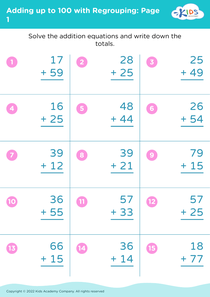
Improve reading comprehension Adding up to 100 Without Regrouping Worksheets for Ages 4-8
3 filtered results
-
From - To
Enhance your child's learning journey with our "Adding up to 100 Without Regrouping Worksheets for Ages 4-8." These printable worksheets not only sharpen basic math skills but also improve reading comprehension. Carefully designed for young learners, each exercise combines engaging stories with addition problems, making learning fun and effective. Kids follow along with simple narratives while solving math challenges, boosting both their numerical and literacy skills. Ideal for home or classroom use, these worksheets promote critical thinking and confidence in solving math problems. Empower your child today with tools that build foundational skills for future academic success.
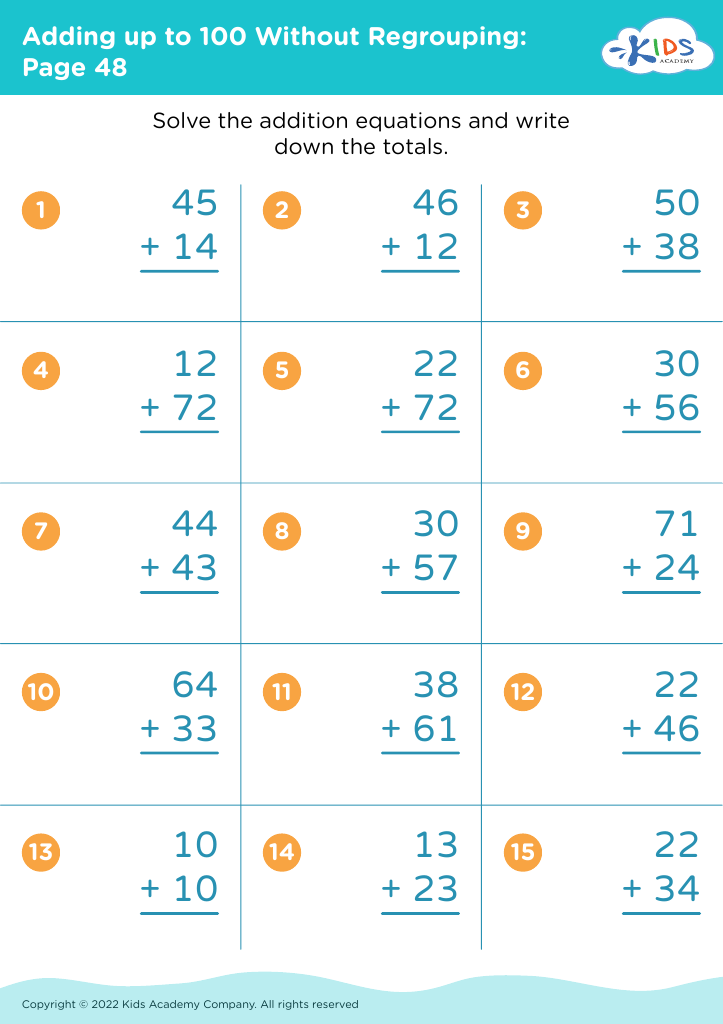
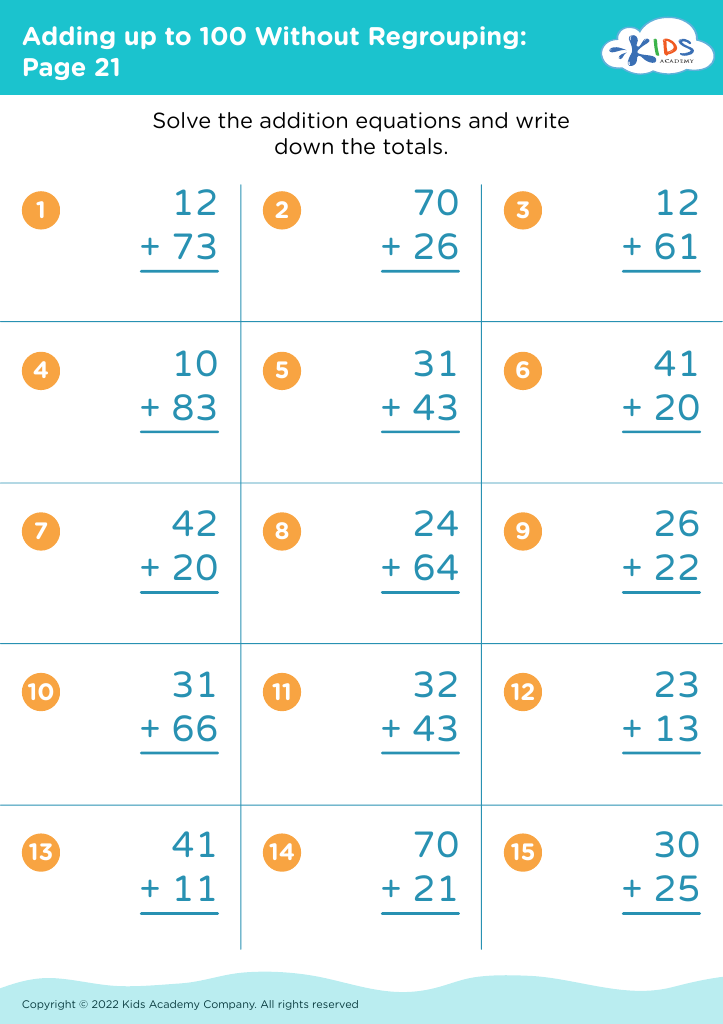
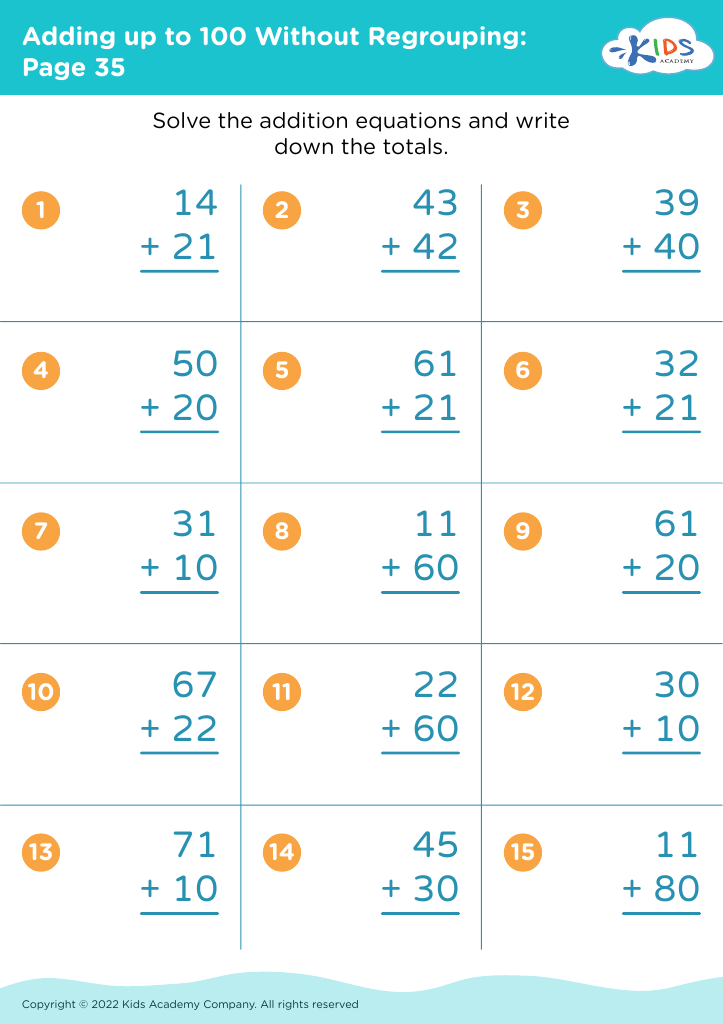




Reading comprehension and the ability to add numbers up to 100 without regrouping are both fundamental skills for children ages 4-8, each contributing significantly to their overall academic and cognitive development.
Firstly, reading comprehension forms the cornerstone of all future learning. When children understand what they read, they can absorb information better, follow instructions accurately, and develop critical thinking skills. These capabilities are essential not just for language arts, but for comprehending mathematical problems, scientific concepts, and historical events as well.
Similarly, being able to add up to 100 without regrouping is an important milestone in early numeracy. This skill boosts a child's confidence in their mathematical abilities and lays the groundwork for more complex arithmetic such as multiplication, division, and eventually, algebra. Being proficient in basic addition also fosters problem-solving skills and logical thinking.
Together, reading comprehension and numerical proficiency enable children to better engage with educational content across subjects. They foster self-esteem and independence, and prepare children for the increasingly complex tasks they will encounter as they advance in school. Therefore, parents and teachers should focus on these areas to ensure well-rounded development, paving the path for future academic success.