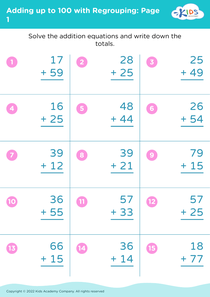
Practicing multiplication Adding up to 100 Without Regrouping Worksheets for Ages 4-8
3 filtered results
-
From - To
Unlock the potential of young minds with our "Practicing Multiplication Adding up to 100 Without Regrouping" worksheets, designed specifically for children aged 4-8. These fun and engaging worksheets help kids master basic addition and multiplication skills while adding within 100, without the complexity of regrouping. Each worksheet offers easy-to-follow exercises that reinforce fundamental math concepts, promote critical thinking, and build a strong foundation for future math success. Perfect for classroom and at-home learning, our worksheets make practicing math a delightful adventure for young learners. Visit us to explore and download today!
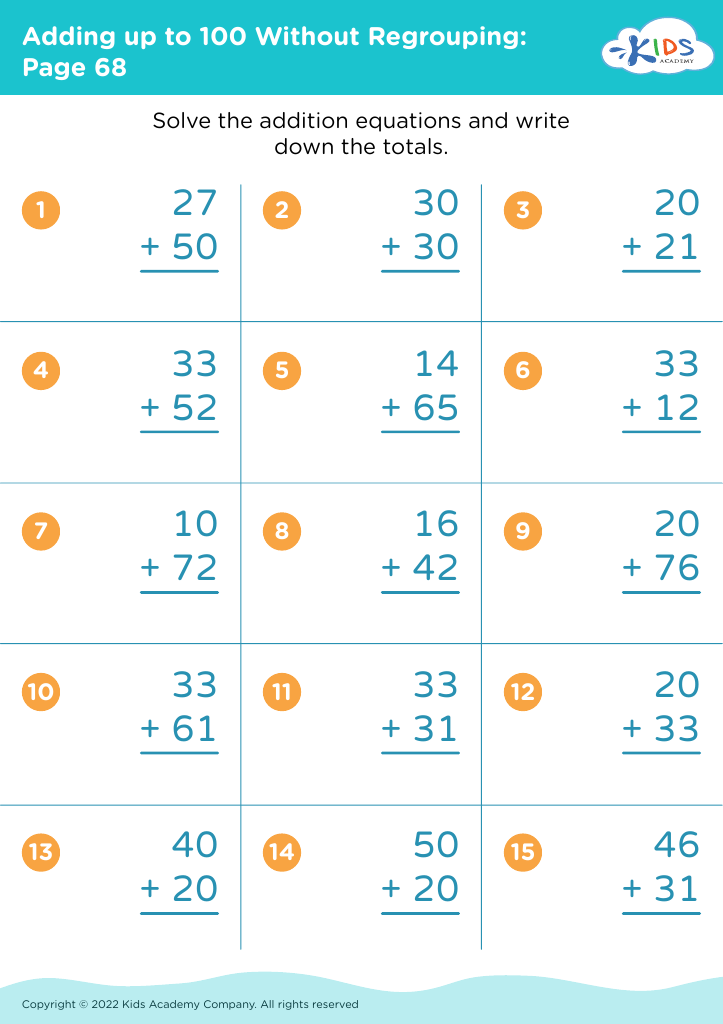
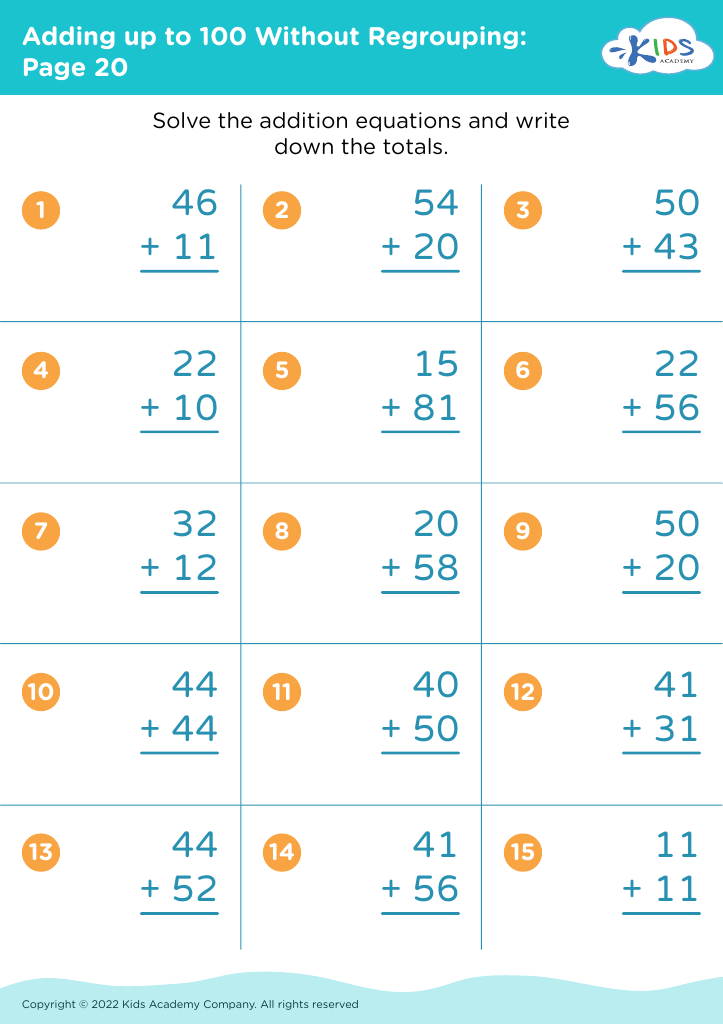
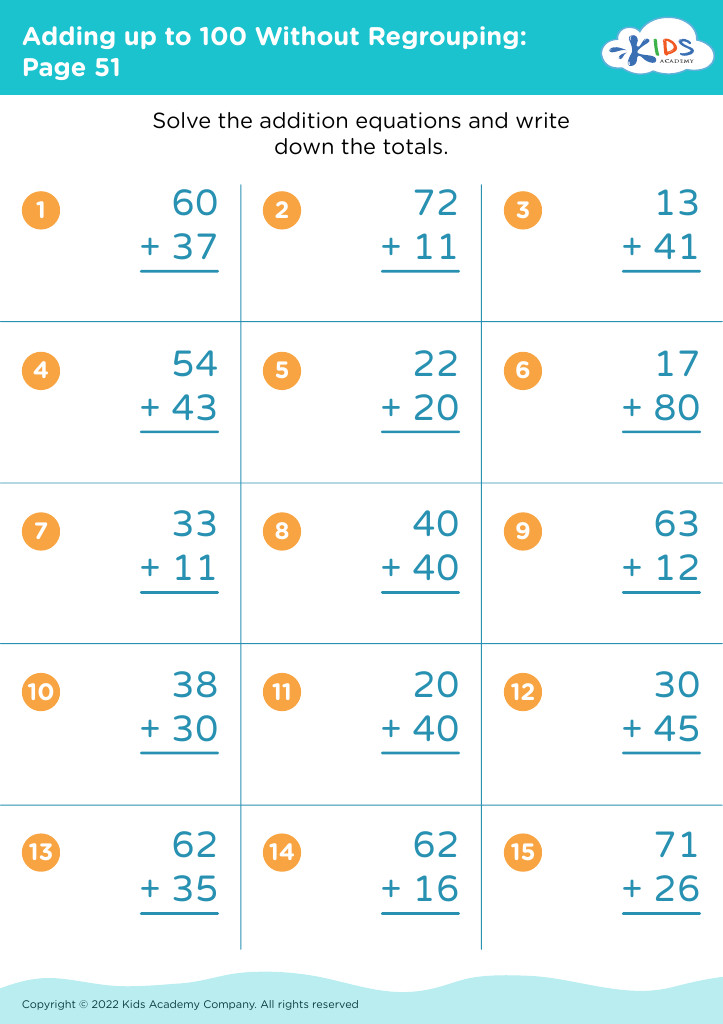




Practicing multiplication and addition up to 100 without regrouping is crucial for children ages 4-8 because it lays the foundation for more complex math skills. At this young age, children's brains are incredibly receptive to learning and forming neural connections. Mastering these fundamental arithmetic skills promotes numerical fluency, making it easier for them to tackle more advanced concepts like division, fractions, and problem-solving later on.
For parents and teachers, emphasizing this practice helps strengthen children's confidence and reduces math anxiety. When kids understand the basics, they are more likely to enjoy math and develop a positive attitude towards learning. In addition, these skills are essential for everyday tasks such as counting money, understanding time, and measuring ingredients in recipes.
Multiplication introduces a new way of thinking about repeated addition, which helps students grasp the concept of grouping and sets, preparing them for higher-order math. Addition without regrouping, on the other hand, allows children to focus on building accuracy and speed.
Overall, early practice with these basic operations equips children with essential life skills, nurtures logical thinking, and sets the stage for lifelong academic and real-world success. Parents and teachers play a key role in facilitating and encouraging these foundational learning experiences.