Problem-Solving Skills Adding up to 100 Without Regrouping Worksheets for Ages 4-8
10 filtered results
-
From - To
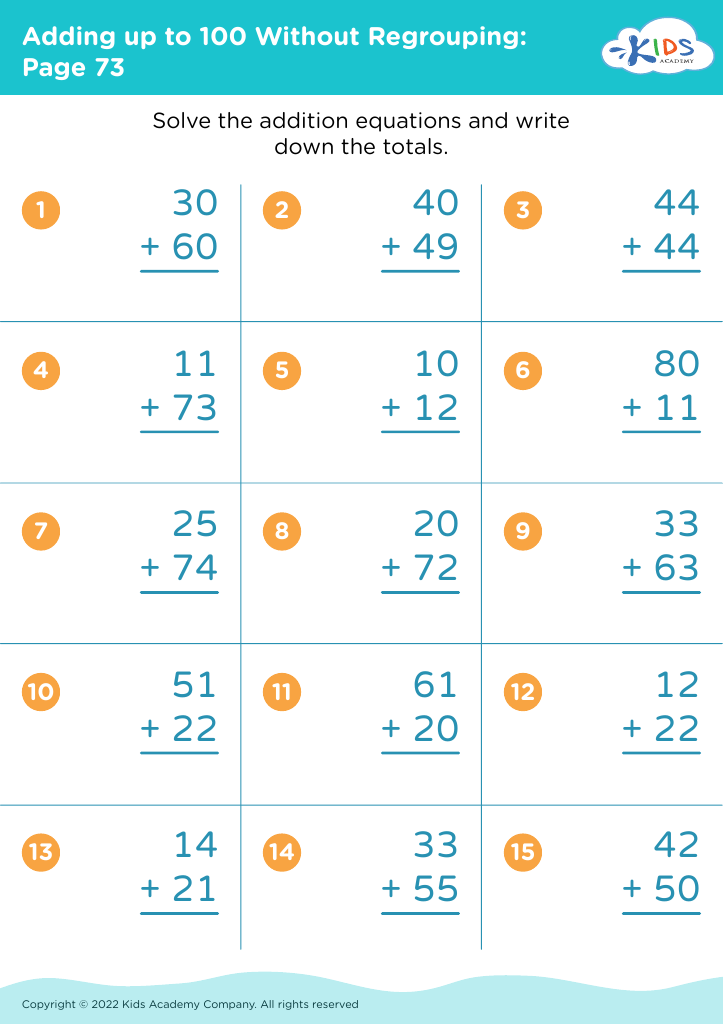
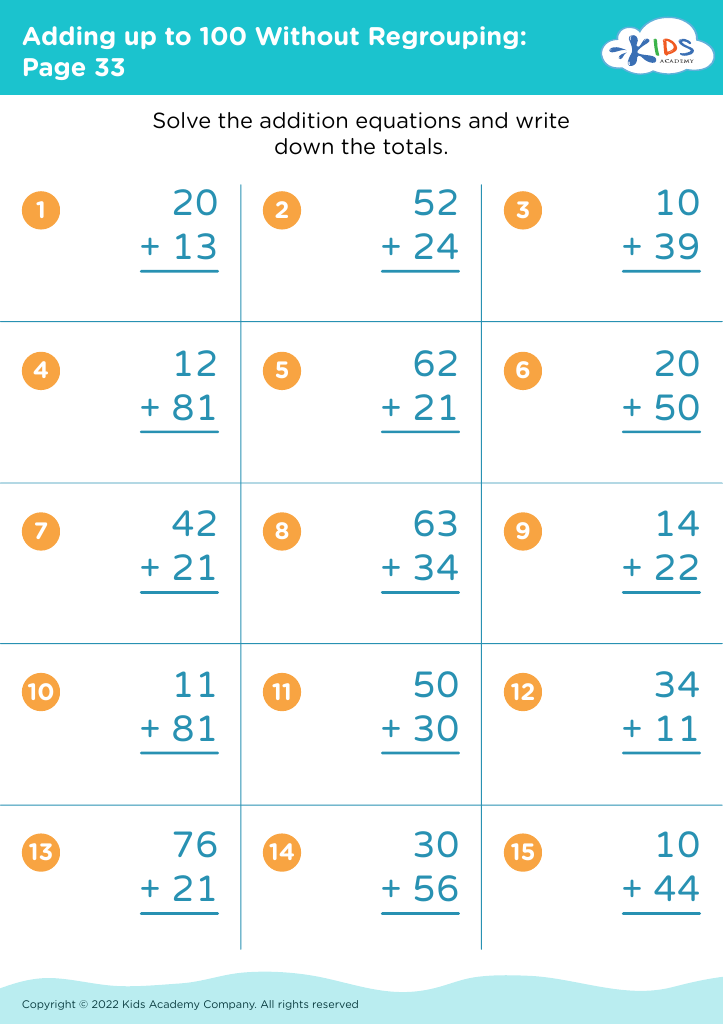
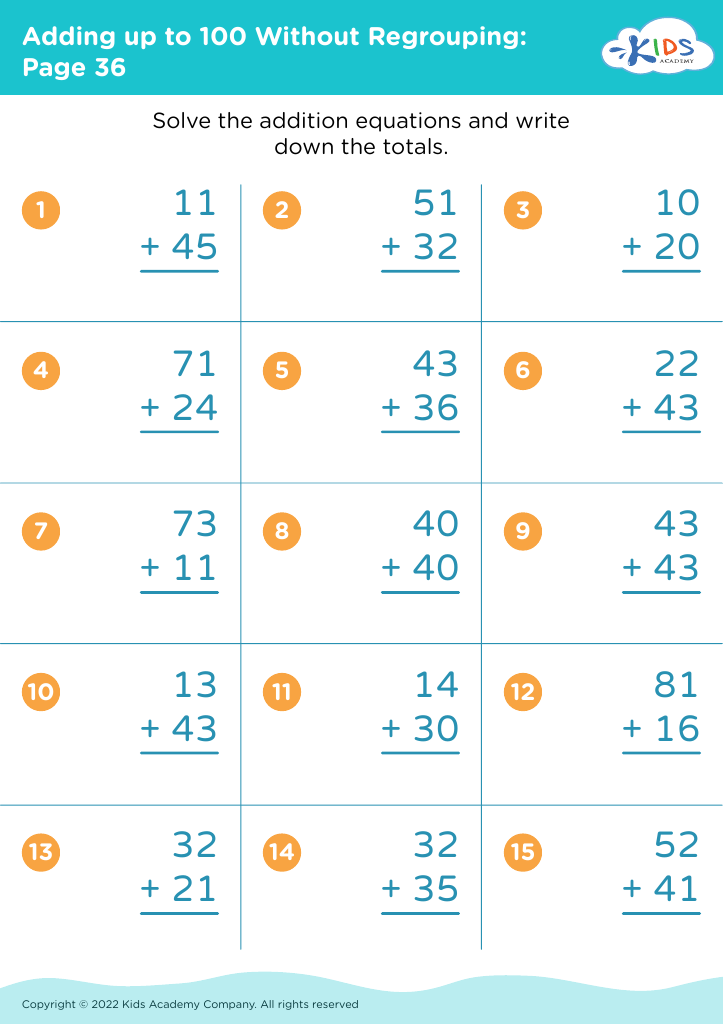
Welcome to our "Problem-Solving Skills: Adding Up to 100 Without Regrouping" worksheets designed specifically for children aged 4-8! These engaging and interactive worksheets help young learners develop critical problem-solving skills through fun, hands-on math activities. Children will practice addition, enhancing their ability to add numbers confidently without the need for regrouping. Each worksheet encourages logical thinking, boosts number sense, and promotes early math fluency, creating a solid foundation for future learning. Perfect for classroom use or at-home practice, these resources offer an enjoyable way to explore math concepts while fostering independence and critical thinking. Start your child's math journey today!
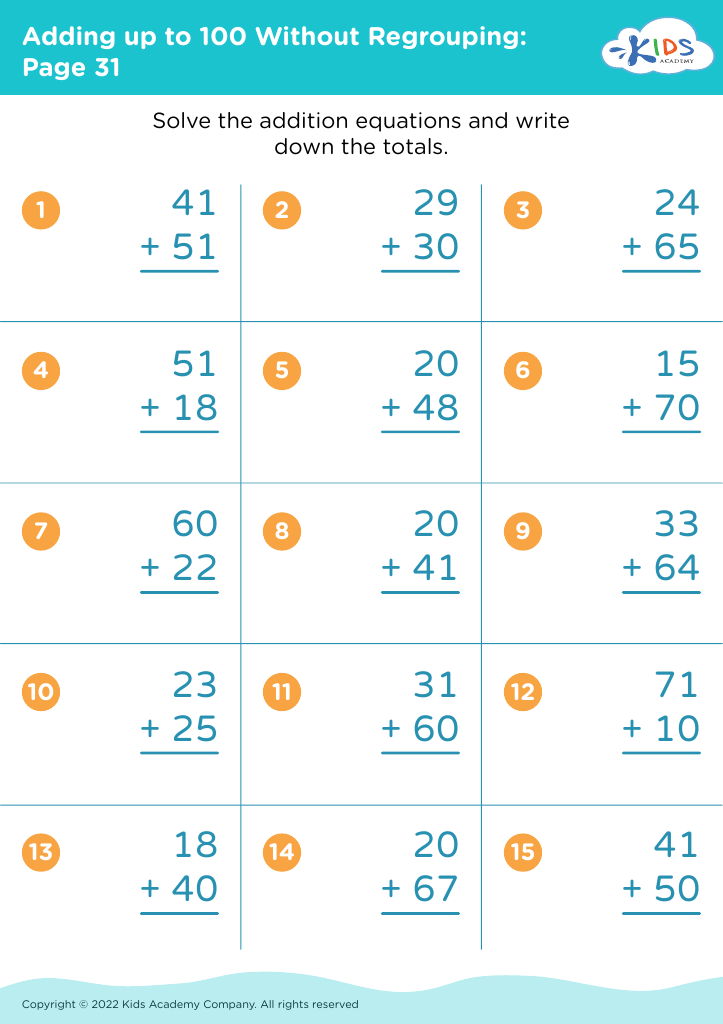
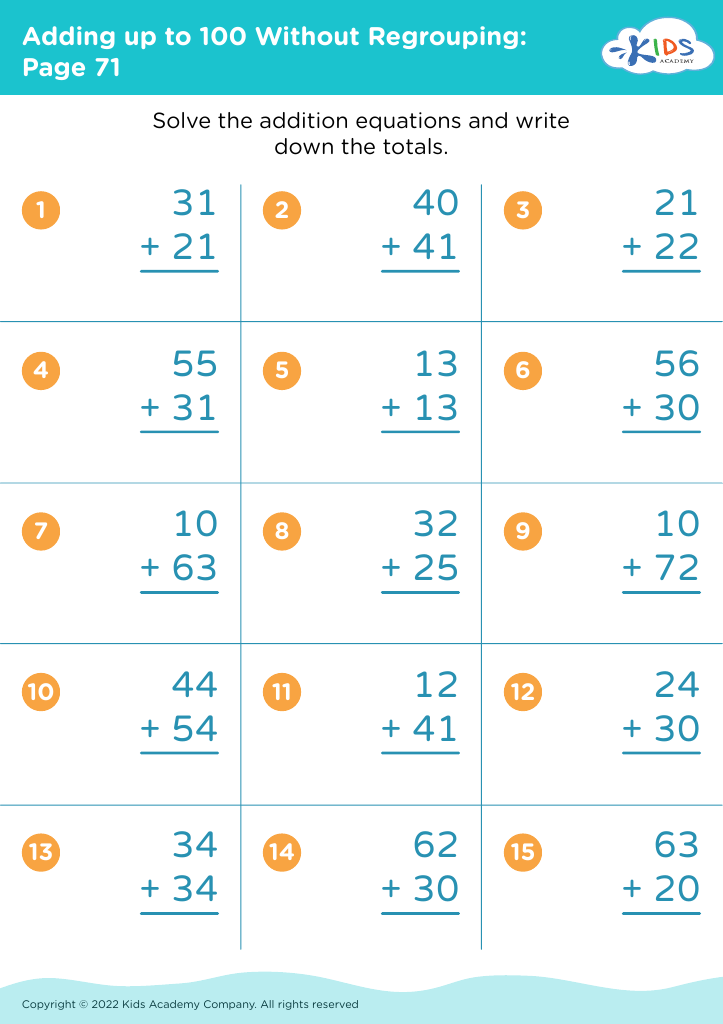
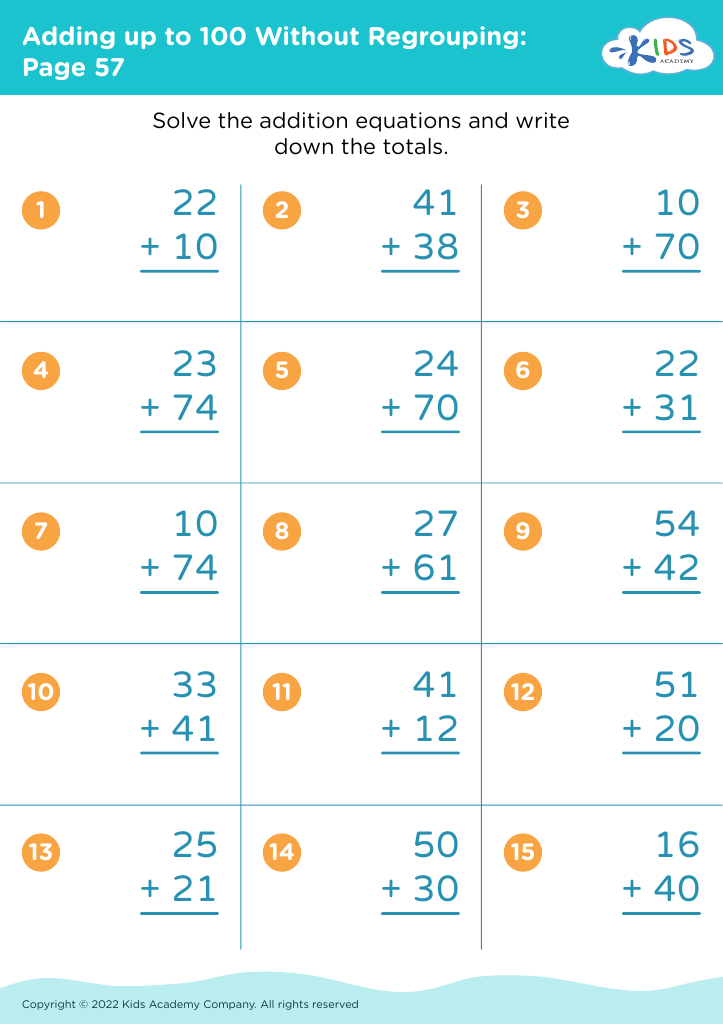
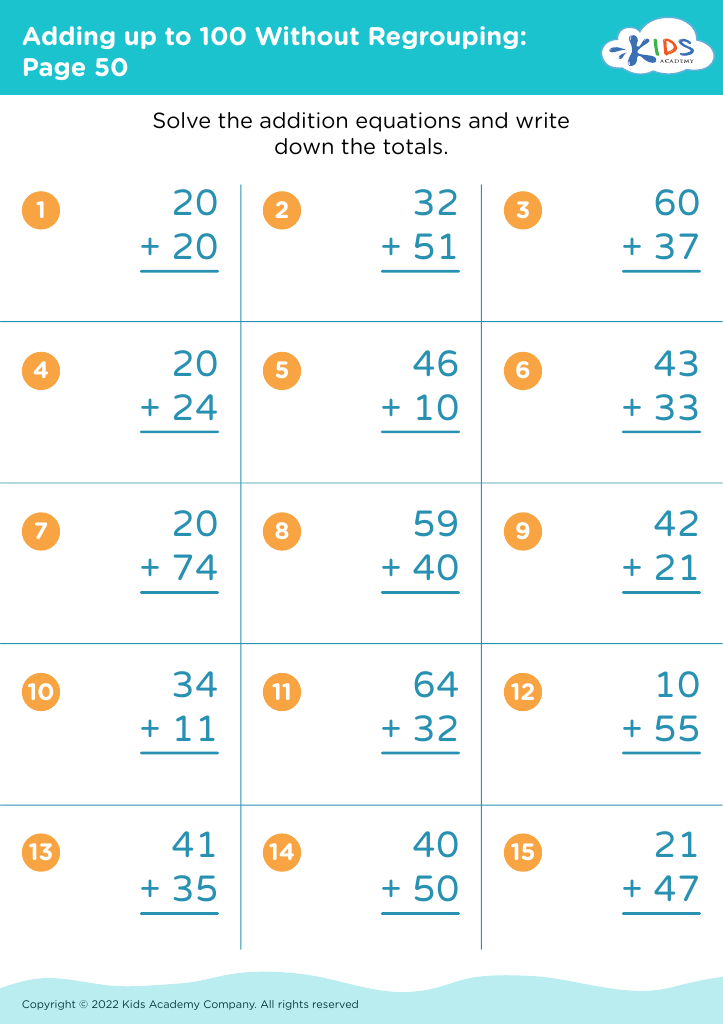
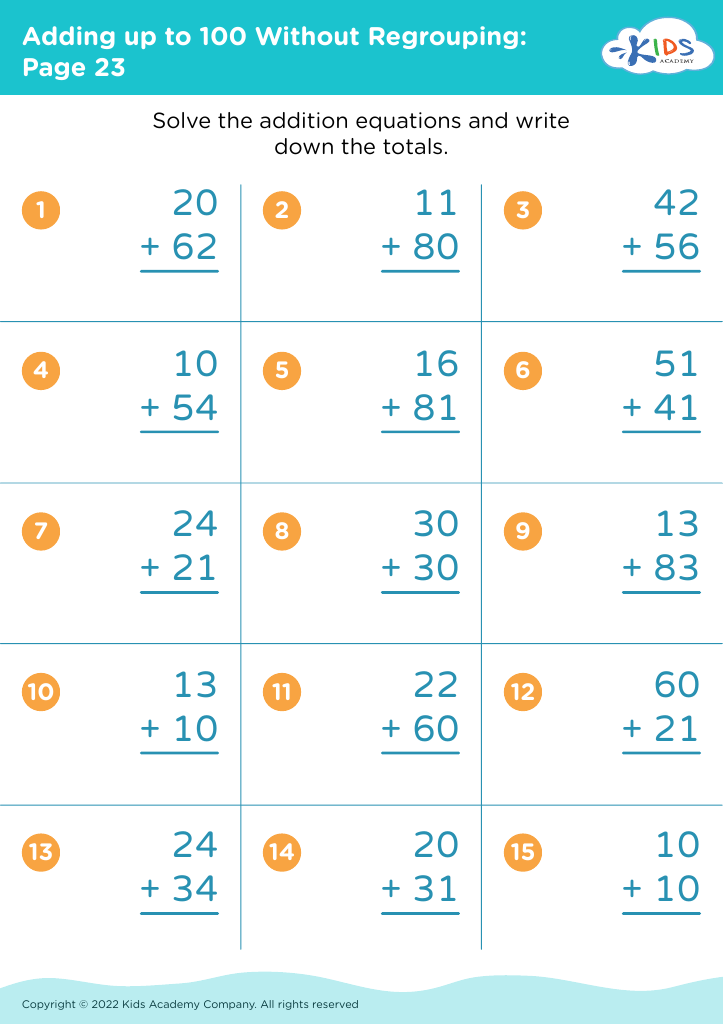
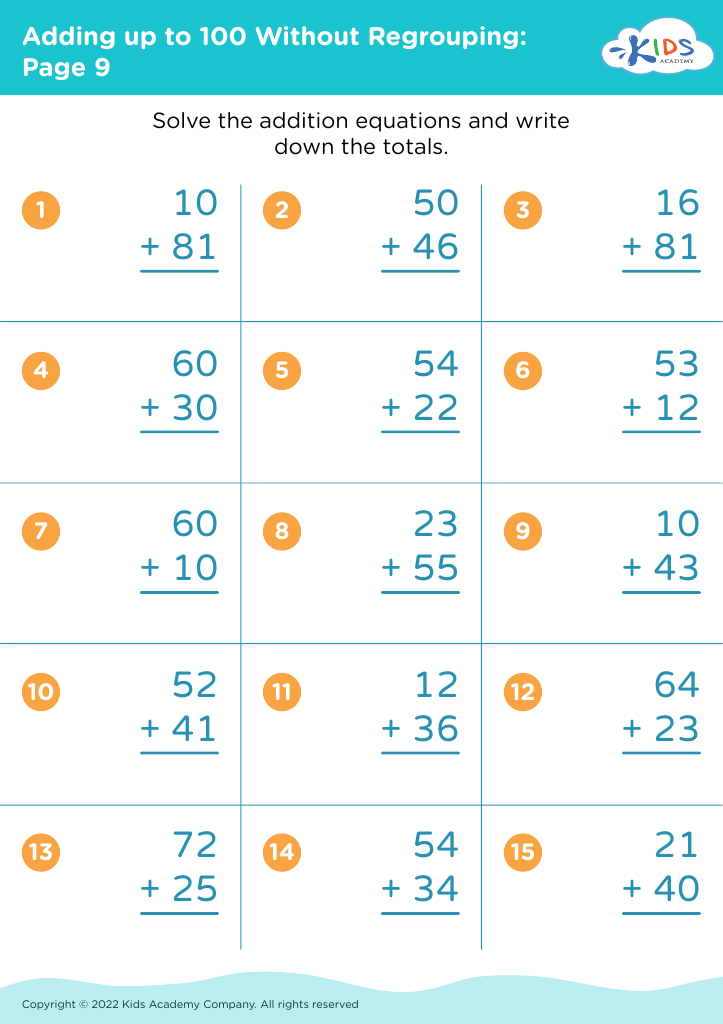
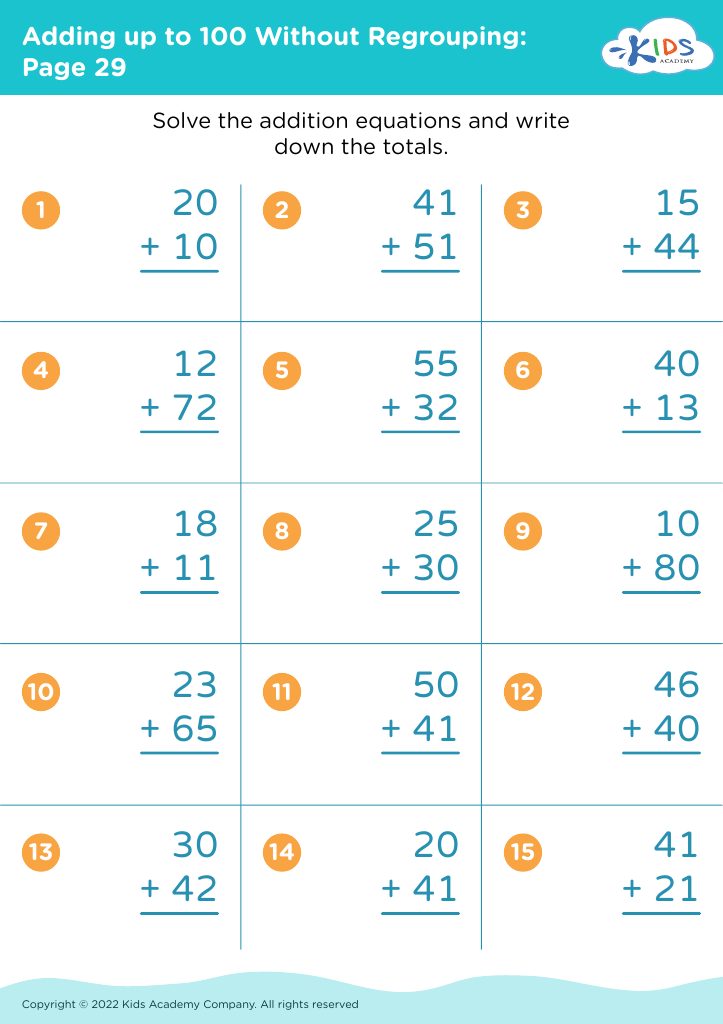




Developing problem-solving skills in young children, particularly in the context of adding up to 100 without regrouping, is foundational for their cognitive development. For ages 4-8, this skill encourages critical thinking and enhances understanding of numbers, helping children to grasp basic arithmetic concepts.
Firstly, mastering addition without regrouping enables children to build confidence in their mathematical abilities. It allows them to approach problems more systematically, fostering a growth mindset. As they learn to break down numbers and visualize quantities, they not only enhance their computational skills but also develop persistence and resilience in tackling challenges.
Secondly, reinforcing these skills early on sets the stage for more complex mathematical concepts in the future. As children progress in their education, a solid understanding of foundational math enables them to tackle larger problems, including subtraction, multiplication, and division, effectively.
Moreover, engaging in age-appropriate problem-solving activities nurtures collaboration and communication skills. Pairing children to solve addition challenges promotes teamwork and sharing of strategies, which are essential life skills. Ultimately, prioritizing these skills equips children with the tools needed for lifelong learning, fostering both academic success and personal growth.