Reading comprehension Adding up to 100 Without Regrouping Worksheets for Ages 4-8
3 filtered results
-
From - To
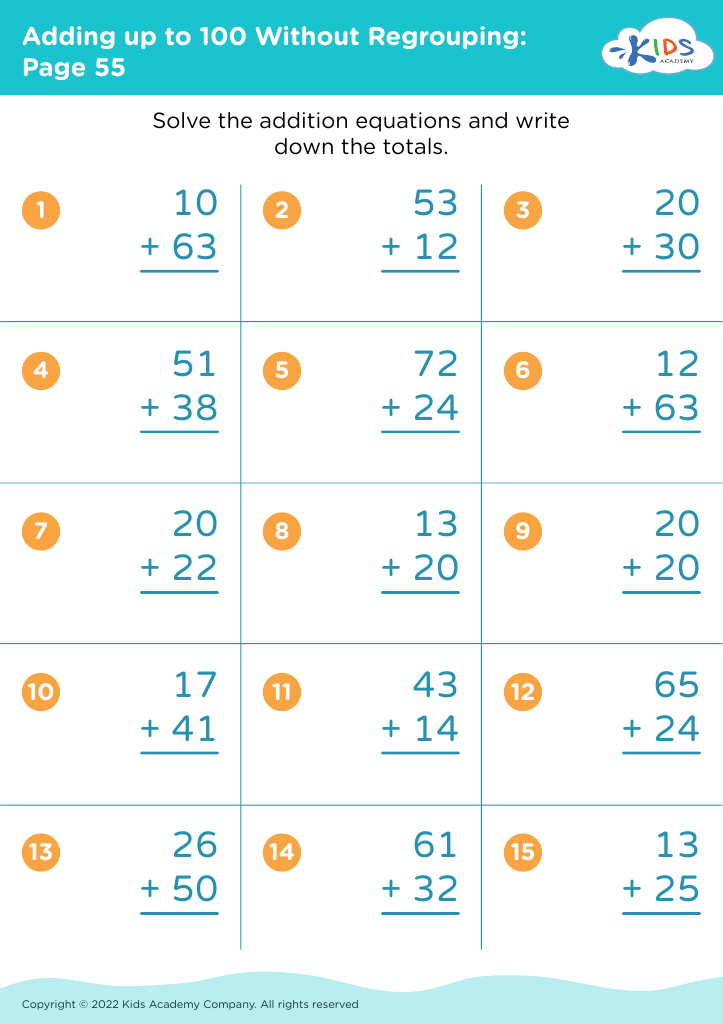
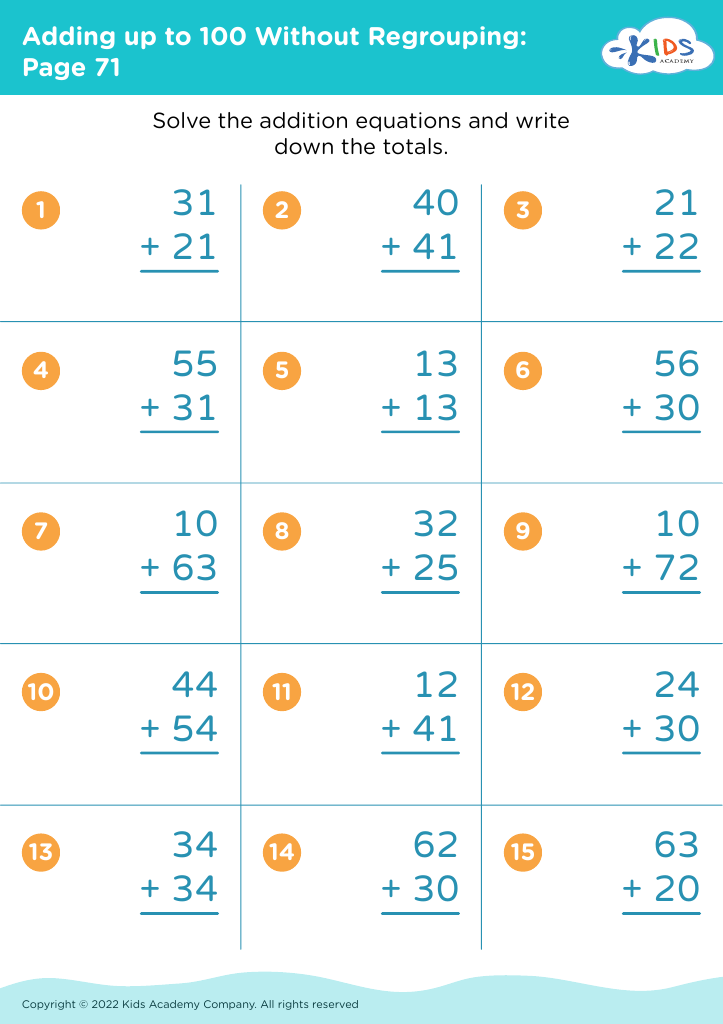
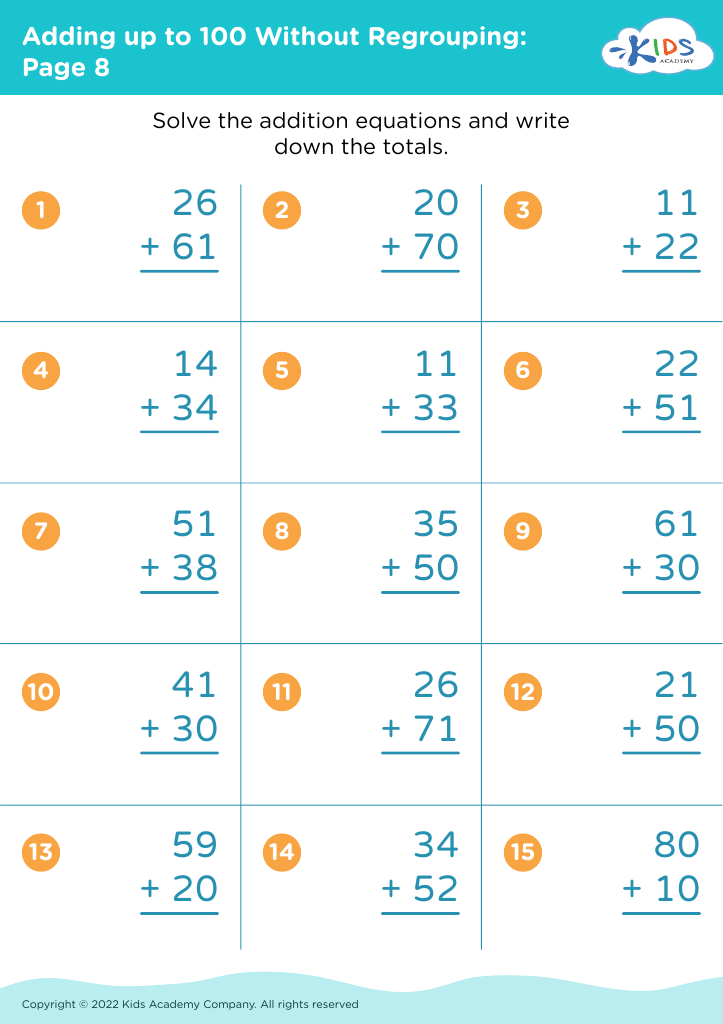
Enhance your child's reading comprehension and math skills simultaneously with our "Adding up to 100 Without Regrouping Worksheets" designed for ages 4-8. These engaging worksheets help young learners practice fundamental addition concepts while developing their ability to understand and interpret information. Each worksheet combines fun, age-appropriate tasks that challenge students to read questions carefully and apply their math knowledge effectively. Ideal for classrooms or at-home learning, these worksheets promote critical thinking, boost confidence, and encourage a love for learning. Let your child embark on an educational adventure that seamlessly blends math and reading comprehension today!




Reading comprehension is a pivotal skill for children aged 4-8, serving as the foundation for learning across all subjects. When children can understand what they read, they are better equipped to absorb new information, engage with texts critically, and develop a love for learning. For parents and teachers, fostering reading comprehension enhances children's overall educational experience and their ability to succeed in school.
Additionally, learning to add numbers up to 100 without regrouping is an important mathematical skill that promotes logical thinking and problem-solving. Mastering this concept not only strengthens a child's number sense but also supports their comprehension skills by helping them understand numerical relationships and patterns.
Moreover, both skills—reading comprehension and fundamental math—valently interlink, enhancing self-confidence and academic performance. When children see the value of understanding, whether in reading or math, they are more likely to take initiative in their learning journey.
Overall, encouraging progress in these areas equips children with crucial tools that will benefit them throughout their academic lives and beyond. Parents and teachers play a vital role in nurturing these skills, paving the way for a brighter future across various learning domains.